
No products in the cart.



Certified Supply Chain Logistics Analyst
₹6,500.00 ₹3,250.00
50% fee concession will end in
To train professionals to analyze logistics data and optimize supply chain performance through data-driven insights and process improvement.
Description
Course Name: Certified Supply Chain Logistics Analyst
Global Occupational Skill Standard – GOSS ID: GOSS/TL/CSCLA/V1
Eligibility: 10+2 (Higher Secondary) or Equivalent or minimum 2 years of relevant experience (experience-based learners can directly enroll and certify).
Objective: The Certified Supply Chain Logistics Analyst course is designed to equip professionals with analytical, technical, and operational skills to evaluate and optimize logistics and supply chain performance. Participants learn data analysis, forecasting, demand planning, KPI development, process optimization, cost analysis, and the use of digital tools and analytics platforms.
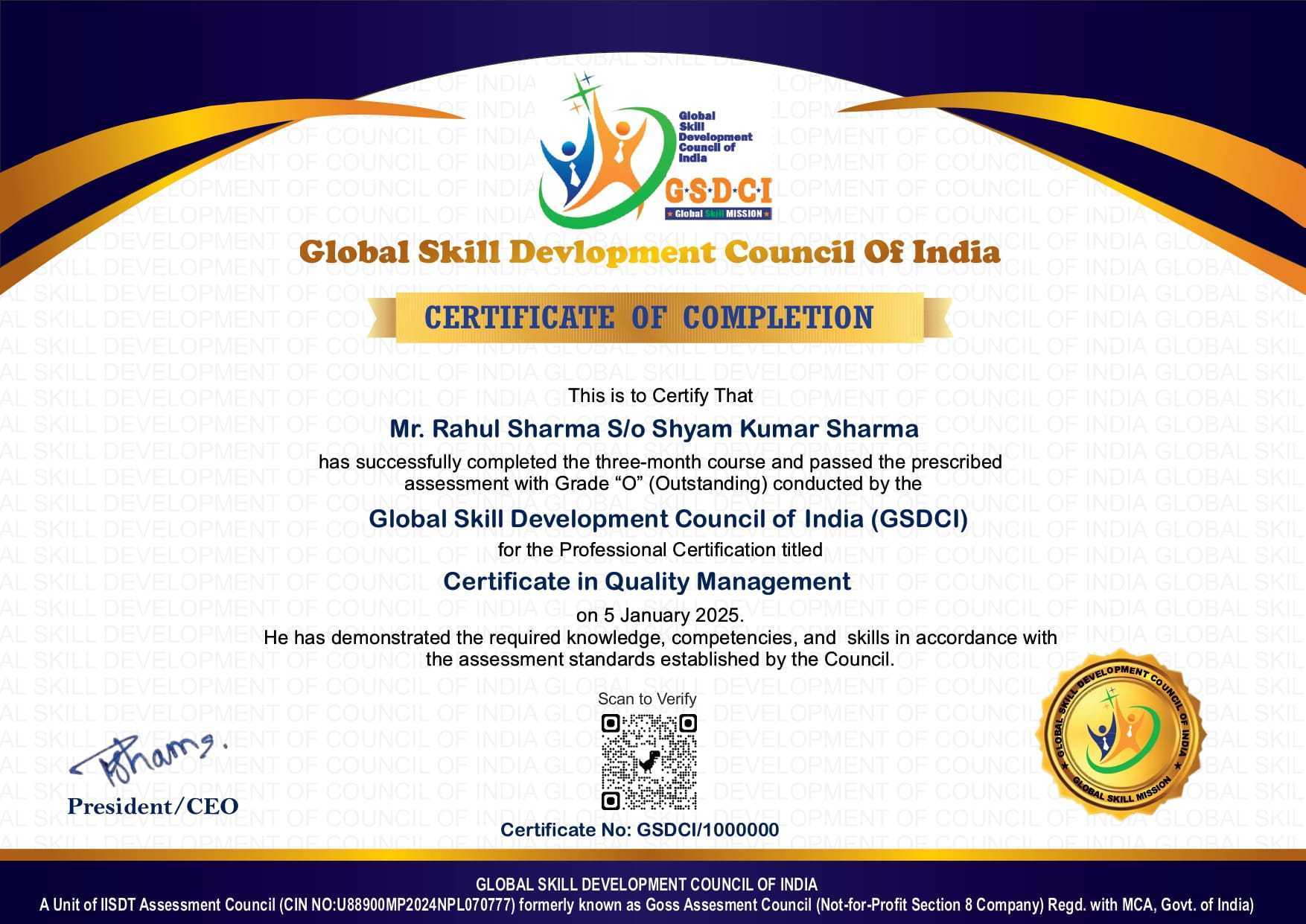
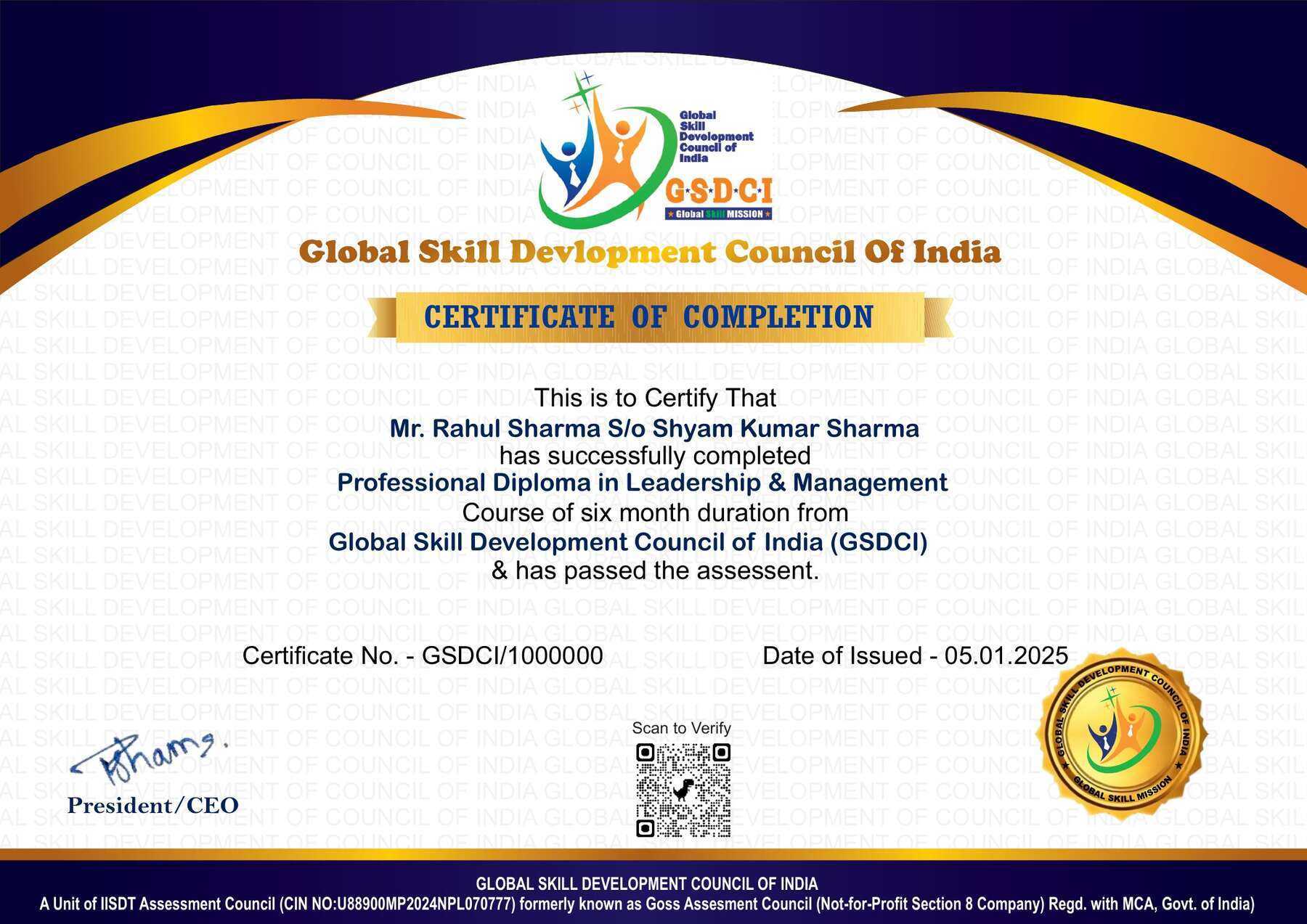
Certification: Within 5 days after Completion of Online Assessment.
Get ready to join the Journey to become a GSDCI Certified Professional – International Certification and Assessment Body.
Steps to become a GSDCI Certified Professional:
Step 1: Select your certification you want to pursue.
Step 2: Click on get certified tab, new pop up window will open.
Step 3: Click on pay certification fee, you will be redirected to billing details page.
Step 4: Fill your details and click on pay certification fee, you will be redirected to payment gateway, pay fee by any available options like Card (Debit/Credit), Wallet, Paytm, Net banking, UPI and Google pay.
Step 5: You will get Login Credentials of Online E-Books and Online assessment link on your email id, within 48 hrs of payment.
Step 6: After completion of the online assessment, the soft copy of your certificate will be sent to your registered email ID within 5 days.
Assessment Modules:
Module 1: Fundamentals of Supply Chain & Logistics Analysis: Overview of supply chain and logistics operations, Role and responsibilities of a supply chain logistics analyst, Key performance indicators (KPIs) in supply chain analytics, Understanding supply chain flows (information, material, financial), Regulatory and compliance considerations, Importance of data-driven decision-making,
Module 2: Data Collection & Analytical Methods: Data sources in logistics and supply chain, Data cleaning, validation, and verification techniques, Descriptive, diagnostic, predictive, and prescriptive analytics, Use of statistical tools and methods, Root cause analysis for logistics issues, Reporting and interpreting analytical findings,
Module 3: Transportation & Distribution Analysis: Transportation cost analysis and optimization, Carrier performance evaluation, Route and network efficiency assessment, Freight cost modeling and comparison, Distribution center performance metrics, Identifying bottlenecks and inefficiencies in transit,
Module 4: Warehouse & Inventory Analytics: Inventory turnover, carrying cost, and demand variability analysis, Stock accuracy and replenishment optimization, Warehouse layout and productivity analysis, Labor, equipment, and space utilization metrics, Cycle time and process efficiency evaluation, Identifying inventory risks and service level gaps,
Module 5: Technology, Systems & Digital Tools: Use of ERP, WMS, and TMS for data extraction and analysis, Data visualization tools (Power BI, Tableau, etc.), Automation and AI-driven analytics in supply chain, IoT applications for real-time data monitoring, Dashboard development for performance tracking, Emerging technologies influencing supply chain analytics,
Module 6: Strategic Planning & Continuous Improvement: Developing improvement recommendations based on data insights, Cost-benefit analysis and financial justification, Supporting strategic sourcing and network design decisions, KPI monitoring and performance tracking systems, Cross-functional communication and stakeholder reporting, Continuous improvement and lean methodologies for logistics,
GSDCI Online Assessment Detail:
- Duration- 60 minutes.
- Number of Questions- 30.
- Number of Questions from each module: 5.
- Language: English.
- Exam Type: Multiple Choice Questions.
- Maximum Marks- 100, Passing Marks- 50%.
- There is no negative marking in any module.
| Marking System: | |||
| S.No. | No. of Questions | Marks Each Question | Total Marks |
| 1 | 10 | 5 | 50 |
| 2 | 5 | 4 | 20 |
| 3 | 5 | 3 | 15 |
| 4 | 5 | 2 | 10 |
| 5 | 5 | 1 | 5 |
| 30 | 100 | ||
| How Students will be Graded: | |||
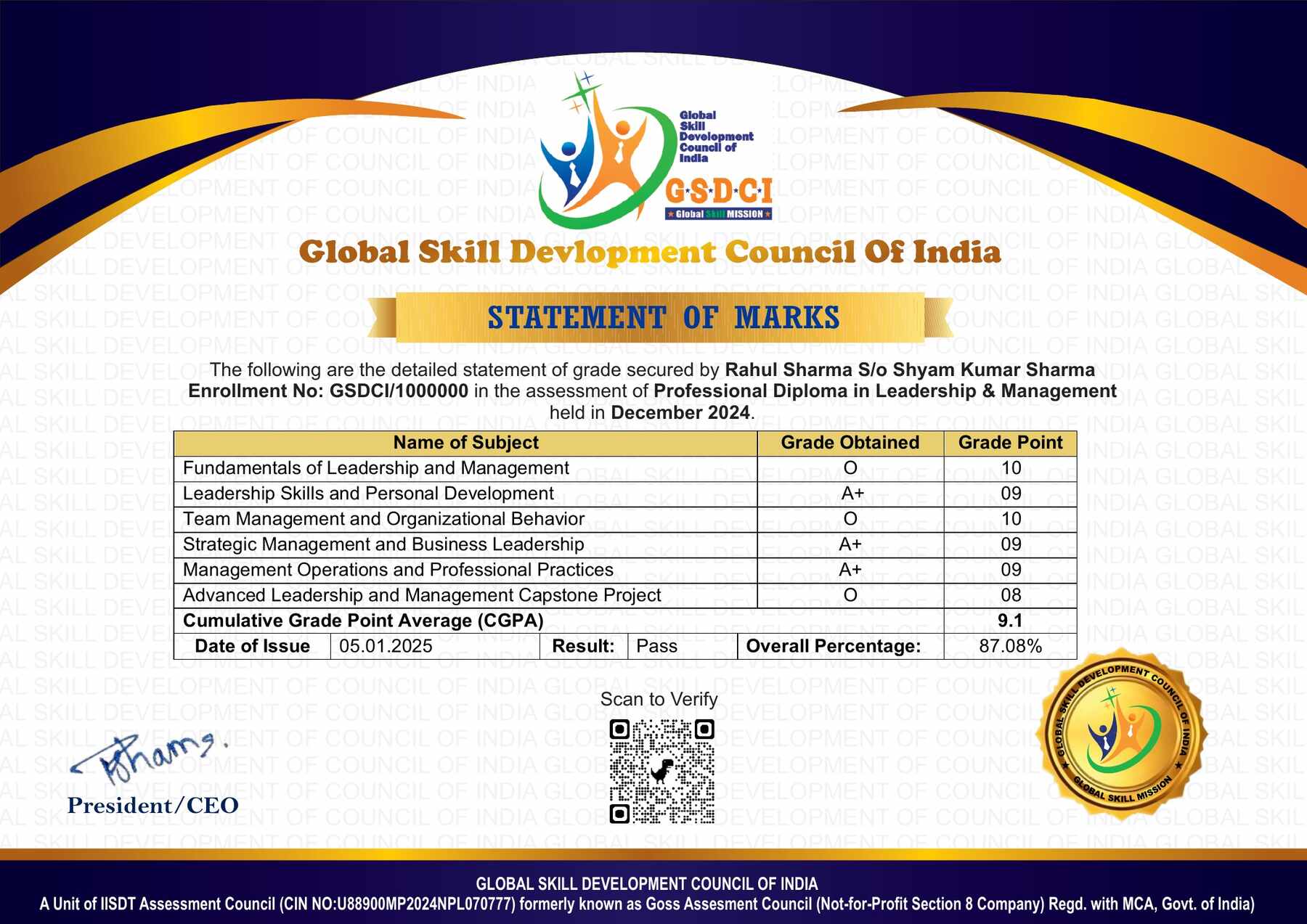
| S.No. | Marks | Grade | |
| 1 | 91-100 | O (Outstanding) | |
| 2 | 81-90 | A+ (Excellent) | |
| 3 | 71-80 | A (Very Good) | |
| 4 | 61-70 | B (Good) | |
| 5 | 50-60 | P (Pass) | |
| 6 | 0-49 | F (Fail) | |
Benefits of Certification:
🌍 1. Global Recognition & Credibility – Stand out worldwide with a certification that opens doors across borders. Trusted by employers, respected by institutions, and recognized in over 100 countries.
📜 2. Quality Assurance through ISO Certification – Certified to global ISO standards, our programs deliver excellence, consistency, and a benchmarked learning experience that speaks for itself.
💼 3. Career Advancement & Employability – Enhances your resume and increases chances of promotions or job offers.
🤝 4. Non-Profit Trust Factor – Certifications from non-profit organizations are mission-driven rather than profit-driven.
📚 5. Access to Verified Learning & Resources – Often includes e-books, mock tests, and online support without hidden costs.
🔍 6. Transparency & Online Verification – Certifications come with a unique Enrolment ID for easy online verification by employers and institutions.
⏳ 7. Lifetime or Long-Term Validity – Certifications usually have lifetime validity or long-term recognition, reducing the need for frequent renewals.

Reviews
There are no reviews yet.