
No products in the cart.


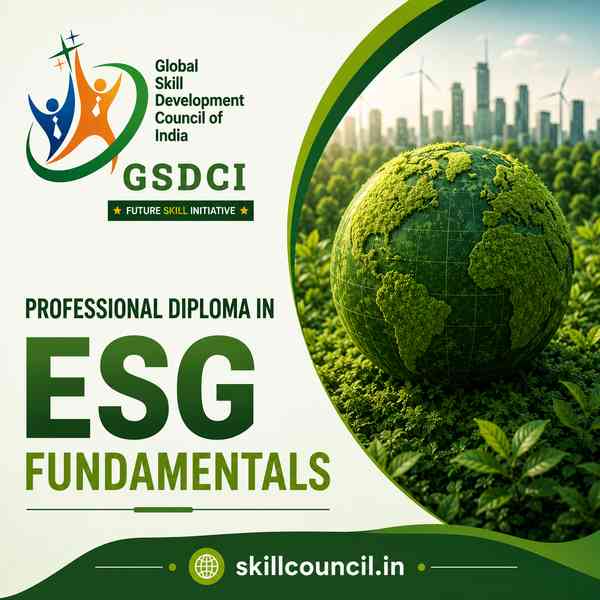
Professional Diploma in ESG Fundamentals
₹10,500.00 ₹5,250.00
50% fee concession will end in
The course aims to equip learners with knowledge of ESG principles, sustainability practices, responsible governance, and social and environmental management approaches to support sustainable business development.
Description
Course Name: Professional Diploma in ESG Fundamentals
Global Occupational Skill Standard – GOSS ID: GOSS/PD-GEN-EF-467
Eligibility: 10+2 or equivalent
Language Type: English
Course Type: Self-Paced Online Learning
Objective: The Professional Diploma in ESG Fundamentals aims to equip learners with the knowledge and understanding of Environmental, Social, and Governance principles for sustainable business and responsible decision-making. The program focuses on sustainability practices, climate risks, social responsibility, corporate governance, ESG reporting, and ethical business management. It develops competencies to evaluate organizational sustainability performance and support the implementation of responsible and transparent business practices.
Duration: 6 Months / 370 Hours
Steps to become a GSDCI Certified Professional:
Step 1: Select your Course you want to pursue.
Step 2: Click on get Enroll Now tab, new pop up window will open.
Step 3: Click on pay Course fee, you will be redirected to billing details page.
Step 4: Fill your details and click on pay course fee, you will be redirected to payment gateway, pay fee by any available options like Card (Debit/Credit), Wallet, Paytm, Net banking, UPI and Google pay.
Step 5: You will get Login Credentials of Online E-Books and Online assessment link on your email id, within 48 hrs of payment.
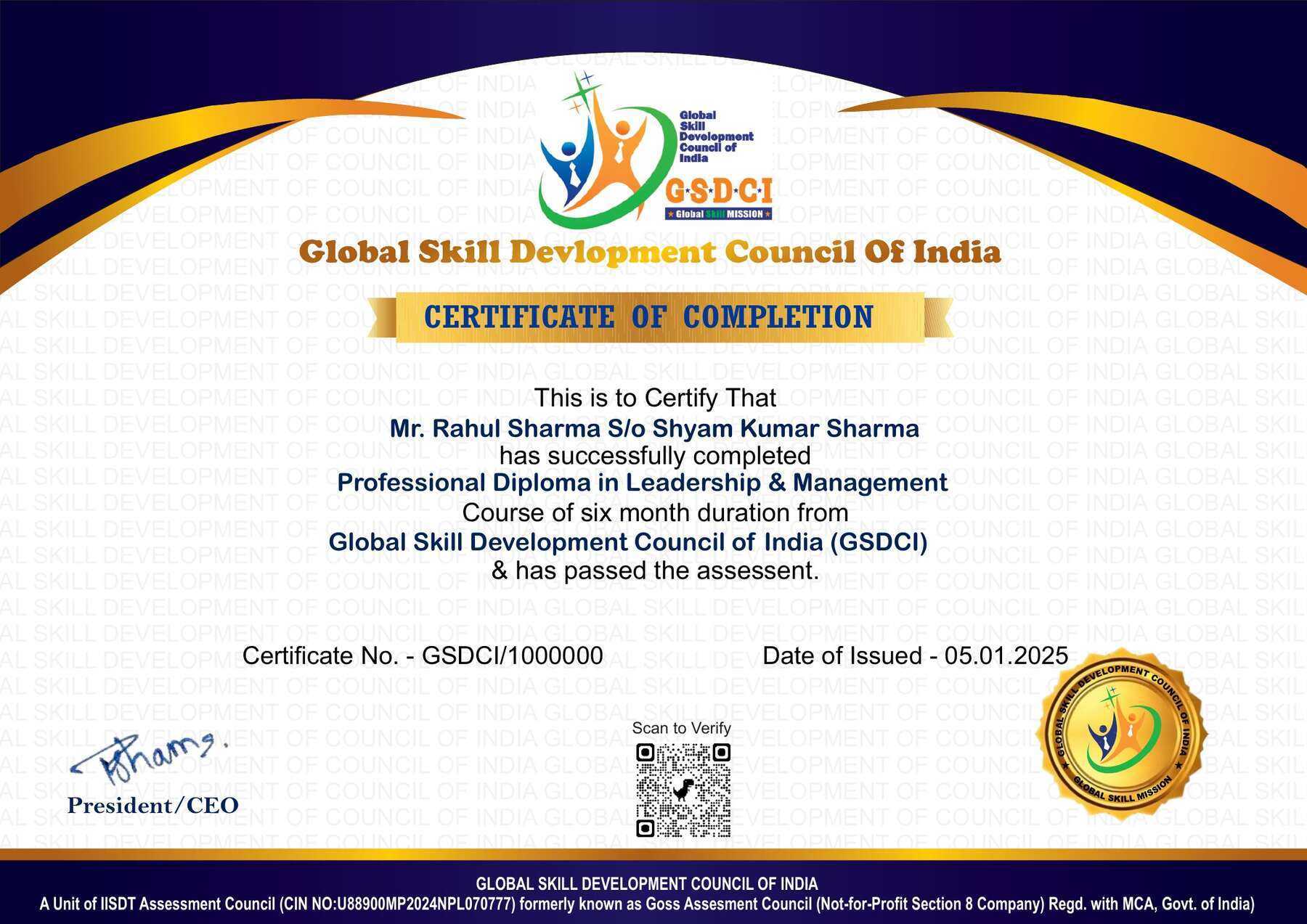
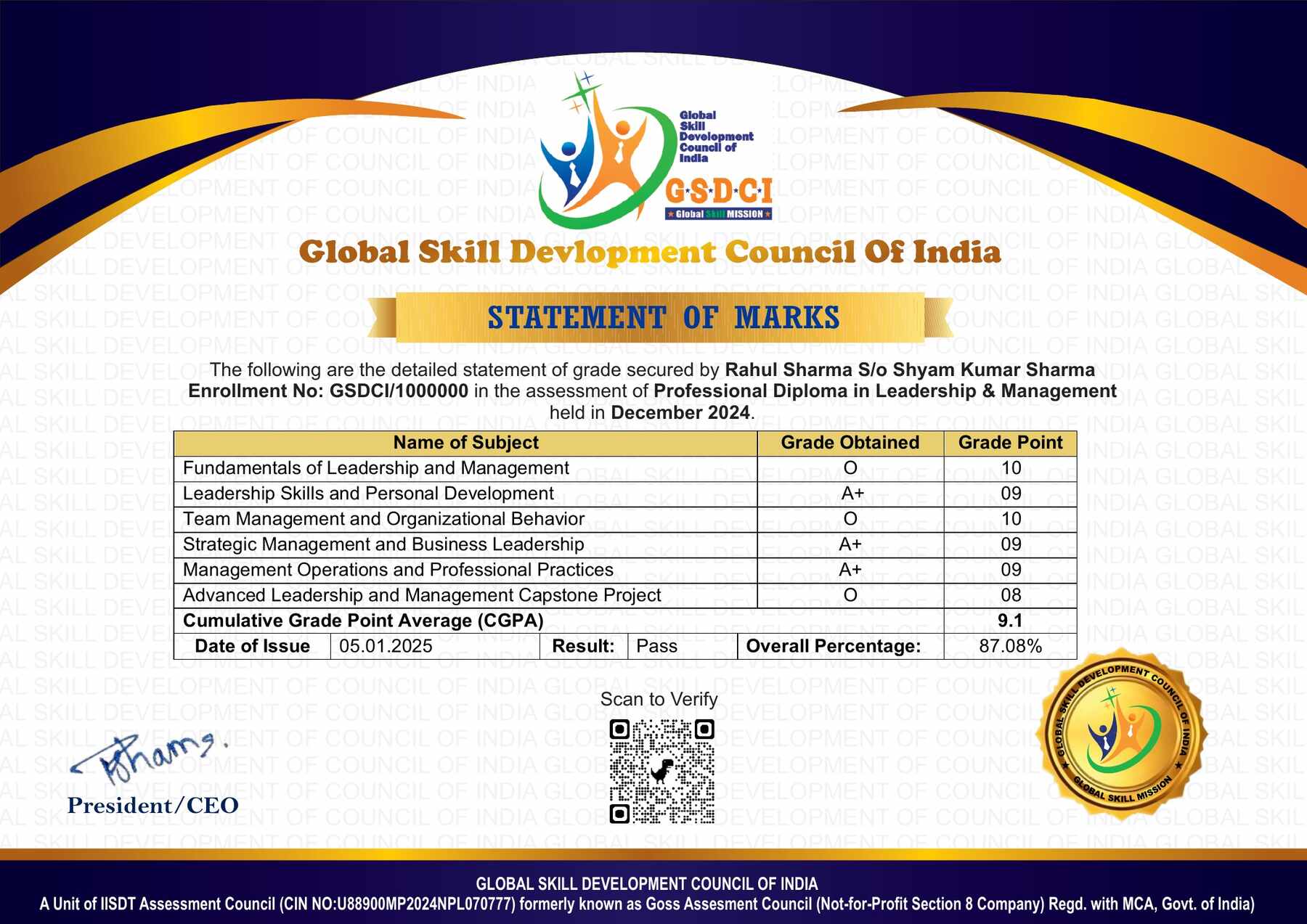
Step 6: After completion of the online assessment, the Digital(PDF) copy of your Diploma & Marksheet will be sent to your registered email ID within 7 days.
Course Modules:
Module 1: Fundamentals of ESG (Environmental, Social and Governance): Introduction to ESG Concepts, Importance and Scope of ESG, Evolution of ESG Practices, ESG Principles and Frameworks, Role of ESG in Sustainable Development, Relationship Between ESG and Corporate Responsibility, ESG Factors in Business Decision Making, Global ESG Trends, Benefits of ESG Adoption, Challenges in ESG Implementation.
Module 2: Environmental Sustainability Management: Environmental Aspects of ESG, Climate Change and Carbon Management, Greenhouse Gas Emission Reduction, Energy Efficiency and Renewable Energy Practices, Sustainable Resource Management, Waste Management and Circular Economy, Water Conservation Strategies, Biodiversity Protection, Environmental Risk Assessment, Environmental Performance Measurement.
Module 3: Social Responsibility and Stakeholder Management: Social Aspects of ESG, Stakeholder Engagement Practices, Workplace Health and Safety Management, Diversity Equity and Inclusion, Employee Welfare and Development, Human Rights and Ethical Labour Practices, Community Development Initiatives, Customer Responsibility and Data Privacy, Social Impact Assessment, Corporate Social Responsibility Strategies.
Module 4: Governance and Ethical Business Practices: Corporate Governance Principles, Board Structure and Accountability, Business Ethics and Integrity, Transparency and Disclosure Practices, Anti-Corruption and Compliance Management, Risk Management Frameworks, Internal Control Systems, Responsible Decision Making, Regulatory Governance Requirements, Ethical Leadership Development.
Module 5: ESG Reporting and Performance Assessment: Introduction to ESG Reporting, ESG Reporting Standards and Frameworks, Sustainability Reporting Practices, ESG Data Collection and Management, Materiality Assessment Process, ESG Performance Indicators, ESG Ratings and Evaluation Methods, Sustainability Auditing, ESG Disclosure Requirements, ESG Communication Strategies.
Module 6: ESG Integration and Business Applications: ESG Strategy Development, ESG Integration into Business Operations, Sustainable Investment Concepts, ESG Risk and Opportunity Management, Green Finance and Responsible Investment, ESG Supply Chain Management, ESG Due Diligence Practices, ESG Policy Development, ESG Implementation Roadmaps, ESG Performance Improvement Planning.
GSDCI Online Assessment Detail:
- Duration- 120 minutes.
- Number of Questions- 60.
- Number of Questions from each module: 10.
- Language: English.
- Exam Type: Multiple Choice Questions.
- Maximum Marks- 600, Passing Marks Above 40%.
- There is no negative marking in any module.
| How Students will be Graded: | ||
| S.No. | Marks | Grade |
| 1 | 91-100 | O (Outstanding) |
| 2 | 81-90 | A+ (Excellent) |
| 3 | 71-80 | A (Very Good) |
| 4 | 61-70 | B (Good) |
| 5 | 51-60 | C (Average) |
| 6 | 41-50 | P (Pass) |
| 7 | 0-40 | F (Fail) |
Benefits of the Professional Diploma
1. Globally Recognized Professional Diploma – Earn a professionally designed diploma that enhances your profile and demonstrates industry-relevant knowledge. Widely valued by employers, organizations, and institutions across multiple sectors.
2. Quality Learning with ISO-Certified Standards – Our training programs are developed under ISO-certified quality management practices, ensuring a structured, consistent, and high-quality learning experience.
3. Enhanced Career Opportunities – Strengthen your resume, improve your professional skills, and increase your potential for employment, career advancement, and new job opportunities.
4. Issued by a Non-Profit Skill Development Organization – The diploma is awarded by a mission-driven organization dedicated to promoting skill development, vocational education, and lifelong learning.
5. Comprehensive Learning Resources – Access quality study materials, e-books, practice assessments, mock tests, and learner support to help you successfully complete the program.
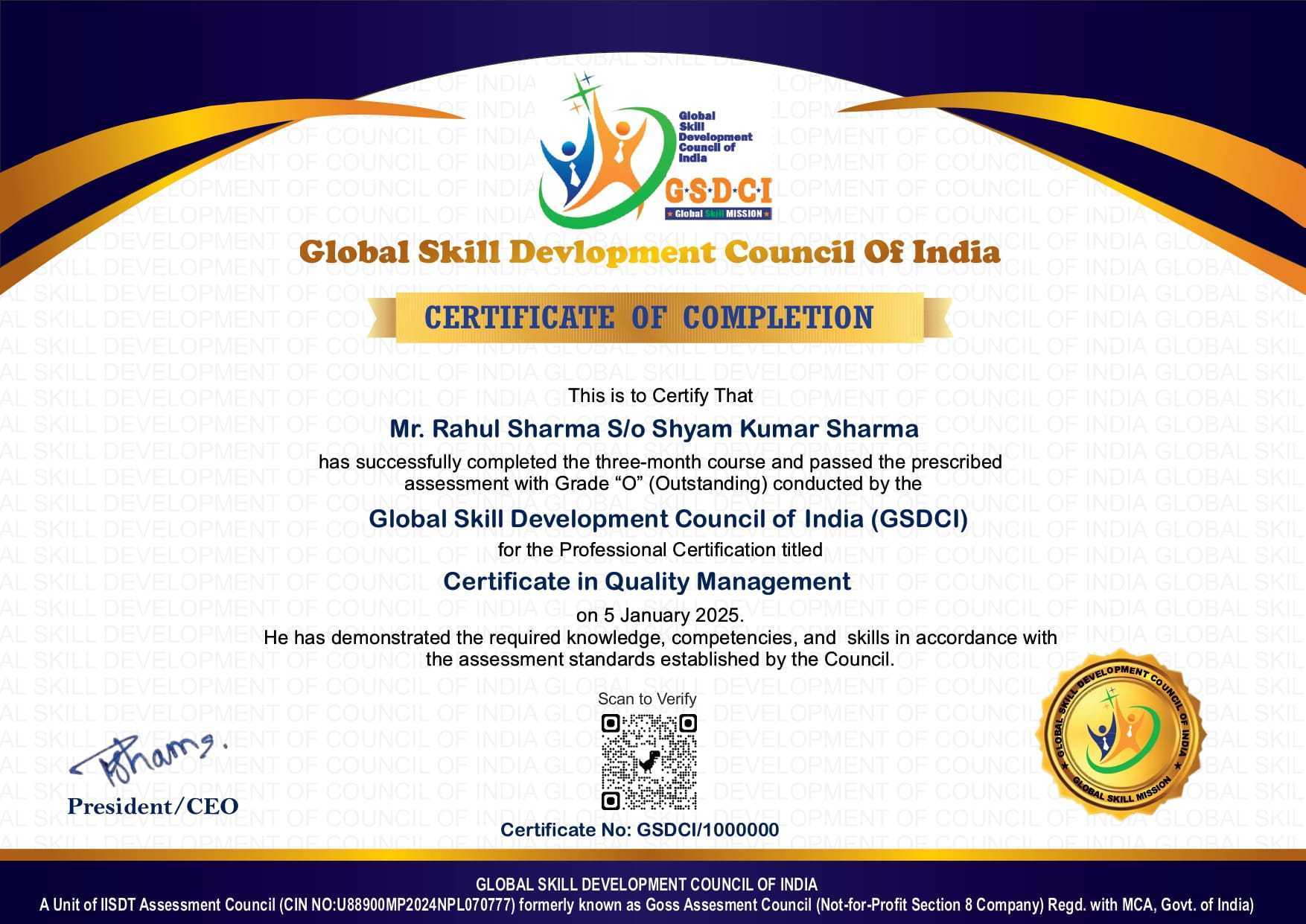
6. Secure Online Verification – Every diploma and marksheet is issued with a unique Enrolment ID and QR Code, enabling employers, institutions, and other stakeholders to instantly verify the authenticity of your credential online.
7. Lifetime Validity – The Professional Diploma is issued with lifetime validity and does not require periodic renewal, allowing you to showcase your achievement throughout your career.
8. Flexible Self-Paced Learning – Learn anytime and anywhere at your own pace, making it easy to balance your studies with work, business, or personal commitments.
9. Industry-Relevant Curriculum – The curriculum is designed to focus on practical knowledge, current industry trends, and real-world applications to improve workplace readiness.
10. Skill-Based Professional Qualification – Demonstrates your commitment to continuous professional development and validates your practical knowledge and skills in the subject area.
Job Opportunities after Professional Diploma in ESG Fundamentals
Graduates of this program gain knowledge in environmental, social, and governance principles, sustainability practices, corporate responsibility, ESG reporting, compliance frameworks, and sustainable business strategies, preparing them for careers in sustainability, corporate governance, and responsible business sectors.
Key Career Options: ESG Analyst, Sustainability Executive, ESG Coordinator, Corporate Responsibility Assistant, Sustainability Consultant, ESG Reporting Associate, Compliance Executive, Environmental Analyst, Social Impact Coordinator, ESG Entrepreneur.
Salary Range (India):
Entry-level: ₹3–6 LPA
Mid-level: ₹6–12 LPA
Senior-level: ₹12–20+ LPA
Industries Hiring Graduates: Corporate Organizations, Consulting Firms, Financial Institutions, Manufacturing Companies, Renewable Energy Companies, Sustainability Organizations, ESG Advisory Firms, NGOs, Government and Regulatory Bodies.
Skills Developed: ESG principles, sustainability reporting, environmental management, social responsibility practices, governance frameworks, compliance management, impact assessment, sustainability strategy, ethical business practices, and ESG data analysis.
Graduates can progress to roles like ESG Specialist, Sustainability Manager, ESG Consultant, Corporate Sustainability Advisor, or support organizations in building responsible and sustainable business practices with experience and advanced training.

Reviews
There are no reviews yet.