
No products in the cart.



Certified Back-End Developer
₹6,500.00 ₹3,250.00
50% fee concession will end in
To develop the skills to design, build, and maintain scalable, secure, and high-performance server-side applications and APIs for modern web and mobile systems.
Description
Course Name: Certified Back-End Developer
Global Occupational Skill Standard – GOSS ID: GOSS/CIT/CBED/V1
Eligibility: 10+2 (Higher Secondary) or Equivalent or minimum 2 years of relevant experience (experience-based learners can directly enroll and certify).
Objective: The Certified Back-End Developer course is designed to provide learners with the technical expertise to build, deploy, and maintain robust, scalable, and secure server-side applications. The course covers fundamental and advanced concepts in server-side programming, database management, API development, authentication/authorization, cloud integration, and performance optimization.
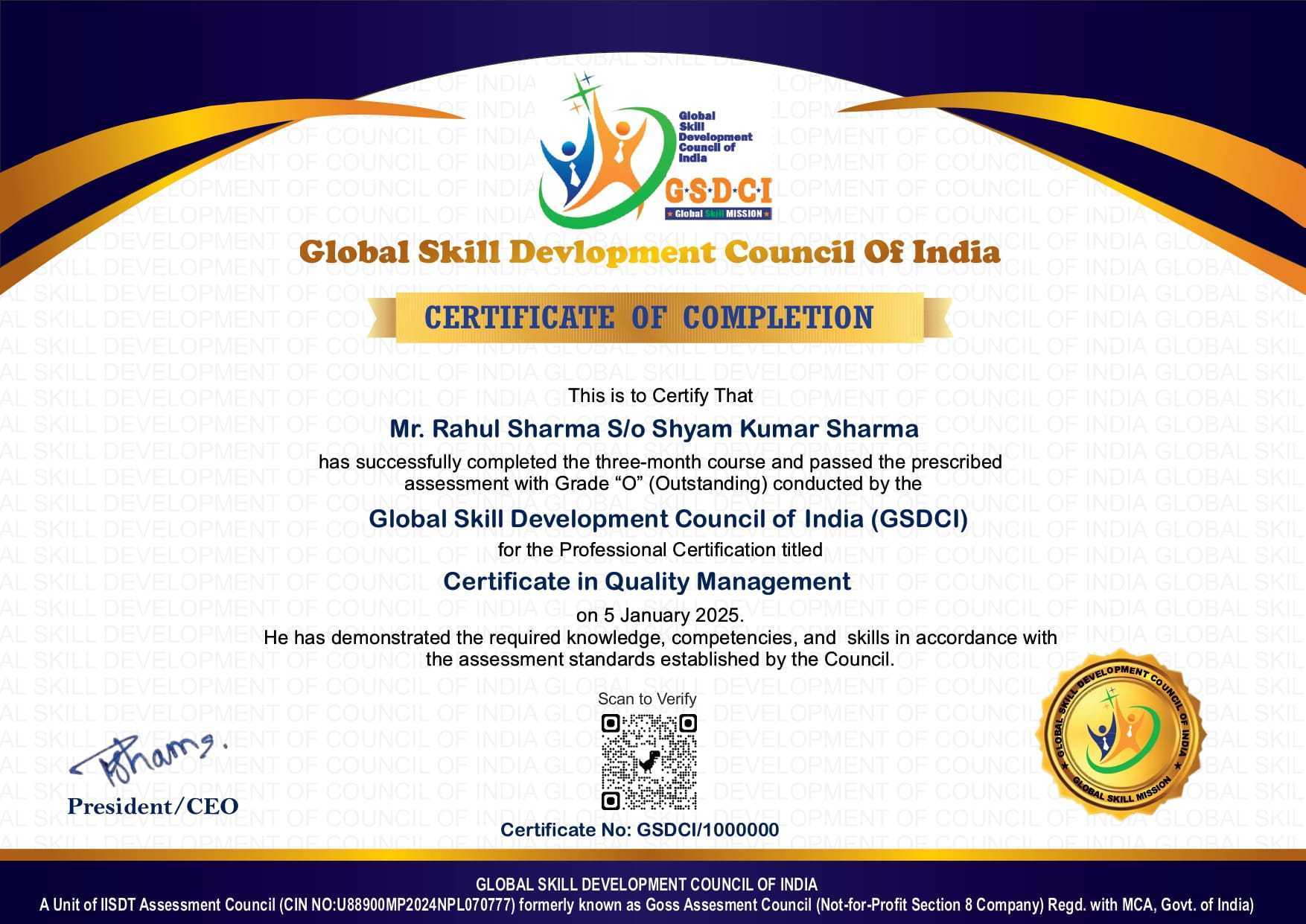
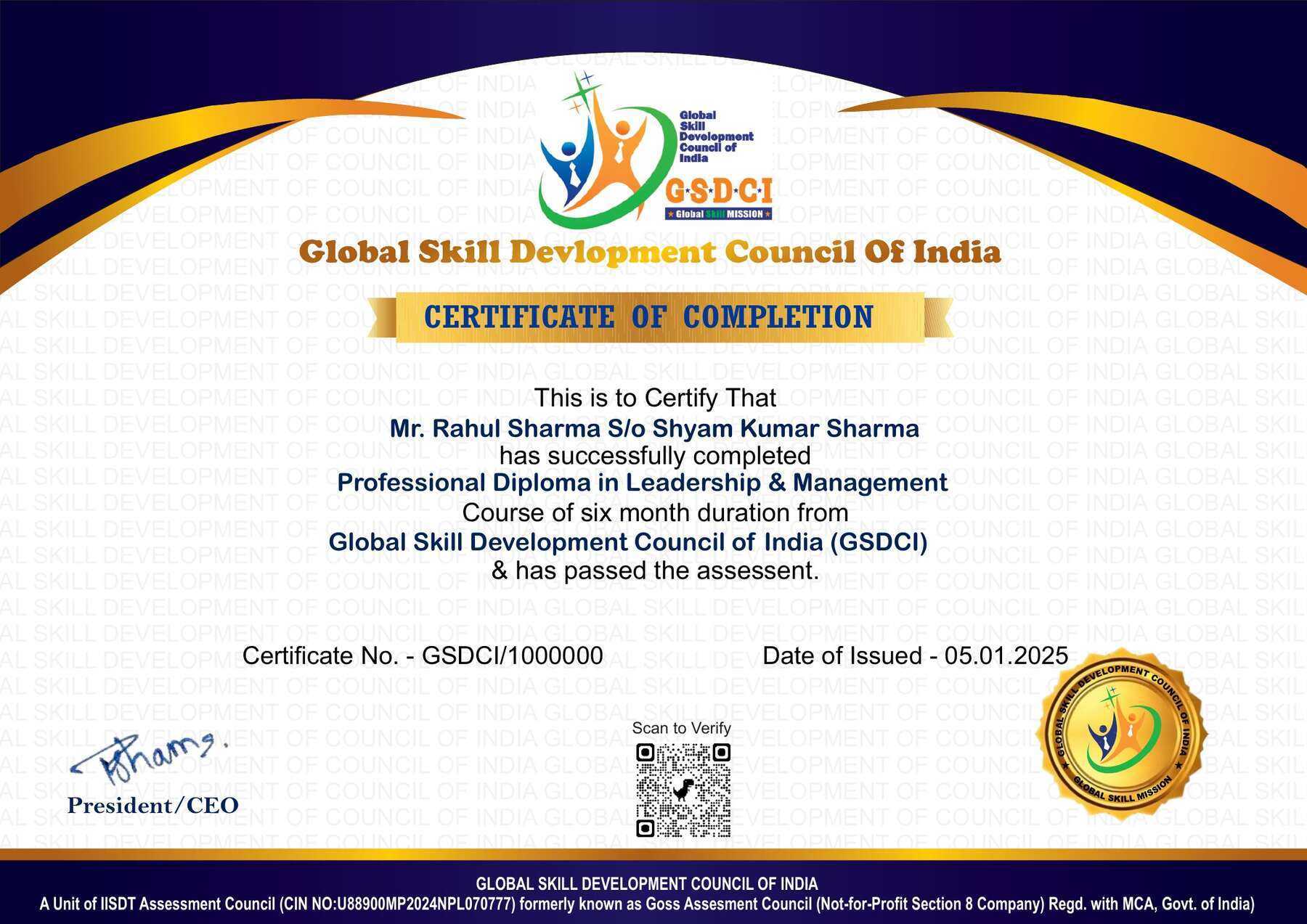
Certification: Within 5 days after Completion of Online Assessment.
Get ready to join the Journey to become a GSDCI Certified Professional – International Certification and Assessment Body.
Steps to become a GSDCI Certified Professional:
Step 1: Select your certification you want to pursue.
Step 2: Click on get certified tab, new pop up window will open.
Step 3: Click on pay certification fee, you will be redirected to billing details page.
Step 4: Fill your details and click on pay certification fee, You will be redirected to payment gateway, pay fee by any available options like Card(Debit/Credit), Wallet, Paytm, Net banking, UPI and Google pay.
Step 5: You will get Login Credentials of Online E-Books and Online assessment link on your email id, within 48 hrs of payment.
Step 6: After completion of the online assessment, the soft copy of your certificate will be sent to your registered email ID within 5 days.
Assessment Modules:
Module 1: Introduction to Back-End Development: Understanding client-server architecture, Role and responsibilities of a back-end developer, Overview of back-end technologies and frameworks, Setting up a development environment, Introduction to RESTful APIs and web services, Basics of HTTP, requests and responses.
Module 2: Server-Side Programming and Frameworks: Server-side languages overview (Node.js, Python, PHP, Java), Building APIs with Express.js (Node.js), Creating web applications using Django/Flask (Python), MVC architecture and routing concepts, Middleware and request handling, Error handling and debugging techniques.
Module 3: Database Management and Integration: Relational vs NoSQL databases overview, Working with SQL databases (MySQL, PostgreSQL), Using NoSQL databases (MongoDB), ORM tools (Sequelize, SQLAlchemy, Mongoose), CRUD operations and schema design, Database indexing and optimization.
Module 4: Authentication, Authorization and Security: User authentication methods (session, token-based), Implementing JWT and OAuth 2.0, Role-based access control (RBAC), Data validation and input sanitization, Protecting against common security threats (XSS, SQL injection), HTTPS, CORS and secure API practices.
Module 5: API Design, Testing and Documentation: RESTful API best practices and standards, Versioning and structuring endpoints, Manual testing with Postman and Swagger, Automated API testing tools and frameworks, Generating API documentation (OpenAPI/Swagger), Rate limiting and error response design.
Module 6: Deployment, Scaling and Maintenance: Deploying back-end apps to cloud (Heroku, AWS, DigitalOcean), CI/CD pipelines for automated deployment, Load balancing and horizontal scaling, Caching strategies (Redis, Memcached), Monitoring, logging and performance tuning, Maintaining code quality and handling updates.
GSDCI Online Assessment Detail:
- Duration- 60 minutes.
- Number of Questions- 30.
- Number of Questions from each module: 5.
- Language: English.
- Exam Type: Multiple Choice Questions.
- Maximum Marks- 100, Passing Marks- 50%.
- There is no negative marking in any module.
| Marking System: | |||
| S.No. | No. of Questions | Marks Each Question | Total Marks |
| 1 | 10 | 5 | 50 |
| 2 | 5 | 4 | 20 |
| 3 | 5 | 3 | 15 |
| 4 | 5 | 2 | 10 |
| 5 | 5 | 1 | 5 |
| 30 | 100 | ||
| How Students will be Graded: | |||
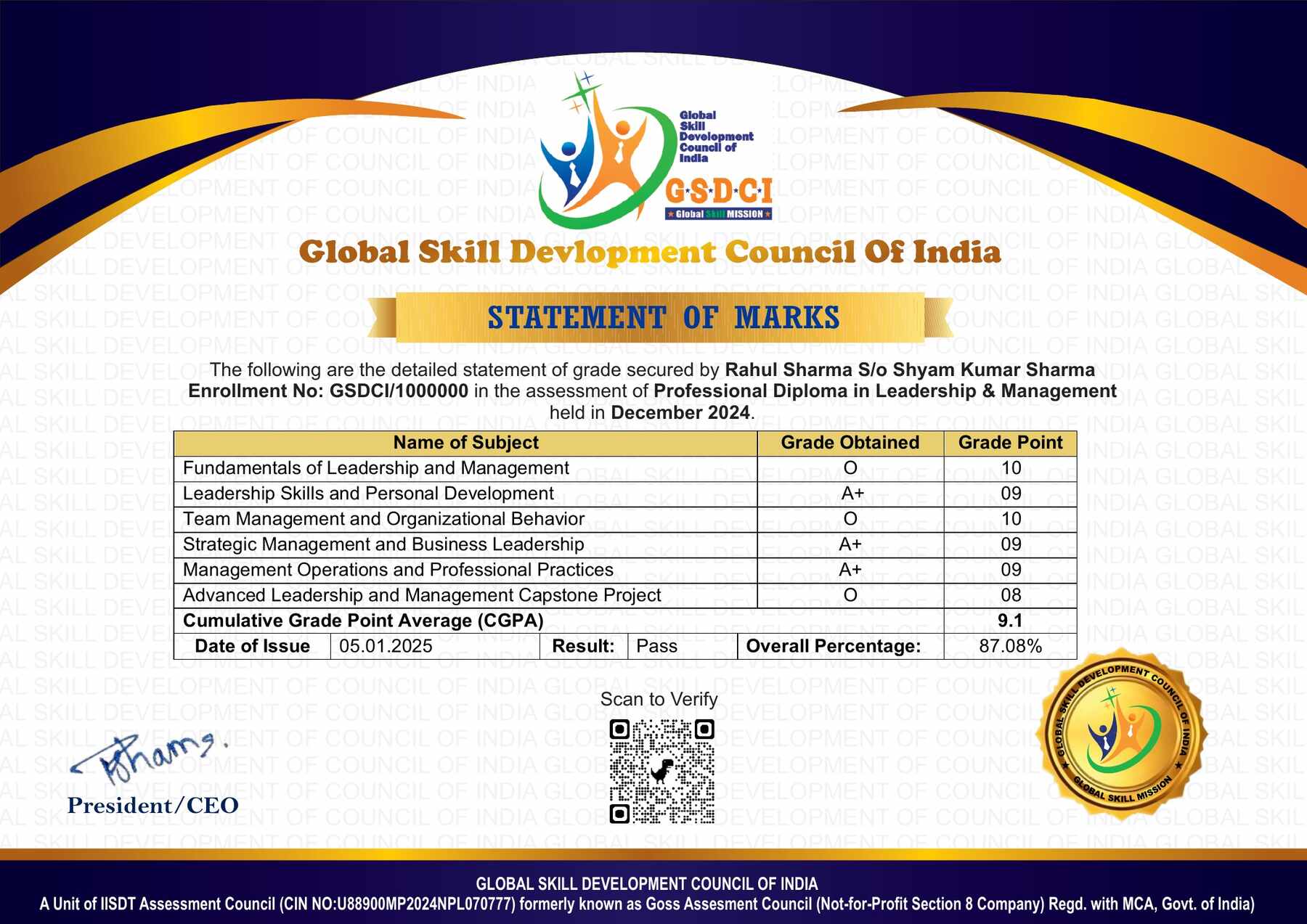
| S.No. | Marks | Grade | |
| 1 | 91-100 | O (Outstanding) | |
| 2 | 81-90 | A+ (Excellent) | |
| 3 | 71-80 | A (Very Good) | |
| 4 | 61-70 | B (Good) | |
| 5 | 50-60 | P (Pass) | |
| 6 | 0-49 | F (Fail) | |
Benefits of Certification:
🌍 1. Global Recognition & Credibility – Stand out worldwide with a certification that opens doors across borders. Trusted by employers, respected by institutions, and recognized in over 100 countries.
📜 2. Quality Assurance through ISO Certification – Certified to global ISO standards, our programs deliver excellence, consistency, and a benchmarked learning experience that speaks for itself.
💼 3. Career Advancement & Employability – Enhances your resume and increases chances of promotions or job offers.
🤝 4. Non-Profit Trust Factor – Certifications from non-profit organizations are mission-driven rather than profit-driven.
📚 5. Access to Verified Learning & Resources – Often includes e-books, mock tests, and online support without hidden costs.
🔍 6. Transparency & Online Verification – Certifications come with a unique Enrolment ID for easy online verification by employers and institutions.
⏳ 7. Lifetime or Long-Term Validity – Certifications usually have lifetime validity or long-term recognition, reducing the need for frequent renewals.

Reviews
There are no reviews yet.