img not found!

Certificate in Information Technology Teaching

Certificate in Information Technology Teaching

₹7,000.00 ₹3,500.00

50% fee concession will end in

To develop basic skills in IT teaching methods, lesson planning, computer fundamentals, operating systems, office applications, internet technologies, digital communication, networking basics, cybersecurity awareness, digital teaching tools, and learner assessment.

Description

Course Name: Certificate in Information Technology Teaching

Course Id: CITT/Q0001.

Eligibility: 10+2 (Higher Secondary) or equivalent.

Objective: The Certificate in Information Technology Teaching develops practical instructional skills for teaching digital literacy and introductory information technology. The course covers computer fundamentals, operating systems, productivity applications, internet use, networking concepts, computational thinking and responsible technology use. It prepares learners to plan practical lessons, demonstrate computer tasks, manage classroom activities and assess learners’ digital skills.

Duration: Three Months.

How to Enroll and Get Certified in Your Chosen Course:

Step 1: Choose the course you wish to get certified in.

Step 2: Click on the “Enroll Now” button.

Step 3: Proceed with the enrollment process.

Step 4: Enter your billing details and continue to course fee payment.

Step 5: You will be redirected to the payment gateway. Pay the course and examination fee using one of the following methods:

Debit/Credit Card, Wallet, Paytm, Net Banking, UPI, or Google Pay.

Step 6: After successful payment, you will receive your study material login ID and password via email within 48 hours of fee payment.

Step 7: Once you complete the course, take the online examination.

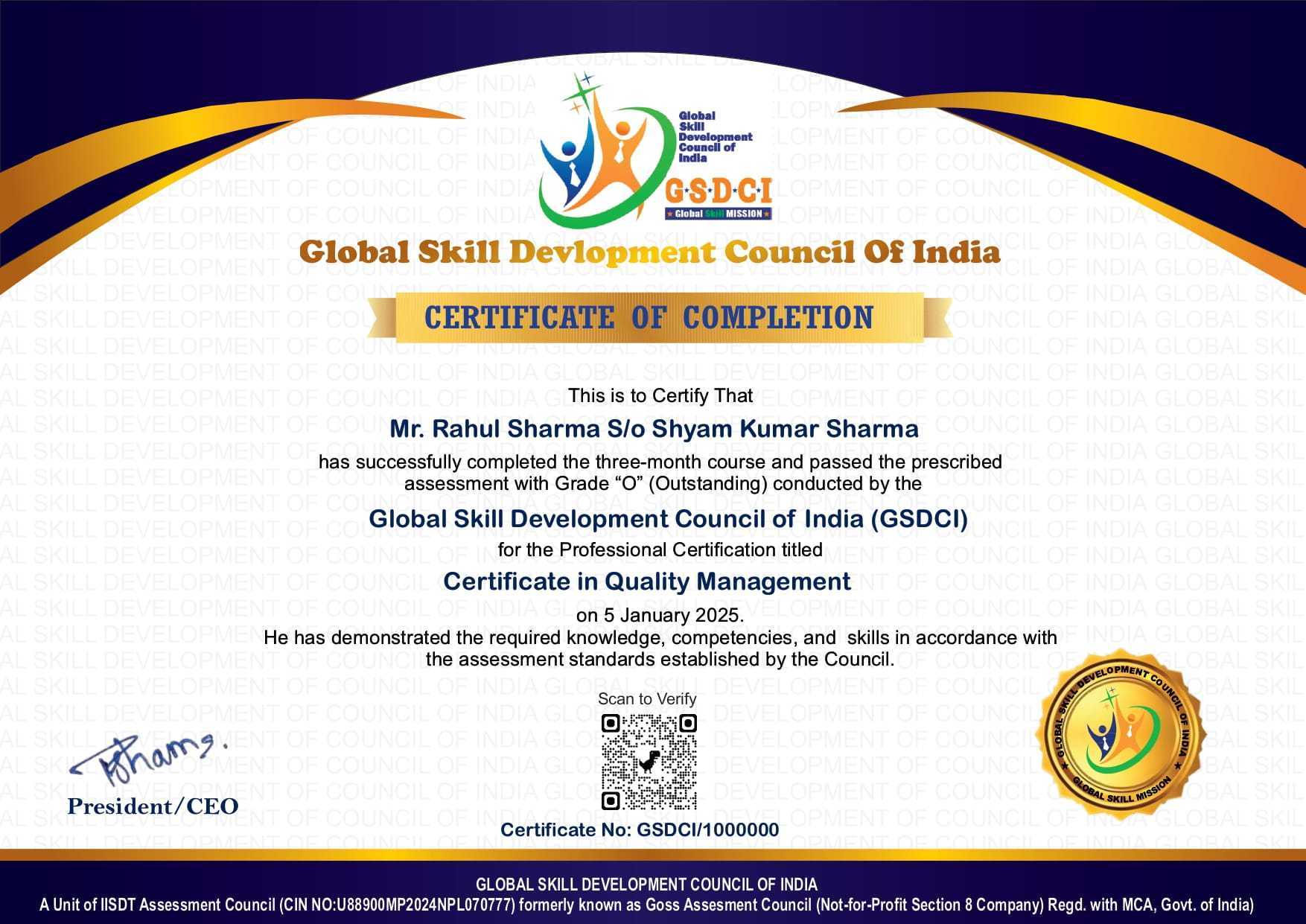
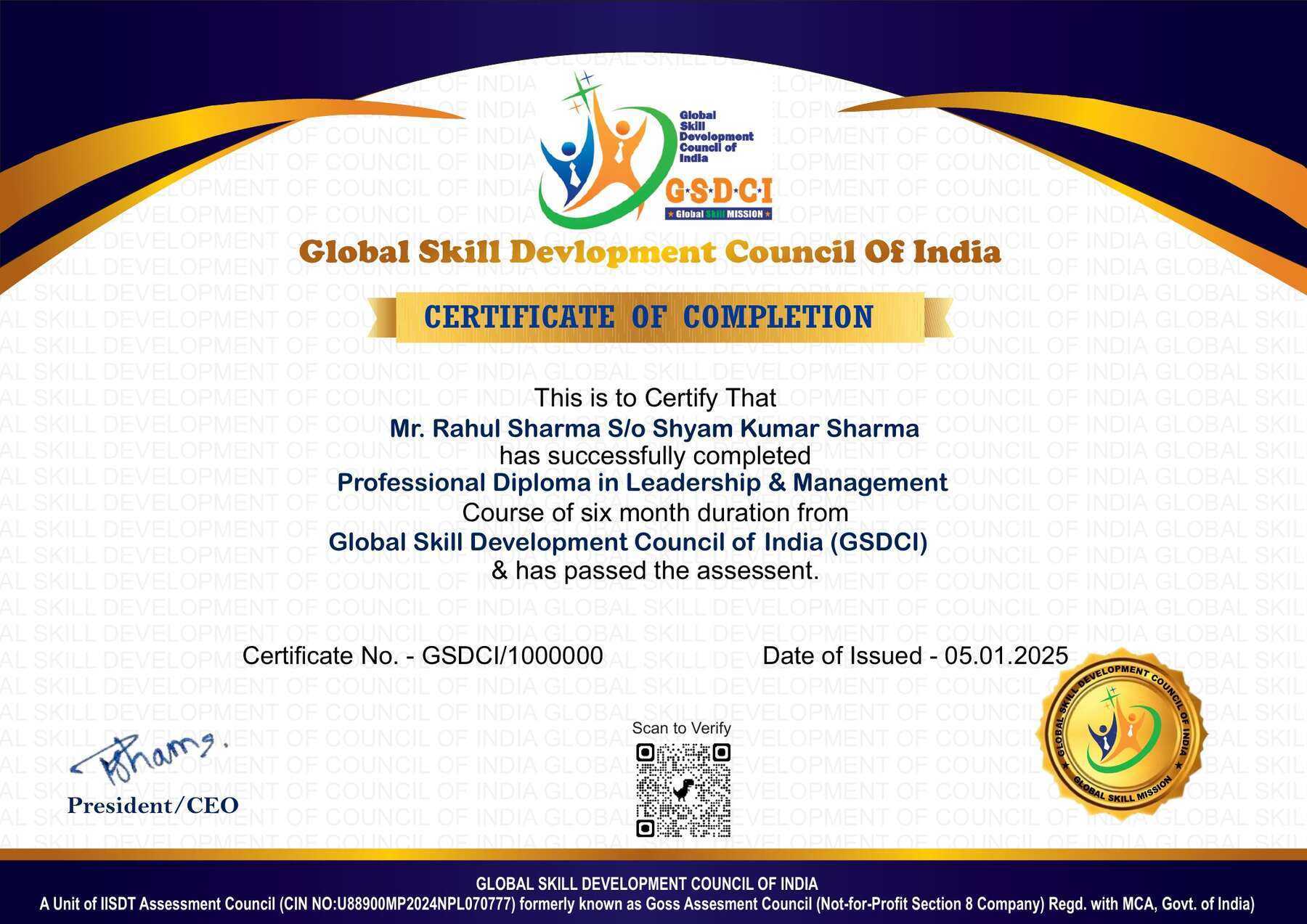
Step 8: Upon passing the examination, you will receive:

  • A soft copy (scanned) of your certificate via email within 7 days of the examination.
  • A hard copy (original with official seal and signature) sent to your address within 45 days of the declaration of the result.

Step 9: After certification, you will be offered job assistance aligned with your area of interest.

Online Examination Detail:

Duration- 60 minutes.
No. of Questions- 30. (Multiple Choice Questions).
Maximum Marks- 100, Passing Marks- 40%.
There is no negative marking in this module.

Marking System:
S.No. No. of Questions Marks Each Question Total Marks
1 10 5 50
2 5 4 20
3 5 3 15
4 5 2 10
5 5 1 5
30 100
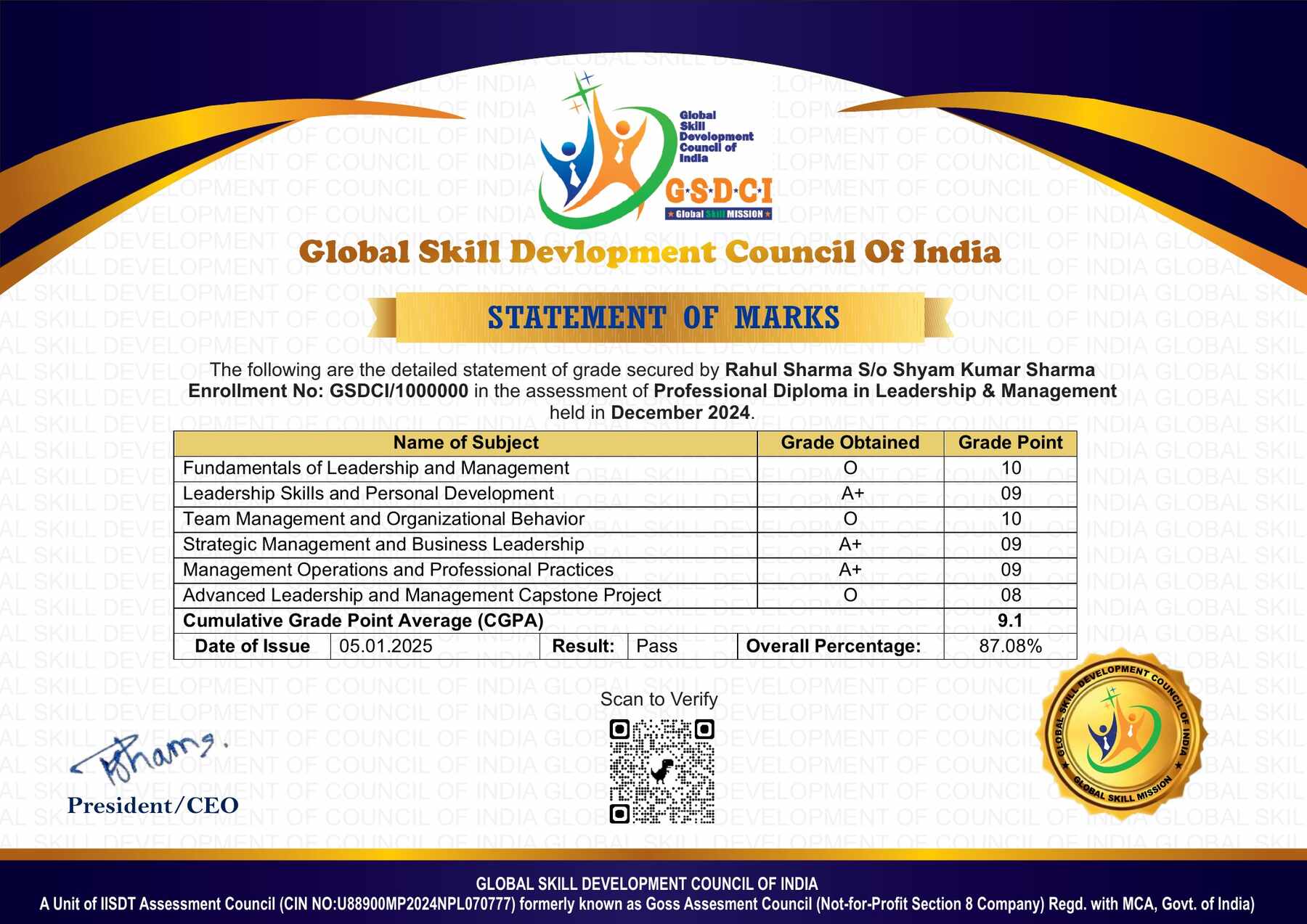
How Students will be Graded:
S.No. Marks Grade
1 91-100 O (Outstanding)
2 81-90 A+ (Excellent)
3 71-80 A (Very Good)
4 61-70 B (Good)
5 51-60 C (Average)
6 40-50 P (Pass)
7 0-40 F (Fail)

Key Benefits of Certification- Earning a professional certification not only validates your skills but also enhances your employability. Here are the major benefits you gain:

Practical, Job-Ready Skills – Our certifications are designed to equip you with real-world, hands-on skills that match current industry demands — helping you become employment-ready from day one.

Lifetime Validity – Your certification is valid for a lifetime — no renewals or expirations. It serves as a permanent proof of your skills and training.

Lifetime Certificate Verification – Employers and institutions can verify your certification anytime through a secure and reliable verification system — adding credibility to your qualifications.

Industry-Aligned Certification –All certifications are developed in consultation with industry experts to ensure that what you learn is current, relevant, and aligned with market needs.

Preferred by Employers – Candidates from ISO-certified institutes are often prioritized by recruiters due to their exposure to standardized, high-quality training.

Free Job Assistance Based on Your Career Interests – Receive personalized job assistance and career guidance in your preferred domain, helping you land the right role faster.

Syllabus

Module 1: Foundations of Information Technology Teaching: Objectives of IT Education, Understanding Learners’ Digital Readiness, IT Curriculum Interpretation, Planning Measurable Learning Outcomes, Structuring Practical Lessons, Demonstration and Guided Practice, Explaining Technical Vocabulary, Differentiated Digital Instruction, Accessible Learning Materials, Professional Responsibilities of IT Educators.

Module 2: Teaching Computer Systems and Operating Skills: Computer Hardware and Peripheral Identification, Input–Process–Output Concepts, System and Application Software, Operating System Navigation, File and Folder Organization, Storage Devices and Capacity, Keyboard and Mouse Proficiency, Application Installation Awareness, Basic Troubleshooting Procedures, Device Care and Ergonomic Practices.

Module 3: Productivity Applications and Digital Content: Word Processing and Document Formatting, Spreadsheet Data Entry and Organization, Creating Charts from Data, Presentation Design and Delivery, Digital Drawing and Image Editing Basics, Database Records and Fields, Selecting Appropriate File Formats, Collaborative Document Editing, Preparing Practical Application Assignments, Designing Integrated Productivity Projects.

Module 4: Internet, Networking and Responsible Technology Use: Browser Navigation and Search Skills, Evaluating Online Information, Email Communication and Etiquette, Network Types and Connectivity, Cloud Storage and File Sharing, Passwords and Account Protection, Recognizing Phishing and Online Scams, Personal Data and Privacy Awareness, Copyright and Responsible Content Use, Digital Citizenship and Online Behaviour.

Module 5: Computational Thinking and Introductory Programming: Problem Decomposition, Pattern Recognition, Abstraction in Everyday Tasks, Algorithm Design, Flowchart Interpretation, Block-Based Programming, Variables and Data Types, Conditional Decisions, Loops and Repetition, Debugging Simple Programs.

Module 6: Computer Lab Facilitation and Assessment: Establishing Computer Lab Routines, Managing Shared Devices, Organizing Pair and Group Activities, Preparing Step-by-Step Task Sheets, Using Learning Management Systems, Assessing Practical Digital Skills, Developing Project Rubrics, Providing Feedback on Learner Work, Planning Remedial and Extension Tasks, Microteaching and Reflective Practice.

Job Opportunities after Certificate in Information Technology Teaching

Graduates can explore digital literacy training, computer teaching assistance and educational technology support opportunities, subject to employer qualification requirements.

Top Roles: Computer Teaching Assistant, Digital Literacy Tutor, IT Training Assistant, Computer Lab Assistant and Digital Learning Support Assistant.

Key Skills: IT concept explanation, practical demonstrations, lesson planning, computer lab facilitation, digital resource preparation and learner assessment.

Salary Range (India):

  • Entry-level: ₹1.2–3 LPA
  • Mid-level: ₹3–5 LPA
  • Senior-level: ₹5–8+ LPA

Scope: Opportunities in computer training centres, schools, community learning programmes and online education. Experience, stronger technical skills and further qualifications can support progression into IT instruction, training coordination and educational technology roles.

Course Rating

4.5/5
★★★★★
★★★★★

Based on 55 student ratings

Highly Rated Course

0
    0
    Your Certification Detail
    Your cart is emptyReturn to Shop
      Apply Coupon
      Available Coupons
      gsdci20 Get 20% off