img not found!

Certificate in Competency-Based Learning

Certificate in Competency-Based Learning

₹7,000.00 ₹3,500.00

50% fee concession will end in

To develop basic skills in planning, implementing, and assessing competency-based learning.

Description

Course Name: Certificate in Competency-Based Learning

Course Id: CCBL/Q0001.

Eligibility: 10+2 (Higher Secondary) or equivalent.

Objective: The Certificate in Competency-Based Learning develops practical skills in planning learning around clearly defined competencies and demonstrated achievement. The course covers competency identification, measurable outcomes, learning progression, authentic practice, evidence collection, mastery assessment and learner support. It prepares learners to design activities that connect knowledge with practical application, provide targeted feedback and support progression based on demonstrated competence.

Duration: Three Months.

How to Enroll and Get Certified in Your Chosen Course:

Step 1: Choose the course you wish to get certified in.

Step 2: Click on the “Enroll Now” button.

Step 3: Proceed with the enrollment process.

Step 4: Enter your billing details and continue to course fee payment.

Step 5: You will be redirected to the payment gateway. Pay the course and examination fee using one of the following methods:

Debit/Credit Card, Wallet, Paytm, Net Banking, UPI, or Google Pay.

Step 6: After successful payment, you will receive your study material login ID and password via email within 48 hours of fee payment.

Step 7: Once you complete the course, take the online examination.

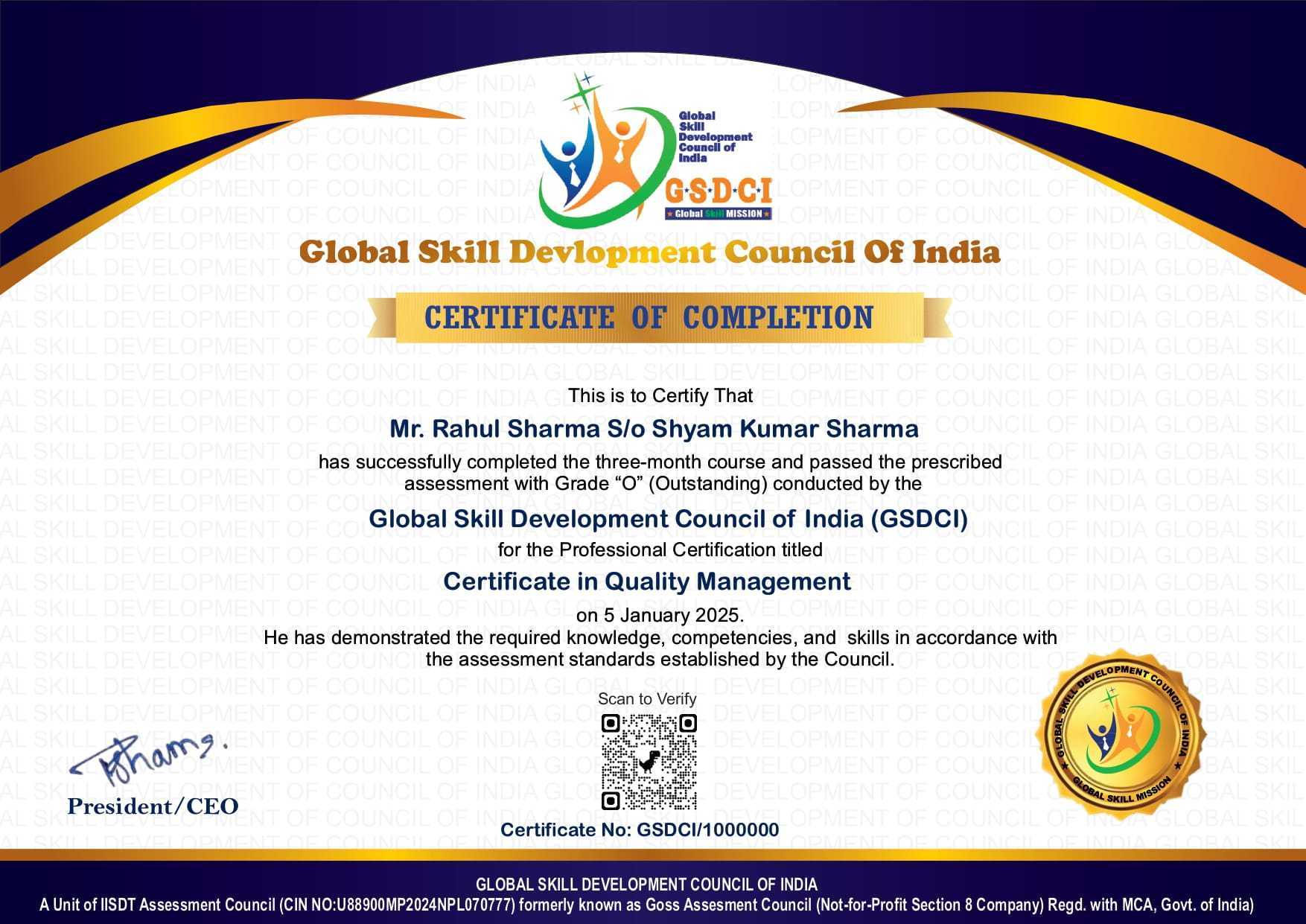
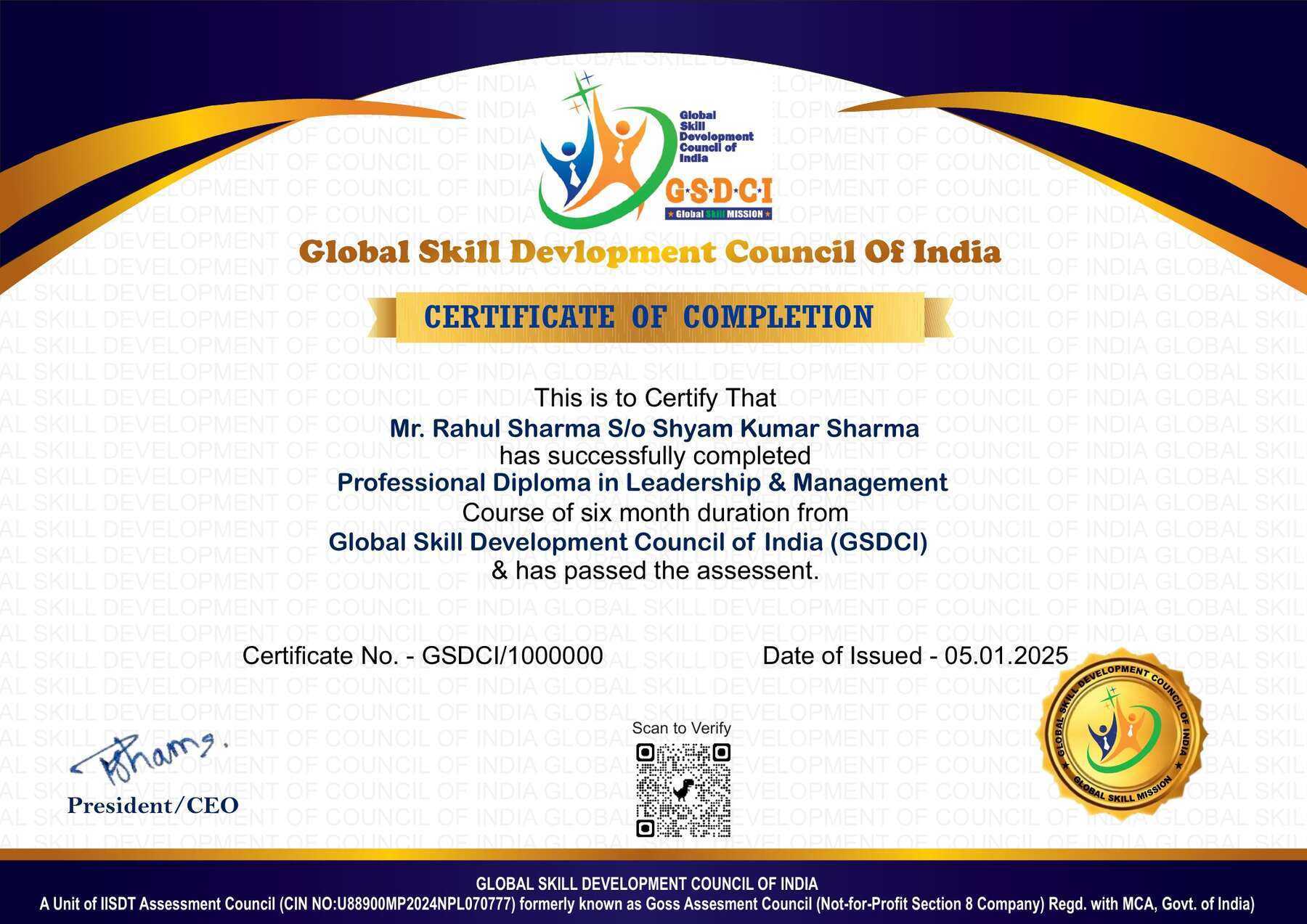
Step 8: Upon passing the examination, you will receive:

  • A soft copy (scanned) of your certificate via email within 7 days of the examination.
  • A hard copy (original with official seal and signature) sent to your address within 45 days of the declaration of the result.

Step 9: After certification, you will be offered job assistance aligned with your area of interest.

Online Examination Detail:

Duration- 60 minutes.
No. of Questions- 30. (Multiple Choice Questions).
Maximum Marks- 100, Passing Marks- 40%.
There is no negative marking in this module.

Marking System:
S.No. No. of Questions Marks Each Question Total Marks
1 10 5 50
2 5 4 20
3 5 3 15
4 5 2 10
5 5 1 5
30 100
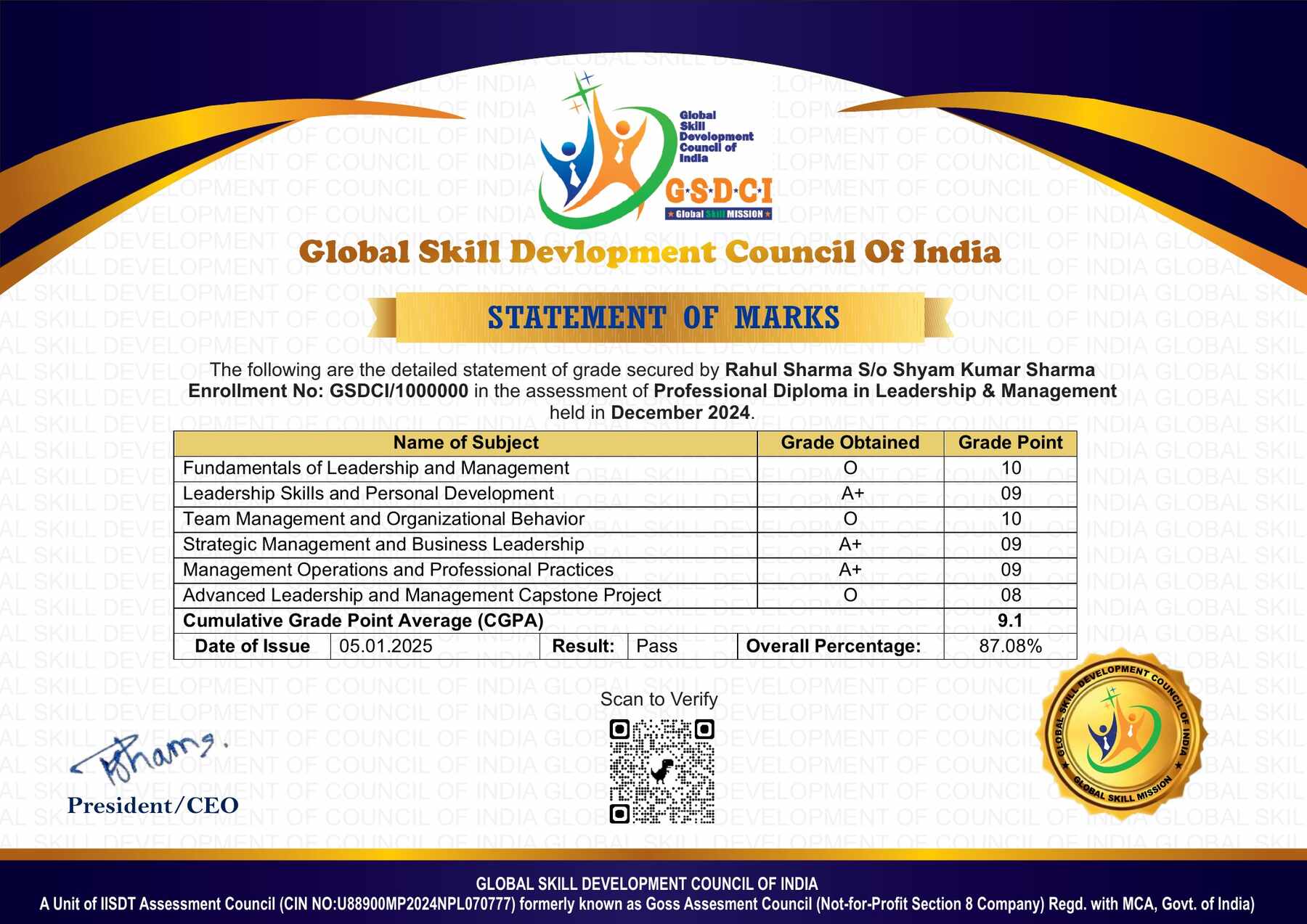
How Students will be Graded:
S.No. Marks Grade
1 91-100 O (Outstanding)
2 81-90 A+ (Excellent)
3 71-80 A (Very Good)
4 61-70 B (Good)
5 51-60 C (Average)
6 40-50 P (Pass)
7 0-40 F (Fail)

Key Benefits of Certification- Earning a professional certification not only validates your skills but also enhances your employability. Here are the major benefits you gain:

Practical, Job-Ready Skills – Our certifications are designed to equip you with real-world, hands-on skills that match current industry demands — helping you become employment-ready from day one.

Lifetime Validity – Your certification is valid for a lifetime — no renewals or expirations. It serves as a permanent proof of your skills and training.

Lifetime Certificate Verification – Employers and institutions can verify your certification anytime through a secure and reliable verification system — adding credibility to your qualifications.

Industry-Aligned Certification –All certifications are developed in consultation with industry experts to ensure that what you learn is current, relevant, and aligned with market needs.

Preferred by Employers – Candidates from ISO-certified institutes are often prioritized by recruiters due to their exposure to standardized, high-quality training.

Free Job Assistance Based on Your Career Interests – Receive personalized job assistance and career guidance in your preferred domain, helping you land the right role faster.

Syllabus

Module 1: Foundations of Competency-Based Learning: Meaning of Competence, Principles of Competency-Based Learning, Distinguishing Competencies from Content Topics, Integrating Knowledge and Practical Skills, Role of Attitudes and Professional Behaviour, Understanding Mastery and Learner Progression, Making Learning Expectations Transparent, Connecting Competencies with Real-Life Tasks, Teacher and Learner Responsibilities, Identifying Suitable Learning Contexts.

Module 2: Competency Identification and Outcome Mapping: Analysing Subject and Task Requirements, Identifying Core Competencies, Writing Observable Competency Statements, Defining Performance Conditions, Establishing Achievement Criteria, Breaking Competencies into Supporting Skills, Mapping Prerequisite Learning, Organizing Competencies into Learning Units, Checking Coverage and Avoiding Overlap, Preparing a Competency Map.

Module 3: Learning Pathways and Instructional Planning: Assessing Learner Starting Points, Setting Individual Learning Goals, Sequencing Competency Development, Planning Flexible Learning Pathways, Selecting Resources for Specific Skill Gaps, Providing Explicit Instruction, Designing Guided Practice, Scheduling Independent Application, Creating Learner Progress Milestones, Preparing a Competency-Based Learning Plan.

Module 4: Authentic Activities and Skill Application: Designing Realistic Learning Tasks, Developing Scenario-Based Exercises, Organizing Practical Demonstrations, Structuring Project-Based Activities, Facilitating Collaborative Problem-Solving, Using Simulations for Practice, Encouraging Application across Different Contexts, Incorporating Learner Reflection, Providing Extension Challenges, Linking Classroom Learning with Workplace Expectations.

Module 5: Mastery Assessment and Evidence Collection: Selecting Evidence for Each Competency, Developing Performance Assessment Tasks, Preparing Observation Checklists, Designing Criterion-Based Rubrics, Collecting Learner Portfolio Evidence, Checking Evidence Authenticity and Sufficiency, Applying Consistent Mastery Decisions, Giving Actionable Performance Feedback, Planning Reassessment Opportunities, Recording Competency Achievement.

Module 6: Learner Support and Implementation Review: Identifying Barriers to Competency Development, Providing Targeted Remedial Activities, Adapting Tasks while Preserving Performance Expectations, Supporting Learner Self-Monitoring, Communicating Progress Clearly, Coordinating Teacher and Assessor Judgments, Reviewing the Practicality of Learning Pathways, Gathering Feedback on Learning Experiences, Revising Competency-Based Resources, Completing a Competency-Based Learning Portfolio.

Job Opportunities after Certificate in Competency-Based Learning

Graduates can explore teaching, skills training and learning support opportunities, subject to their qualifications and employer requirements.

Top Roles: Teaching Assistant, Skills Training Assistant, Learning Support Assistant, Curriculum Support Assistant, Training Content Assistant and Assessment Support Assistant.

Key Skills: Competency mapping, learning pathway planning, practical activity design, mastery assessment, evidence collection, feedback and learner support.

Salary Range (India):

  • Entry-level: ₹2.5–5 LPA
  • Mid-level: ₹5–9 LPA
  • Senior-level: ₹9–15+ LPA

Scope: Skills are applicable in schools, vocational institutes, skill development centres, EdTech companies and workplace training teams. With experience and further qualifications, learners can progress into competency-based teaching, curriculum development and training coordination.

Course Rating

4.8/5
★★★★★
★★★★★

Based on 46 student ratings

Highly Rated Course

0
    0
    Your Certification Detail
    Your cart is emptyReturn to Shop
      Apply Coupon
      Available Coupons
      gsdci20 Get 20% off