
No products in the cart.


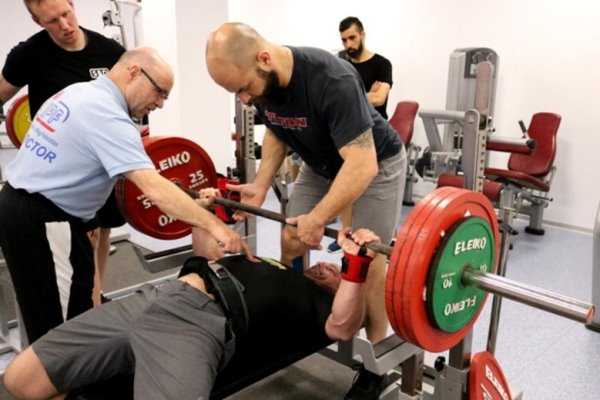
Certificate in Powerlifting Training and Coaching Practices
₹6,000.00 ₹3,000.00
50% fee concession will end in
To train professionals to coach powerlifting athletes in the squat, bench press, and deadlift using safe, effective, and performance-focused programming.
Description
Course Name: Certificate in Powerlifting Training and Coaching Practices
Global Occupational Skill Standard – GOSS ID: GOSS/HF/CPTCP/V1
Duration: Three Months.
Eligibility: 10+2 (Higher Secondary) or Equivalent.
Objective: The Certificate in Powerlifting Training and Coaching Practices course is designed to provide coaches and fitness professionals with specialized knowledge in training athletes for the three core powerlifting lifts: squat, bench press, and deadlift. The program covers biomechanics, advanced lifting techniques, programming and periodization, competition rules, injury prevention, and athlete assessment.
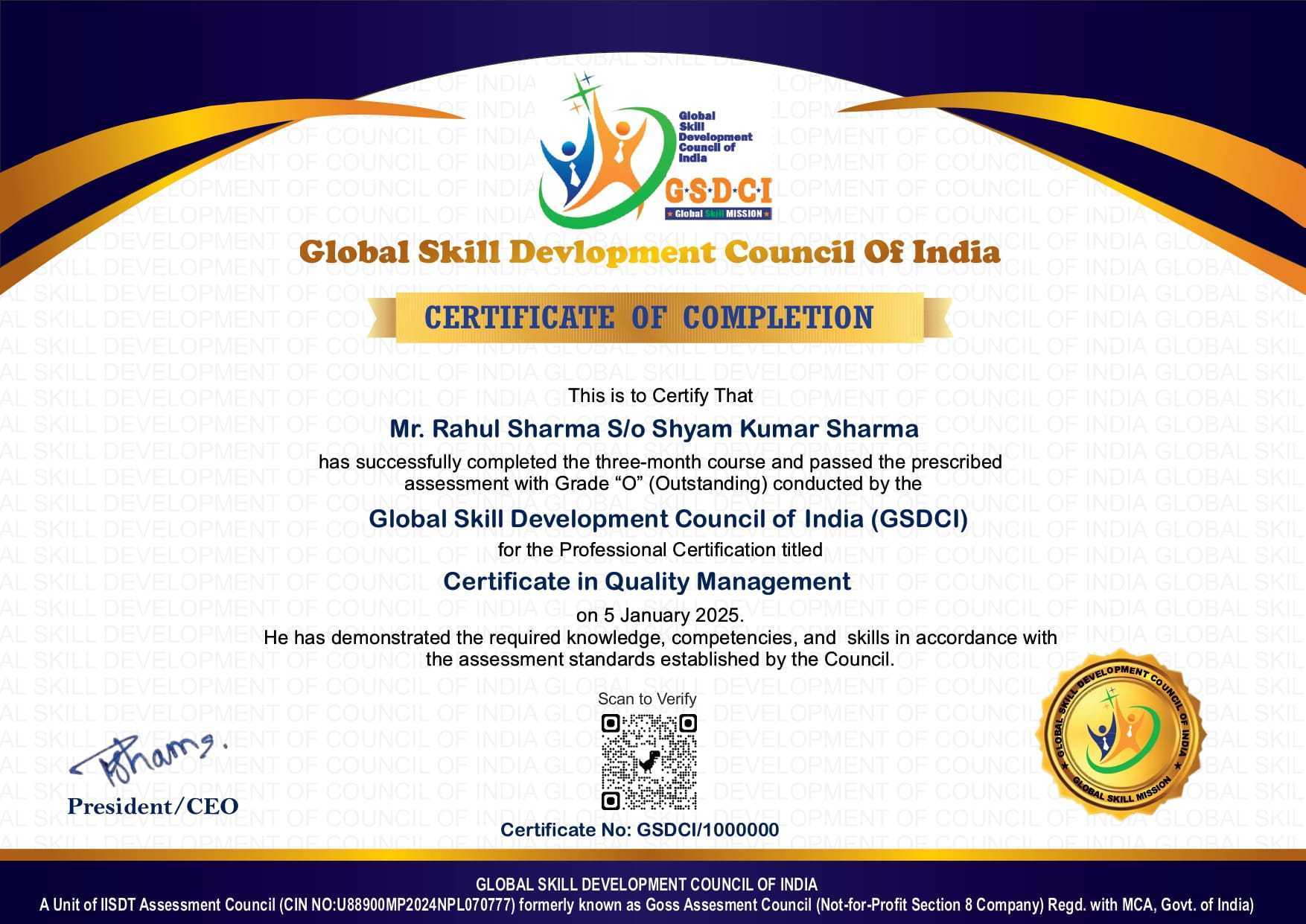
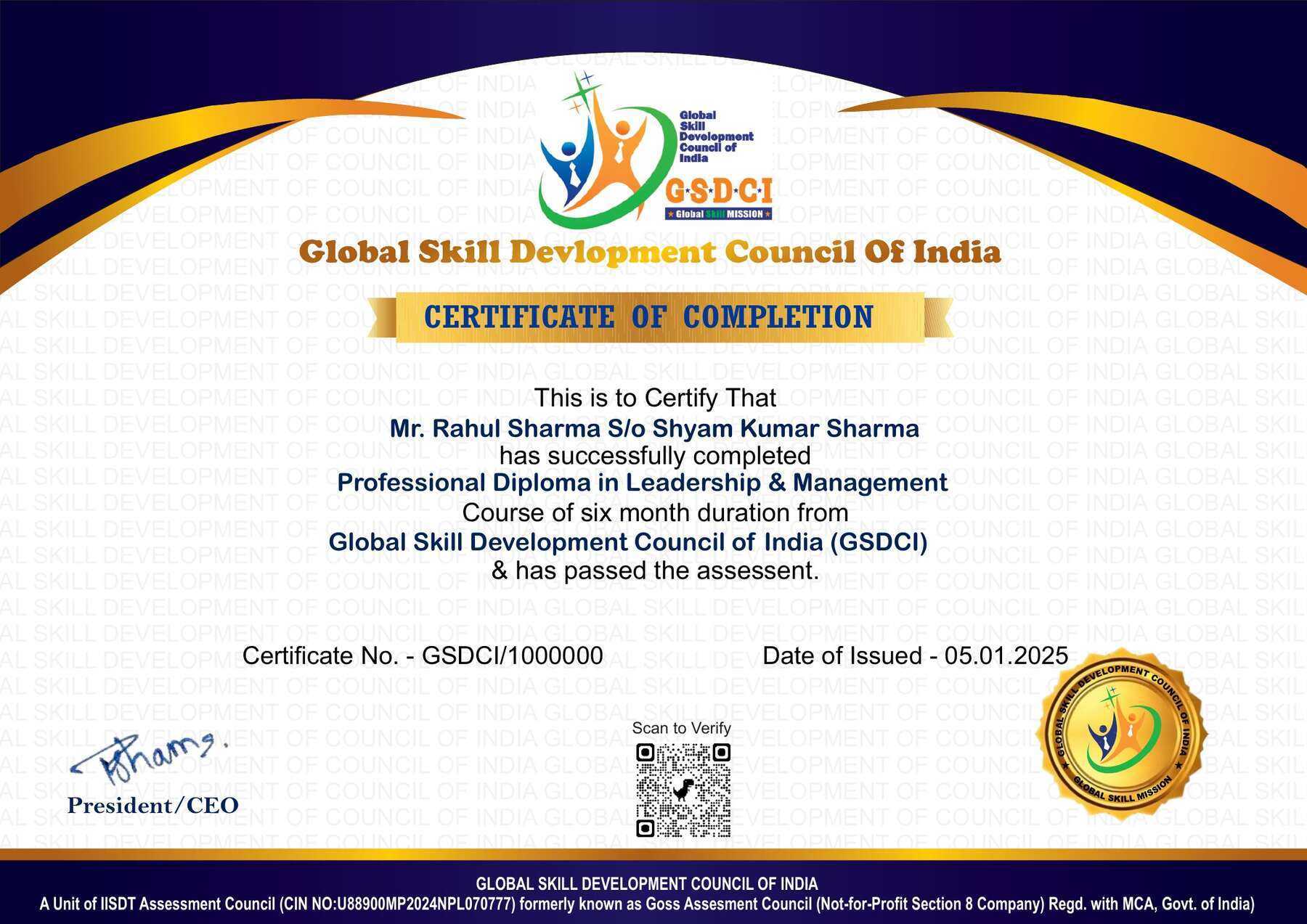
Get ready to join the Journey to become a GSDCI Certified Professional – International Certification and Assessment Body.
Steps to become a GSDCI Certified Professional:
Step 1: Select your certification you want to pursue.
Step 2: Click on get certified tab, new pop up window will open.
Step 3: Click on pay certification fee, you will be redirected to billing details page.
Step 4: Fill your details and click on pay certification fee, You will be redirected to payment gateway, pay fee by any available options like Card(Debit/Credit), Wallet, Paytm, Net banking, UPI and Google pay.
Step 5: You will get Login Credentials of Online E-Books and Online assessment link on your email id, within 48 hrs of payment.
Step 6: After completion of the online assessment, the soft copy of your certificate will be sent to your registered email ID within 5 days.
Assessment Modules:
Module 1: Introduction to Powerlifting and Coaching Role: History and structure of competitive powerlifting (squat, bench press, deadlift), Powerlifting federations, rules, and equipment standards, Roles and responsibilities of a certified powerlifting coach, Assessing lifter readiness and potential, Understanding weight classes and gender-specific considerations, Ethical coaching practices and athlete development.
Module 2: Technique and Biomechanics of the Big Three Lifts: Detailed breakdown of the squat: stance, depth, bar position, and bracing, Bench press technique: grip width, leg drive, bar path, and lockout, Deadlift variations: conventional vs. sumo, setup, and lockout mechanics, Biomechanical efficiency and joint loading principles, Identifying and correcting technical faults, Mobility and anatomical considerations in lift execution.
Module 3: Assistance Work and Accessory Training: Selecting accessory exercises for weakness correction and balance, Variations of the squat, bench, and deadlift for strength development, Incorporating unilateral, core, and posterior chain movements, Training frequency, volume, and load selection for accessories, Injury prevention and prehabilitation strategies, Periodic rotation of assistance exercises for continued adaptation.
Module 4: Programming, Periodization, and Load Management: Fundamentals of powerlifting program design (sets, reps, intensity), Periodization models: linear, block, conjugate, and DUP, Peaking cycles and tapering for competition readiness, Monitoring fatigue, recovery, and training readiness, Using RPE, velocity-based training, and %1RM approaches, Individualizing programs based on training age and goals.
Module 5: Athlete Assessment, Progress Tracking, and Recovery: Movement screening and baseline strength testing (max testing, AMRAPs), Creating and using spreadsheets, software, and tracking logs, Nutrition basics for strength athletes and weight class management, Recovery protocols: sleep, deloads, soft tissue, and mobility work, Psychological readiness and mindset coaching, Regular reassessments and long-term progression planning.
Module 6: Meet Day Coaching, Business, and Professional Practice: Preparing for competition: openers, warm-up timing, and commands, Handling multiple lifters and attempt selection strategy, Managing stress, arousal, and energy on meet day, Building a powerlifting team or gym-based coaching business, Marketing, networking, and online coaching models, Continuing education, certifications, and federation recognition.
GSDCI Online Assessment Detail:
- Duration- 60 minutes.
- Number of Questions- 30.
- Number of Questions from each module: 5.
- Language: English.
- Exam Type: Multiple Choice Questions.
- Maximum Marks- 100, Passing Marks- 50%.
- There is no negative marking in any module.
| Marking System: | |||
| S.No. | No. of Questions | Marks Each Question | Total Marks |
| 1 | 10 | 5 | 50 |
| 2 | 5 | 4 | 20 |
| 3 | 5 | 3 | 15 |
| 4 | 5 | 2 | 10 |
| 5 | 5 | 1 | 5 |
| 30 | 100 | ||
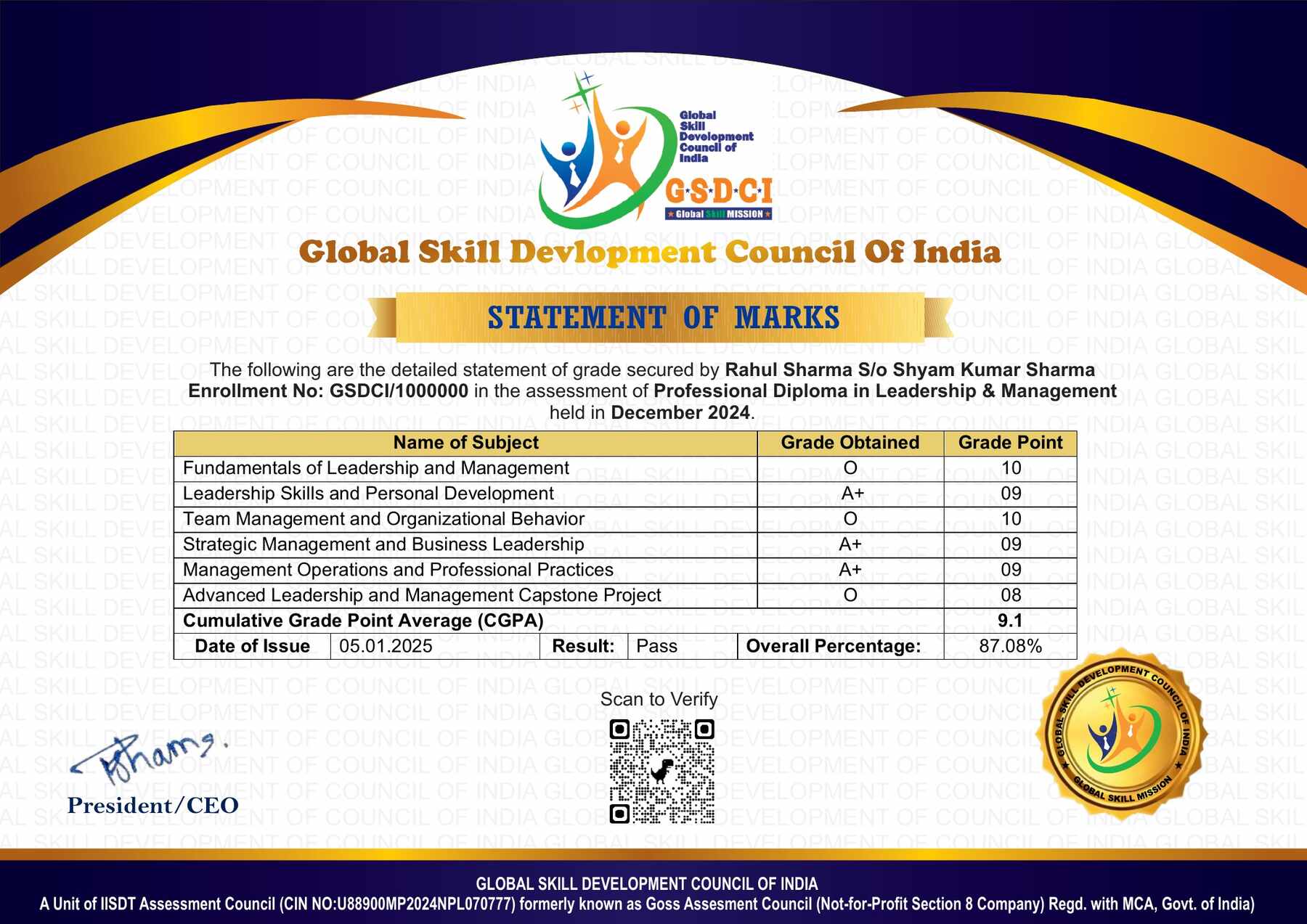
| How Students will be Graded: | |||
| S.No. | Marks | Grade | |
| 1 | 91-100 | O (Outstanding) | |
| 2 | 81-90 | A+ (Excellent) | |
| 3 | 71-80 | A (Very Good) | |
| 4 | 61-70 | B (Good) | |
| 5 | 50-60 | P (Pass) | |
| 6 | 0-49 | F (Fail) | |
Benefits of Certification:
1. Global Recognition & Credibility – Stand out worldwide with a certification that strengthens your professional profile across borders and demonstrates your skills to employers and institutions.
2. Quality Assurance through ISO Certification – Programs follow an ISO-certified quality management system to promote consistency, reliability, and a standardized learning experience.
3. Career Advancement & Employability – Enhance your résumé, demonstrate professional competence, and improve your prospects for career growth, promotions, or suitable job opportunities.
4. Non-Profit Trust Factor – Certification from a non-profit organization reflects a mission-driven approach focused on skill development, professional learning, and public benefit.
5. Access to Learning Resources – Gain access to useful learning resources such as e-books, mock tests, assessments, and online academic support.
6. Transparency & Online Verification – Each certification includes a unique enrolment or certificate ID, enabling convenient online verification by employers and other interested parties.
7. Lifetime or Long-Term Validity – Certifications may offer lifetime or extended validity, reducing the need for frequent renewal, subject to the applicable certification scheme.

Reviews
There are no reviews yet.