
No products in the cart.



Certificate in Weight Management and Healthy Lifestyle
₹6,500.00 ₹3,250.00
50% fee concession will end in
To prepare professionals to design and implement effective, personalized weight management programs that promote health and wellness.
Description
Course Name: Certificate in Weight Management and Healthy Lifestyle
Global Occupational Skill Standard – GOSS ID: GOSS/HF/CWMHL/V1
Eligibility: Graduation or Equivalent.
Duration: Three Months.
Objective: The Certificate in Weight Management and Healthy Lifestyle course is designed to provide healthcare and fitness professionals with in-depth knowledge and practical skills to assess, design, and implement effective weight management programs. The course covers the physiological, psychological, and behavioral aspects of weight control, including nutrition, exercise, metabolism, and lifestyle modification.
Get ready to join the Journey to become a GSDCI Certified Professional – International Certification and Assessment Body.
Steps to become a GSDCI Certified Professional:
Step 1: Select your certification you want to pursue.
Step 2: Click on get certified tab, new pop up window will open.
Step 3: Click on pay certification fee, you will be redirected to billing details page.
Step 4: Fill your details and click on pay certification fee, You will be redirected to payment gateway, pay fee by any available options like Card(Debit/Credit), Wallet, Paytm, Net banking, UPI and Google pay.
Step 5: You will get Login Credentials of Online E-Books and Online assessment link on your email id, within 48 hrs of payment.
Step 6: After completion of the online assessment, the soft copy of your certificate will be sent to your registered email ID within 5 days.
Assessment Modules:
Module 1: Introduction to Weight Management and Obesity Science: Fundamentals of body weight regulation and energy balance, Understanding obesity: causes, classifications, and health risks, Epidemiology and global trends in overweight and obesity, Genetic, hormonal, and environmental influences on weight, Psychological and behavioral aspects of weight gain, Role and responsibilities of a weight management specialist.
Module 2: Nutritional Strategies for Weight Management: Macronutrient composition and its effect on metabolism and satiety, Caloric needs assessment and portion control planning, Designing balanced, evidence-based meal plans for weight loss and maintenance, Popular diet approaches (low-carb, intermittent fasting, ketogenic, etc.), Addressing emotional eating and disordered eating behaviors, Supplement use and nutrient adequacy in calorie-restricted diets.
Module 3: Physical Activity and Lifestyle Modification: Role of physical activity in weight management and fat loss, Designing individualized fitness and movement plans, NEAT (non-exercise activity thermogenesis) and active living strategies, Behavioral coaching for habit formation and consistency, Sleep, stress, and lifestyle habits affecting metabolism, Motivational strategies to increase physical activity adherence.
Module 4: Clinical and Medical Aspects of Weight Management: Medical evaluation and screening for weight-related conditions, Understanding metabolic syndrome, PCOS, diabetes, and thyroid disorders, Pharmacological interventions and anti-obesity medications, Bariatric surgery: types, indications, and nutritional care, Monitoring progress: anthropometrics, lab values, and body composition, Working with healthcare professionals in multidisciplinary settings.
Module 5: Coaching Techniques and Behavior Change Psychology: Client-centered coaching and motivational interviewing, Goal setting and SMART behavior planning, Cognitive-behavioral strategies for overcoming barriers, Managing relapses, plateaus, and emotional setbacks, Communication skills and building client rapport, Long-term weight maintenance strategies and accountability systems.
Module 6: Program Design, Ethics, and Professional Practice: Developing individualized and group-based weight management programs, Screening tools and intake assessments for new clients, Documentation, progress tracking, and outcome evaluation, Ethical considerations and scope of practice in weight management, Digital tools, apps, and platforms for coaching and education, Certification exam preparation and career advancement pathways.
GSDCI Online Assessment Detail:
- Duration- 60 minutes.
- Number of Questions- 30.
- Number of Questions from each module: 5.
- Language: English.
- Exam Type: Multiple Choice Questions.
- Maximum Marks- 100, Passing Marks- 50%.
- There is no negative marking in any module.
| Marking System: | |||
| S.No. | No. of Questions | Marks Each Question | Total Marks |
| 1 | 10 | 5 | 50 |
| 2 | 5 | 4 | 20 |
| 3 | 5 | 3 | 15 |
| 4 | 5 | 2 | 10 |
| 5 | 5 | 1 | 5 |
| 30 | 100 | ||
| How Students will be Graded: | |||
| S.No. | Marks | Grade | |
| 1 | 91-100 | O (Outstanding) | |
| 2 | 81-90 | A+ (Excellent) | |
| 3 | 71-80 | A (Very Good) | |
| 4 | 61-70 | B (Good) | |
| 5 | 50-60 | P (Pass) | |
| 6 | 0-49 | F (Fail) | |
Benefits of Certification:
1. Global Recognition & Credibility – Stand out worldwide with a certification that strengthens your professional profile across borders and demonstrates your skills to employers and institutions.
2. Quality Assurance through ISO Certification – Programs follow an ISO-certified quality management system to promote consistency, reliability, and a standardized learning experience.
3. Career Advancement & Employability – Enhance your résumé, demonstrate professional competence, and improve your prospects for career growth, promotions, or suitable job opportunities.
4. Non-Profit Trust Factor – Certification from a non-profit organization reflects a mission-driven approach focused on skill development, professional learning, and public benefit.
5. Access to Learning Resources – Gain access to useful learning resources such as e-books, mock tests, assessments, and online academic support.
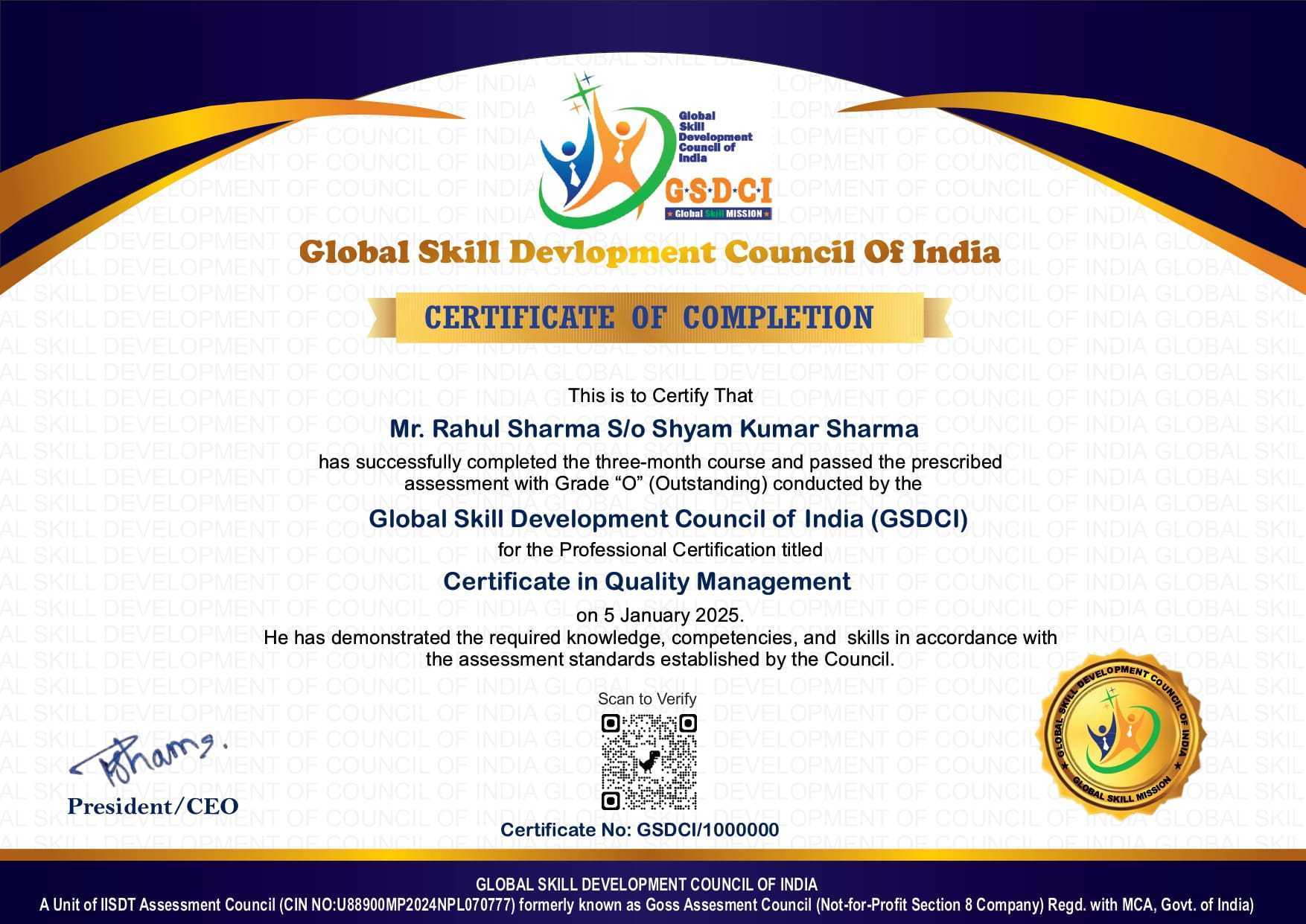
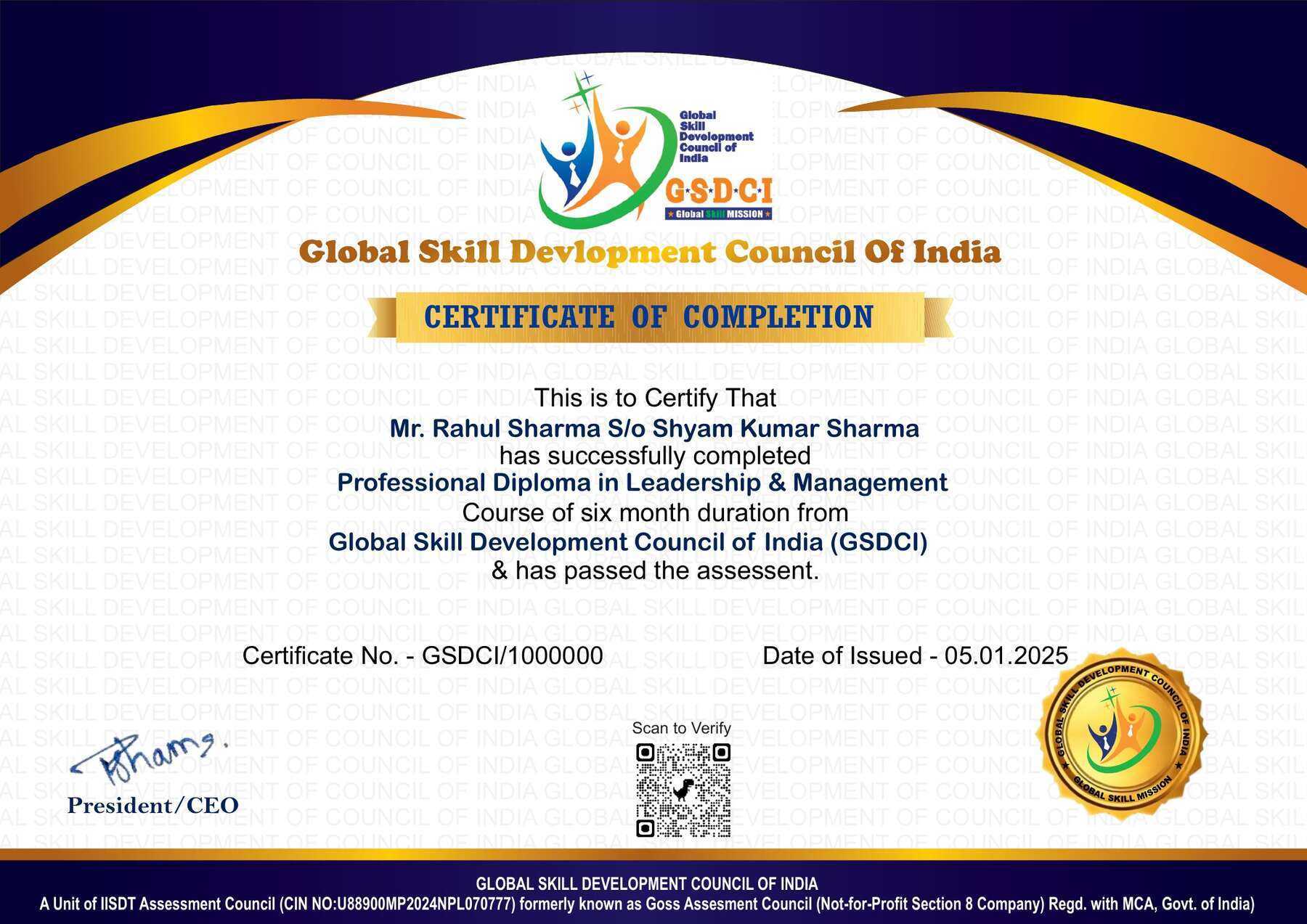
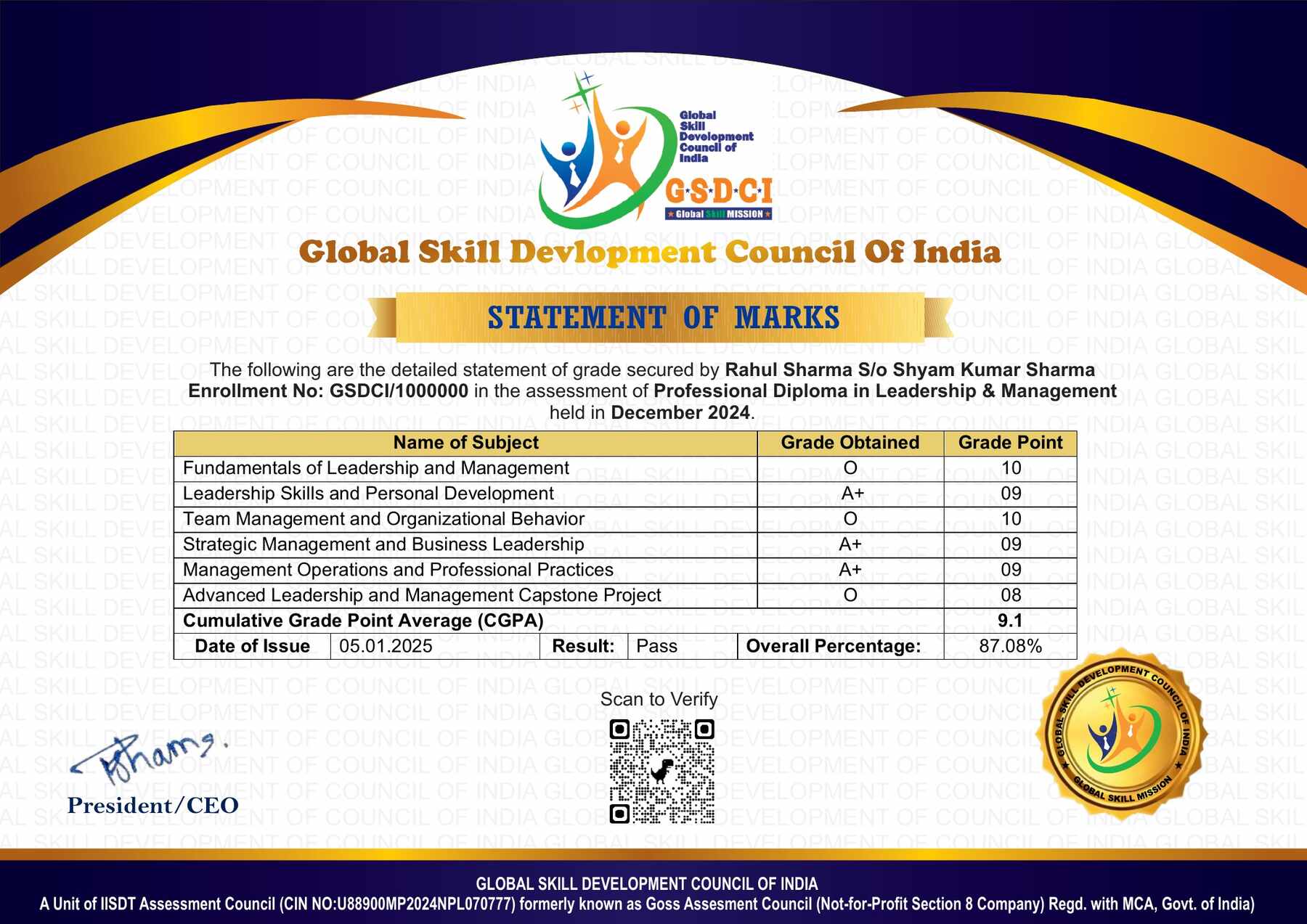
6. Transparency & Online Verification – Each certification includes a unique enrolment or certificate ID, enabling convenient online verification by employers and other interested parties.
7. Lifetime or Long-Term Validity – Certifications may offer lifetime or extended validity, reducing the need for frequent renewal, subject to the applicable certification scheme.

Reviews
There are no reviews yet.