No products in the cart.


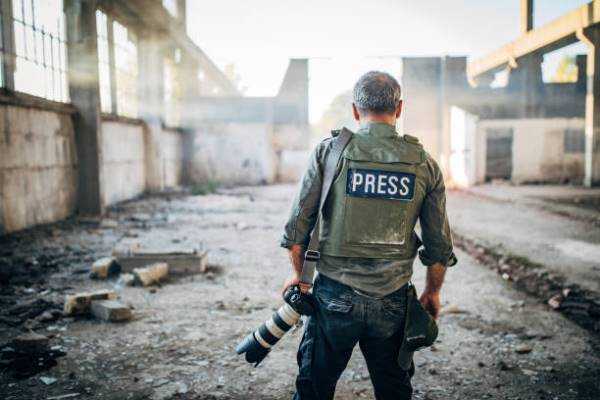
Certified Conflict Reporter
₹6,500.00 ₹3,250.00
50% fee concession will end in
To train journalists to report safely, ethically, and accurately from conflict zones and crisis areas, delivering truthful and human-centered coverage.
Description
Course Name: Certified Conflict Reporter
Global Occupational Skill Standard – GOSS ID: GOSS/JPM/CCR/V1
Eligibility: 10+2 (Higher Secondary) or Equivalent or minimum 2 years of relevant experience (experience-based learners can directly enroll and certify).
Objective: The Certified Conflict Reporter course is designed to train journalists in the specialized skills required to cover wars, civil unrest, humanitarian crises, and politically sensitive conflicts with accuracy, courage, and ethical responsibility. The course covers conflict dynamics, international humanitarian law, risk assessment, safety protocols, trauma-informed reporting, and cultural sensitivity.
Certification: Within 5 days after Completion of Online Assessment.
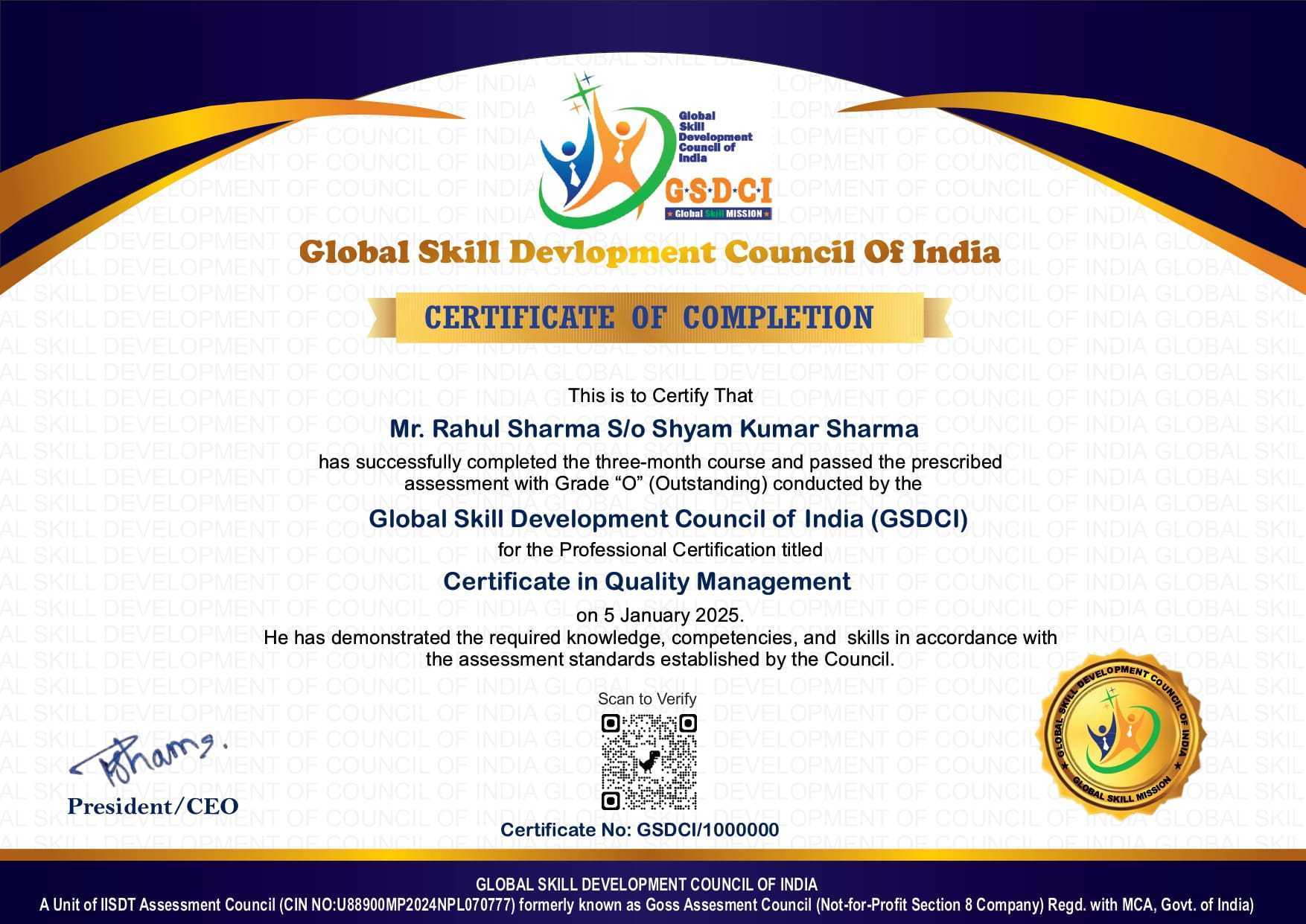
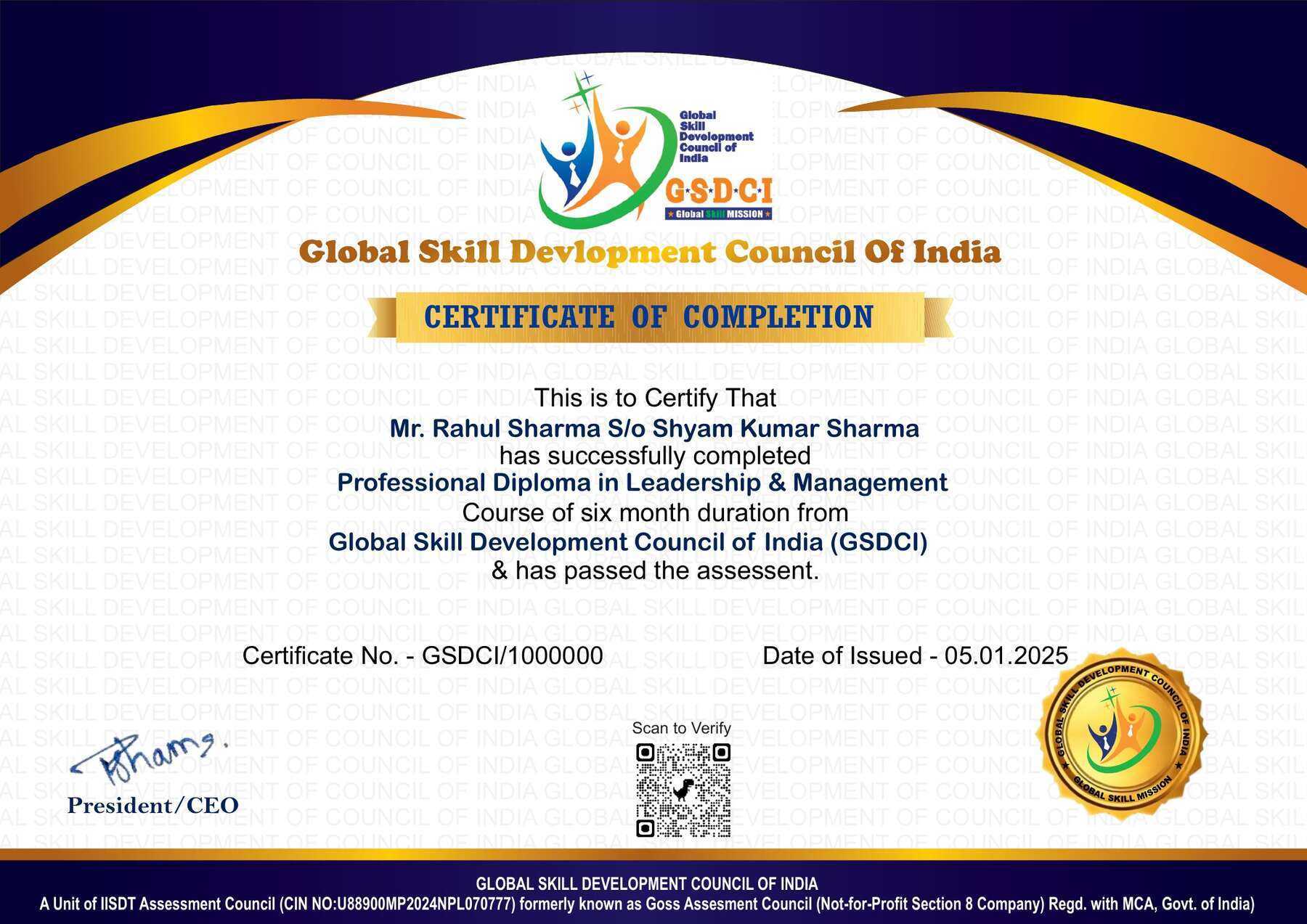
Get ready to join the Journey to become a GSDCI Certified Professional – International Certification and Assessment Body.
Steps to become a GSDCI Certified Professional:
Step 1: Select your certification you want to pursue.
Step 2: Click on get certified tab, new pop up window will open.
Step 3: Click on pay certification fee, you will be redirected to billing details page.
Step 4: Fill your details and click on pay certification fee, You will be redirected to payment gateway, pay fee by any available options like Card(Debit/Credit), Wallet, Paytm, Net banking, UPI and Google pay.
Step 5: You will get Login Credentials of Online E-Books and Online assessment link on your email id, within 48 hrs of payment.
Step 6: After completion of the online assessment, the soft copy of your certificate will be sent to your registered email ID within 5 days.
Assessment Modules:
Module 1: Introduction to Conflict Reporting: Definition and scope of conflict journalism, Historical evolution of war and conflict reporting, Types of conflicts (armed, political, ethnic, civil unrest), Role of conflict reporters in shaping public understanding, Responsibilities and challenges of reporting from conflict zones, Ethical standards in conflict and war journalism.
Module 2: Understanding the Nature of Conflict: Root causes and dynamics of conflict (social, political, economic), Key actors in conflict zones (military, rebels, civilians, NGOs), Overview of international humanitarian law and Geneva Conventions, Conflict-sensitive reporting and peace journalism approaches, Cultural and regional understanding in conflict contexts, Avoiding bias and framing narratives responsibly.
Module 3: Field Reporting and Safety Practices: Pre-deployment planning and risk assessment, Personal safety equipment and first-aid basics, Working with fixers, translators, and local sources, Navigating checkpoints, curfews, and restricted zones, Digital security and secure communications, Emergency evacuation protocols and crisis management.
Module 4: Reporting Techniques and Content Creation: Gathering information in hostile environments, Interviewing survivors, witnesses, and combatants, Verifying claims, casualty numbers, and on-ground footage, Writing breaking news, features, and human-interest stories, Capturing photos and videos ethically and safely, Covering refugee crises, displacement, and humanitarian issues.
Module 5: Legal, Ethical, and Psychological Considerations: Respecting victims’ dignity and trauma reporting guidelines, Avoiding incitement, propaganda, and fake news, Understanding defamation, censorship, and press freedom laws, Protecting sources and maintaining confidentiality, Dealing with PTSD and mental health as a conflict journalist, Working under international legal frameworks and UN guidelines.
Module 6: Career Development and Global Networks: Building a conflict reporting portfolio and credibility, Working with international media, NGOs, and humanitarian agencies, Freelancing vs embedded journalism opportunities, Accessing grants, fellowships, and safety training, Networking with conflict journalism associations and watchdogs, Keeping up with trends in global conflict and crisis reporting.
GSDCI Online Assessment Detail:
- Duration- 60 minutes.
- Number of Questions- 30.
- Number of Questions from each module: 5.
- Language: English.
- Exam Type: Multiple Choice Questions.
- Maximum Marks- 100, Passing Marks- 50%.
- There is no negative marking in any module.
| Marking System: | |||
| S.No. | No. of Questions | Marks Each Question | Total Marks |
| 1 | 10 | 5 | 50 |
| 2 | 5 | 4 | 20 |
| 3 | 5 | 3 | 15 |
| 4 | 5 | 2 | 10 |
| 5 | 5 | 1 | 5 |
| 30 | 100 | ||
| How Students will be Graded: | |||
| S.No. | Marks | Grade | |
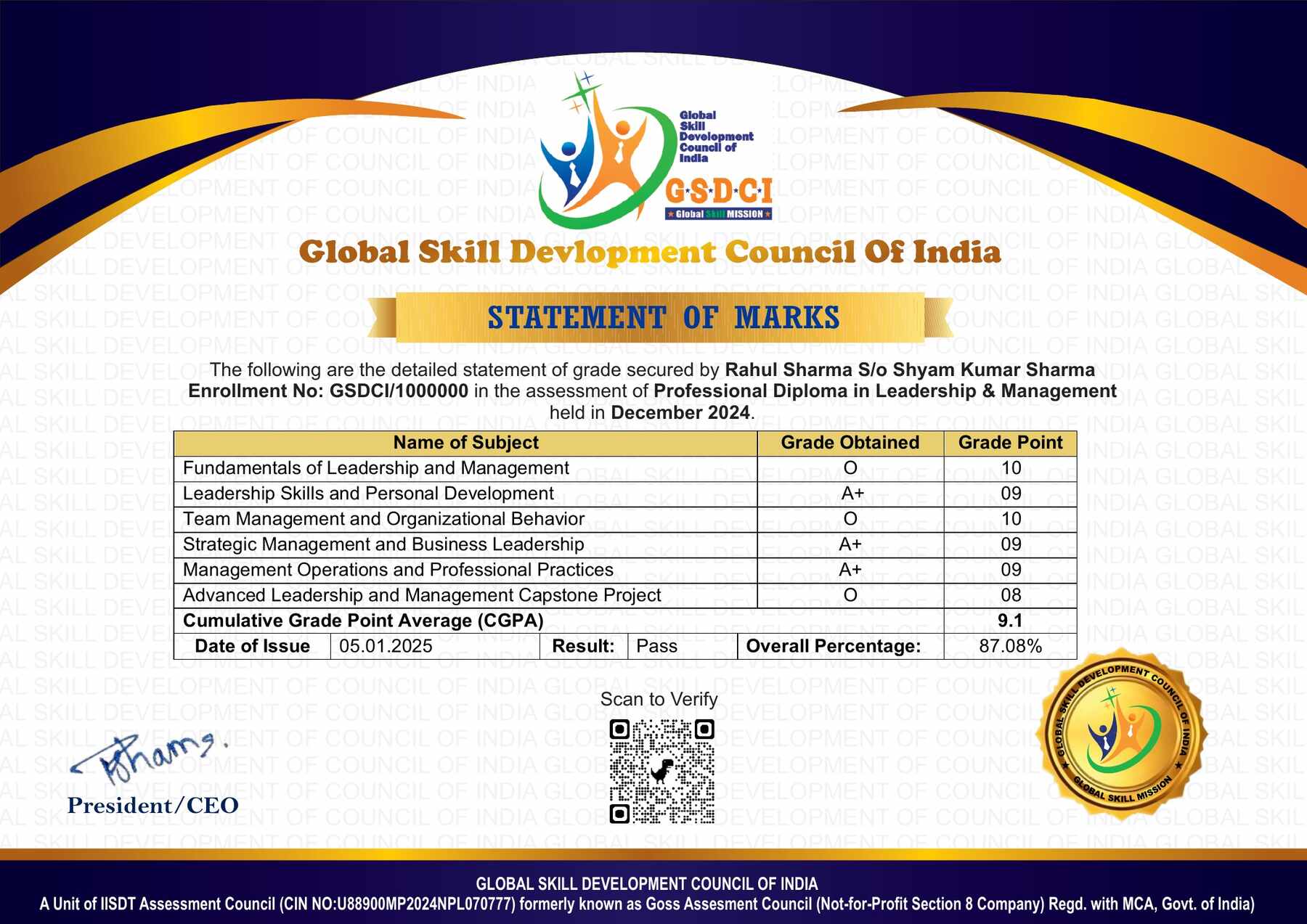
| 1 | 91-100 | O (Outstanding) | |
| 2 | 81-90 | A+ (Excellent) | |
| 3 | 71-80 | A (Very Good) | |
| 4 | 61-70 | B (Good) | |
| 5 | 50-60 | P (Pass) | |
| 6 | 0-49 | F (Fail) | |
Benefits of Certification:
🌍 1. Global Recognition & Credibility – Stand out worldwide with a certification that opens doors across borders. Trusted by employers, respected by institutions, and recognized in over 100 countries.
📜 2. Quality Assurance through ISO Certification – Certified to global ISO standards, our programs deliver excellence, consistency, and a benchmarked learning experience that speaks for itself.
💼 3. Career Advancement & Employability – Enhances your resume and increases chances of promotions or job offers.
🤝 4. Non-Profit Trust Factor – Certifications from non-profit organizations are mission-driven rather than profit-driven.
📚 5. Access to Verified Learning & Resources – Often includes e-books, mock tests, and online support without hidden costs.
🔍 6. Transparency & Online Verification – Certifications come with a unique Enrolment ID for easy online verification by employers and institutions.
⏳ 7. Lifetime or Long-Term Validity – Certifications usually have lifetime validity or long-term recognition, reducing the need for frequent renewals.