
No products in the cart.



Certified Cinematographer (Basic)
₹6,000.00 ₹3,000.00
50% fee concession will end in
To train learners in the foundational techniques of visual storytelling through camera operation, lighting, and shot composition for film and video projects.
Description
Course Name: Certified Cinematographer (Basic)
Global Occupational Skill Standard – GOSS ID: GOSS/JPM/CC/V1
Eligibility: 10+2 (Higher Secondary) or Equivalent or minimum 2 years of relevant experience (experience-based learners can directly enroll and certify).
Objective: The Certified Cinematographer (Basic) course is designed to introduce learners to the core principles and techniques of cinematography used in film, television, and digital video production. The course focuses on visual storytelling through camera work, lighting, shot composition, framing, lens selection, and camera movements. Learners will gain practical experience with DSLR/mirrorless and professional video cameras, learning how to operate equipment, control exposure, and work with natural and artificial lighting.
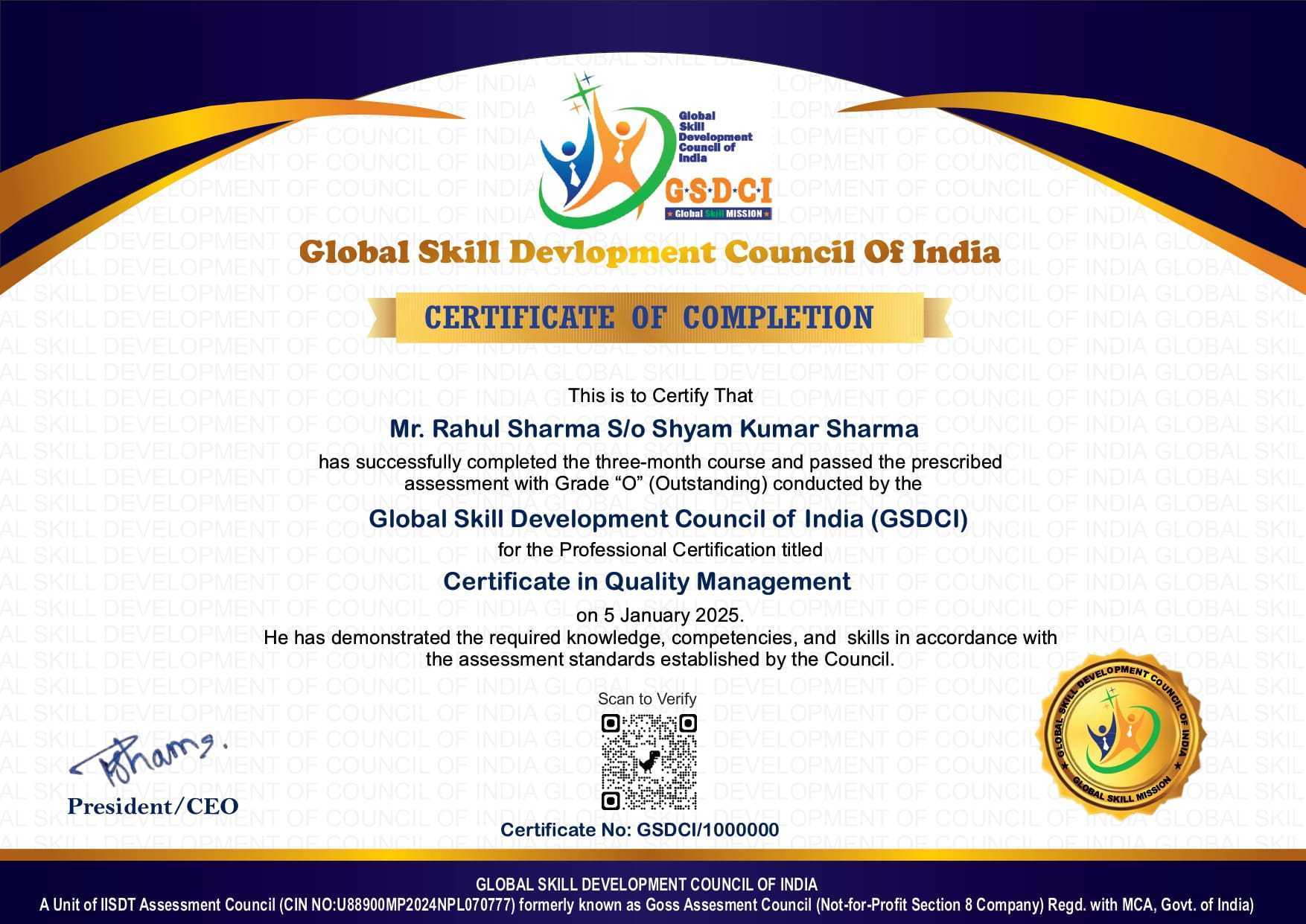
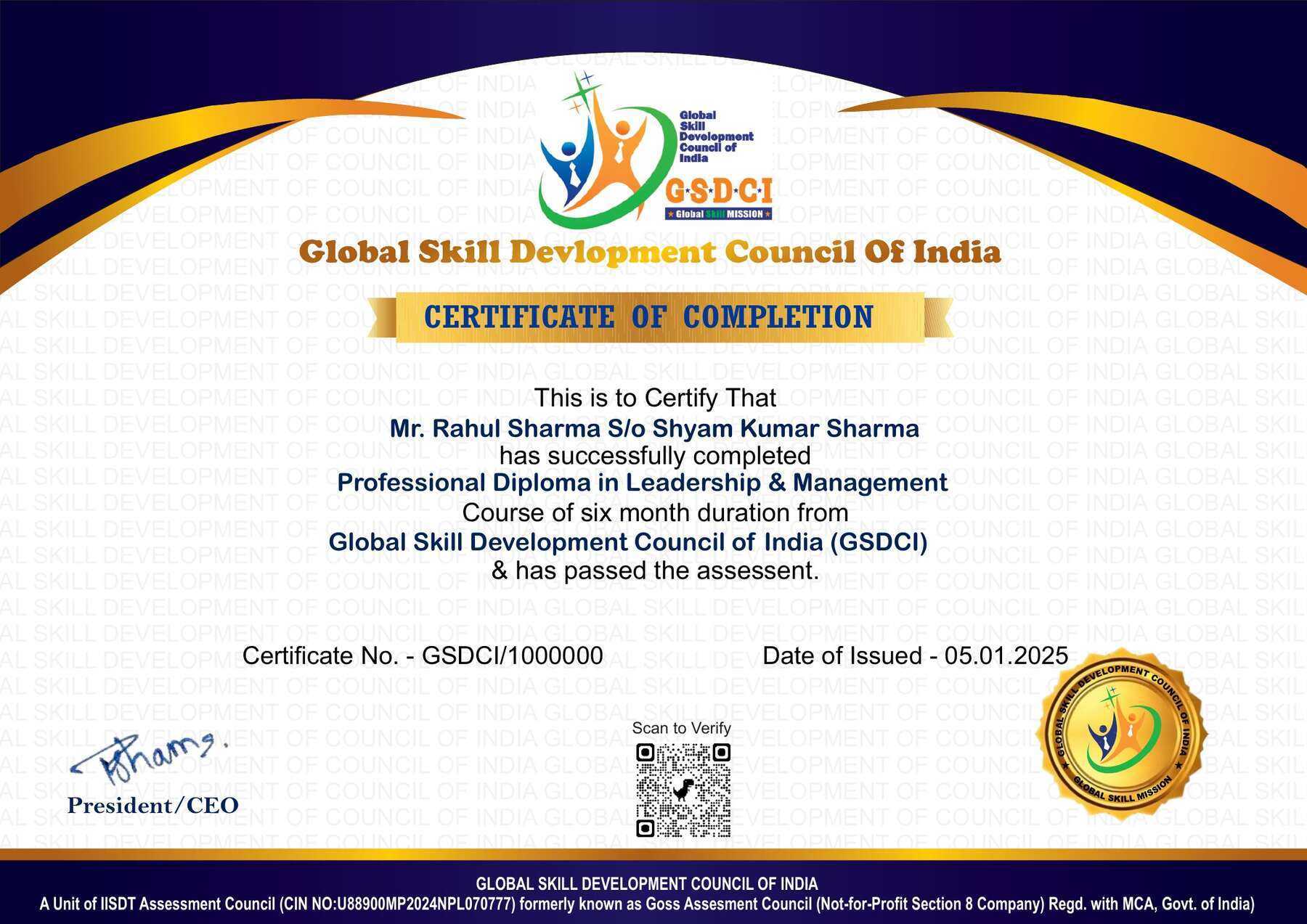
Certification: Within 5 days after Completion of Online Assessment.
Get ready to join the Journey to become a GSDCI Certified Professional – International Certification and Assessment Body.
Steps to become a GSDCI Certified Professional:
Step 1: Select your certification you want to pursue.
Step 2: Click on get certified tab, new pop up window will open.
Step 3: Click on pay certification fee, you will be redirected to billing details page.
Step 4: Fill your details and click on pay certification fee, You will be redirected to payment gateway, pay fee by any available options like Card(Debit/Credit), Wallet, Paytm, Net banking, UPI and Google pay.
Step 5: You will get Login Credentials of Online E-Books and Online assessment link on your email id, within 48 hrs of payment.
Step 6: After completion of the online assessment, the soft copy of your certificate will be sent to your registered email ID within 5 days.
Assessment Modules:
Module 1: Introduction to Cinematography and Visual Storytelling: Role and responsibilities of a cinematographer in film and television, Basic components of cinematography: camera, lighting, lens, and composition, Understanding the visual language of storytelling, Collaborating with directors, production designers, and lighting teams, Overview of different genres and their cinematographic styles, Evolution of cinematography from film to digital.
Module 2: Camera Types, Settings, and Operations: Types of cameras used in professional cinematography (DSLR, cinema cameras, mirrorless), Understanding camera sensors, resolutions, and frame rates, Exposure triangle: aperture, shutter speed, ISO, White balance, focus techniques, and depth of field, Introduction to camera rigs, gimbals, and tripods, Hands-on setup and operation of basic camera systems.
Module 3: Composition, Framing, and Camera Movement: Rule of thirds, leading lines, symmetry, and negative space, Shot types: wide, medium, close-up, over-the-shoulder, POV, Understanding aspect ratios and visual aesthetics, Blocking scenes and planning shot sequences, Types of camera movements: pan, tilt, dolly, handheld, crane, Framing subjects for dramatic and narrative effect.
Module 4: Lenses, Filters, and Visual Effects: Types of lenses: prime vs zoom, focal length and perspective, Lens characteristics: depth of field, bokeh, and distortion, Using filters: ND, polarizers, diffusion, and color filters, Understanding lens choices for storytelling and mood, Basic lens care and handling, Visual effects achieved through lens and in-camera techniques.
Module 5: Lighting Basics for Cinematography: Understanding natural and artificial light sources, Three-point lighting: key, fill, and backlight, Controlling light with flags, reflectors, and diffusers, Introduction to color temperature and light metering, Creating mood and depth through lighting setups, Working with practical lights and motivated lighting.
Module 6: Cinematography Practice and Visual Reel Development; Shooting short scenes with varied lighting and composition styles, Analyzing and emulating cinematic looks from reference films, On-set troubleshooting and adapting to shooting conditions, Reviewing footage for visual consistency and improvement, Creating a basic cinematography showreel, Introduction to career paths and working with production teams.
GSDCI Online Assessment Detail:
- Duration- 60 minutes.
- Number of Questions- 30.
- Number of Questions from each module: 5.
- Language: English.
- Exam Type: Multiple Choice Questions.
- Maximum Marks- 100, Passing Marks- 50%.
- There is no negative marking in any module.
| Marking System: | |||
| S.No. | No. of Questions | Marks Each Question | Total Marks |
| 1 | 10 | 5 | 50 |
| 2 | 5 | 4 | 20 |
| 3 | 5 | 3 | 15 |
| 4 | 5 | 2 | 10 |
| 5 | 5 | 1 | 5 |
| 30 | 100 | ||
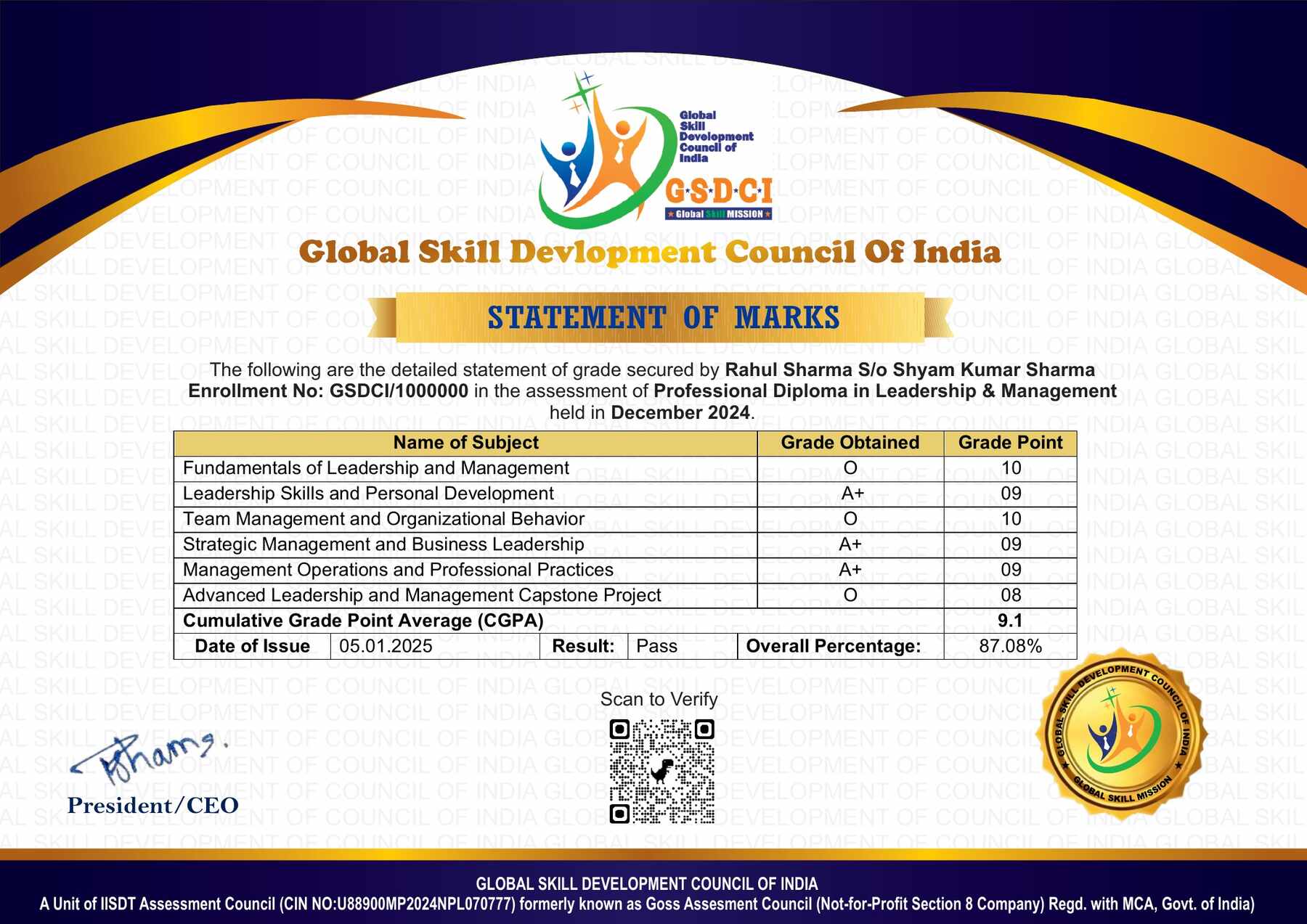
| How Students will be Graded: | |||
| S.No. | Marks | Grade | |
| 1 | 91-100 | O (Outstanding) | |
| 2 | 81-90 | A+ (Excellent) | |
| 3 | 71-80 | A (Very Good) | |
| 4 | 61-70 | B (Good) | |
| 5 | 50-60 | P (Pass) | |
| 6 | 0-49 | F (Fail) | |
Benefits of Certification:
🌍 1. Global Recognition & Credibility – Stand out worldwide with a certification that opens doors across borders. Trusted by employers, respected by institutions, and recognized in over 100 countries.
📜 2. Quality Assurance through ISO Certification – Certified to global ISO standards, our programs deliver excellence, consistency, and a benchmarked learning experience that speaks for itself.
💼 3. Career Advancement & Employability – Enhances your resume and increases chances of promotions or job offers.
🤝 4. Non-Profit Trust Factor – Certifications from non-profit organizations are mission-driven rather than profit-driven.
📚 5. Access to Verified Learning & Resources – Often includes e-books, mock tests, and online support without hidden costs.
🔍 6. Transparency & Online Verification – Certifications come with a unique Enrolment ID for easy online verification by employers and institutions.
⏳ 7. Lifetime or Long-Term Validity – Certifications usually have lifetime validity or long-term recognition, reducing the need for frequent renewals.

Reviews
There are no reviews yet.