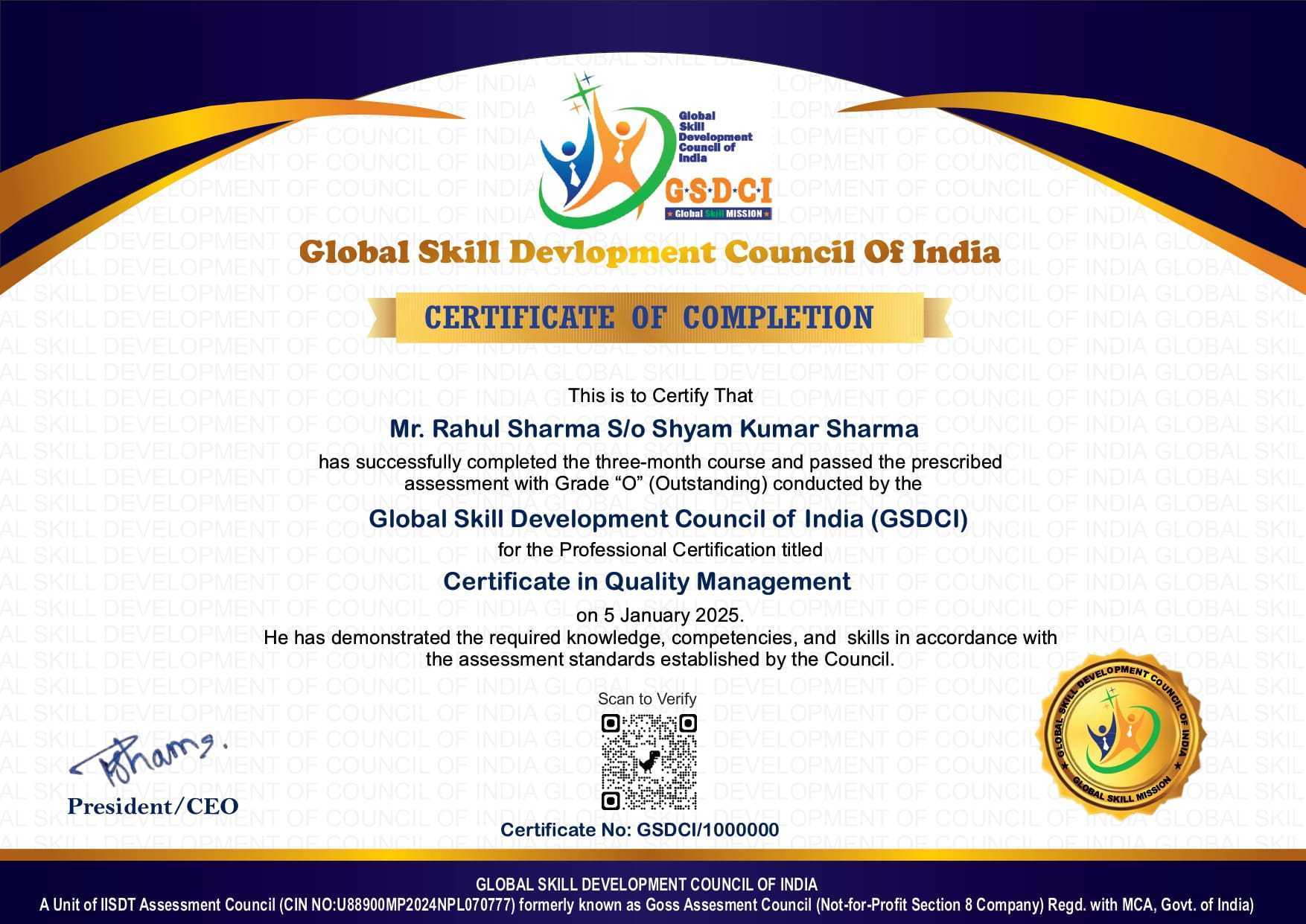
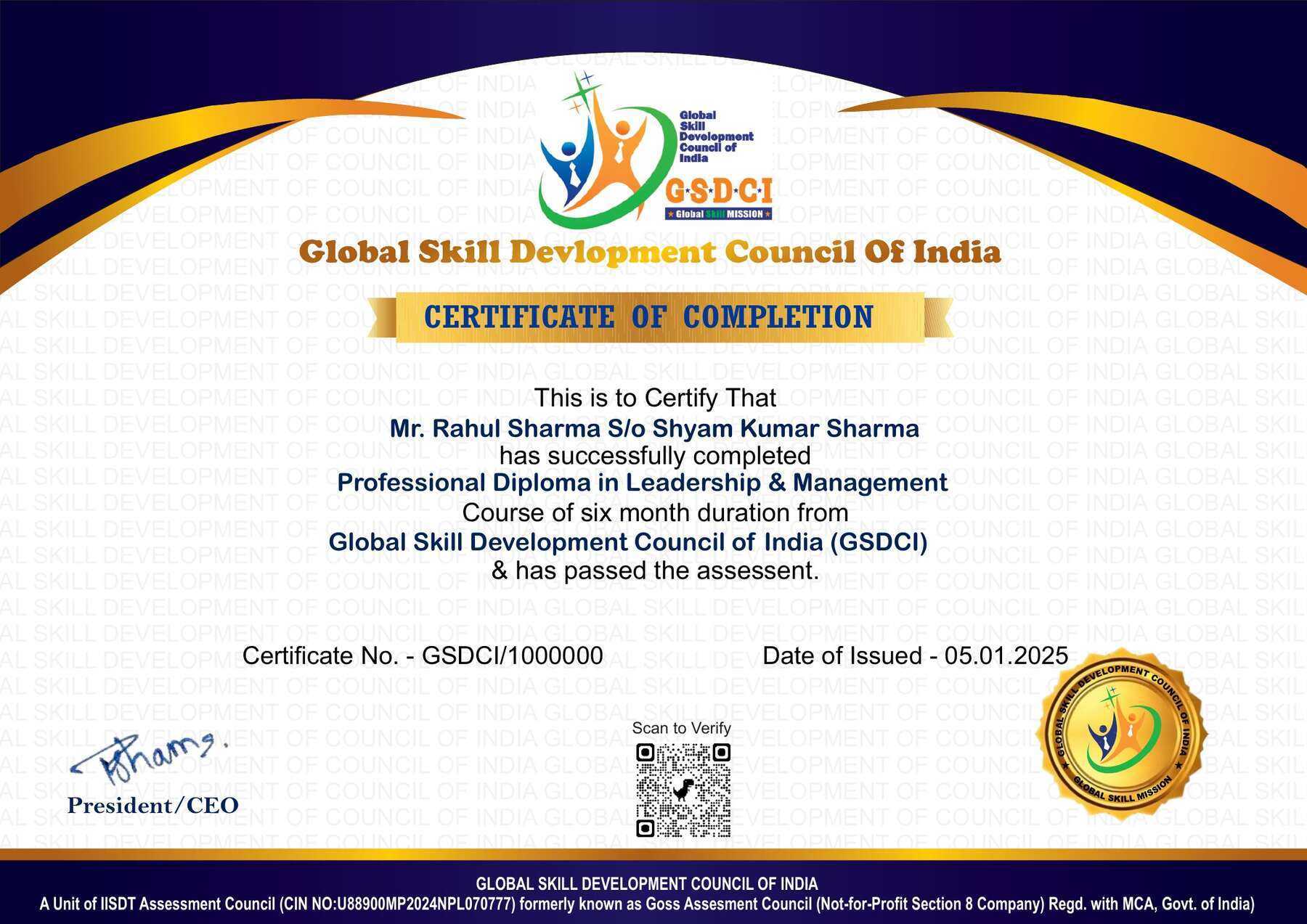
Certified Visual Communication Designer

6,500.00 3,250.00

50% fee concession will end in

To train learners in designing clear, impactful visual communication materials across print and digital media using design principles and creative tools.

Description

Certification Name: Certified Visual Communication Designer

Global Occupational Skill Standard – GOSS ID: GOSS/AD/CVCD/V1

Eligibility: 10+2 (higher Secondary) or Equivalent or minimum 2 years of relevant experience (experience-based learners can directly enroll and certify).

Objective: The Certified Visual Communication Designer course is designed to develop well-rounded skills in using visual elements to effectively convey messages, ideas, and information across various media formats. The course focuses on the principles of design, color theory, typography, layout, composition, and visual hierarchy, while integrating storytelling, branding, and user-centered communication strategies. 

Certification: Within 5 days after Completion of Online Assessment.

Get ready to join the Journey to become a GSDCI Certified Professional  – International Certification and Assessment Body.

Steps to become a GSDCI Certified Professional:

Step 1: Select your certification you want to pursue.

Step 2: Click on get certified tab, new pop up window will open.

Step 3: Click on pay certification fee, you will be redirected to billing details page.

Step 4: Fill your details and click on pay certification fee, You will be redirected to payment gateway, pay fee by any available options like Card(Debit/Credit), Wallet, Paytm, Net banking, UPI and Google pay.

Step 5: You will get Login Credentials of Online E-Books and Online assessment link on your email id, within 48 hrs of payment.

Step 6: After completion of online assessment, you can download your Certificate Immediately.

Assessment Modules:

Module 1: Foundations of Visual Communication: Definition and scope of visual communication, Elements of communication theory (sender, message, medium, receiver), Principles of semiotics and visual language, Human perception and cognitive processing of visuals, Role of visual storytelling in messaging, Ethics and cultural considerations in visual communication.

Module 2: Design Principles and Composition: Principles of design (balance, contrast, emphasis, rhythm, unity), Visual hierarchy and focal points, Use of grids and compositional frameworks, White space and visual breathing room, Gestalt principles in layout, Creating visual flow and reader pathways.

Module 3: Typography and Imagery: Anatomy of type and font classification, Typographic hierarchy and pairing, Image types and formats (raster vs vector), Basics of photography and illustration for communication, Integrating icons and pictograms effectively, Ethical image sourcing and copyright considerations.

Module 4: Color Theory and Visual Styling: Color models and digital vs print workflows (RGB, CMYK, HEX), Color harmony and contrast techniques, Psychological impact of color in messaging, Creating and managing color palettes, Accessibility and contrast compliance, Applying texture and pattern for visual interest.

Module 5: Tools, Software, and Production Workflow: Overview of industry-standard tools (Adobe Illustrator, Photoshop, InDesign, Figma), Asset preparation and file organization, Non‑destructive editing and smart objects, Prototyping and mock‑up creation, Exporting for different media (print, web, social), Version control and collaboration best practices.

Module 6: Applied Projects and Portfolio Development: Designing brand identity collateral (logos, stationery, style guides), Information design and data visualization projects, Advertising and promotional campaign mock‑ups, UI/UX wireframes and social media templates, Client briefing, feedback cycles, and revisions, Curating and presenting a professional visual communication portfolio.

GSDCI Online Assessment Detail:

  • Duration- 60 minutes.
  • Number of Questions- 30.
  • Number of Questions from each module: 5.
  • Language: English.
  • Exam Type: Multiple Choice Questions.
  • Maximum Marks- 100, Passing Marks- 50%.
  • There is no negative marking in any module.
Marking System:
S.No. No. of Questions Marks Each Question Total Marks
1 10 5 50
2 5 4 20
3 5 3 15
4 5 2 10
5 5 1 5
30   100
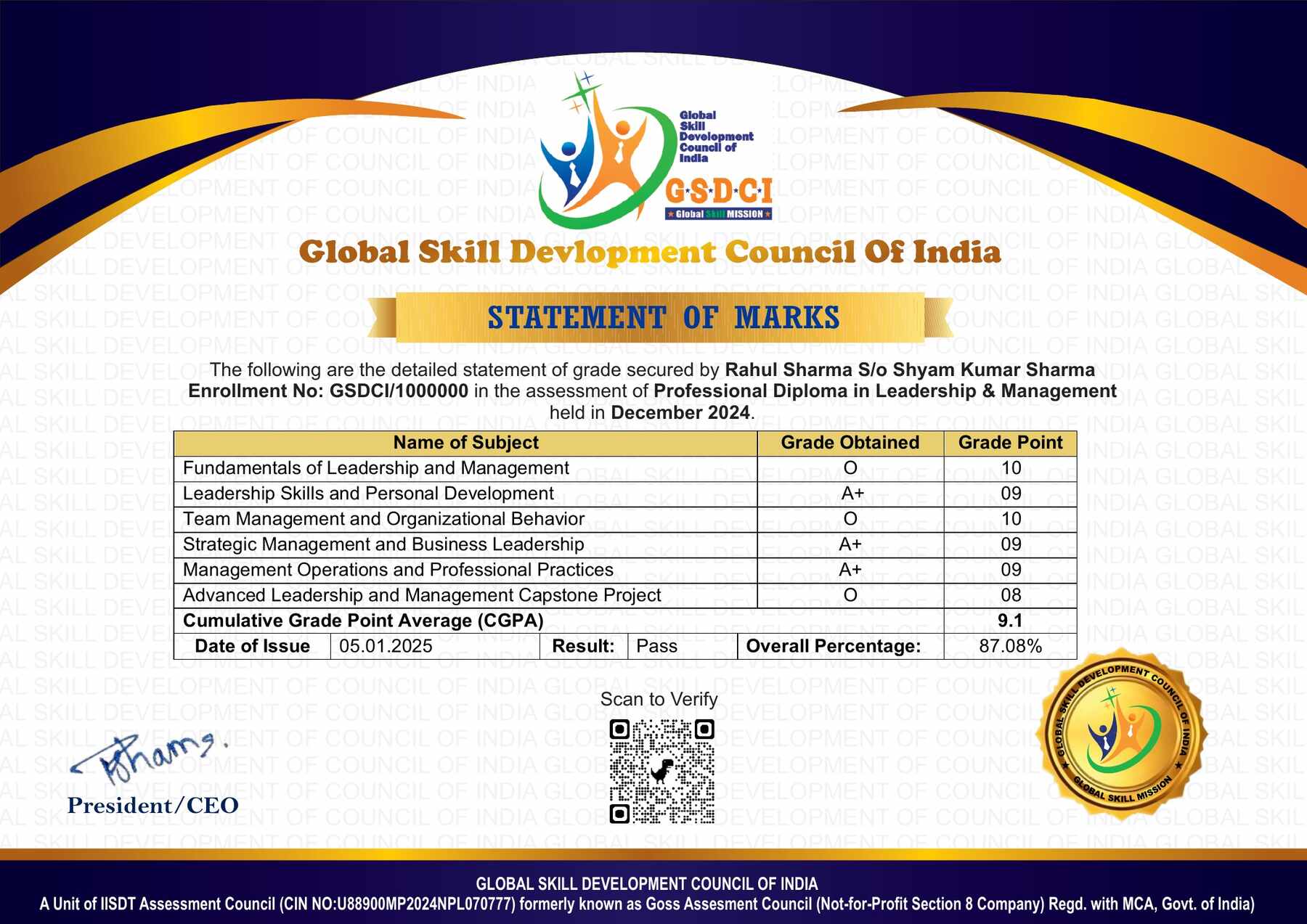
How Students will be Graded:
S.No. Marks Grade
1 91-100 O (Outstanding)
2 81-90 A+ (Excellent)
3 71-80 A (Very Good)
4 61-70 B (Good)
5 50-60 P (Pass)
6  0-49 F (Fail)


Benefits of Certification:

🌍 1. Global Recognition & Credibility – Stand out worldwide with a certification that opens doors across borders. Trusted by employers, respected by institutions, and recognized in over 100 countries.

📜 2. Quality Assurance through ISO Certification – Certified to global ISO standards, our programs deliver excellence, consistency, and a benchmarked learning experience that speaks for itself.

💼 3. Career Advancement & Employability – Enhances your resume and increases chances of promotions or job offers.

🤝 4. Non-Profit Trust Factor – Certifications from non-profit organizations are mission-driven rather than profit-driven.

📚 5. Access to Verified Learning & Resources – Often includes e-books, mock tests, and online support without hidden costs.

🔍 6. Transparency & Online Verification – Certifications come with a unique Enrolment ID for easy online verification by employers and institutions.

⏳ 7. Lifetime or Long-Term Validity – Certifications usually have lifetime validity or long-term recognition, reducing the need for frequent renewals.