
No products in the cart.


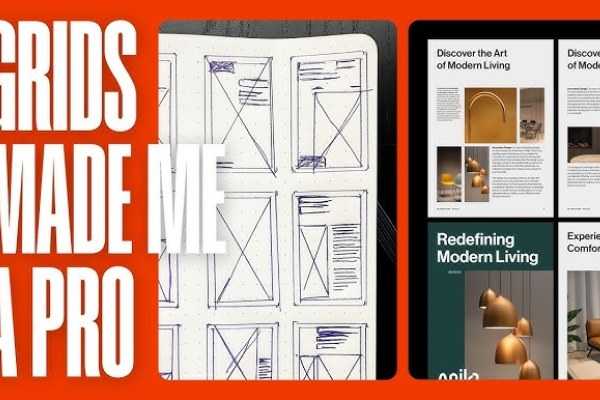
Certified Layout and Composition Professional
₹6,500.00 ₹3,250.00
50% fee concession will end in
To train learners in designing effective and visually balanced layouts using professional tools and design principles for print and digital media.
Description
Course Name: Certified Layout and Composition Professional
Global Occupational Skill Standard – GOSS ID: GOSS/AD/CLCP/V1
Eligibility: Graduation or Equivalent or minimum 2 years of relevant experience (experience-based learners can directly enroll and certify).
Objective: The Certified Layout and Composition Professional course is crafted to develop professional expertise in designing visually appealing and well-structured layouts for print and digital media. The course covers the foundational principles of design, including balance, alignment, proximity, hierarchy, contrast, white space, and typography. Participants will learn to use industry-standard software like Adobe InDesign, Illustrator, and QuarkXPress to create layouts for magazines, books, brochures, newsletters, posters, and web content.
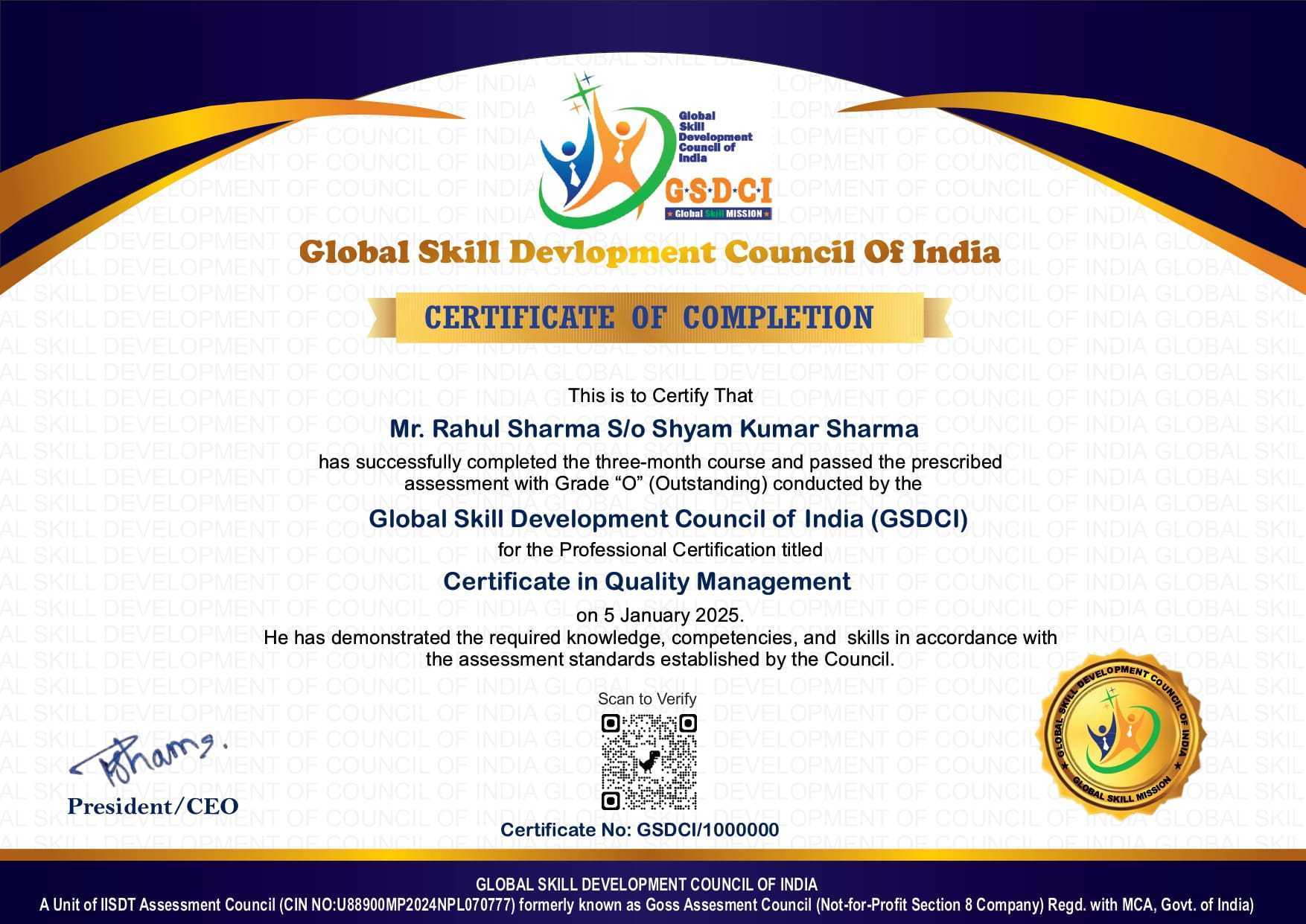
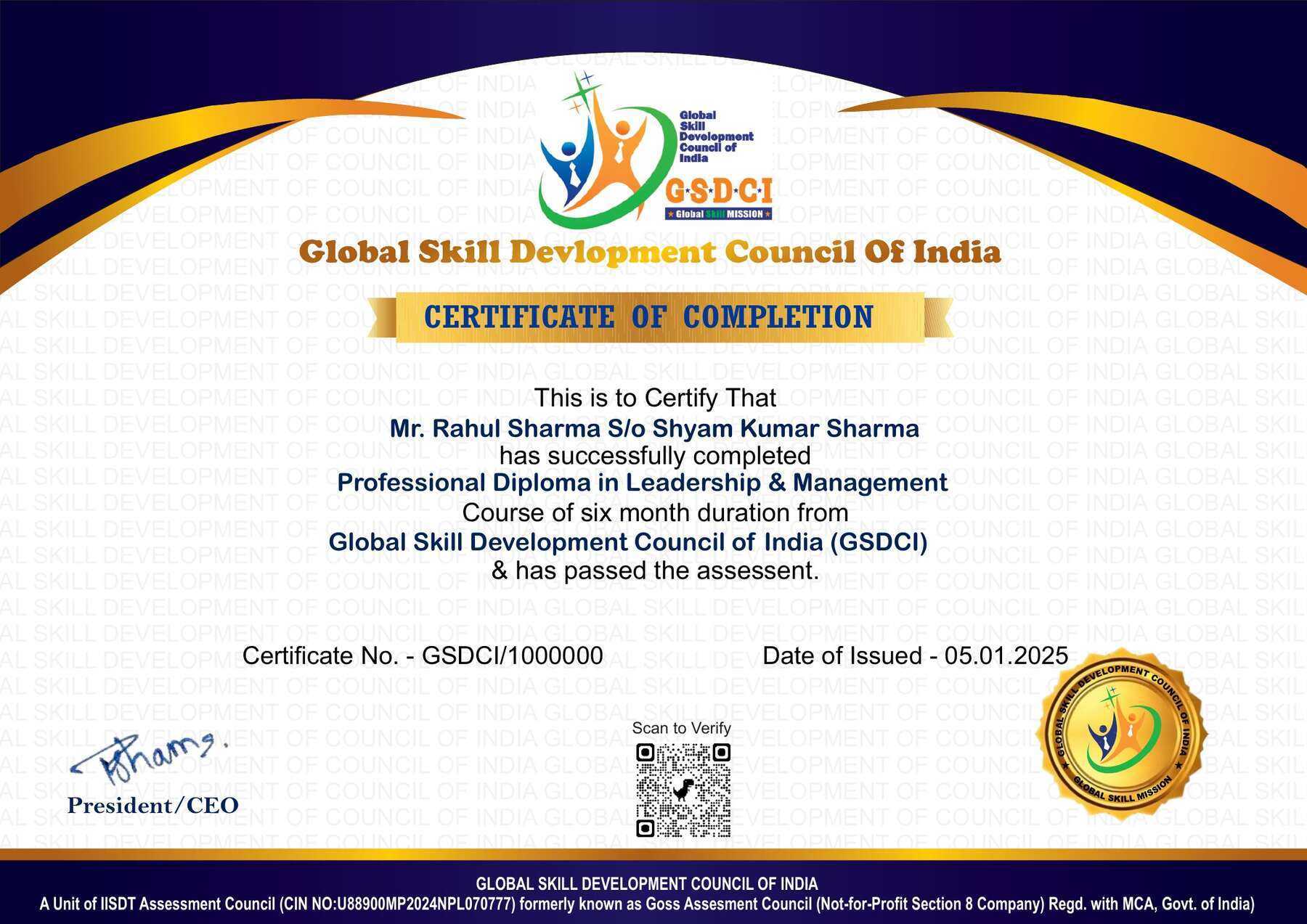
Certification: Within 5 days after Completion of Online Assessment.
Get ready to join the Journey to become a GSDCI Certified Professional – International Certification and Assessment Body.
Steps to become a GSDCI Certified Professional:
Step 1: Select your certification you want to pursue.
Step 2: Click on get certified tab, new pop up window will open.
Step 3: Click on pay certification fee, you will be redirected to billing details page.
Step 4: Fill your details and click on pay certification fee, You will be redirected to payment gateway, pay fee by any available options like Card(Debit/Credit), Wallet, Paytm, Net banking, UPI and Google pay.
Step 5: You will get Login Credentials of Online E-Books and Online assessment link on your email id, within 48 hrs of payment.
Step 6: After completion of the online assessment, the soft copy of your certificate will be sent to your registered email ID within 5 days.
Assessment Modules:
Module 1: Fundamentals of Layout and Composition: Principles of design (balance, contrast, alignment, proximity), Elements of visual hierarchy and focal points, Types of layout structures (grid, column, modular), Understanding white space and visual rhythm, Introduction to page geometry and margins, Role of layout in visual communication.
Module 2: Typography and Text Arrangement: Basics of typefaces and font classification, Text alignment, spacing, and justification techniques, Pairing and hierarchy in typography, Using typography to guide the reader’s eye, Readability and legibility considerations, Creating typographic compositions for different media.
Module 3: Grids, Alignment, and Visual Flow: Setting up and using baseline and modular grids, Column structures for print and digital layouts, Alignment techniques for consistency, Creating flow through alignment and repetition, Building templates with consistent structure, Best practices in responsive layout design.
Module 4: Image Placement and Visual Balance: Choosing and placing images effectively in layouts, Cropping and scaling images for visual impact, Using color and contrast to balance visual weight, Layering and overlapping elements with harmony, Combining text and visuals for storytelling, Guidelines for ethical and legal image use.
Module 5: Layout Design Tools and Software: Overview of layout design software (Adobe InDesign, Affinity Publisher), Working with artboards, layers, and master pages, Creating and managing style guides and libraries, Integrating vector and raster graphics into layouts, Exporting and packaging files for print and digital, Designing layouts for different formats (flyers, magazines, web).
Module 6: Advanced Composition Projects and Evaluation: Designing multi-page documents and editorial spreads, Creating brand-compliant marketing materials, Layouts for advertising and promotional content, User-centered design for UI layout composition, Final project: layout design from concept to delivery, Portfolio building and professional presentation of layout work.
GSDCI Online Assessment Detail:
- Duration- 60 minutes.
- Number of Questions- 30.
- Number of Questions from each module: 5.
- Language: English.
- Exam Type: Multiple Choice Questions.
- Maximum Marks- 100, Passing Marks- 50%.
- There is no negative marking in any module.
| Marking System: | |||
| S.No. | No. of Questions | Marks Each Question | Total Marks |
| 1 | 10 | 5 | 50 |
| 2 | 5 | 4 | 20 |
| 3 | 5 | 3 | 15 |
| 4 | 5 | 2 | 10 |
| 5 | 5 | 1 | 5 |
| 30 | 100 | ||
| How Students will be Graded: | |||
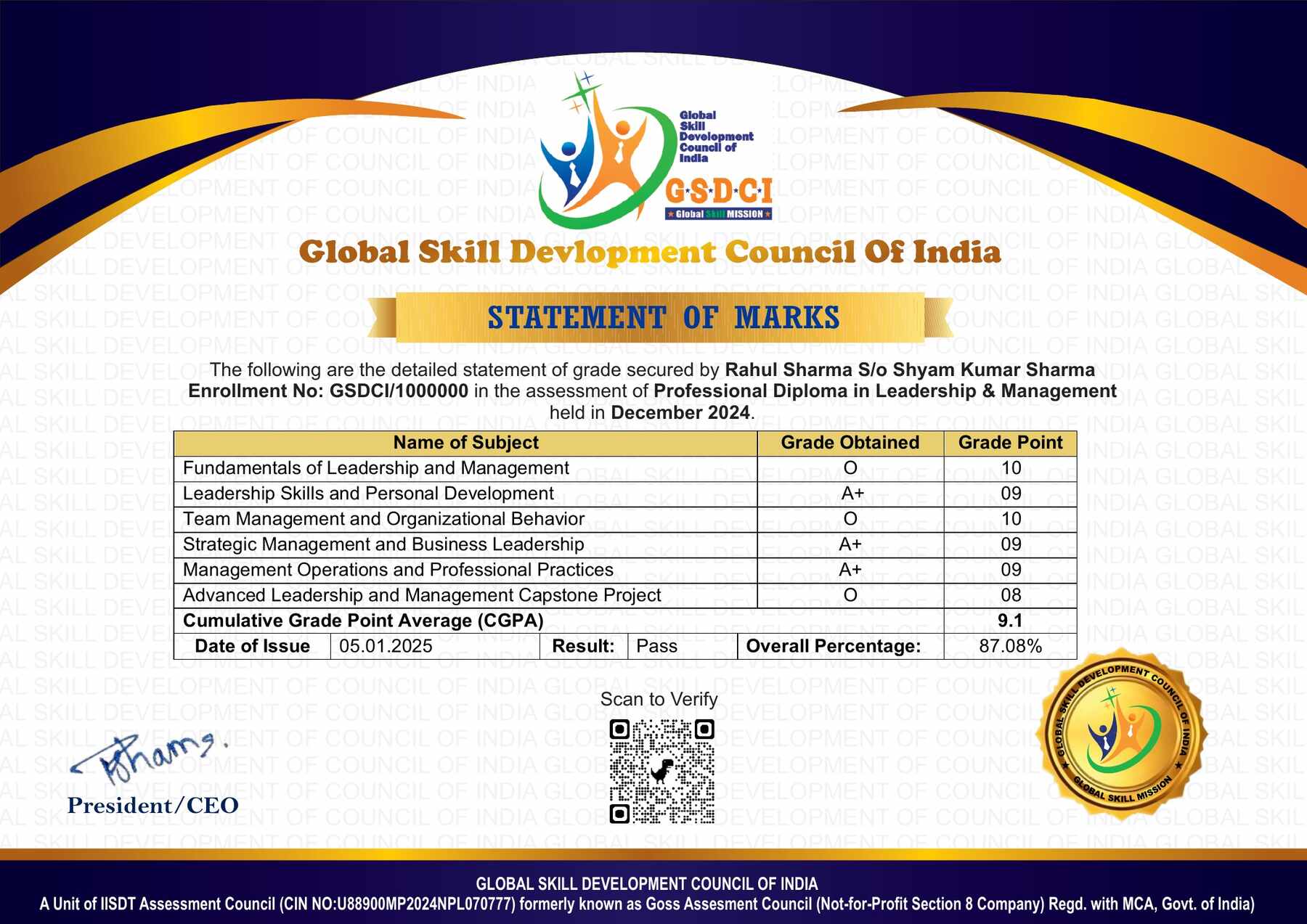
| S.No. | Marks | Grade | |
| 1 | 91-100 | O (Outstanding) | |
| 2 | 81-90 | A+ (Excellent) | |
| 3 | 71-80 | A (Very Good) | |
| 4 | 61-70 | B (Good) | |
| 5 | 50-60 | P (Pass) | |
| 6 | 0-49 | F (Fail) | |
Benefits of Certification:
🌍 1. Global Recognition & Credibility – Stand out worldwide with a certification that opens doors across borders. Trusted by employers, respected by institutions, and recognized in over 100 countries.
📜 2. Quality Assurance through ISO Certification – Certified to global ISO standards, our programs deliver excellence, consistency, and a benchmarked learning experience that speaks for itself.
💼 3. Career Advancement & Employability – Enhances your resume and increases chances of promotions or job offers.
🤝 4. Non-Profit Trust Factor – Certifications from non-profit organizations are mission-driven rather than profit-driven.
📚 5. Access to Verified Learning & Resources – Often includes e-books, mock tests, and online support without hidden costs.
🔍 6. Transparency & Online Verification – Certifications come with a unique Enrolment ID for easy online verification by employers and institutions.
⏳ 7. Lifetime or Long-Term Validity – Certifications usually have lifetime validity or long-term recognition, reducing the need for frequent renewals.

Reviews
There are no reviews yet.