
No products in the cart.



Certified Container Shipping Officer
₹6,000.00 ₹3,000.00
50% fee concession will end in
To train professionals to manage container shipping operations efficiently, ensuring smooth cargo movement, documentation accuracy, and regulatory compliance.
Description
Course Name: Certified Container Shipping Officer
Global Occupational Skill Standard – GOSS ID: GOSS/TL/CCSO/V1
Eligibility: Graduation or Equivalent or minimum 2 years of relevant experience (experience-based learners can directly enroll and certify).
Objective: The Certified Container Shipping Officer course is designed to equip participants with the operational knowledge and skills required to handle end-to-end container shipping processes. The course covers container types and specifications, booking and stowage planning, terminal operations, vessel scheduling, freight documentation (e.g., bill of lading, manifest), customs procedures, and international shipping regulations (SOLAS, IMO, ISPS).
Certification: Within 5 days after Completion of Online Assessment.
Get ready to join the Journey to become a GSDCI Certified Professional – International Certification and Assessment Body.
Steps to become a GSDCI Certified Professional:
Step 1: Select your certification you want to pursue.
Step 2: Click on get certified tab, new pop up window will open.
Step 3: Click on pay certification fee, you will be redirected to billing details page.
Step 4: Fill your details and click on pay certification fee, You will be redirected to payment gateway, pay fee by any available options like Card(Debit/Credit), Wallet, Paytm, Net banking, UPI and Google pay.
Step 5: You will get Login Credentials of Online E-Books and Online assessment link on your email id, within 48 hrs of payment.
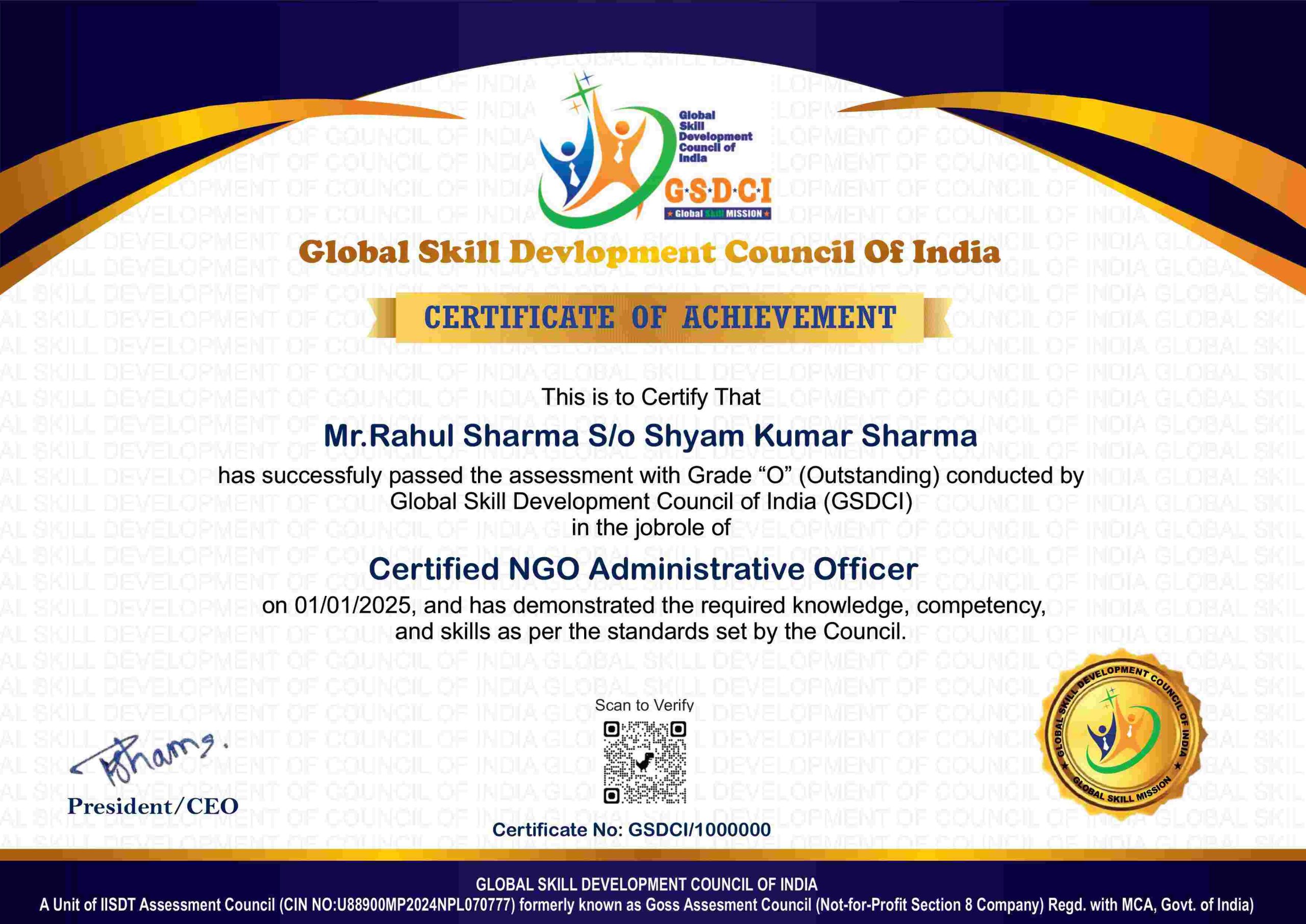
Step 6: After completion of the online assessment, the soft copy of your certificate will be sent to your registered email ID within 5 days.
Assessment Modules:
Module 1: Fundamentals of Container Shipping: Introduction to containerization and its impact on global trade, Types of containers and container vessels, Overview of major container shipping routes and alliances, Roles and responsibilities of a Container Shipping Officer, Key players: shipping lines, NVOCCs, freight forwarders, Port and terminal infrastructure supporting container operations.
Module 2: Container Handling and Vessel Operations: Loading and unloading operations for container ships, Container stowage planning and weight distribution, Coordination with port terminals and yard operations, Use of cranes, RTGs, and automated handling systems, Reefer container handling and monitoring, Lashing, securing, and container damage inspection.
Module 3: Shipping Documentation and Regulatory Compliance: Essential shipping documents: Bill of Lading, manifest, booking confirmation, Customs clearance procedures and regulatory bodies, Compliance with international codes (SOLAS VGM, IMDG, ISPS), Digital documentation and EDI in container shipping, Container tracking and status updates.
Module 4: Logistics Coordination and Customer Service: Coordination with shippers, consignees, and inland transporters, Container booking, scheduling, and tracking, Customer relationship management and issue resolution, Handling transshipment and intermodal operations, Empty container repositioning strategies, Service reliability and performance metrics.
Module 5: Container Freight Management and Planning: Freight rate structures and surcharges, Container leasing and demurrage/detention control, Slot allocation and space optimization, Cost control and fuel efficiency in container operations, Use of container management software and forecasting tools, Revenue and yield management strategies.
Module 6: Safety, Security, and Sustainability in Container Shipping: Container inspection and safety protocols, ISPS compliance and anti-piracy measures, Risk management and incident handling, Environmental regulations and green shipping practices, Waste management and emission reduction in container transport, Capstone project: develop a container shipping operation plan for a regional trade route including logistics, compliance, and sustainability measures.
GSDCI Online Assessment Detail:
- Duration- 60 minutes.
- Number of Questions- 30.
- Number of Questions from each module: 5.
- Language: English.
- Exam Type: Multiple Choice Questions.
- Maximum Marks- 100, Passing Marks- 50%.
- There is no negative marking in any module.
| Marking System: | |||
| S.No. | No. of Questions | Marks Each Question | Total Marks |
| 1 | 10 | 5 | 50 |
| 2 | 5 | 4 | 20 |
| 3 | 5 | 3 | 15 |
| 4 | 5 | 2 | 10 |
| 5 | 5 | 1 | 5 |
| 30 | 100 | ||
| How Students will be Graded: | |||
| S.No. | Marks | Grade | |
| 1 | 91-100 | O (Outstanding) | |
| 2 | 81-90 | A+ (Excellent) | |
| 3 | 71-80 | A (Very Good) | |
| 4 | 61-70 | B (Good) | |
| 5 | 50-60 | P (Pass) | |
| 6 | 0-49 | F (Fail) | |
Benefits of Certification:
1. Global Recognition & Credibility – Stand out worldwide with a certification that opens doors across borders. Trusted by employers, respected by institutions, and recognized in over 100 countries.
2. Quality Assurance through ISO Certification – Certified to global ISO standards, our programs deliver excellence, consistency, and a benchmarked learning experience that speaks for itself.
3. Career Advancement & Employability – Enhances your resume and increases chances of promotions or job offers.
4. Non-Profit Trust Factor – Certifications from non-profit organizations are mission-driven rather than profit-driven.
5. Access to Verified Learning & Resources – Often includes e-books, mock tests, and online support without hidden costs.
6. Transparency & Online Verification – Certifications come with a unique Enrolment ID for easy online verification by employers and institutions.
7. Lifetime or Long-Term Validity – Certifications usually have lifetime validity or long-term recognition, reducing the need for frequent renewals.



Reviews
There are no reviews yet.