Certified Pollution Control Specialist

6,500.00 3,250.00

50% fee concession will end in

To train professionals to identify, monitor, and control various forms of pollution, ensuring compliance with environmental regulations and promoting sustainable practices.

Description

Certification Name: Certified Pollution Control Specialist

Global Occupational Skill Standard – GOSS ID: GOSS/FS/CPCS/V1

Eligibility: Graduation or Equivalent or minimum 2 years of relevant experience (experience-based learners can directly enroll and certify).

Objective: The Certified Pollution Control Specialist course is designed to provide comprehensive training in the prevention, control, and management of air, water, soil, and noise pollution across industrial, municipal, and commercial sectors. The course covers pollution sources, monitoring techniques, sampling and analysis methods, pollution control technologies, and waste treatment processes. Participants will gain expertise in regulatory compliance with standards such as those set by the Central Pollution Control Board (CPCB), State Pollution Control Boards (SPCBs), EPA, and ISO 14001. 

Certification: Within 5 days after Completion of Online Assessment.

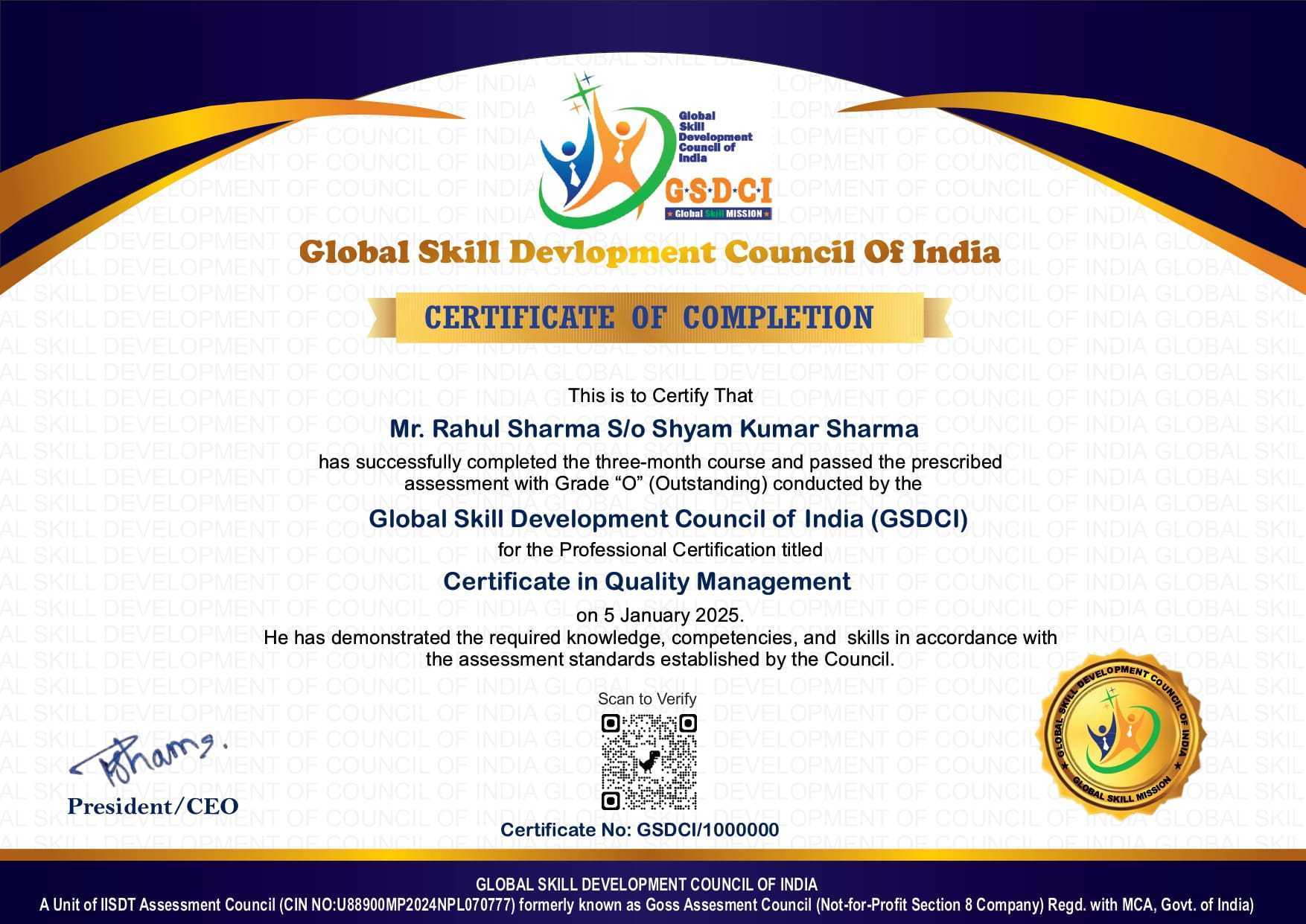
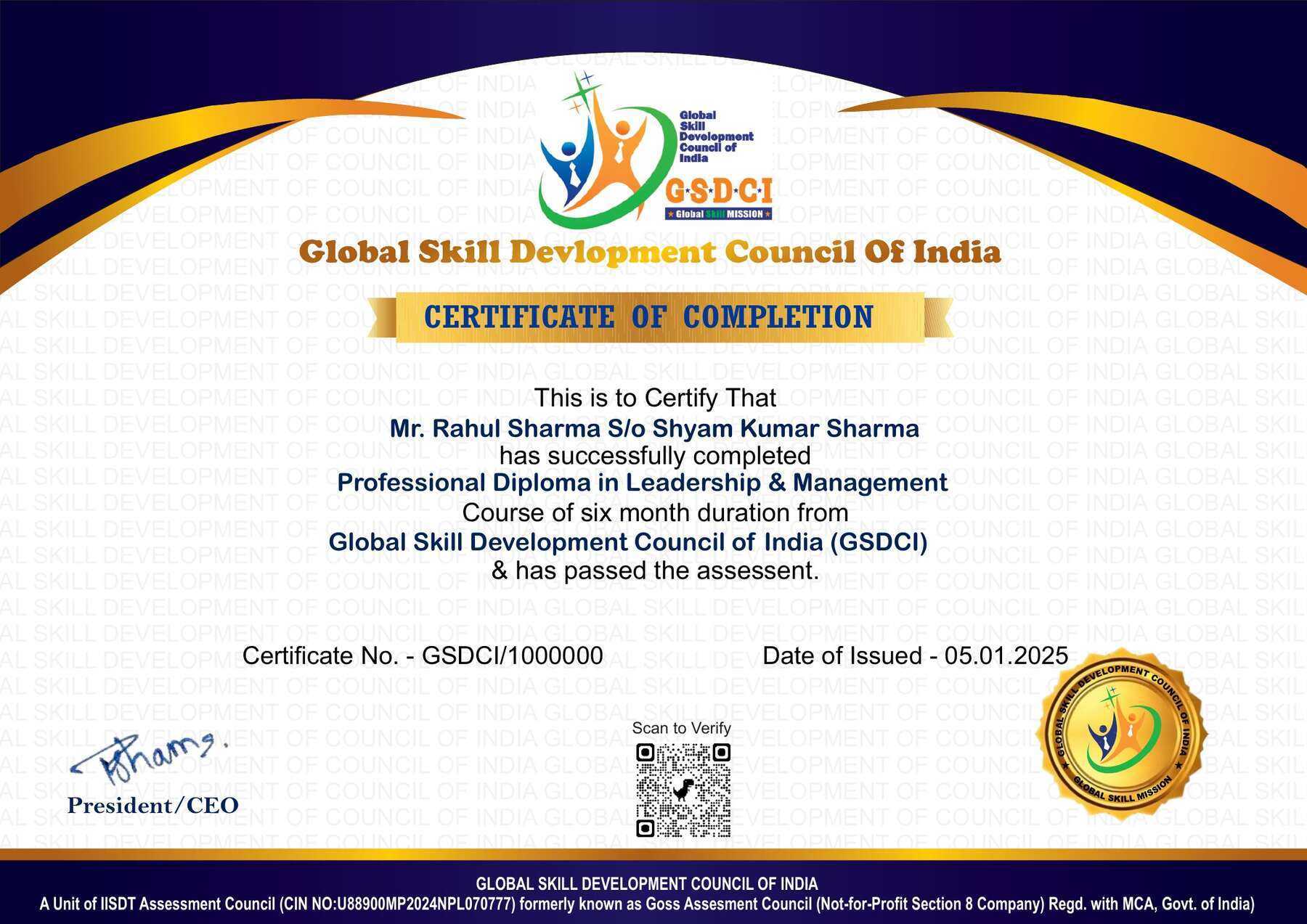
Get ready to join the Journey to become a GSDCI Certified Professional  – International Certification and Assessment Body.

Steps to become a GSDCI Certified Professional:

Step 1: Select your certification you want to pursue.

Step 2: Click on get certified tab, new pop up window will open.

Step 3: Click on pay certification fee, you will be redirected to billing details page.

Step 4: Fill your details and click on pay certification fee, You will be redirected to payment gateway, pay fee by any available options like Card(Debit/Credit), Wallet, Paytm, Net banking, UPI and Google pay.

Step 5: You will get Login Credentials of Online E-Books and Online assessment link on your email id, within 48 hrs of payment.

Step 6: After completion of online assessment, you can download your Certificate Immediately.

Assessment Modules:

Module 1: Introduction to Pollution and Environmental Management: Definition and types of pollution (air, water, soil, noise, thermal, light), Sources and causes of pollution in various sectors, Effects of pollution on health and ecosystems, Principles of pollution prevention and control, Role and responsibilities of a Pollution Control Specialist, Overview of global and national pollution control goals.

Module 2: Air Pollution Control and Monitoring: Air pollutants and emission sources, Ambient air quality standards and indices, Air pollution control technologies (scrubbers, filters, ESPs), Vehicular and industrial emission control strategies, Air quality monitoring methods and equipment, Indoor air pollution and mitigation techniques.

Module 3: Water Pollution Control and Wastewater Treatment: Sources and types of water pollutants, Water quality parameters and standards, Primary, secondary, and tertiary wastewater treatment methods, Sewage treatment plants (STPs) and effluent treatment plants (ETPs), Reuse and recycling of treated water, Monitoring and sampling techniques for water bodies.

Module 4: Soil Pollution and Solid Waste Management: Causes and types of soil contamination, Soil remediation and treatment techniques, Municipal solid waste (MSW) segregation and disposal, Hazardous and biomedical waste management rules, Composting, incineration, and landfill management, Circular economy and zero-waste strategies.

Module 5: Noise, Thermal, and Other Emerging Pollutants: Sources and effects of noise and thermal pollution, Noise level measurement and control measures, Radiation, plastic, e-waste, and light pollution control, Environmental standards for non-conventional pollutants, Public health implications and mitigation strategies, Technological innovations in pollution control.

Module 6: Environmental Laws, Compliance, and Reporting: National and international pollution control regulations (EPA, CPCB, SPCB), Environmental permits, licenses, and clearances, Pollution control boards and institutional frameworks, Environmental audit and compliance reporting, Penalties, violations, and enforcement mechanisms, Case studies on successful pollution control initiatives.

GSDCI Online Assessment Detail:

  • Duration- 60 minutes.
  • Number of Questions- 30.
  • Number of Questions from each module: 5.
  • Language: English.
  • Exam Type: Multiple Choice Questions.
  • Maximum Marks- 100, Passing Marks- 50%.
  • There is no negative marking in any module.
Marking System:
S.No. No. of Questions Marks Each Question Total Marks
1 10 5 50
2 5 4 20
3 5 3 15
4 5 2 10
5 5 1 5
30   100
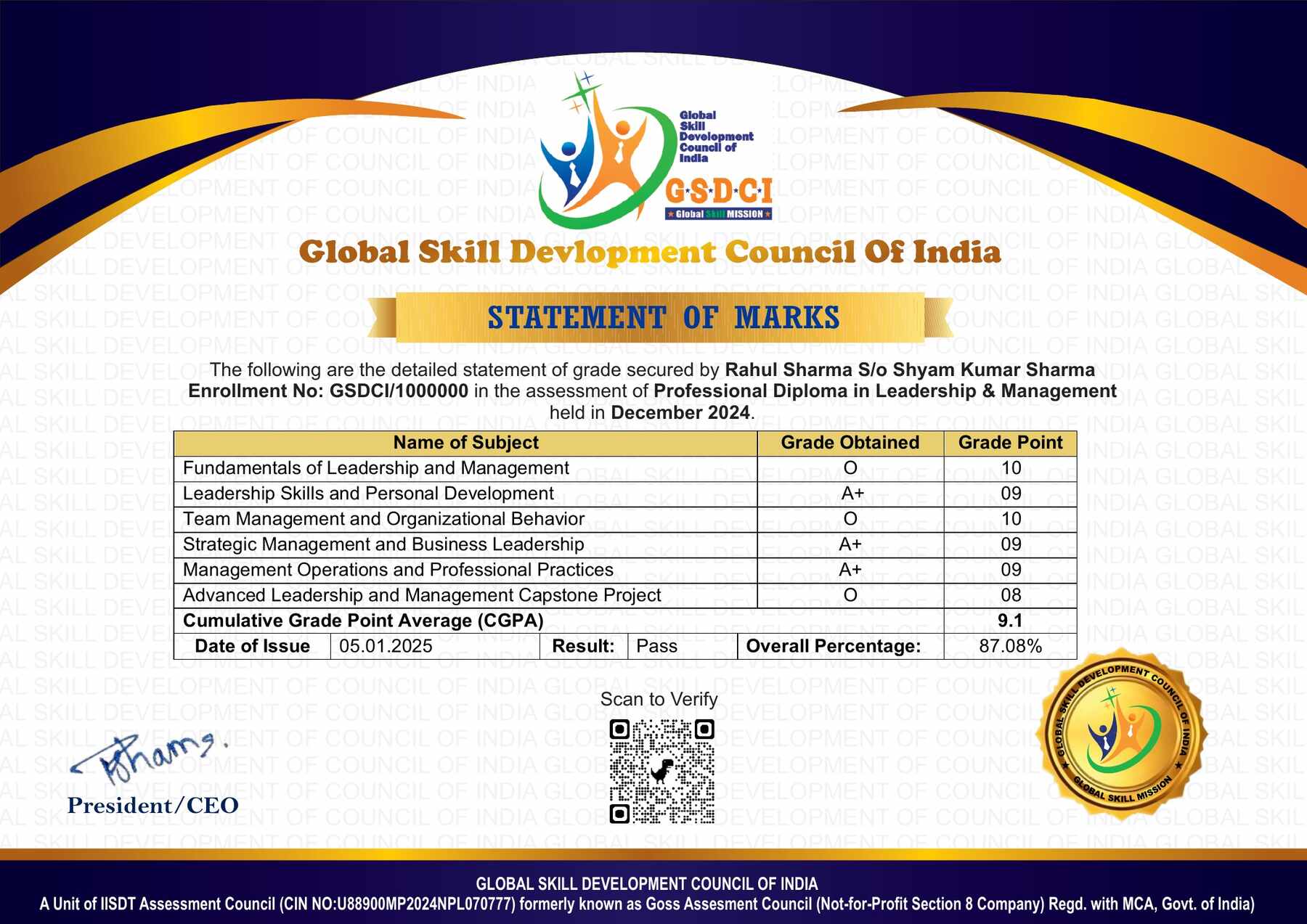
How Students will be Graded:
S.No. Marks Grade
1 91-100 O (Outstanding)
2 81-90 A+ (Excellent)
3 71-80 A (Very Good)
4 61-70 B (Good)
5 50-60 P (Pass)
6  0-49 F (Fail)


Benefits of Certification:

🌍 1. Global Recognition & Credibility – Stand out worldwide with a certification that opens doors across borders. Trusted by employers, respected by institutions, and recognized in over 100 countries.

📜 2. Quality Assurance through ISO Certification – Certified to global ISO standards, our programs deliver excellence, consistency, and a benchmarked learning experience that speaks for itself.

💼 3. Career Advancement & Employability – Enhances your resume and increases chances of promotions or job offers.

🤝 4. Non-Profit Trust Factor – Certifications from non-profit organizations are mission-driven rather than profit-driven.

📚 5. Access to Verified Learning & Resources – Often includes e-books, mock tests, and online support without hidden costs.

🔍 6. Transparency & Online Verification – Certifications come with a unique Enrolment ID for easy online verification by employers and institutions.

⏳ 7. Lifetime or Long-Term Validity – Certifications usually have lifetime validity or long-term recognition, reducing the need for frequent renewals.

Reviews

There are no reviews yet.

Be the first to review “Certified Pollution Control Specialist”

Your email address will not be published. Required fields are marked *