
No products in the cart.



Certified Sewing Machine Operator
₹5,500.00 ₹2,750.00
50% fee concession will end in
This course trains individuals to operate various sewing machines, focusing on machine setup, sewing techniques, quality stitching, and troubleshooting to ensure efficient and high-quality garment production.
Description
Course Name: Certified Sewing Machine Operator
Global Occupational Skill Standard – GOSS ID: GOSS/AT/CSMO/V1
Eligibility: 10th (High School) or Equivalent or minimum 2 years of relevant experience (experience-based learners can directly enroll and certify).
Objective: This course is designed to equip participants with the practical skills and technical knowledge required to operate various types of sewing machines used in garment manufacturing. Participants will learn about machine setup, threading, operation, and maintenance to ensure smooth and efficient sewing processes. The curriculum covers key sewing techniques such as straight stitching, overlocking, buttonholes, and decorative stitching, as well as understanding fabric types and their corresponding sewing requirements.
Certification: Within 5 days after Completion of Online Assessment.
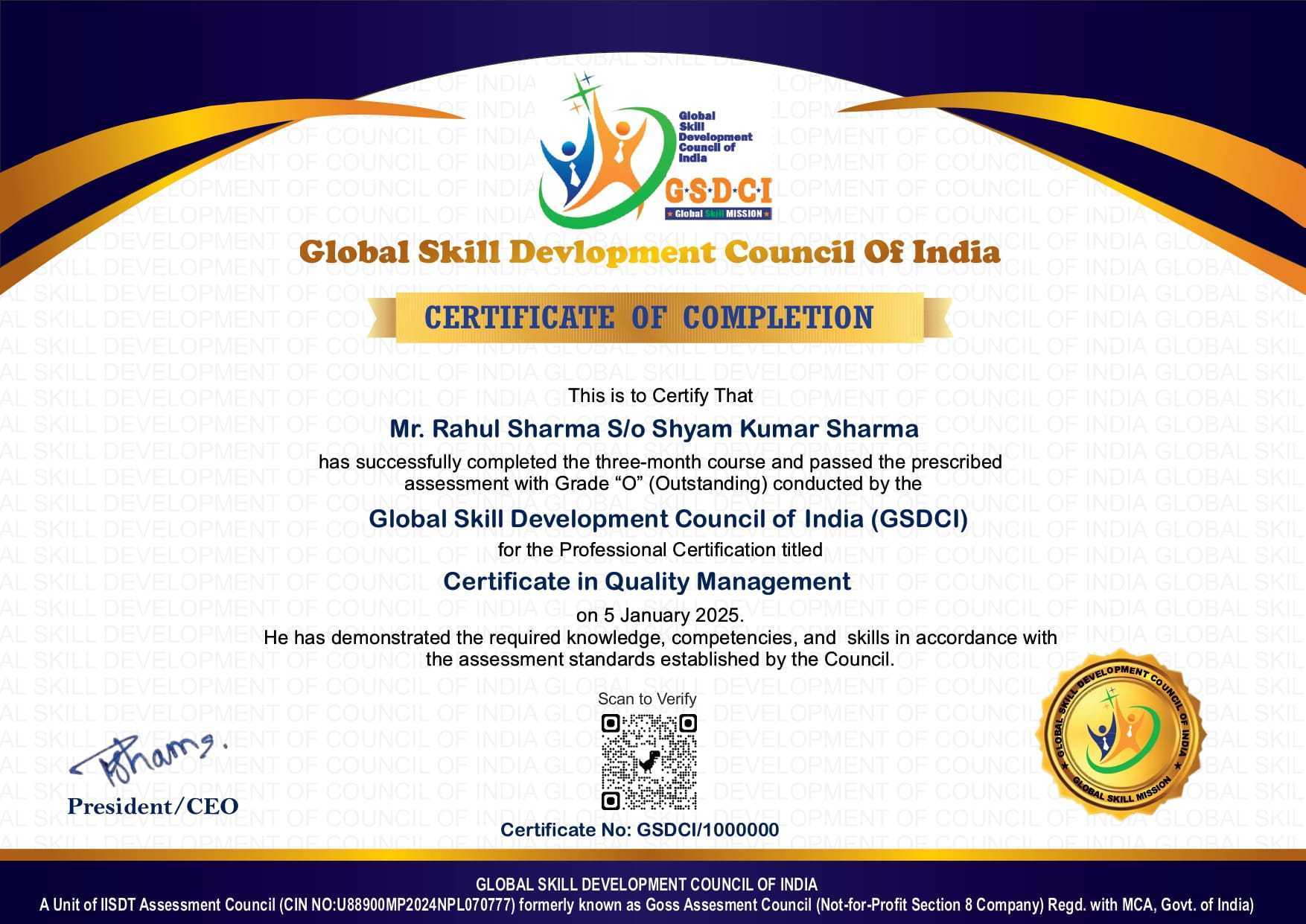
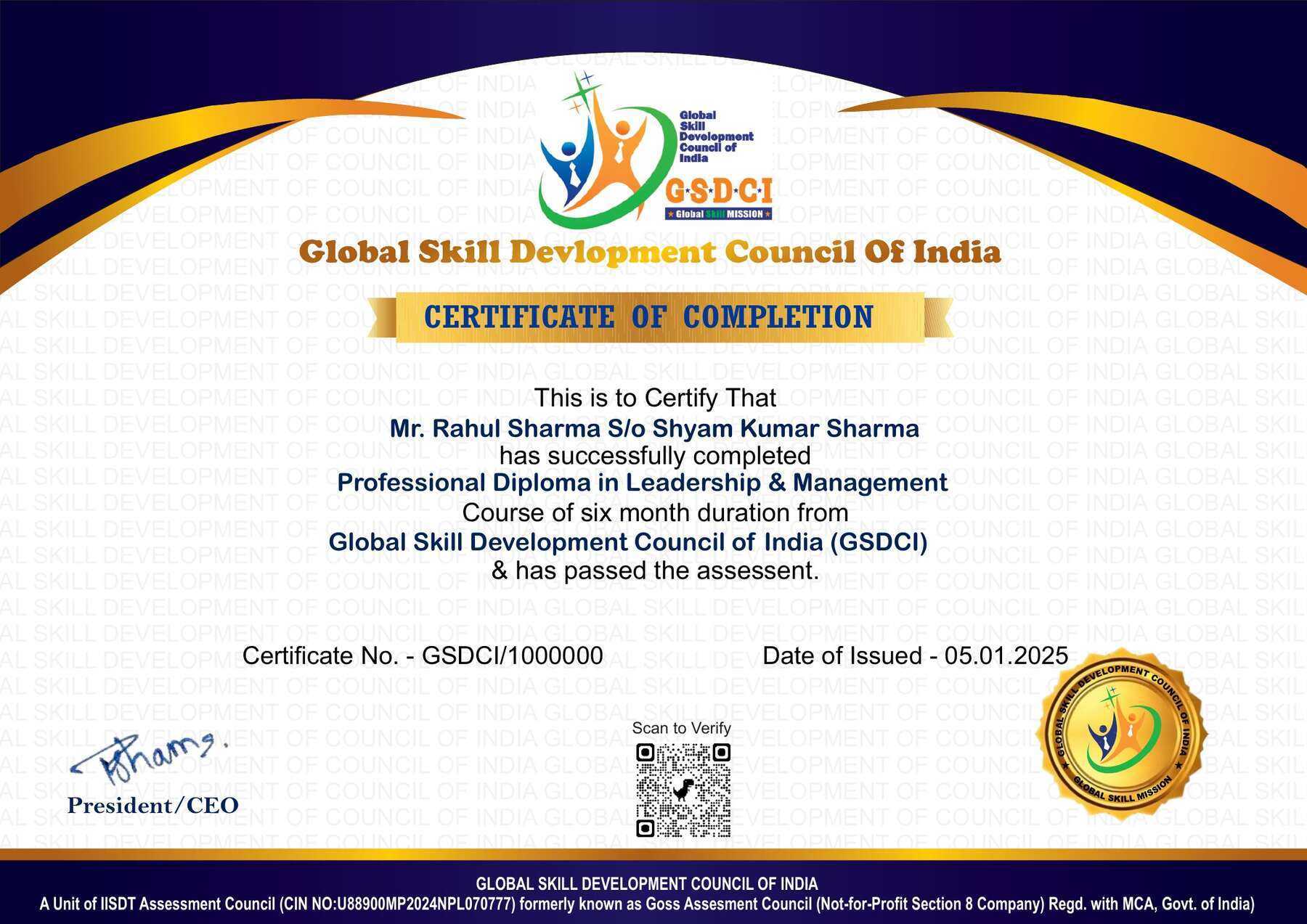
Get ready to join the Journey to become a GSDCI Certified Professional – International Certification and Assessment Body.
Steps to become a GSDCI Certified Professional:
Step 1: Select your certification you want to pursue.
Step 2: Click on get certified tab, new pop up window will open.
Step 3: Click on pay certification fee, you will be redirected to billing details page.
Step 4: Fill your details and click on pay certification fee, You will be redirected to payment gateway, pay fee by any available options like Card(Debit/Credit), Wallet, Paytm, Net banking, UPI and Google pay.
Step 5: You will get Login Credentials of Online E-Books and Online assessment link on your email id, within 48 hrs of payment.
Step 6: After completion of the online assessment, the soft copy of your certificate will be sent to your registered email ID within 5 days.
Assessment Modules:
Module 1: Introduction to Sewing Machines and Equipment: Overview of Different Types of Sewing Machines (Flat-bed, Cylinder-bed, Overlock, Coverstitch, etc.), Components of a Sewing Machine and Their Functions, Understanding Machine Settings and Adjustments, Importance of Thread Types and Needle Selection, Operating Sewing Machines Safely and Efficiently, Troubleshooting Common Sewing Machine Issues.
Module 2: Fabric Handling and Preparation for Sewing: Preparing and Inspecting Fabrics Before Sewing, Understanding Fabric Properties (Woven, Knitted, Stretch, etc.), Proper Handling to Prevent Damage or Stretching, Understanding Fabric Grain and How It Affects Sewing, Measuring and Marking Fabric for Accurate Cutting and Sewing, Managing Fabric Shrinkage and Pre-treatment Techniques.
Module 3: Sewing Techniques and Stitches: Introduction to Different Types of Stitches (Straight Stitch, Zigzag, Overlock, Blind Stitch, etc.), Understanding Seam Types and Their Applications, Correct Stitch Length and Tension Settings, Handling Specialty Threads (Elastic, Metallic, etc.), Sewing Techniques for Different Fabrics (Delicate, Heavyweight, Stretch), Performing Decorative Stitches and Embellishments.
Module 4: Sewing Machine Maintenance and Adjustment: Routine Maintenance of Sewing Machines (Lubrication, Cleaning, etc.), Adjusting Stitch Tension and Feed Mechanism, Replacing Needles and Presser Feet, Troubleshooting and Repairing Common Machine Malfunctions, Ensuring Consistent Sewing Speed and Quality, Preventing Thread Breakage and Machine Jam Issues.
Module 5: Quality Control and Fabric Alignment: Ensuring Accurate Fabric Alignment During Sewing, Inspecting and Adjusting for Consistent Seam Quality, Quality Standards for Stitches and Seams (No Skipped Stitches, Even Tension), Monitoring and Controlling Stitching Accuracy, Managing Waste and Thread Trimming, Checking for Defects (Fabric Defects, Incorrect Stitching, etc.).
Module 6: Efficiency, Safety, and Work Environment: Improving Sewing Speed Without Compromising Quality, Time Management and Meeting Production Targets, Ergonomics and Safety Measures in the Sewing Area, Organizing the Sewing Workstation for Maximum Efficiency, Managing Production Line Flow and Reducing Downtime, Adhering to Workplace Safety Standards and Practices (Handling Tools, Electrical Equipment, etc.).
GSDCI Online Assessment Detail:
- Duration- 60 minutes.
- Number of Questions- 30.
- Number of Questions from each module: 5.
- Language: English.
- Exam Type: Multiple Choice Questions.
- Maximum Marks- 100, Passing Marks- 50%.
- There is no negative marking in any module.
| Marking System: | |||
| S.No. | No. of Questions | Marks Each Question | Total Marks |
| 1 | 10 | 5 | 50 |
| 2 | 5 | 4 | 20 |
| 3 | 5 | 3 | 15 |
| 4 | 5 | 2 | 10 |
| 5 | 5 | 1 | 5 |
| 30 | 100 | ||
| How Students will be Graded: | |||
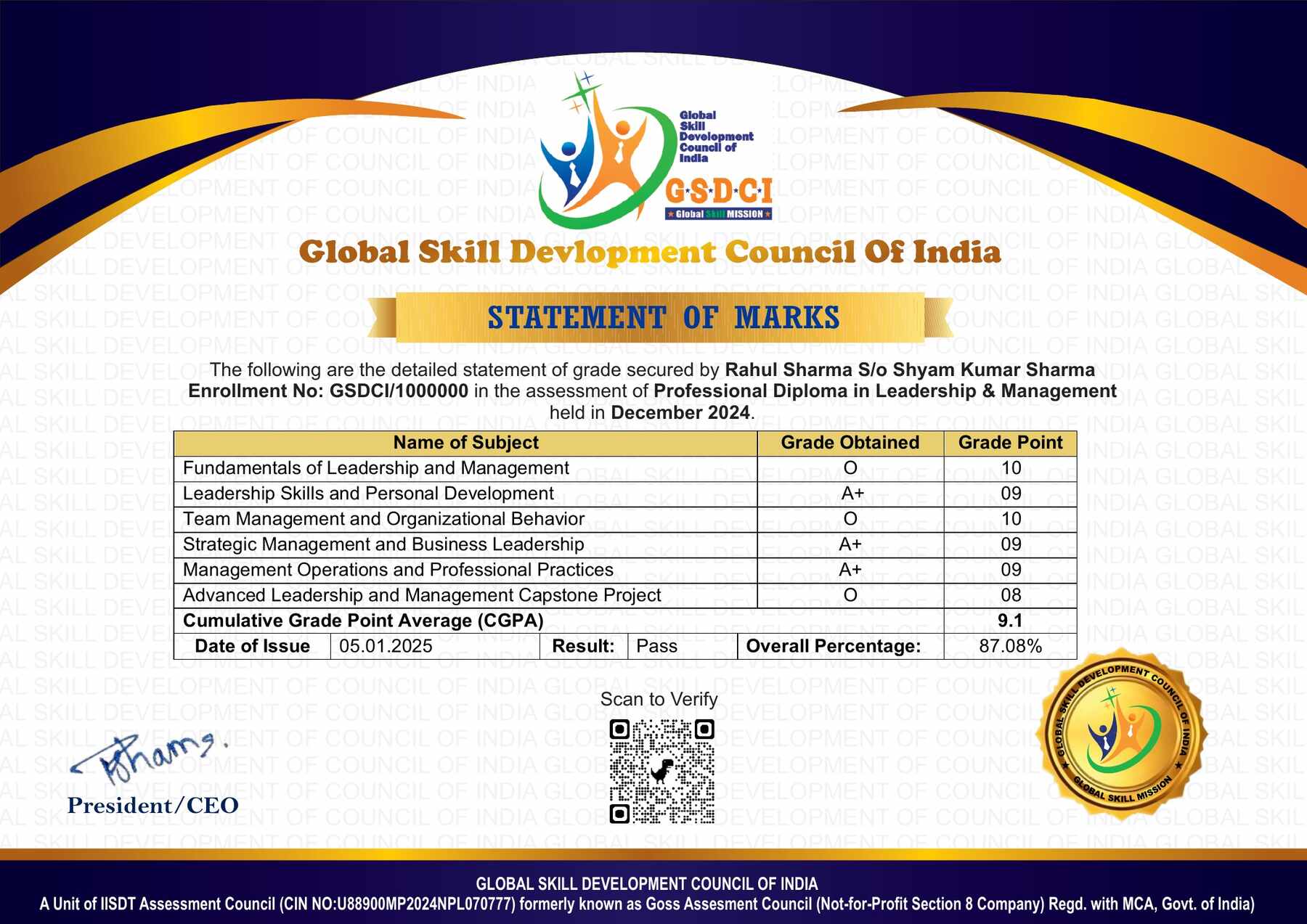
| S.No. | Marks | Grade | |
| 1 | 91-100 | O (Outstanding) | |
| 2 | 81-90 | A+ (Excellent) | |
| 3 | 71-80 | A (Very Good) | |
| 4 | 61-70 | B (Good) | |
| 5 | 50-60 | P (Pass) | |
| 6 | 0-49 | F (Fail) | |
Benefits of Certification:
🌍 1. Global Recognition & Credibility – Stand out worldwide with a certification that opens doors across borders. Trusted by employers, respected by institutions, and recognized in over 100 countries.
📜 2. Quality Assurance through ISO Certification – Certified to global ISO standards, our programs deliver excellence, consistency, and a benchmarked learning experience that speaks for itself.
💼 3. Career Advancement & Employability – Enhances your resume and increases chances of promotions or job offers.
🤝 4. Non-Profit Trust Factor – Certifications from non-profit organizations are mission-driven rather than profit-driven.
📚 5. Access to Verified Learning & Resources – Often includes e-books, mock tests, and online support without hidden costs.
🔍 6. Transparency & Online Verification – Certifications come with a unique Enrolment ID for easy online verification by employers and institutions.
⏳ 7. Lifetime or Long-Term Validity – Certifications usually have lifetime validity or long-term recognition, reducing the need for frequent renewals.


Reviews
There are no reviews yet.