Certified Yoga Philosophy & History Specialist

6,500.00 3,250.00

50% Discount will end in

To provide in-depth knowledge of yoga’s philosophical roots and historical development, enhancing the depth and authenticity of personal practice and teaching.

Description

Certification Name: Certified Yoga Philosophy & History Specialist

Global Occupational Skill Standard – GOSS ID: GOSS/YM/CYPHS/V1

Eligibility: 10+2 (higher Secondary) or Equivalent or minimum 2 years of relevant experience (experience-based learners can directly enroll and certify).

Objective: The Certified Yoga Philosophy & History Specialist course is designed to provide participants with a deep and scholarly understanding of the philosophical foundations and historical evolution of yoga. This course explores key yogic texts such as the Yoga Sutras of Patanjali, Bhagavad Gita, Hatha Yoga Pradipika, and Upanishads, offering insights into their core teachings and relevance to modern practice. 

Certification: Within 5 days after Completion of Online Assessment.

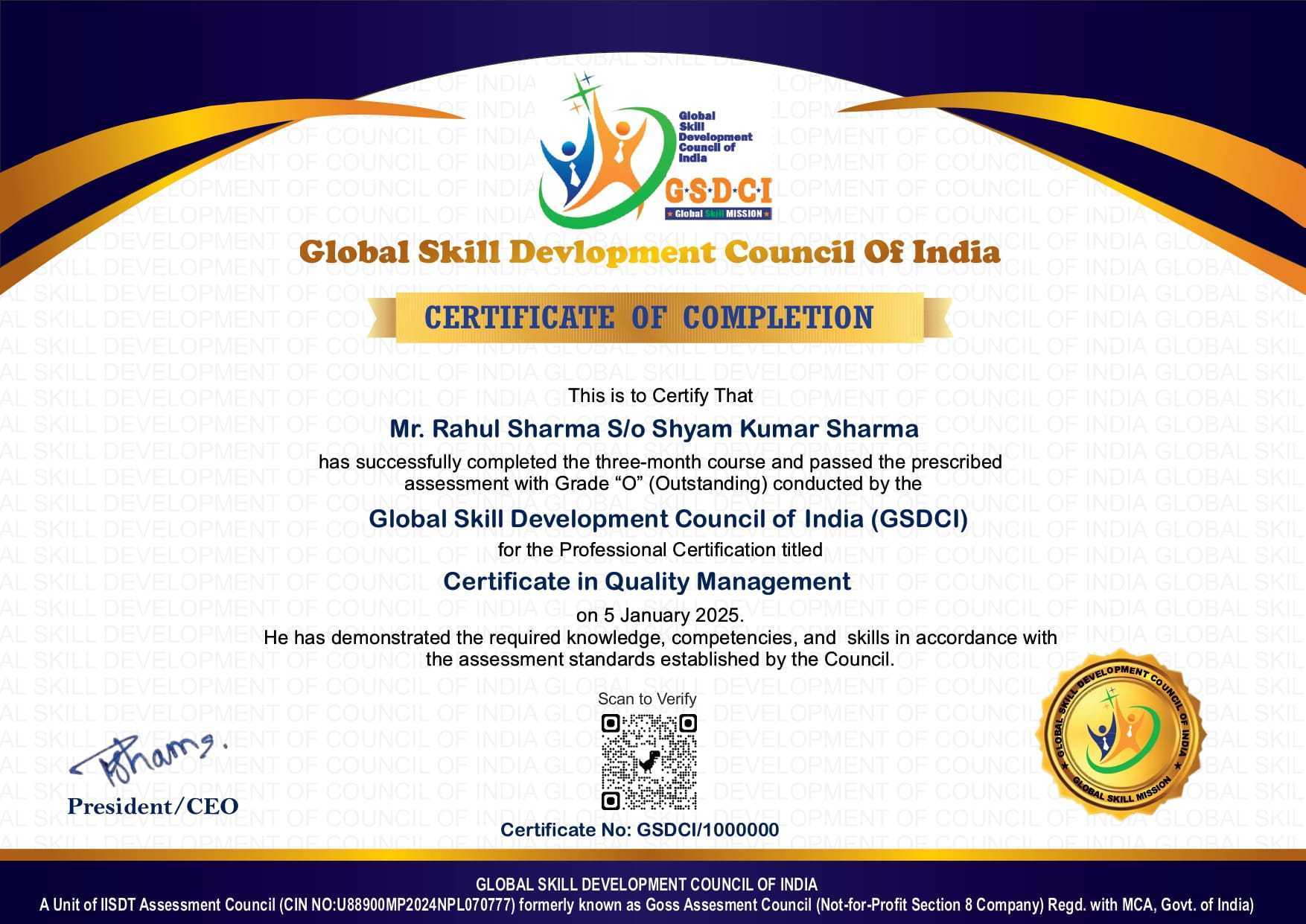
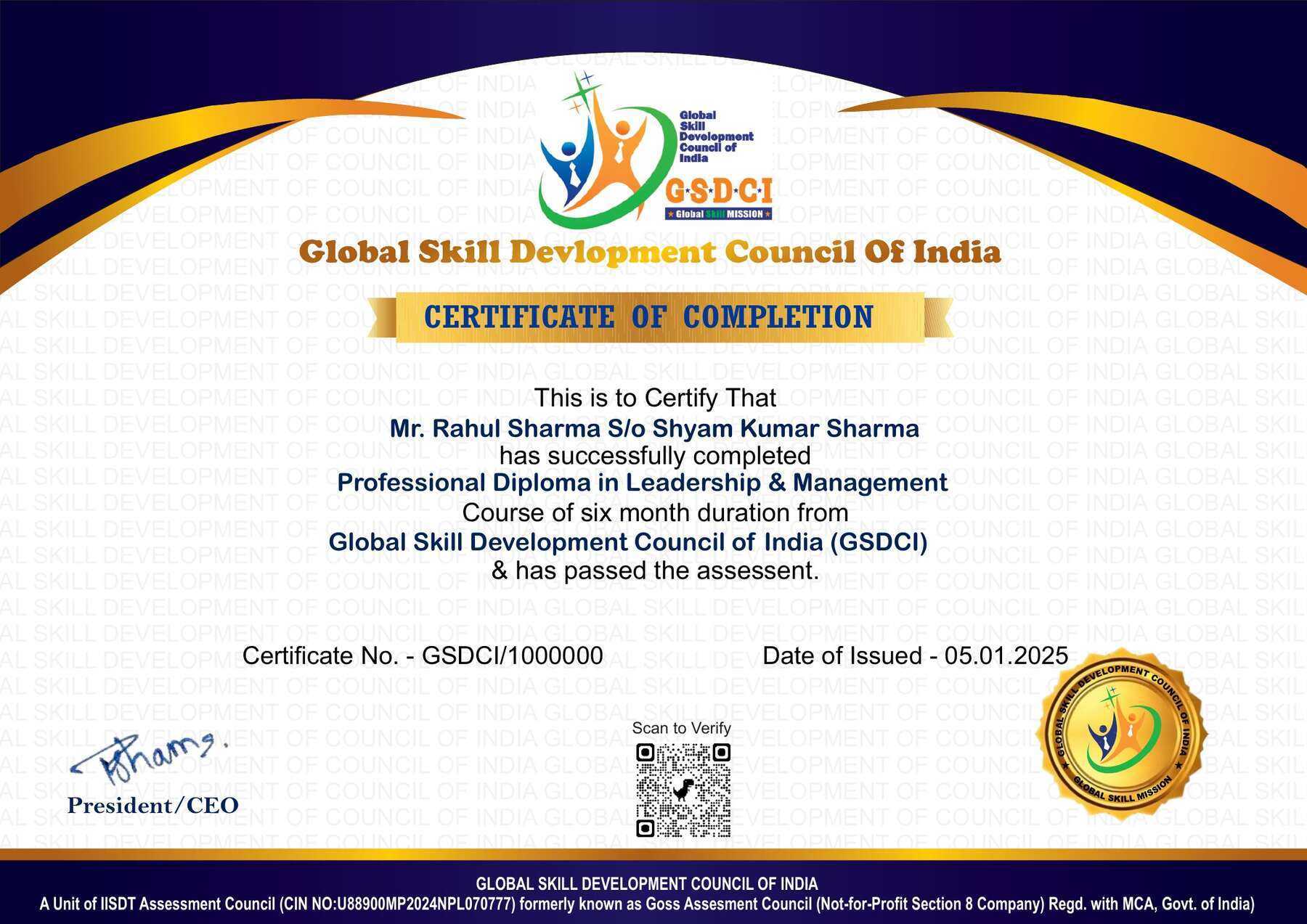
Get ready to join the Journey to become a GSDCI Certified Professional  – International Certification and Assessment Body.

Steps to become a GSDCI Certified Professional:

Step 1: Select your certification you want to pursue.

Step 2: Click on get certified tab, new pop up window will open.

Step 3: Click on pay certification fee, you will be redirected to billing details page.

Step 4: Fill your details and click on pay certification fee, You will be redirected to payment gateway, pay fee by any available options like Card(Debit/Credit), Wallet, Paytm, Net banking, UPI and Google pay.

Step 5: You will get Login Credentials of Online E-Books and Online assessment link on your email id, within 48 hrs of payment.

Step 6: After completion of online assessment, you can download your Certificate Immediately.

Assessment Modules:

Module 1: Introduction to Yoga Philosophy: Overview of Yoga as a holistic system of mind-body-spirit integration, The origins of Yoga and its historical development in ancient India, Key philosophical texts: The Vedas, Upanishads, Bhagavad Gita, and Yoga Sutras of Patanjali, Introduction to the concept of “Dharma” (righteousness) in Yoga, The relationship between Yoga philosophy and its practical application in modern life, The five key principles of Yoga (Breath, Body, Mind, Energy, and Awareness).

Module 2: The Yoga Sutras of Patanjali: In-depth study of the 8 Limbs of Yoga (Ashtanga Yoga): Yamas, Niyamas, Asana, Pranayama, Pratyahara, Dharana, Dhyana, and Samadhi, The concept of “Chitta” (mind stuff) and its role in Yoga practice, Understanding the nature of “Vrittis” (mental modifications) and how to control them, The concept of “Kriya” Yoga and its practical applications in daily life, The role of meditation and mindfulness in attaining self-realization, Interpretation of key Sutras and their relevance to modern Yoga practice.

Module 3: The Bhagavad Gita and Its Role in Yoga: The Bhagavad Gita as a spiritual and philosophical text, Key teachings of Lord Krishna: Karma Yoga (selfless action), Bhakti Yoga (the path of devotion), and Jnana Yoga (the path of knowledge), The nature of the Self (Atman) and its connection to the universal consciousness (Brahman), Understanding the concept of Dharma and its role in life’s purpose, Applying the teachings of the Bhagavad Gita in modern Yoga practice, The influence of the Bhagavad Gita on the development of various schools of Yoga.

Module 4: The History and Evolution of Yoga: Tracing the historical roots of Yoga from the Vedic period to modern times, The development of different schools of Yoga: Hatha Yoga, Raja Yoga, Karma Yoga, Bhakti Yoga, and Jnana Yoga, Key figures in the history of Yoga (e.g., Patanjali, Swami Vivekananda, Krishnamacharya, T. Krishnamacharya, B.K.S. Iyengar), The influence of Yoga on Eastern and Western spiritual practices, The spread of Yoga to the West in the 20th century, The globalization and modern adaptations of Yoga.

Module 5: The Concept of Self-Realization in Yoga: Understanding the nature of “Atman” (individual soul) and “Brahman” (universal consciousness), The process of self-discovery and spiritual awakening through Yoga, The importance of meditation, introspection, and self-inquiry (Jnana Yoga) in understanding the Self, The role of the Guru in guiding students toward self-realization, The pursuit of liberation (Moksha) through Yoga, Exploring the ultimate goal of Yoga: union with the Divine (Samadhi).

Module 6: Integrating Yoga Philosophy into Practice: How to incorporate the teachings of Yoga philosophy into daily life and practice, The application of Yamas (moral codes) and Niyamas (personal observances) in modern living, Integrating the practice of meditation, mindfulness, and self-inquiry into Yoga classes, Using philosophical principles to enhance personal growth and spiritual development, Teaching Yoga philosophy in a practical, accessible way for students, Balancing traditional teachings with contemporary approaches to make philosophy relevant to modern practitioners.

GSDCI Online Assessment Detail:

  • Duration- 60 minutes.
  • Number of Questions- 30.
  • Number of Questions from each module: 5.
  • Language: English.
  • Exam Type: Multiple Choice Questions.
  • Maximum Marks- 100, Passing Marks- 50%.
  • There is no negative marking in any module.
Marking System:
S.No. No. of Questions Marks Each Question Total Marks
1 10 5 50
2 5 4 20
3 5 3 15
4 5 2 10
5 5 1 5
30   100
How Students will be Graded:
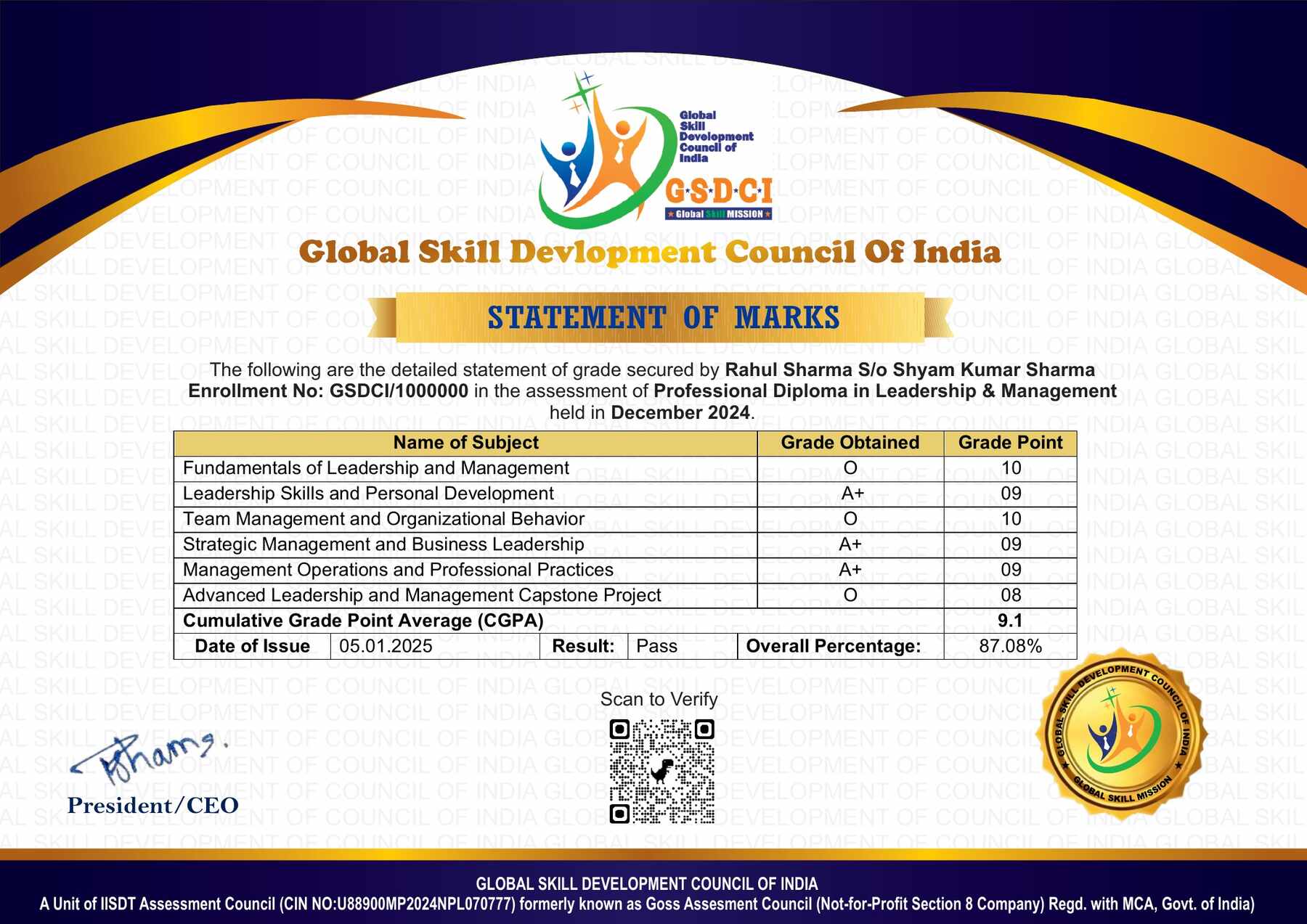
S.No. Marks Grade
1 91-100 O (Outstanding)
2 81-90 A+ (Excellent)
3 71-80 A (Very Good)
4 61-70 B (Good)
5 50-60 P (Pass)
6  0-49 F (Fail)


Benefits of Certification:

🌍 1. Global Recognition & Credibility – Stand out worldwide with a certification that opens doors across borders. Trusted by employers, respected by institutions, and recognized in over 100 countries.

📜 2. Quality Assurance through ISO Certification – Certified to global ISO standards, our programs deliver excellence, consistency, and a benchmarked learning experience that speaks for itself.

💼 3. Career Advancement & Employability – Enhances your resume and increases chances of promotions or job offers.

🤝 4. Non-Profit Trust Factor – Certifications from non-profit organizations are mission-driven rather than profit-driven.

📚 5. Access to Verified Learning & Resources – Often includes e-books, mock tests, and online support without hidden costs.

🔍 6. Transparency & Online Verification – Certifications come with a unique Enrolment ID for easy online verification by employers and institutions.

⏳ 7. Lifetime or Long-Term Validity – Certifications usually have lifetime validity or long-term recognition, reducing the need for frequent renewals.

Reviews

There are no reviews yet.

Be the first to review “Certified Yoga Philosophy & History Specialist”

Your email address will not be published. Required fields are marked *