Certified Yogaasana And Pranayama Professional

6,500.00 3,250.00

50% Discount will end in

To train individuals in the professional practice and teaching of yoga asanas and pranayama for physical health, mental clarity, and inner harmony.

Description

Certification Name: Certified Yogaasana And Pranayama Professional

Global Occupational Skill Standard – GOSS ID: GOSS/YM/CYPP/V1

Eligibility: 10+2 (higher Secondary) or Equivalent or minimum 2 years of relevant experience (experience-based learners can directly enroll and certify).

Objective: The Certified Yogaasana and Pranayama Professional course is designed to equip individuals with a thorough understanding and practical mastery of yogic postures (asanas) and breath control techniques (pranayama) based on classical yoga traditions. The course aims to develop professional competence in guiding others through safe, effective, and meaningful yoga sessions that integrate physical, mental, and energetic dimensions of practice.

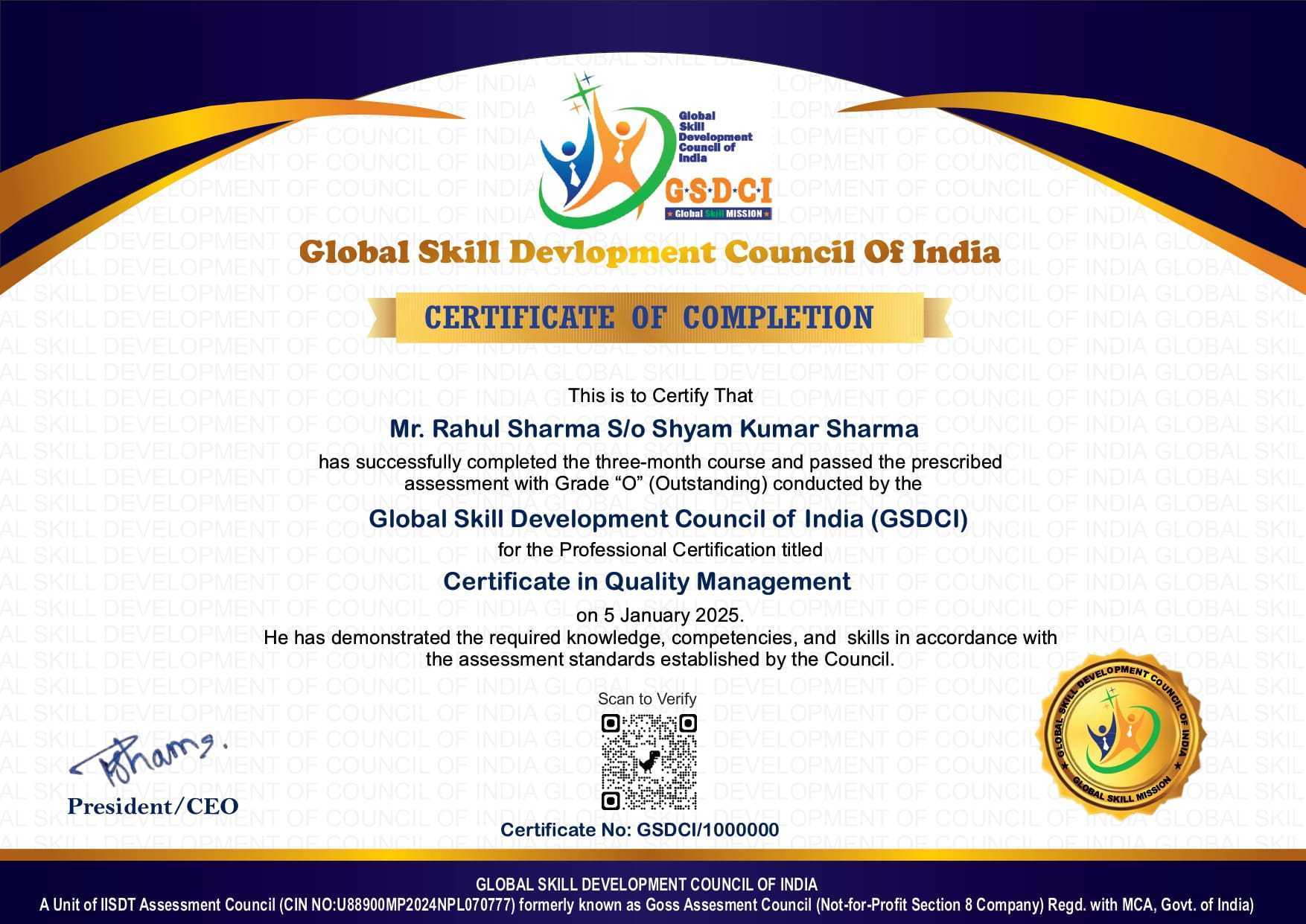
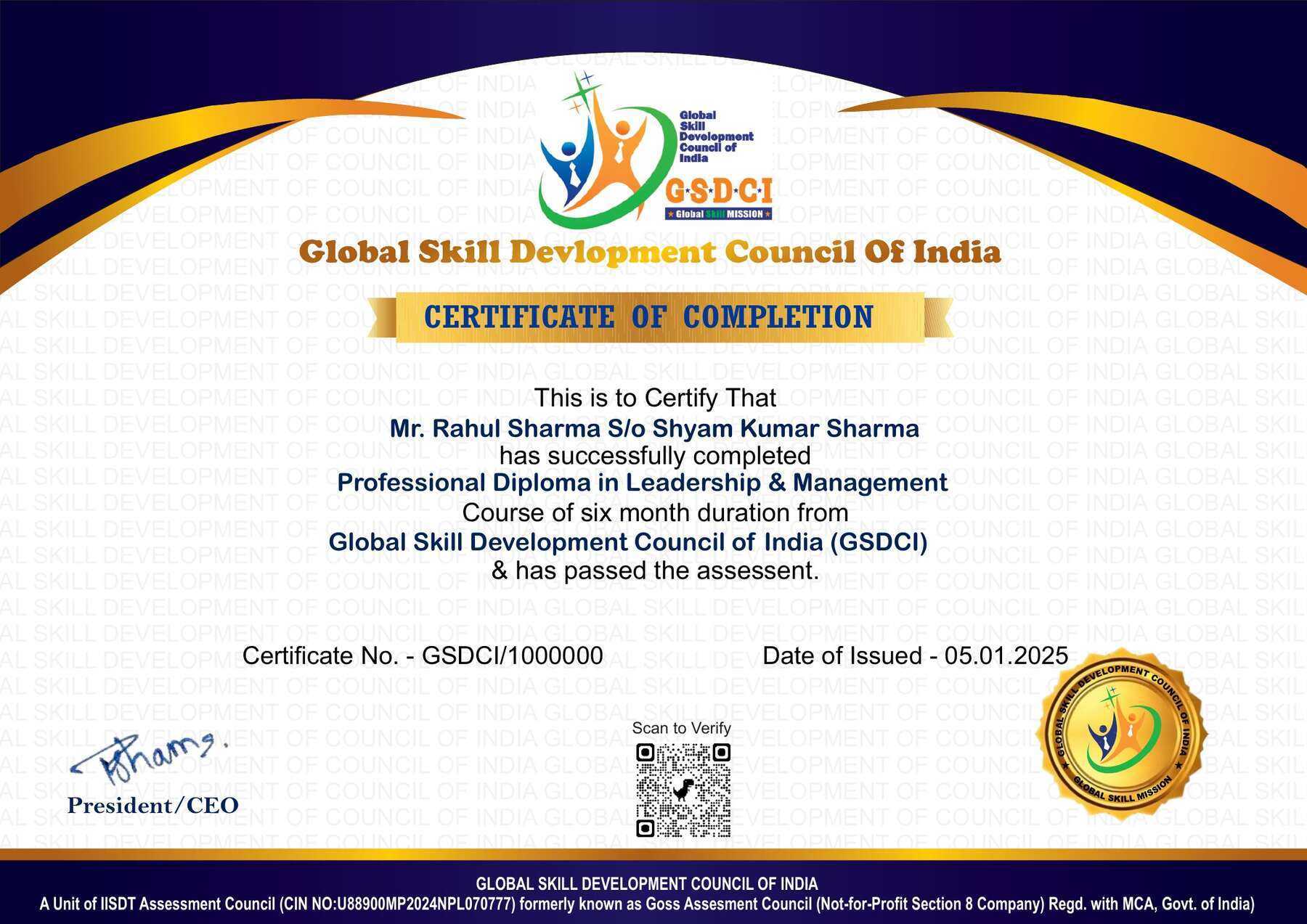
Certification: Within 5 days after Completion of Online Assessment.

Get ready to join the Journey to become a GSDCI Certified Professional  – International Certification and Assessment Body.

Steps to become a GSDCI Certified Professional:

Step 1: Select your certification you want to pursue.

Step 2: Click on get certified tab, new pop up window will open.

Step 3: Click on pay certification fee, you will be redirected to billing details page.

Step 4: Fill your details and click on pay certification fee, You will be redirected to payment gateway, pay fee by any available options like Card(Debit/Credit), Wallet, Paytm, Net banking, UPI and Google pay.

Step 5: You will get Login Credentials of Online E-Books and Online assessment link on your email id, within 48 hrs of payment.

Step 6: After completion of online assessment, you can download your Certificate Immediately.

Assessment Modules:

Module 1: Introduction to Yoga and Pranayama: The history and philosophy of Yoga and Pranayama, Key principles of Yoga (Asana, Pranayama, Meditation, and Ethics), The relationship between breath, body, and mind in Yoga practice, Overview of the benefits of Yoga Asanas and Pranayama for physical and mental health, Understanding the concept of Prana (life force) and its role in Yoga, The Eight Limbs of Yoga (Ashtanga Yoga) and their integration with breath.

Module 2: Anatomy, Physiology, and Alignment for Yoga and Pranayama: Anatomy of the human body (muscles, joints, spine, and respiratory system), The role of breath in supporting physical movement and alignment in Asanas, Understanding the physiological effects of breath and movement, Proper alignment and body mechanics in key Yoga Asanas, The impact of Pranayama on the nervous, circulatory, and respiratory systems, The role of breath and movement in enhancing flexibility, strength, and balance.

Module 3: Key Yoga Asanas and Pranayama Techniques: Step-by-step instruction and alignment cues for essential Yoga Asanas (e.g., Surya Namaskar, standing poses, seated poses, backbends, inversions), Pranayama techniques for beginners and advanced practitioners (e.g., Ujjayi, Kapalbhati, Bhastrika, Nadi Shodhana, Anulom Vilom), The role of Pranayama in enhancing energy flow during Asana practice, Integrating breath with movement in dynamic and restorative practices, How to combine Asanas with Pranayama to enhance overall well-being, Using Bandhas (energy locks) and Mudras (hand gestures) with breath and movement.

Module 4: Therapeutic Applications of Yoga Asanas and Pranayama: Using Yoga Asanas and Pranayama for common physical ailments (e.g., back pain, shoulder tension, neck stiffness), Pranayama techniques for emotional regulation and stress reduction, Yoga for mental clarity, focus, and concentration, Breathwork for calming the nervous system and balancing energy (e.g., Nadi Shodhana, Ujjayi), Yoga Asanas and Pranayama for improving digestion, sleep, and circulation, Developing personalized Yoga and breathwork sequences for specific health concerns.

Module 5: Teaching Methodology for Yoga Asanas and Pranayama: How to design and structure a balanced Yoga Asana and Pranayama class, Teaching techniques for clear, effective communication and cueing, Modifying and adjusting Asanas for individual needs and limitations, Guiding students through Pranayama with safety and precision, Encouraging mindfulness, breath awareness, and relaxation during practice, Creating a positive and inclusive environment for all students.

Module 6: Ethics, Professionalism, and Building Your Yoga Practice: Ethical responsibilities of a Yoga Asana and Pranayama instructor (Yamas, Niyamas, integrity), Developing and maintaining a strong personal practice (self-care, discipline), Creating a sustainable and thriving Yoga teaching career (marketing, networking, client relationships), Managing student safety, boundaries, and confidentiality, Continuing education and professional growth as a Yoga and Pranayama instructor, Building community and fostering a holistic approach to Yoga teaching.

GSDCI Online Assessment Detail:

  • Duration- 60 minutes.
  • Number of Questions- 30.
  • Number of Questions from each module: 5.
  • Language: English.
  • Exam Type: Multiple Choice Questions.
  • Maximum Marks- 100, Passing Marks- 50%.
  • There is no negative marking in any module.
Marking System:
S.No. No. of Questions Marks Each Question Total Marks
1 10 5 50
2 5 4 20
3 5 3 15
4 5 2 10
5 5 1 5
30   100
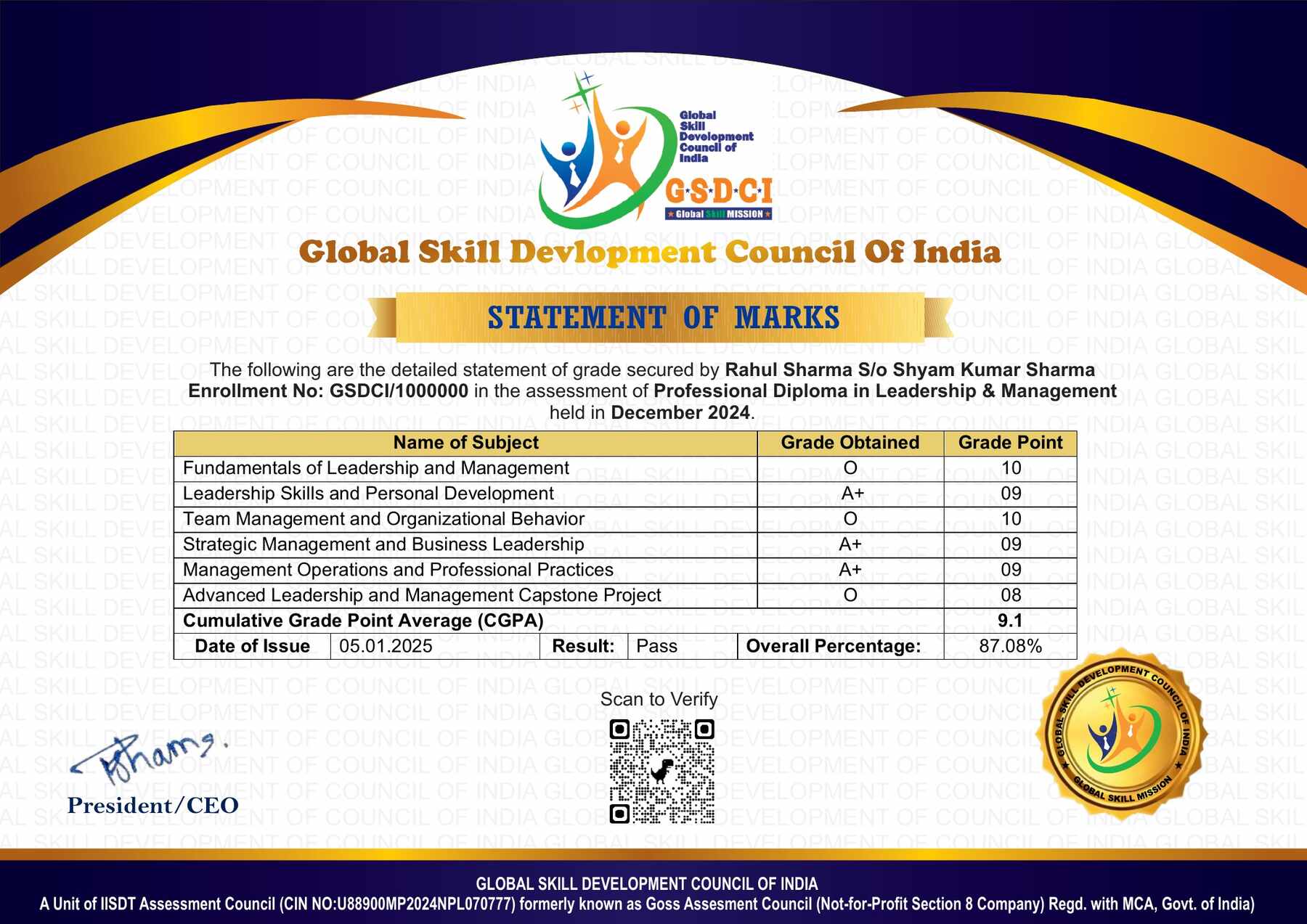
How Students will be Graded:
S.No. Marks Grade
1 91-100 O (Outstanding)
2 81-90 A+ (Excellent)
3 71-80 A (Very Good)
4 61-70 B (Good)
5 50-60 P (Pass)
6  0-49 F (Fail)


Benefits of Certification:

🌍 1. Global Recognition & Credibility – Stand out worldwide with a certification that opens doors across borders. Trusted by employers, respected by institutions, and recognized in over 100 countries.

📜 2. Quality Assurance through ISO Certification – Certified to global ISO standards, our programs deliver excellence, consistency, and a benchmarked learning experience that speaks for itself.

💼 3. Career Advancement & Employability – Enhances your resume and increases chances of promotions or job offers.

🤝 4. Non-Profit Trust Factor – Certifications from non-profit organizations are mission-driven rather than profit-driven.

📚 5. Access to Verified Learning & Resources – Often includes e-books, mock tests, and online support without hidden costs.

🔍 6. Transparency & Online Verification – Certifications come with a unique Enrolment ID for easy online verification by employers and institutions.

⏳ 7. Lifetime or Long-Term Validity – Certifications usually have lifetime validity or long-term recognition, reducing the need for frequent renewals.

Reviews

There are no reviews yet.

Be the first to review “Certified Yogaasana And Pranayama Professional”

Your email address will not be published. Required fields are marked *