
No products in the cart.


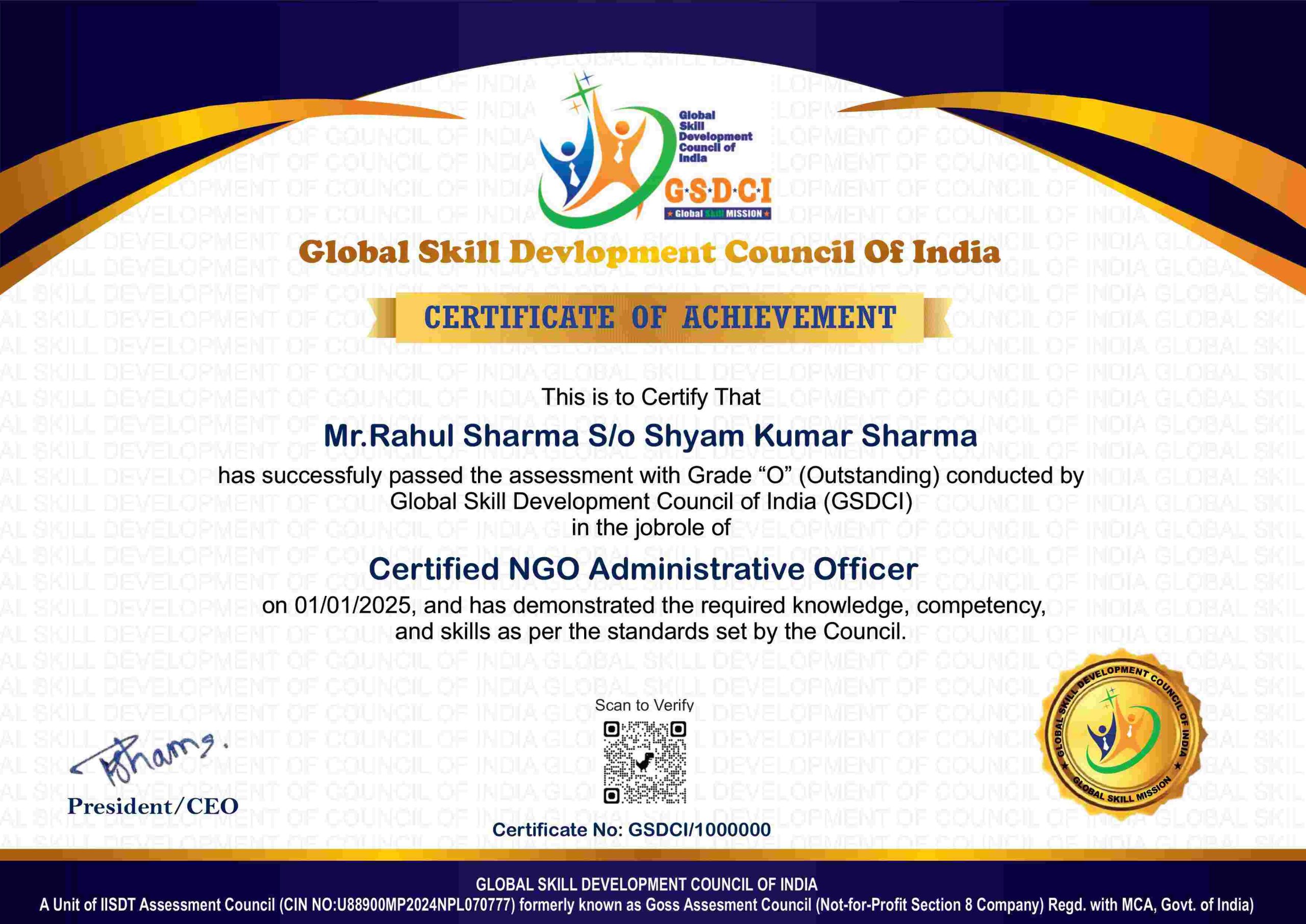
Global Occupational Standards Skill(GOSS) depict an occupational profile and defines the necessary knowledge, skills, and attitudes, required for successfully performing occupational duties and responsibilities.
Global Occupational Standards Skill (GOSS) is a detailed and internationally aligned occupational competency framework. It outlines the essential competencies—Knowledge, Skills, and Attitudes (KSA)—required to perform a particular job role effectively, safely, and in a manner that meets global industry expectations.
It ensures that training, assessment, and employment standards match the real-world demands of various industries across countries.
Purpose and Relevance
GOSS aims to:
- Bridge skill gaps by defining what is expected from a worker in a specific occupation.
- Promote mobility and portability of skills across borders.
- Enable standardization and benchmarking in vocational education and training (VET).
- Support industry-driven skilling initiatives with clearly articulated expectations.
International Compatibility
GOSS often aligns with or is influenced by the following frameworks:
- NSQF (India) – National Skills Qualifications Framework
- ESCO (Europe) – European Skills, Competences, Qualifications and Occupations
- AQF (Australia) – Australian Qualifications Framework
- RQF (UK) – Regulated Qualifications Framework
- TVET (UNESCO) – Technical and Vocational Education and Training
- ILO Guidelines – International Labour Organization competency-based approaches
Why GOSS Matters Globally
In today’s interconnected world, labor mobility, international outsourcing, and global value chains require that skills be understood and recognized beyond national borders. GOSS plays a vital role in:
- Standardizing skill definitions across countries
- Improving employability in foreign labor markets
- Facilitating mutual recognition of qualifications and certifications
- Ensuring workforce readiness in a globalized economy
Alignment with International Qualification Frameworks (IQFs)
GOSS is harmonized with international standards, allowing for cross-border comparability. Key frameworks include:
ILO Competency-Based Training Guidelines
- Framework developed by the International Labour Organization (ILO)
- Promotes competency-based education and training (CBET)
- Emphasizes learning outcomes, not just inputs
ESCO (Europe) – European Skills, Competences, Qualifications and Occupations
- Managed by the European Commission
- Provides a multilingual classification of skills, competences, and occupations
- GOSS structures often integrate ESCO classifications for European market relevance
TVET (UNESCO) – Technical and Vocational Education and Training
- Promotes access to quality vocational education
- Encourages member states to adopt outcome-based qualification systems similar to GOSS
Australian Qualifications Framework (AQF)
- One of the most developed national qualification frameworks
- GOSS models have drawn inspiration from AQF’s approach to skills benchmarking
ASEAN Qualifications Reference Framework (AQRF)
- Facilitates comparison of qualifications across ASEAN countries
- GOSS aligns to regional job roles in hospitality, manufacturing, and healthcare
Global Occupational Standards Skill (GOSS) serves as a universal skill passport, ensuring that an individual’s competence is recognized, respected, and portable across industries and borders. It helps in creating an equitable, skilled, and mobile global workforce, enhancing productivity and economic resilience in a dynamic labor market.