
No products in the cart.


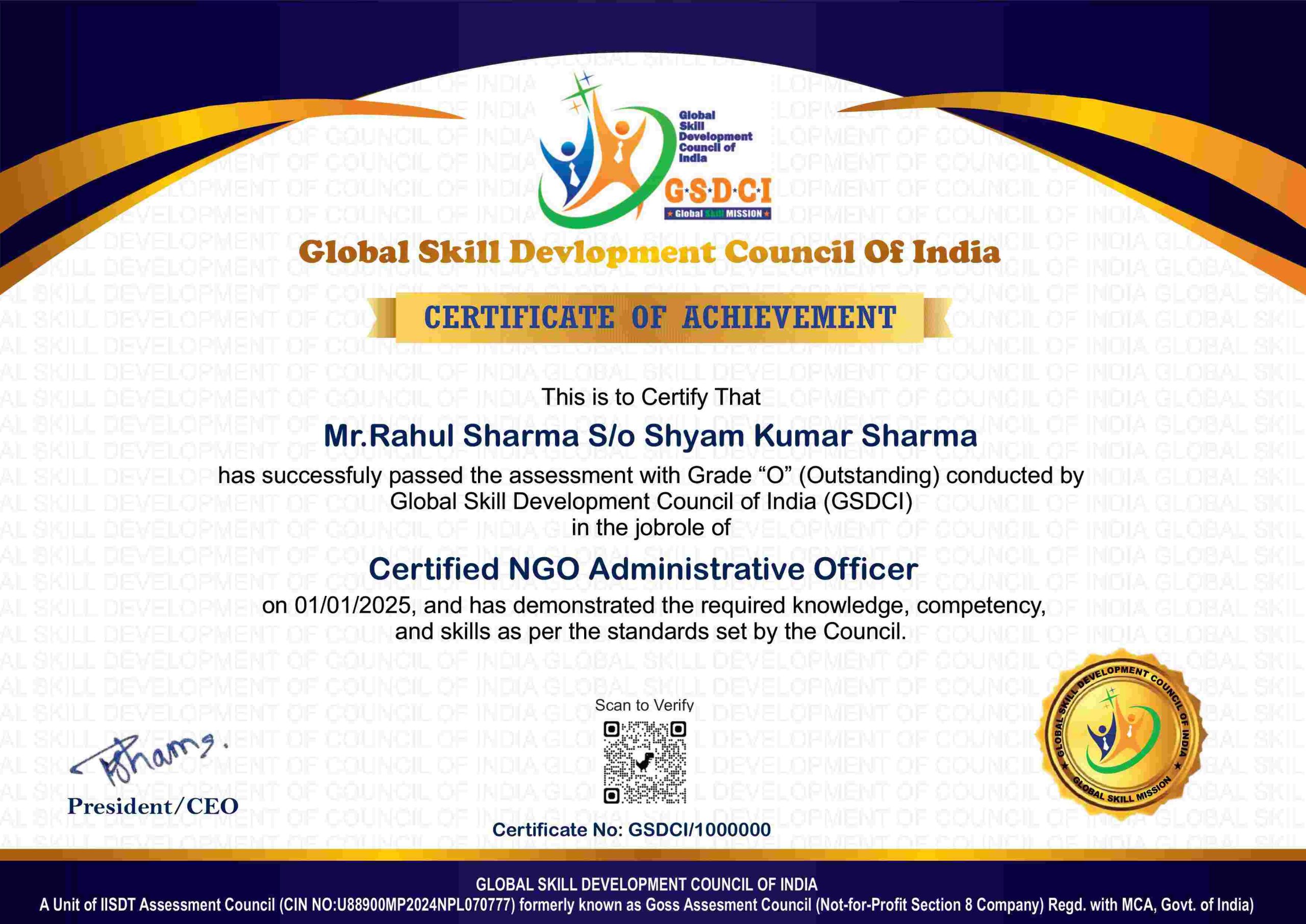
GSDCI and Offline Assessment
The Global Skill Development Council of India (GSDCI) also supports offline examination centers for regions with limited digital access. Using secure question paper delivery, trained invigilators, and structured processes, GSDCI ensures fair, standardized, and skill-relevant offline assessments with subsequent digital result processing.
Key Features of Offline Assessments:
- Supervised Testing Environment
Offline assessments are typically conducted in a controlled, physical setting such as classrooms, training centers, or examination halls. These sessions are closely monitored by invigilators or supervisors who ensure that the assessment process is conducted fairly and without disruptions. Their presence helps maintain discipline, verify student identity, and prevent any form of impersonation, cheating, or unauthorized assistance. This structured environment adds a layer of accountability and integrity to the evaluation process.
- Types of Assessment
Offline assessments support multiple formats of evaluation depending on the nature of the course or skill being tested:
- Written Exams: These include Multiple Choice Questions (MCQs), short-answer questions, long-answer or descriptive questions, and essay-type responses. They assess theoretical understanding and the ability to articulate concepts.
- Practical Tests: Especially important in vocational, technical, or scientific education, these are conducted in laboratories, workshops, or studios. Students demonstrate skills such as handling tools, performing experiments, or creating products.
- Oral/Viva Examinations: In these face-to-face assessments, students answer questions or explain processes directly to the examiner. This method is useful for testing communication skills, conceptual clarity, and real-time thinking abilities.
- Fixed Schedule and Location
Unlike online assessments that offer flexible access, offline tests are conducted at predefined dates, times, and physical venues. Students are required to be present at the location on time, with all necessary materials. This rigidity ensures uniformity in test conditions and allows institutions to manage examination logistics in a controlled manner. It also ensures that all students are evaluated under the same environment and timing, promoting fairness.
- Manual Evaluation
In offline assessments, answer sheets are physically collected after the test and evaluated manually by subject matter experts or faculty members. This manual grading process allows evaluators to consider nuances in handwriting, expression, and partial understanding, especially in descriptive answers. While it takes more time than automated grading, it often results in more context-sensitive and personalized evaluation. After review, marks are recorded, tabulated, and results are declared officially.
- No Dependency on Internet or Devices
One of the most practical benefits of offline assessments is their independence from digital infrastructure. They do not require computers, internet access, or software platforms, making them ideal for rural or under-resourced areas. Students only need stationery and access to the exam center. This also eliminates technical issues such as internet outages, system crashes, or login failures, ensuring a smooth and uninterrupted examination experience.