img not found!

Certificate in Course Design

Certificate in Course Design

₹7,000.00 ₹3,500.00

50% fee concession will end in

To develop basic skills in learner needs identification, course goals, learning objectives, course structure, module planning, content sequencing, teaching-learning strategies, learning activities, resource integration, assessment planning, accessibility, and course evaluation.

Description

Course Name: Certificate in Course Design

Course Id: CCD/Q1001.

Eligibility: 10+2 (Higher Secondary) or equivalent.

Objective: The Certificate in Course Design develops practical skills to plan, structure and review learning courses. It covers learner needs analysis, learning outcomes, course sequencing, instructional strategies, learning resources, assessment design and course evaluation. Learners practise preparing course outlines and aligned learning activities for classroom, online and blended delivery.

Duration: Three Months.

How to Enroll and Get Certified in Your Chosen Course:

Step 1: Choose the course you wish to get certified in.

Step 2: Click on the “Enroll Now” button.

Step 3: Complete the enrollment process.

Step 4: Enter your billing details and proceed to course fee payment.

Step 5: Pay the course and examination fee through the payment gateway using Debit/Credit Card, Wallet, Paytm, Net Banking, UPI, or Google Pay.

Step 6: Receive your study material login ID and password via email within 48 hours of successful payment.

Step 7: Complete the course and take the online examination.

Step 8: Upon passing the examination, receive:

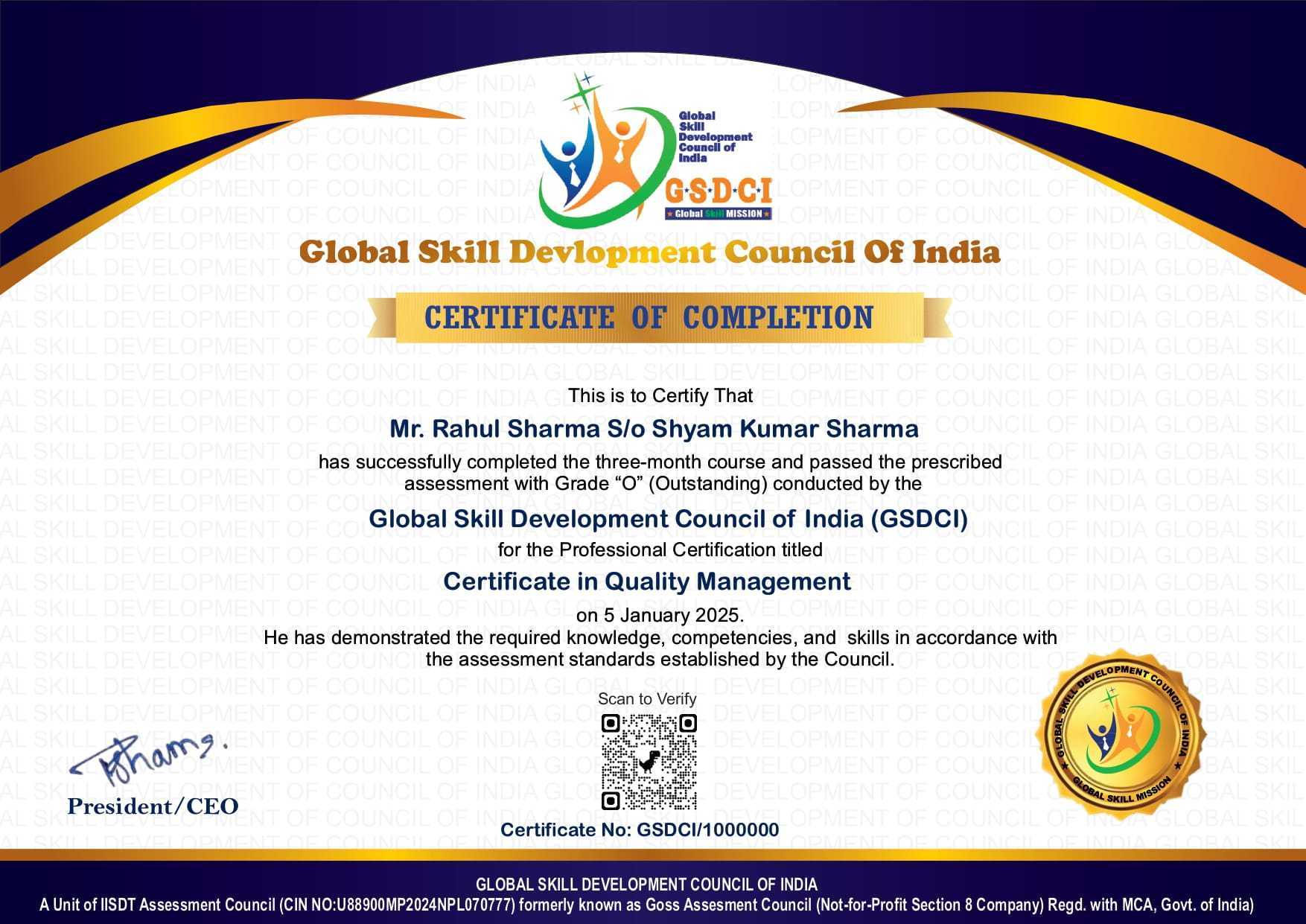
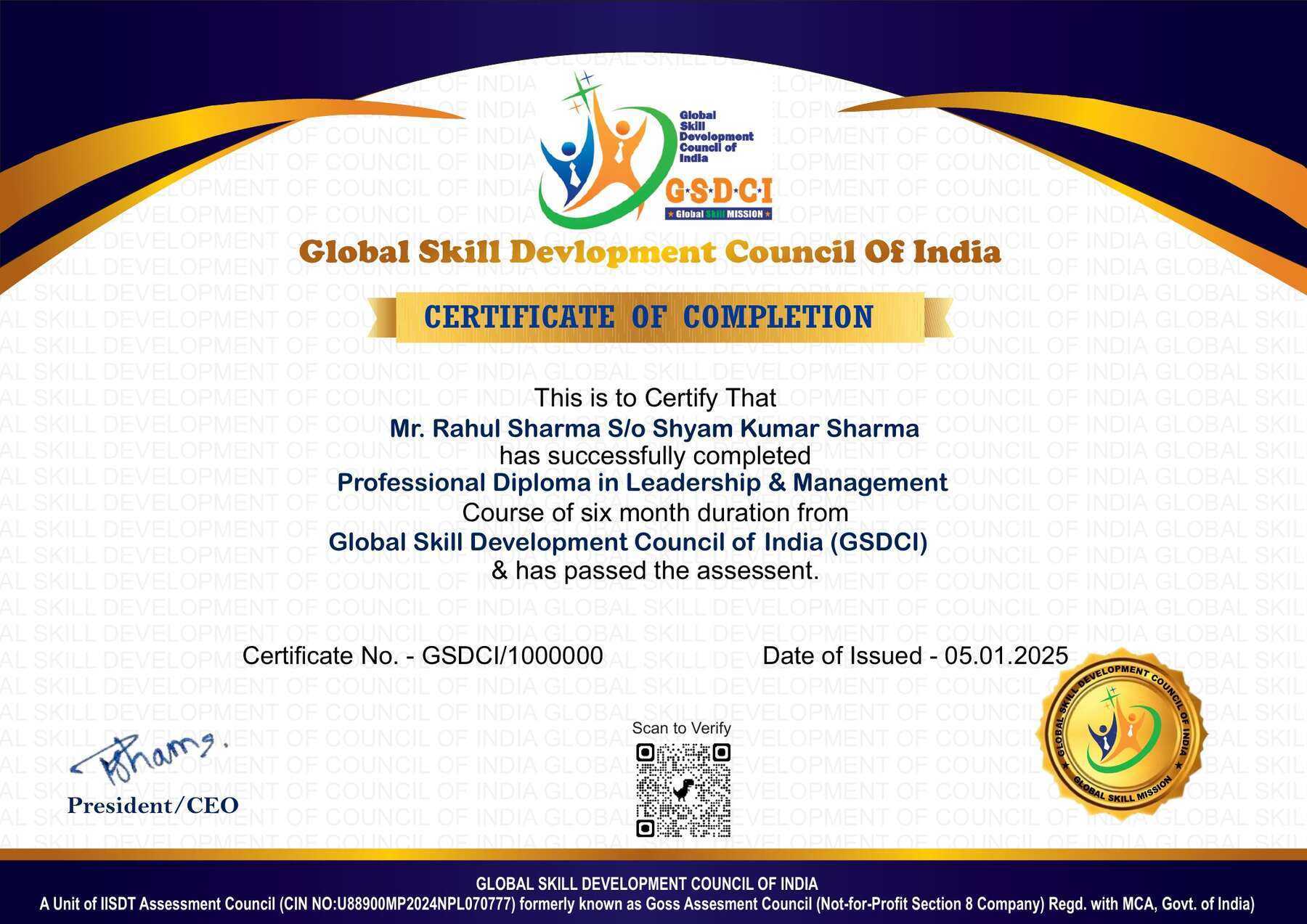
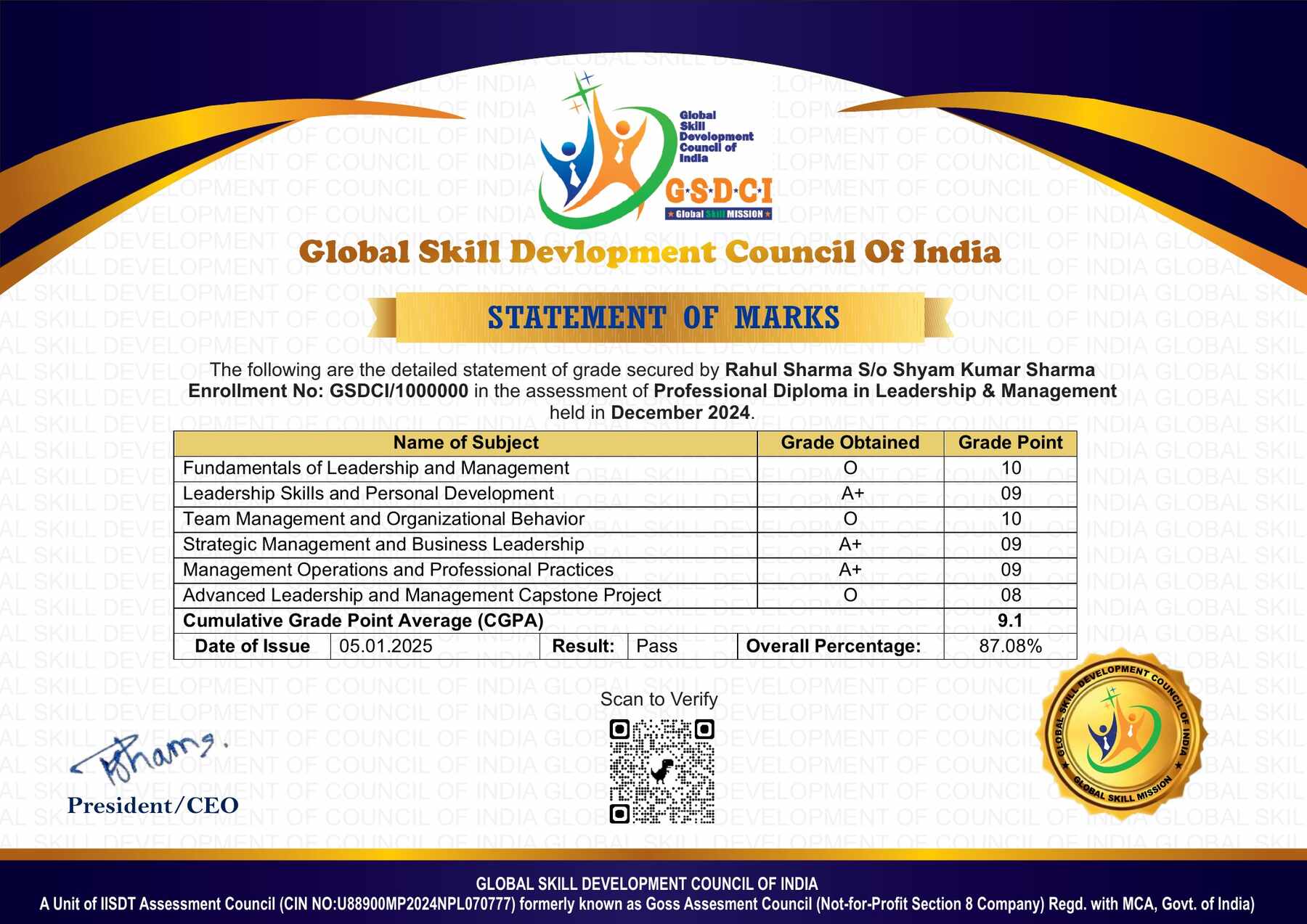
  • A soft copy of your certificate via email within 7 days of the examination.
  • A hard copy with official seal and signature at your address within 45 days of the result declaration.

Step 9: Receive job assistance aligned with your area of interest.

Online Examination Detail:

Duration- 60 minutes.
No. of Questions- 30. (Multiple Choice Questions).
Maximum Marks- 100, Passing Marks- 40%.
There is no negative marking in this module.

Marking System:
S.No. No. of Questions Marks Each Question Total Marks
1 10 5 50
2 5 4 20
3 5 3 15
4 5 2 10
5 5 1 5
30 100
How Students will be Graded:
S.No. Marks Grade
1 91-100 O (Outstanding)
2 81-90 A+ (Excellent)
3 71-80 A (Very Good)
4 61-70 B (Good)
5 51-60 C (Average)
6 40-50 P (Pass)
7 0-40 F (Fail)

Key Benefits of Certification- Earning a professional certification not only validates your skills but also enhances your employability. Here are the major benefits you gain:

Practical, Job-Ready Skills – Our certifications are designed to equip you with real-world, hands-on skills that match current industry demands — helping you become employment-ready from day one.

Lifetime Validity – Your certification is valid for a lifetime — no renewals or expirations. It serves as a permanent proof of your skills and training.

Lifetime Certificate Verification – Employers and institutions can verify your certification anytime through a secure and reliable verification system — adding credibility to your qualifications.

Industry-Aligned Certification –All certifications are developed in consultation with industry experts to ensure that what you learn is current, relevant, and aligned with market needs.

Preferred by Employers – Candidates from ISO-certified institutes are often prioritized by recruiters due to their exposure to standardized, high-quality training.

Free Job Assistance Based on Your Career Interests – Receive personalized job assistance and career guidance in your preferred domain, helping you land the right role faster.

Syllabus

Module 1: Foundations of Course Design: Purpose and Elements of a Course, Course Design and Curriculum Development Differences, Learner Profiles and Prior Knowledge, Learning Needs Analysis, Identifying Performance Gaps, Defining Course Scope, Understanding Delivery Contexts, Reviewing Time and Resource Constraints, Gathering Stakeholder Requirements, Preparing a Course Design Brief.

Module 2: Learning Outcomes and Course Structure: Defining Course Goals, Writing Measurable Learning Outcomes, Using Bloom’s Taxonomy, Establishing Prerequisite Knowledge, Selecting Essential Course Content, Organising Content into Modules, Sequencing Learning Progression, Estimating Learner Workload, Creating an Outcome Alignment Map, Preparing a Course Outline.

Module 3: Learning Activities and Teaching Strategies: Selecting Instructional Approaches, Designing Guided Practice, Developing Discussion Activities, Planning Case-Based Learning, Creating Problem-Solving Tasks, Incorporating Demonstrations, Structuring Collaborative Assignments, Supporting Independent Study, Building Reflection Opportunities, Providing Learning Scaffolds.

Module 4: Learning Materials and Delivery Planning: Preparing Lesson and Session Plans, Writing Clear Learner Instructions, Developing Worksheets and Job Aids, Selecting Readings and Reference Materials, Planning Visual and Multimedia Resources, Designing Accessible Learning Materials, Adapting Resources for Classroom Delivery, Structuring Online Learning Components, Coordinating Blended Learning Sessions, Checking Content Permissions and Attribution.

Module 5: Assessment and Feedback Design: Selecting Assessment Methods, Aligning Tasks with Learning Outcomes, Developing Diagnostic Checks, Creating Formative Knowledge Checks, Designing Summative Assignments, Writing Clear Assessment Questions, Preparing Marking Criteria and Rubrics, Planning Constructive Feedback, Reviewing Assessment Fairness, Establishing Completion Requirements.

Module 6: Course Review and Practical Design Project: Conducting a Course Design Review, Checking Content Accuracy and Consistency, Testing Activity Instructions, Reviewing Course Navigation and Usability, Planning a Small-Scale Course Pilot, Collecting Learner Feedback, Analysing Assessment Results, Revising Course Components, Compiling a Complete Course Design Proposal, Presenting a Course Design Portfolio.

Job Opportunities after Certificate in Course Design

Graduates can explore entry-level course planning and learning content support opportunities, subject to employer requirements and portfolio quality.

Top Roles: Course Design Assistant, Learning Content Assistant, Instructional Design Assistant, Training Content Assistant and Course Development Assistant.

Key Skills: Learner needs analysis, outcome writing, course sequencing, activity planning, assessment design, resource preparation and course review.

Salary Range (India):

  • Entry-level: ₹3–6 LPA.
  • Mid-level: ₹6–12 LPA.
  • Senior-level: ₹12–20+ LPA.

Scope: Opportunities in educational institutions, training organisations, publishing and EdTech, with progression into course development and instructional design through experience, portfolio development and further study.

Course Rating

4.8/5
★★★★★
★★★★★

Based on 58 student ratings

Highly Rated Course

0
    0
    Your Certification Detail
    Your cart is emptyReturn to Shop
      Apply Coupon
      Available Coupons
      gsdci20 Get 20% off