No products in the cart.



Certificate in Customer Service & Relationship Management
₹6,500.00 ₹3,250.00
50% fee concession will end in
To train professionals to deliver excellent customer service that improves satisfaction and loyalty.
Description
Course Name: Certificate in Customer Service & Relationship Management
Global Occupational Skill Standard – GOSS ID: GOSS/HT/CCSRM/V1
Eligibility: 10+2 (Higher Secondary) or Equivalent.
Duration: Three Months.
Objective: The Certificate in Customer Service & Relationship Management course is designed to equip professionals with essential skills and knowledge to deliver outstanding customer service across various industries. The program covers communication skills, problem-solving techniques, conflict resolution, customer psychology, service standards, handling difficult customers, and creating positive customer experiences.
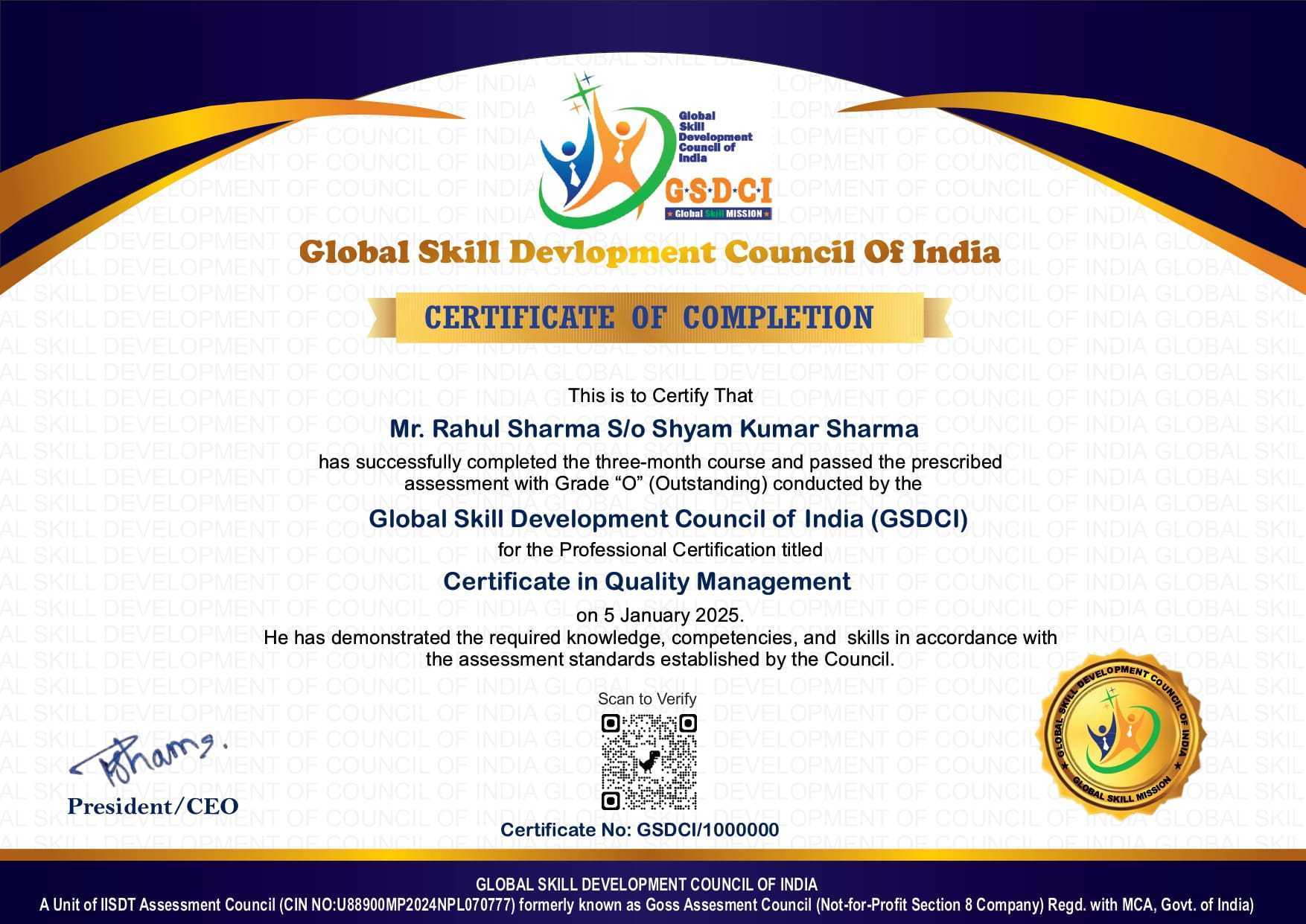
Get ready to join the Journey to become a GSDCI Certified Professional – International Certification and Assessment Body.
Steps to become a GSDCI Certified Professional:
Step 1: Select your certification you want to pursue.
Step 2: Click on get certified tab, new pop up window will open.
Step 3: Click on pay certification fee, you will be redirected to billing details page.
Step 4: Fill your details and click on pay certification fee, You will be redirected to payment gateway, pay fee by any available options like Card(Debit/Credit), Wallet, Paytm, Net banking, UPI and Google pay.
Step 5: You will get Login Credentials of Online E-Books and Online assessment link on your email id, within 48 hrs of payment.
Step 6: After completion of the online assessment, the soft copy of your certificate will be sent to your registered email ID within 5 days.
Assessment Modules:
Module 1: Introduction to Customer Service Excellence: Definition and importance of customer service in various industries, Role and responsibilities of a Customer Service Specialist, Understanding the customer journey and key touchpoints, Impact of excellent service on customer loyalty and business success, Key qualities of a service professional: empathy, patience, and integrity, Difference between customer service, support, and experience.
Module 2: Communication and Interpersonal Skills: Verbal and non-verbal communication techniques, Active listening and asking the right questions, Professional telephone and email etiquette, Using positive language and tone in challenging situations, Managing cross-cultural and language-diverse interactions, Building rapport and trust with different customer personalities.
Module 3: Handling Difficult Customers and Conflict Resolution: Identifying types of difficult customers and understanding their needs, De-escalation strategies and staying calm under pressure, Steps for effective complaint handling and resolution, Turning negative experiences into positive outcomes, Managing emotional triggers and maintaining professionalism, Role-playing and case studies of conflict resolution.
Module 4: Customer Service Tools and Technologies: Overview of CRM systems and ticketing tools, Live chat, chatbot, and AI-assisted customer interactions, Using knowledge bases and support portals effectively, Documenting service interactions and follow-up processes, Service metrics: response time, resolution rate, CSAT, and NPS, Data privacy, confidentiality, and compliance with regulations.
Module 5: Service Standards, Ethics, and Quality Assurance: Setting and maintaining service standards and SLAs, Ethical conduct and responsible decision-making in customer service, Monitoring service quality through audits and feedback, Creating and following SOPs for consistency and efficiency, Role of supervisor evaluations and self-assessments, Handling internal communication and teamwork in service delivery.
Module 6: Professional Growth and Career Advancement: Creating a personal development plan and setting service goals, Time management and stress control in high-volume environments, Preparing for interviews and certifications in customer service, Career opportunities in call centers, hospitality, retail, IT, and more, Importance of lifelong learning and continuous improvement, Building a service-driven mindset for leadership roles.
GSDCI Online Assessment Detail:
- Duration- 60 minutes.
- Number of Questions- 30.
- Number of Questions from each module: 5.
- Language: English.
- Exam Type: Multiple Choice Questions.
- Maximum Marks- 100, Passing Marks- 50%.
- There is no negative marking in any module.
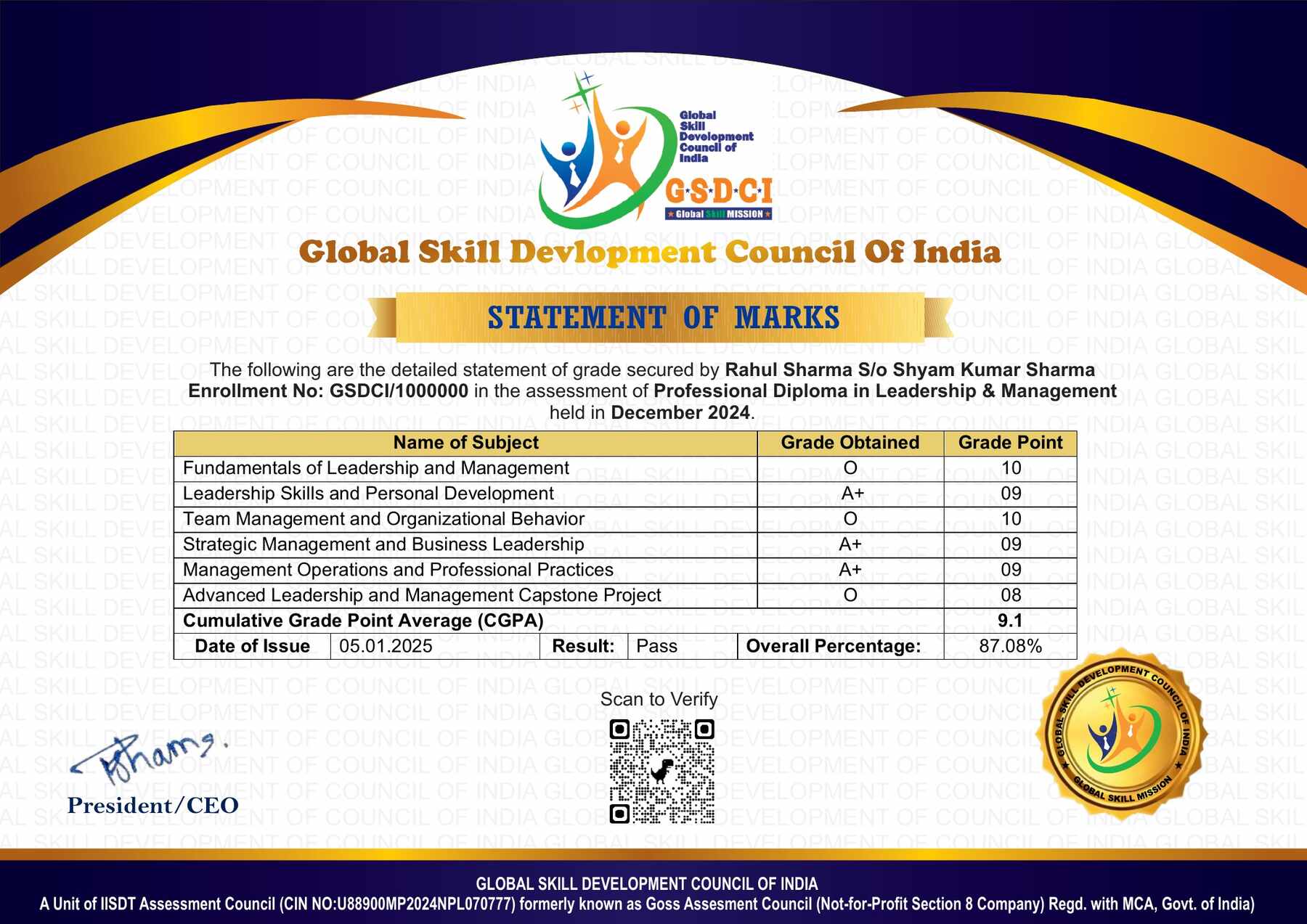
| Marking System: | |||
| S.No. | No. of Questions | Marks Each Question | Total Marks |
| 1 | 10 | 5 | 50 |
| 2 | 5 | 4 | 20 |
| 3 | 5 | 3 | 15 |
| 4 | 5 | 2 | 10 |
| 5 | 5 | 1 | 5 |
| 30 | 100 | ||
| How Students will be Graded: | |||
| S.No. | Marks | Grade | |
| 1 | 91-100 | O (Outstanding) | |
| 2 | 81-90 | A+ (Excellent) | |
| 3 | 71-80 | A (Very Good) | |
| 4 | 61-70 | B (Good) | |
| 5 | 50-60 | P (Pass) | |
| 6 | 0-49 | F (Fail) | |
Benefits of Certification:
1. Global Recognition & Credibility – Stand out worldwide with a certification that strengthens your professional profile across borders and demonstrates your skills to employers and institutions.
2. Quality Assurance through ISO Certification – Programs follow an ISO-certified quality management system to promote consistency, reliability, and a standardized learning experience.
3. Career Advancement & Employability – Enhance your résumé, demonstrate professional competence, and improve your prospects for career growth, promotions, or suitable job opportunities.
4. Non-Profit Trust Factor – Certification from a non-profit organization reflects a mission-driven approach focused on skill development, professional learning, and public benefit.
5. Access to Learning Resources – Gain access to useful learning resources such as e-books, mock tests, assessments, and online academic support.
6. Transparency & Online Verification – Each certification includes a unique enrolment or certificate ID, enabling convenient online verification by employers and other interested parties.
7. Lifetime or Long-Term Validity – Certifications may offer lifetime or extended validity, reducing the need for frequent renewal, subject to the applicable certification scheme.