img not found!

Certificate in Plastic Waste Management

Certificate in Plastic Waste Management

₹6,500.00 ₹3,250.00

50% fee concession will end in

The course is designed to develop knowledge of plastic waste management, recycling techniques, and business strategies for sustainable and profitable operations.

Description

Course Name: Certificate in Plastic Waste Management

Course Id: CPWM/Q1001.
Eligibility: 10th Grade(High School) or Equivalent.

Duration: Two Month.

Objective: The objective of this course is to provide learners with the essential knowledge, technical skills, and strategic insights needed to manage plastic waste sustainably. The course focuses on the collection, segregation, recycling, and upcycling of plastic waste, along with environmental regulations and business development opportunities, enabling participants to contribute to the circular economy and reduce environmental pollution.

How to Enroll and Get Certified in Your Chosen Course:

Step 1: Choose the course you wish to get certified in.

Step 2: Click on the “Enroll Now” button.

Step 3: Proceed with the enrollment process.

Step 4: Enter your billing details and continue to course fee payment.

Step 5: You will be redirected to the payment gateway. Pay the course and exam fee using one of the following methods:
Debit/Credit Card, Wallet, Paytm, Net Banking, UPI, or Google Pay.

Step 6: After successful payment, you will receive your study material login ID and password via email within 48 hours of fee payment.

Step 7: Once you complete the course, take the online examination.

Step 8: Upon passing the examination, you will receive:
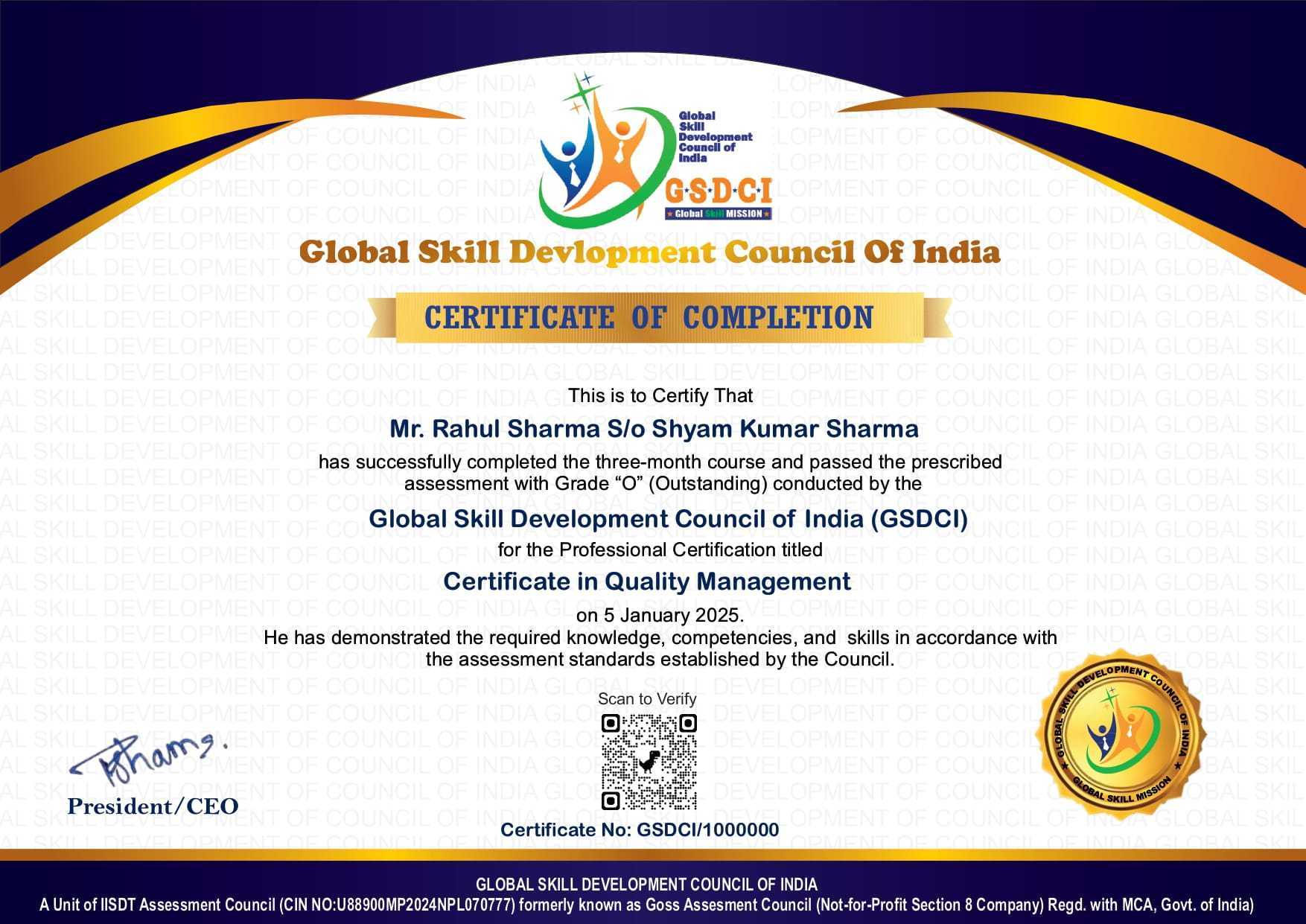
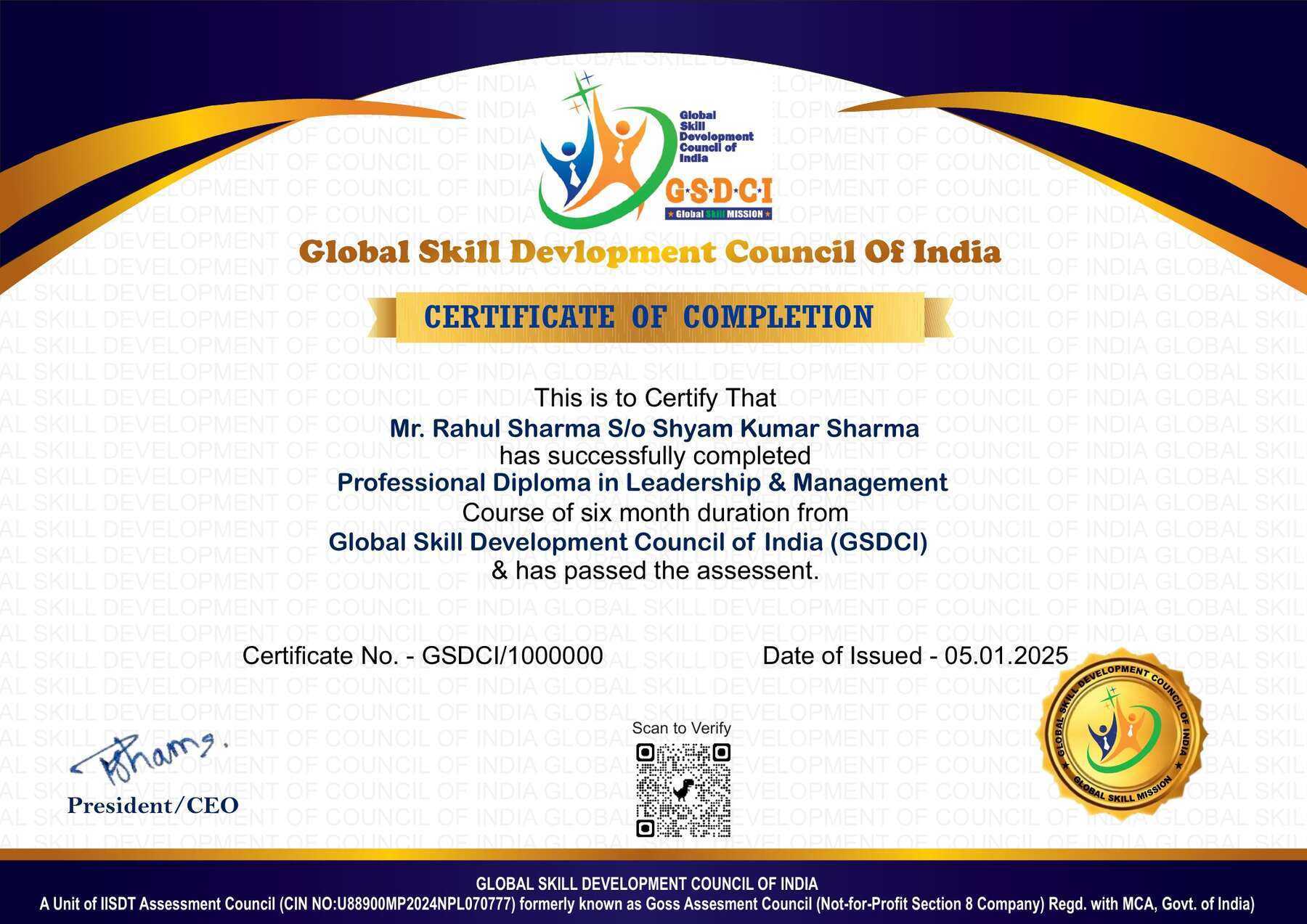
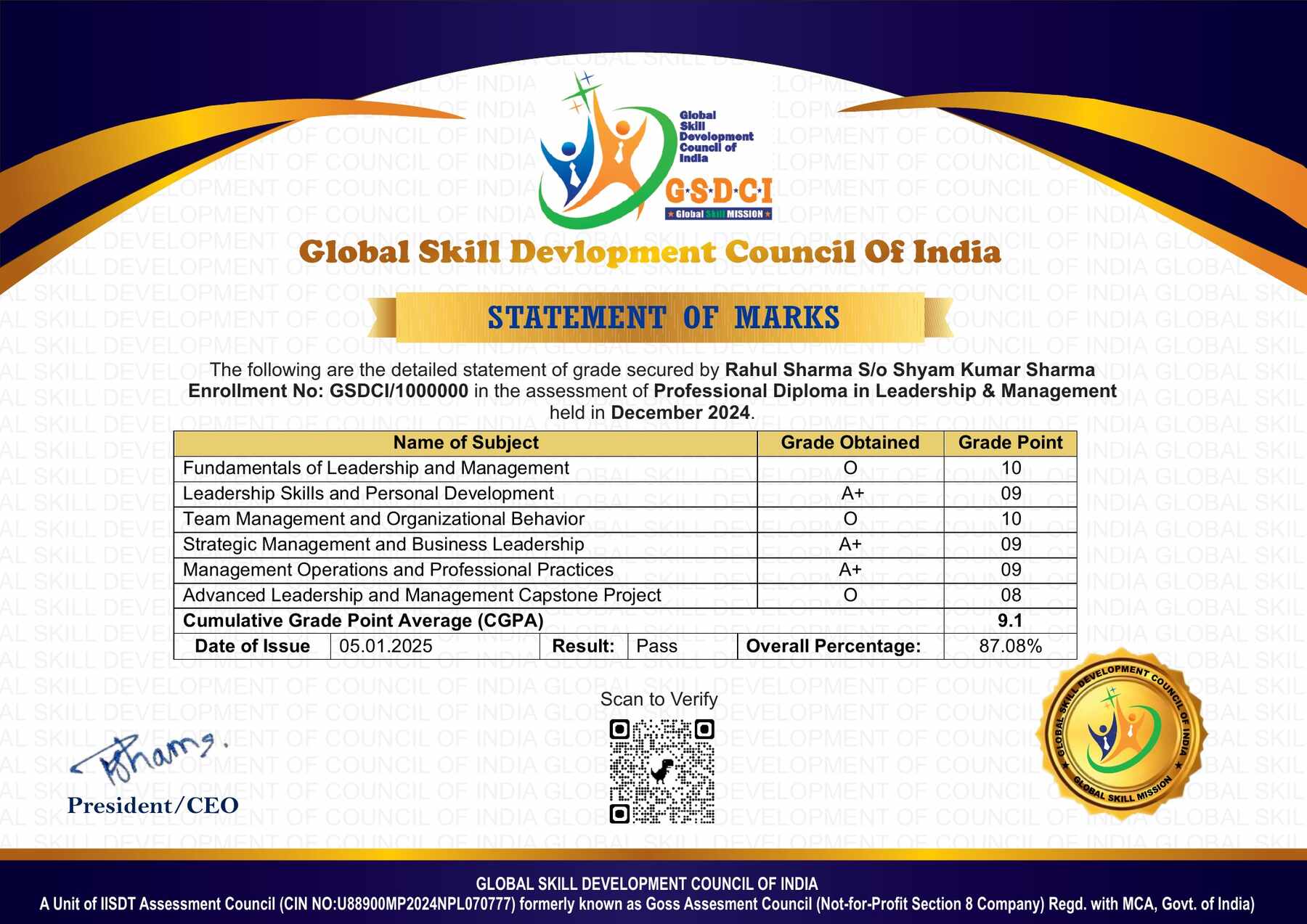
• A soft copy (scanned) of your certificate via email within 7 days of examination.
• A hard copy (original with official seal and signature) sent to your address within 45 day of declaration of result.

Step 9: After certification, you will be offered job opportunities aligned with your area of interest.

Online Examination Detail:

Duration- 60 minutes.
No. of Questions- 30. (Multiple Choice Questions).
Maximum Marks- 100, Passing Marks- 40%.
There is no negative marking in this module.

Key Benefits of Certification- Earning a professional certification not only validates your skills but also enhances your employability. Here are the major benefits you gain:

Practical, Job-Ready Skills – Our certifications are designed to equip you with real-world, hands-on skills that match current industry demands — helping you become employment-ready from day one.

Lifetime Validity – Your certification is valid for a lifetime — no renewals or expirations. It serves as a permanent proof of your skills and training.

Lifetime Certificate Verification – Employers and institutions can verify your certification anytime through a secure and reliable verification system — adding credibility to your qualifications.

Industry-Aligned Certification –All certifications are developed in consultation with industry experts to ensure that what you learn is current, relevant, and aligned with market needs.

Preferred by Employers – Candidates from ISO-certified institutes are often prioritized by recruiters due to their exposure to standardized, high-quality training.

Free Job Assistance Based on Your Career Interests – Receive personalized job assistance and career guidance in your preferred domain, helping you land the right role faster.

Syllabus

Introduction to Plastic and Waste Management: History and evolution of plastic, Types of plastics and their uses, Environmental impact of plastic waste, Sources of plastic waste, Plastic waste in urban and rural areas, Global statistics on plastic pollution, Importance of plastic waste management, 3Rs concept (Reduce, Reuse, Recycle), Legal and policy framework in India, Career opportunities in plastic waste management.

Classification and Identification of Plastics: Thermoplastics vs thermosets, Common plastic types (PET, HDPE, LDPE, PVC, PP, PS), Resin Identification Codes (RIC), Physical and chemical properties of plastics, Plastic usage in various industries, Toxic and non-toxic plastics, Biodegradable vs non-biodegradable plastics, Plastic waste sorting techniques, Importance of correct classification, Challenges in plastic identification.

Collection and Segregation of Plastic Waste: Plastic waste collection systems, Role of municipalities and private sectors, Door-to-door collection process, Community-level collection models, Manual vs automated segregation, Source segregation importance, Tools and equipment for collection, Color-coded bin system, Challenges in segregation, Best practices in waste collection.

Recycling and Recovery Techniques: Mechanical recycling process, Chemical recycling overview, Energy recovery from plastic waste, Steps in plastic reprocessing, Washing, shredding, and pelletizing, Equipment used in recycling, Quality control in recycled plastics, Limitations and challenges in recycling, Reuse of recycled plastic products, Innovations in plastic recycling.

Plastic Waste Treatment Technologies: Incineration and pyrolysis, Gasification of plastic waste, Co-processing in cement kilns, Compostable plastic treatment, Landfilling of residual plastic waste, Environmental impact of different methods, Comparison of treatment techniques, Plastic to fuel conversion methods, Pilot and industrial-scale units, Techno-economic analysis.

Environmental and Health Impacts: Microplastics and marine pollution, Air and soil contamination due to plastic waste, Plastic waste and climate change, Human health risks from plastic exposure, Impact on wildlife and biodiversity, Groundwater and land degradation, Occupational health hazards in recycling units, Environmental monitoring techniques, Case studies on pollution hotspots, Public awareness and behavior change.

Job Opportunities after Certificate in Plastic Waste Management

After successful completion of the Certificate in Plastic Waste Management program, graduates gain practical knowledge and technical skills in plastic waste collection, segregation, recycling, reprocessing, and safe disposal. In India, this sector is expanding rapidly due to stricter environmental regulations, implementation of Plastic Waste Management Rules, Extended Producer Responsibility (EPR) systems, and rising demand for recycled plastic materials.

Top Roles: Plastic Waste Collection Supervisor, Recycling Plant Operator, Waste Segregation Technician, Quality Control Analyst (Recycled Plastic), Environmental Compliance Officer, Sales & Marketing Executive (Recycled Materials), Sustainability Officer, Plastic Recycling Entrepreneur

Key Skills: Waste segregation techniques, plastic identification (PET, HDPE, LDPE, PP), recycling machinery operation, shredding and extrusion processes, quality testing of recycled plastics, environmental compliance, EPR guidelines, supply chain handling, and sustainability practices

Salary Range (India):

  • Entry-level: ₹2–4.5 LPA
  • Mid-level: ₹4.5–9 LPA
  • Senior-level: ₹9–20+ LPA

Scope: Opportunities exist in plastic recycling industries, municipal waste management systems, environmental agencies, manufacturing industries using recycled plastics, NGOs, and sustainability-focused startups. Graduates can also establish their own plastic recycling or reprocessing business. Earnings vary depending on scale, technology used, and supply contracts.

Course Rating

4.6/5
★★★★★
★★★★★

Based on 26 student ratings

Highly Rated Course

0
    0
    Your Certification Detail
    Your cart is emptyReturn to Shop
      Apply Coupon
      Available Coupons
      gsdci20 Get 20% off