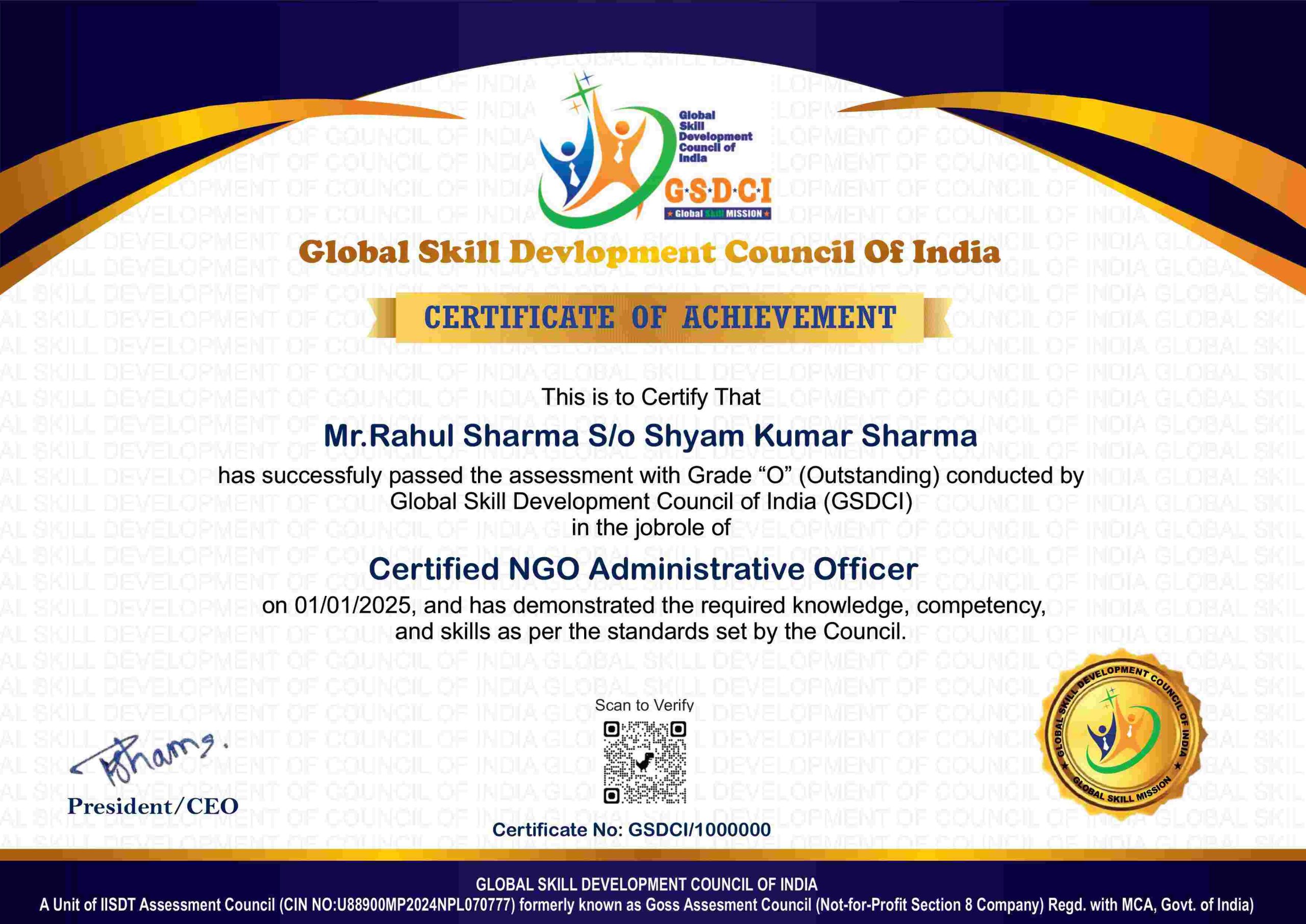
Certified Back-End Web Developer

6,500.00 3,250.00

50% fee concession will end in

The course trains professionals to develop and maintain secure, scalable, and efficient server-side systems for web applications.

Description

Certification Name: Certified Back-End Web Developer

Global Occupational Skill Standard – GOSS ID: GOSS/CIT/CBEWD/V1

Eligibility: Graduation or Equivalent or minimum 2 years of relevant experience (experience-based learners can directly enroll and certify).

Objective: The Certified Back-End Web Developer course is designed to equip professionals with the knowledge and skills to develop, maintain, and optimize the server-side components of web applications. The course covers server-side programming languages (such as Node.js, Python, PHP, Java), database management, API development, authentication and authorization, security best practices, and server deployment.

Certification: Within 5 days after Completion of Online Assessment.

Get ready to join the Journey to become a GSDCI Certified Professional  – International Certification and Assessment Body.

Steps to become a GSDCI Certified Professional:

Step 1: Select your certification you want to pursue.

Step 2: Click on get certified tab, new pop up window will open.

Step 3: Click on pay certification fee, you will be redirected to billing details page.

Step 4: Fill your details and click on pay certification fee, you will be redirected to payment gateway, pay fee by any available options like Card (Debit/Credit), Wallet, Paytm, Net banking, UPI and Google pay.

Step 5: You will get Login Credentials of Online E-Books and Online assessment link on your email id, within 48 hrs of payment.

Step 6: After completion of online assessment, you can download your Certificate Immediately.

Assessment Modules:

Module 1 – Back‑End Fundamentals & Environment Setup: Server‑side programming overview, Client‑server & request‑response model, Developer tools & version control (Git, branches, merge), Local development environment setup (IDE, local server, debugging), HTTP/HTTPS protocols and status codes, File systems, logging and environment variables

Module 2 – Programming Languages & Frameworks: Choosing a back‑end language (Node.js/Express, Python/Django or Flask, Java/Spring, PHP/Laravel), Language syntax fundamentals (variables, data types, functions, control flow), Object‑oriented programming and design patterns, Framework architecture (MVC, routing, middleware), Writing APIs and services in the chosen framework, Error handling, logging and monitoring in application code

Module 3 – Databases & Data Management: Relational databases: SQL basics, schema design, joins, transactions, indexing, NoSQL databases: document, key‑value and when to use, ORM/ODM tools and integration with application code, Data modelling, normalization vs denormalization, Connection, pooling, and performance tuning, Backup, replication and high‑level database maintenance for applications

Module 4 – API Design, Web Services & Integrations: RESTful API design principles: endpoints, verbs, status codes, versioning, Authentication/Authorization (JWT, OAuth, sessions), Data serialization formats (JSON, XML), API documentation and testing (Postman, Swagger), Integrating with external services (third‑party APIs, microservices) and asynchronous operations

Module 5 – Security, Performance & Deployment: Secure coding practices (input validation, sanitization, SQL injection, XSS, CSRF), Access control and role‑based permissions, Caching, rate‑limiting, pagination and performance optimisation, Deployment workflows: CI/CD pipelines, containers (Docker), environment configurations, Cloud vs on‑premises deployment, Monitoring, logging, alerting and uptime/reliability management

Module 6 – Scalability, Architecture & Modern Practices: Microservices vs monoliths: trade‑offs and when to use, Event‑driven architecture, message queues and background tasks, Serverless and function‑as‑a‑service (FaaS) in back‑end, Multi‑tenant, horizontal scaling and distributed systems patterns, Container orchestration (Kubernetes) and infrastructure as code, Emerging trends: GraphQL, gRPC, API gateways and future back‑end practices

GSDCI Online Assessment Detail:

  • Duration- 60 minutes.
  • Number of Questions- 30.
  • Number of Questions from each module: 5.
  • Language: English.
  • Exam Type: Multiple Choice Questions.
  • Maximum Marks- 100, Passing Marks- 50%.
  • There is no negative marking in any module.
Marking System:
S.No. No. of Questions Marks Each Question Total Marks
1 10 5 50
2 5 4 20
3 5 3 15
4 5 2 10
5 5 1 5
30   100
How Students will be Graded:
S.No. Marks Grade
1 91-100 O (Outstanding)
2 81-90 A+ (Excellent)
3 71-80 A (Very Good)
4 61-70 B (Good)
5 50-60 P (Pass)
6  0-49 F (Fail)


Benefits of Certification:

🌍 1. Global Recognition & Credibility – Stand out worldwide with a certification that opens doors across borders. Trusted by employers, respected by institutions, and recognized in over 100 countries.

📜 2. Quality Assurance through ISO Certification – Certified to global ISO standards, our programs deliver excellence, consistency, and a benchmarked learning experience that speaks for itself.

💼 3. Career Advancement & Employability – Enhances your resume and increases chances of promotions or job offers.

🤝 4. Non-Profit Trust Factor – Certifications from non-profit organizations are mission-driven rather than profit-driven.

📚 5. Access to Verified Learning & Resources – Often includes e-books, mock tests, and online support without hidden costs.

🔍 6. Transparency & Online Verification – Certifications come with a unique Enrolment ID for easy online verification by employers and institutions.

⏳ 7. Lifetime or Long-Term Validity – Certifications usually have lifetime validity or long-term recognition, reducing the need for frequent renewals.

Reviews

There are no reviews yet.

Be the first to review “Certified Back-End Web Developer”

Your email address will not be published. Required fields are marked *