
No products in the cart.

Certified Broadcast Production Technician
₹6,500.00 ₹3,250.00
50% fee concession will end in
To train learners in operating and maintaining the technical systems essential for professional broadcast production across TV, radio, and digital platforms.
Description
Certification Name: Certified Broadcast Production Technician
Global Occupational Skill Standard – GOSS ID: GOSS/JPM/CBPT/V1
Eligibility: Graduation or Equivalent or minimum 2 years of relevant experience (experience-based learners can directly enroll and certify).
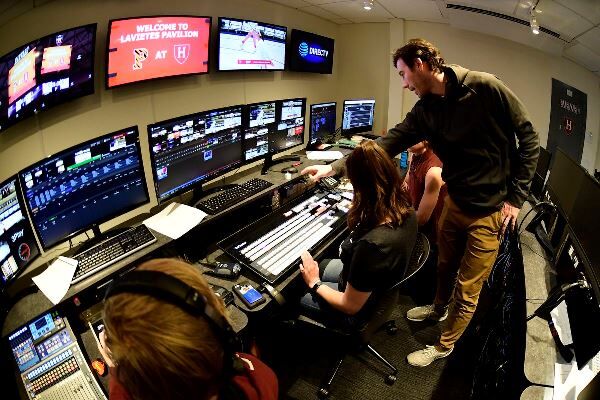
Objective: The Certified Broadcast Production Technician course is designed to equip learners with the technical expertise and operational skills required to support live and recorded broadcasting in television, radio, and digital platforms. The course covers the setup, maintenance, and operation of cameras, audio equipment, lighting systems, teleprompters, switchers, and broadcast control rooms. Learners will gain knowledge in signal flow, video and audio standards, studio and field production workflows, live transmission setups, troubleshooting techniques, and compliance with broadcast regulations.
Certification: Within 5 days after Completion of Online Assessment.
Get ready to join the Journey to become a GSDCI Certified Professional – International Certification and Assessment Body.
Steps to become a GSDCI Certified Professional:
Step 1: Select your certification you want to pursue.
Step 2: Click on get certified tab, new pop up window will open.
Step 3: Click on pay certification fee, you will be redirected to billing details page.
Step 4: Fill your details and click on pay certification fee, You will be redirected to payment gateway, pay fee by any available options like Card(Debit/Credit), Wallet, Paytm, Net banking, UPI and Google pay.
Step 5: You will get Login Credentials of Online E-Books and Online assessment link on your email id, within 48 hrs of payment.
Step 6: After completion of online assessment, you can download your Certificate Immediately.
Assessment Modules:
Module 1: Introduction to Broadcast Production Technology: Understanding the role of a broadcast production technician in TV and radio, Overview of broadcast systems and workflows, Difference between live, recorded, and streaming broadcasts, Introduction to studio operations and control room functions, Familiarity with different broadcast formats (SD, HD, 4K, IP-based), Basics of broadcast signal flow and transmission paths.
Module 2: Studio Equipment and Setup: Understanding the function of video switchers, audio consoles, and intercom systems, Setting up studio lighting, cameras, microphones, and monitors, Cable types, connectors, and signal routing in broadcast setups, Operation of teleprompters, tally systems, and OB (outside broadcast) units, Troubleshooting common equipment and setup issues, Studio maintenance and power management.
Module 3: Audio and Video Signal Management: Basics of audio signal types, gain staging, and mixing for broadcast, Video signals: analog vs digital, formats, resolutions, and frame rates, Working with SDI, HDMI, XLR, and BNC connections, Syncing audio and video using timecode and genlock, Using waveform monitors, vectorscopes, and peak meters, Ensuring proper levels and quality for broadcast compliance.
Module 4: Live Broadcast and Control Room Operations: Operating vision mixers, graphics generators, and playout systems, Monitoring live feeds, switching camera angles, and cueing talent, Managing IFB (interruptible foldback) and communication systems, Coordinating with directors, anchors, and on-ground crew during live events, Handling broadcast automation systems and rundowns, Managing emergency signals, backups, and continuity.
Module 5: Editing, Graphics, and Playback Systems: Using non-linear editing tools for quick turnaround (Adobe Premiere Pro, EDIUS, DaVinci Resolve), Basics of CG (character generator) systems and live graphics overlays, Managing media ingest, transcoding, and asset naming conventions, Scheduling and cueing playback for promos, commercials, and programs, Working with servers, playout automation, and content backup, Integrating graphics, tickers, and lower thirds into live content.
Module 6: Compliance, Safety, and Technical Documentation: Understanding broadcasting standards and legal compliance (loudness, closed captioning, format), Performing routine checks and preventive maintenance, Logging transmission errors and equipment faults, Following health and electrical safety protocols in studios, Preparing technical reports, checklists, and signal flow diagrams, Building a technician portfolio and preparing for studio or field assignments.
GSDCI Online Assessment Detail:
- Duration- 60 minutes.
- Number of Questions- 30.
- Number of Questions from each module: 5.
- Language: English.
- Exam Type: Multiple Choice Questions.
- Maximum Marks- 100, Passing Marks- 50%.
- There is no negative marking in any module.
| Marking System: | |||
| S.No. | No. of Questions | Marks Each Question | Total Marks |
| 1 | 10 | 5 | 50 |
| 2 | 5 | 4 | 20 |
| 3 | 5 | 3 | 15 |
| 4 | 5 | 2 | 10 |
| 5 | 5 | 1 | 5 |
| 30 | 100 | ||
| How Students will be Graded: | |||
| S.No. | Marks | Grade | |
| 1 | 91-100 | O (Outstanding) | |
| 2 | 81-90 | A+ (Excellent) | |
| 3 | 71-80 | A (Very Good) | |
| 4 | 61-70 | B (Good) | |
| 5 | 50-60 | P (Pass) | |
| 6 | 0-49 | F (Fail) | |
Benefits of Certification:
🌍 1. Global Recognition & Credibility – Stand out worldwide with a certification that opens doors across borders. Trusted by employers, respected by institutions, and recognized in over 100 countries.
📜 2. Quality Assurance through ISO Certification – Certified to global ISO standards, our programs deliver excellence, consistency, and a benchmarked learning experience that speaks for itself.
💼 3. Career Advancement & Employability – Enhances your resume and increases chances of promotions or job offers.
🤝 4. Non-Profit Trust Factor – Certifications from non-profit organizations are mission-driven rather than profit-driven.
📚 5. Access to Verified Learning & Resources – Often includes e-books, mock tests, and online support without hidden costs.
🔍 6. Transparency & Online Verification – Certifications come with a unique Enrolment ID for easy online verification by employers and institutions.
⏳ 7. Lifetime or Long-Term Validity – Certifications usually have lifetime validity or long-term recognition, reducing the need for frequent renewals.
Reviews
There are no reviews yet.