Certified Crime Reporter

6,500.00 3,250.00

50% fee concession will end in

To train journalists in reporting crime-related news with accuracy, sensitivity, and ethical responsibility across media platforms.

Description

Certification Name: Certified Crime Reporter

Global Occupational Skill Standard – GOSS ID: GOSS/JPM/CCR/V1

Eligibility: 10+2 (higher Secondary) or Equivalent or minimum 2 years of relevant experience (experience-based learners can directly enroll and certify).

Objective: The Certified Crime Reporter course is designed to equip participants with the knowledge, skills, and ethical framework required to report accurately and sensitively on crime, law enforcement, judicial proceedings, and public safety issues. The course covers investigative reporting techniques, source development, legal and ethical boundaries, crime scene protocols, understanding police and court records, and writing for print, broadcast, and digital platforms.

Certification: Within 5 days after Completion of Online Assessment.

Get ready to join the Journey to become a GSDCI Certified Professional  – International Certification and Assessment Body.

Steps to become a GSDCI Certified Professional:

Step 1: Select your certification you want to pursue.

Step 2: Click on get certified tab, new pop up window will open.

Step 3: Click on pay certification fee, you will be redirected to billing details page.

Step 4: Fill your details and click on pay certification fee, You will be redirected to payment gateway, pay fee by any available options like Card(Debit/Credit), Wallet, Paytm, Net banking, UPI and Google pay.

Step 5: You will get Login Credentials of Online E-Books and Online assessment link on your email id, within 48 hrs of payment.

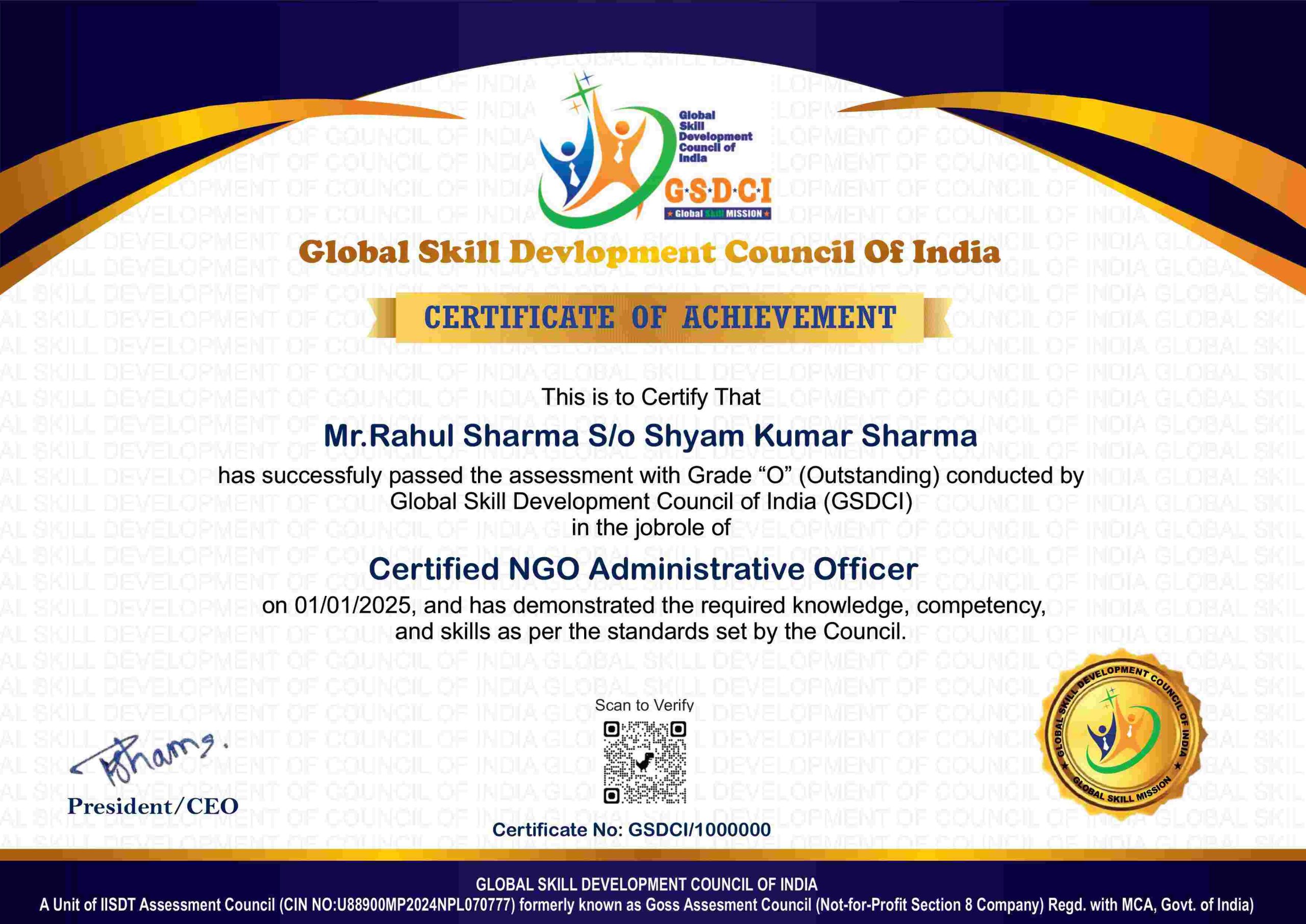
Step 6: After completion of online assessment, you can download your Certificate Immediately.

Assessment Modules:

Module 1: Introduction to Crime Reporting: Role and responsibilities of a crime reporter, Importance of crime journalism in society, Differences between crime reporting and investigative journalism, Types of crimes and classifications, Understanding the criminal justice system, Ethics, neutrality, and sensitivity in crime coverage.

Module 2: Law Enforcement and Legal Procedures: Structure and roles of police, judiciary, and legal agencies, Crime scene protocols and terminology, Understanding FIRs, chargesheets, and court filings, Attending police briefings and court hearings, Interaction guidelines with law enforcement officials, Legal limitations and rights of reporters.

Module 3: Investigative Techniques and Source Development: Identifying credible leads and crime-related news angles, Building and protecting confidential sources, Conducting interviews with victims, witnesses, and authorities, Gathering and verifying documents and evidence, Background checks and use of public records, Safety and risk management in fieldwork.

Module 4: Writing and Presenting Crime News: Structure and format of a crime news report, Writing with clarity, accuracy, and sensitivity, Crafting headlines without sensationalism, Reporting on ongoing investigations and legal cases, Visual storytelling for crime reporting (photos, graphics), Adhering to newsroom style guides and legal standards.

Module 5: Ethical, Legal, and Privacy Concerns: Respecting victim rights and privacy, Avoiding defamation and contempt of court, Handling minors and vulnerable populations ethically, Differentiating between public interest and sensationalism, Navigating issues of bias, stereotypes, and discrimination, Understanding media law applicable to crime reporting.

Module 6: Digital Tools, Trends, and Career Development: Using databases, OSINT, and crime-mapping tools, Social media and real-time crime updates, Multimedia reporting (video, podcasts, digital graphics), Challenges of covering cybercrime and digital evidence, Building a portfolio and beat specialization, Freelance vs staff crime reporting career paths and networks.

GSDCI Online Assessment Detail:

  • Duration- 60 minutes.
  • Number of Questions- 30.
  • Number of Questions from each module: 5.
  • Language: English.
  • Exam Type: Multiple Choice Questions.
  • Maximum Marks- 100, Passing Marks- 50%.
  • There is no negative marking in any module.
Marking System:
S.No. No. of Questions Marks Each Question Total Marks
1 10 5 50
2 5 4 20
3 5 3 15
4 5 2 10
5 5 1 5
30   100
How Students will be Graded:
S.No. Marks Grade
1 91-100 O (Outstanding)
2 81-90 A+ (Excellent)
3 71-80 A (Very Good)
4 61-70 B (Good)
5 50-60 P (Pass)
6  0-49 F (Fail)


Benefits of Certification:

🌍 1. Global Recognition & Credibility – Stand out worldwide with a certification that opens doors across borders. Trusted by employers, respected by institutions, and recognized in over 100 countries.

📜 2. Quality Assurance through ISO Certification – Certified to global ISO standards, our programs deliver excellence, consistency, and a benchmarked learning experience that speaks for itself.

💼 3. Career Advancement & Employability – Enhances your resume and increases chances of promotions or job offers.

🤝 4. Non-Profit Trust Factor – Certifications from non-profit organizations are mission-driven rather than profit-driven.

📚 5. Access to Verified Learning & Resources – Often includes e-books, mock tests, and online support without hidden costs.

🔍 6. Transparency & Online Verification – Certifications come with a unique Enrolment ID for easy online verification by employers and institutions.

⏳ 7. Lifetime or Long-Term Validity – Certifications usually have lifetime validity or long-term recognition, reducing the need for frequent renewals.