
No products in the cart.


Certified Culturally Responsive Teaching Specialist
₹6,500.00 ₹3,250.00
50% fee concession will end in
To prepare educators to implement culturally responsive teaching practices that foster equity, inclusion, and student success.
Description
Certification Name: Certified Culturally Responsive Teaching Specialist
Global Occupational Skill Standard – GOSS ID: GOSS/ET/CCRTS/V1
Eligibility: Graduation or Equivalent or minimum 2 years of relevant experience (experience-based learners can directly enroll and certify).
Objective: The Certified Culturally Responsive Teaching Specialist course is designed to equip educators with the knowledge, skills, and strategies to create inclusive, equitable, and culturally affirming learning environments. The course covers the principles of culturally responsive pedagogy, awareness of cultural diversity, bias recognition, curriculum adaptation, student-centered instructional practices, and community engagement.
Certification: Within 5 days after Completion of Online Assessment.
Get ready to join the Journey to become a GSDCI Certified Professional – International Certification and Assessment Body.
Steps to become a GSDCI Certified Professional:
Step 1: Select your certification you want to pursue.
Step 2: Click on get certified tab, new pop up window will open.
Step 3: Click on pay certification fee, you will be redirected to billing details page.
Step 4: Fill your details and click on pay certification fee, You will be redirected to payment gateway, pay fee by any available options like Card(Debit/Credit), Wallet, Paytm, Net banking, UPI and Google pay.
Step 5: You will get Login Credentials of Online E-Books and Online assessment link on your email id, within 48 hrs of payment.
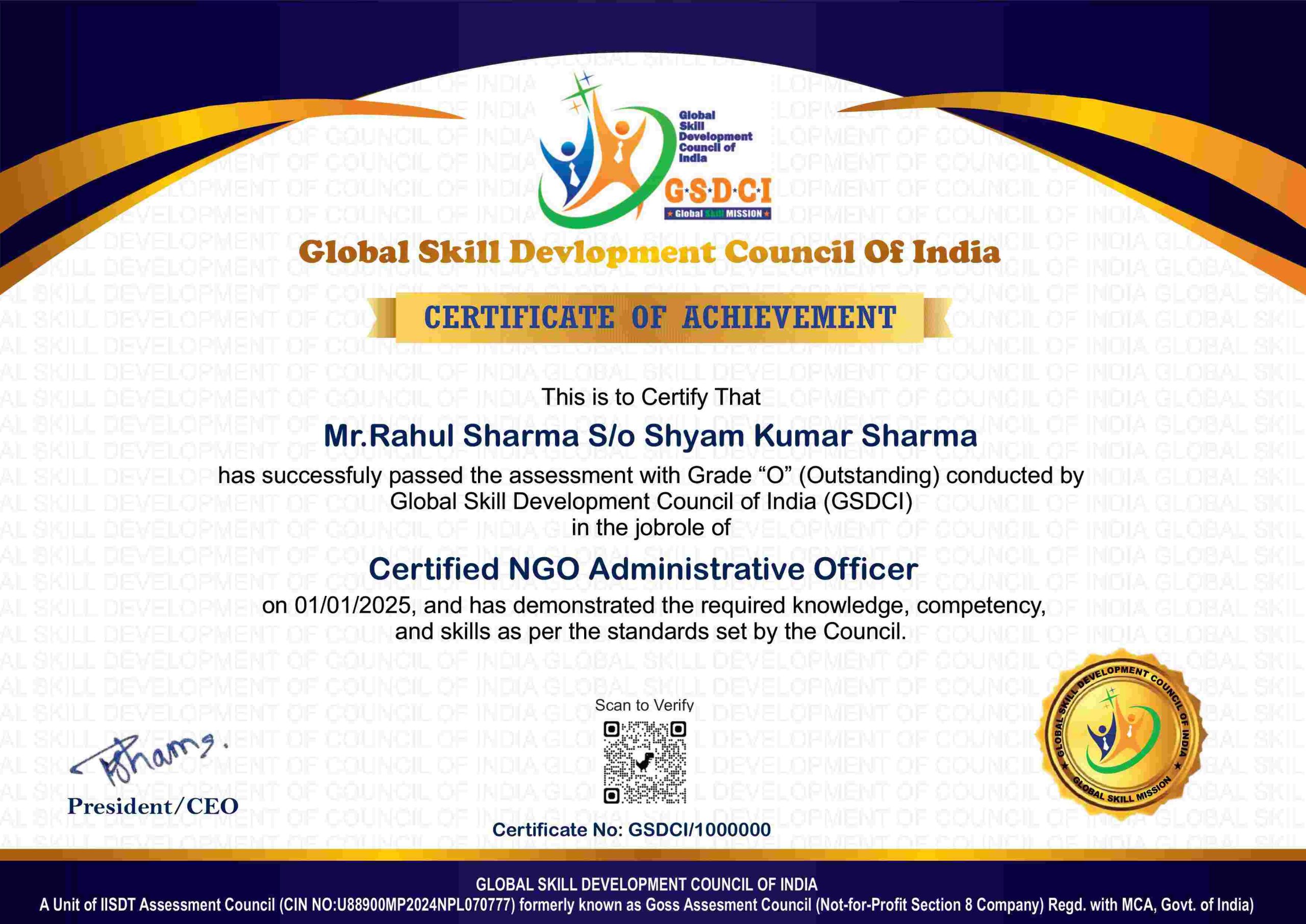
Step 6: After completion of online assessment, you can download your Certificate Immediately.
Assessment Modules:
Module 1: Foundations of Culturally Responsive Teaching: Definition and importance of culturally responsive teaching, Historical and social context of diversity in education, Understanding culture, identity, and bias, Theoretical frameworks supporting culturally responsive pedagogy, Impact of culture on learning and development, Benefits of culturally responsive teaching for all students.
Module 2: Cultural Awareness and Self-Reflection: Exploring personal cultural identity and biases, Developing cultural humility and empathy, Recognizing implicit bias and stereotypes, Reflective practices for educators, Building cultural competence, Strategies for ongoing self-assessment.
Module 3: Curriculum Design and Instructional Strategies: Integrating diverse perspectives and content, Designing inclusive lesson plans and materials, Differentiating instruction to meet cultural needs, Using students’ cultural backgrounds as assets, Culturally relevant assessment practices, Incorporating storytelling and oral traditions.
Module 4: Building Inclusive Classroom Environments: Creating a safe and welcoming space for all learners, Establishing respectful communication norms, Encouraging student voice and agency, Promoting positive relationships among diverse students, Addressing microaggressions and discrimination, Collaborative classroom management techniques.
Module 5: Family and Community Engagement: Understanding the role of families and communities in education, Strategies for effective family communication and partnerships, Culturally responsive outreach and involvement, Collaborating with community resources, Supporting multilingual and multicultural families, Building trust and mutual respect.
Module 6: Leadership and Advocacy in Culturally Responsive Teaching: Leading culturally responsive initiatives in schools, Advocating for equitable policies and practices, Professional development and training for educators, Overcoming systemic barriers and resistance, Measuring impact and outcomes, Sustaining culturally responsive practices over time.
GSDCI Online Assessment Detail:
- Duration- 60 minutes.
- Number of Questions- 30.
- Number of Questions from each module: 5.
- Language: English.
- Exam Type: Multiple Choice Questions.
- Maximum Marks- 100, Passing Marks- 50%.
- There is no negative marking in any module.
| Marking System: | |||
| S.No. | No. of Questions | Marks Each Question | Total Marks |
| 1 | 10 | 5 | 50 |
| 2 | 5 | 4 | 20 |
| 3 | 5 | 3 | 15 |
| 4 | 5 | 2 | 10 |
| 5 | 5 | 1 | 5 |
| 30 | 100 | ||
| How Students will be Graded: | |||
| S.No. | Marks | Grade | |
| 1 | 91-100 | O (Outstanding) | |
| 2 | 81-90 | A+ (Excellent) | |
| 3 | 71-80 | A (Very Good) | |
| 4 | 61-70 | B (Good) | |
| 5 | 50-60 | P (Pass) | |
| 6 | 0-49 | F (Fail) | |
Benefits of Certification:
🌍 1. Global Recognition & Credibility – Stand out worldwide with a certification that opens doors across borders. Trusted by employers, respected by institutions, and recognized in over 100 countries.
📜 2. Quality Assurance through ISO Certification – Certified to global ISO standards, our programs deliver excellence, consistency, and a benchmarked learning experience that speaks for itself.
💼 3. Career Advancement & Employability – Enhances your resume and increases chances of promotions or job offers.
🤝 4. Non-Profit Trust Factor – Certifications from non-profit organizations are mission-driven rather than profit-driven.
📚 5. Access to Verified Learning & Resources – Often includes e-books, mock tests, and online support without hidden costs.
🔍 6. Transparency & Online Verification – Certifications come with a unique Enrolment ID for easy online verification by employers and institutions.
⏳ 7. Lifetime or Long-Term Validity – Certifications usually have lifetime validity or long-term recognition, reducing the need for frequent renewals.
Reviews
There are no reviews yet.