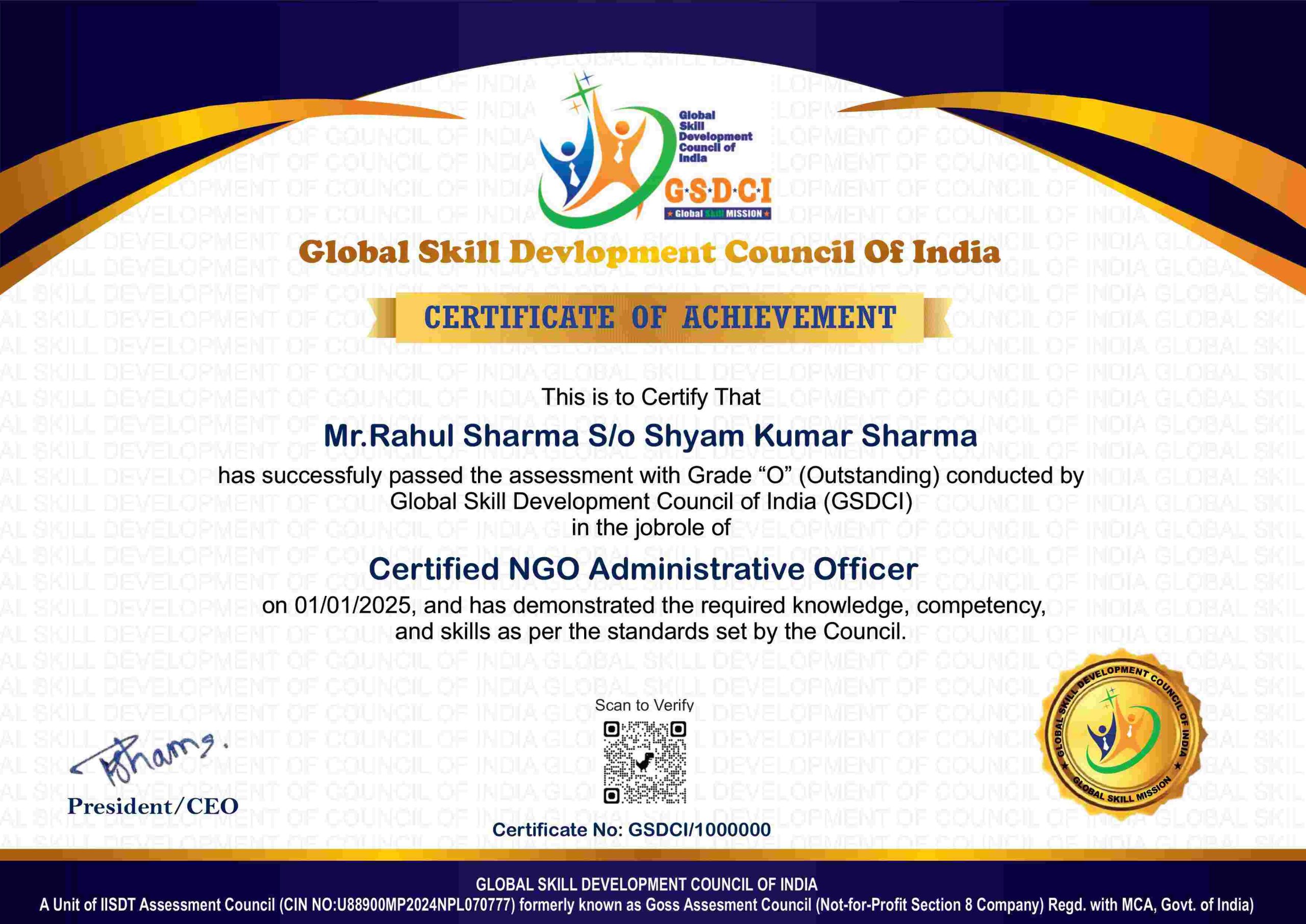
Certified Drone Journalist /Aerial Filmmaker

6,500.00 3,250.00

50% fee concession will end in

To train learners in operating drones and capturing professional aerial visuals for journalism, filmmaking, and digital storytelling with safety and compliance.

Description

Certification Name: Certified Drone Journalist /Aerial Filmmaker

Global Occupational Skill Standard – GOSS ID: GOSS/JPM/CDJAF/V1

Eligibility: 10+2 (higher Secondary) or Equivalent or minimum 2 years of relevant experience (experience-based learners can directly enroll and certify).

Objective: The Certified Drone Journalist / Aerial Filmmaker course is designed to equip learners with the technical, creative, and regulatory skills needed to capture compelling aerial footage for journalism, filmmaking, and digital storytelling. The course covers drone operation, flight planning, aerial cinematography techniques, camera control, safety protocols, and legal compliance (including DGCA or FAA regulations, depending on the region). Learners will explore shot composition, movement dynamics, storytelling through aerial visuals, and integration with ground footage. 

Certification: Within 5 days after Completion of Online Assessment.

Get ready to join the Journey to become a GSDCI Certified Professional  – International Certification and Assessment Body.

Steps to become a GSDCI Certified Professional:

Step 1: Select your certification you want to pursue.

Step 2: Click on get certified tab, new pop up window will open.

Step 3: Click on pay certification fee, you will be redirected to billing details page.

Step 4: Fill your details and click on pay certification fee, You will be redirected to payment gateway, pay fee by any available options like Card(Debit/Credit), Wallet, Paytm, Net banking, UPI and Google pay.

Step 5: You will get Login Credentials of Online E-Books and Online assessment link on your email id, within 48 hrs of payment.

Step 6: After completion of online assessment, you can download your Certificate Immediately.

Assessment Modules:

Module 1: Introduction to Drone Journalism and Aerial Filmmaking: Understanding the role of drones in modern journalism and filmmaking, Types of drones used in media production and their components, Aerial storytelling: advantages, challenges, and use cases, Applications in news, documentaries, real estate, sports, and events, Ethical considerations in drone journalism, Overview of drone industry trends and emerging opportunities.

Module 2: Drone Operations, Safety, and Regulations: Basic aerodynamics and drone flight principles, Types of UAVs and drone classifications, Pre-flight planning, airspace classification, and no-fly zones, DGCA/FAA rules, licensing, insurance, and legal compliance, Safety protocols and emergency handling during drone flights, Drone registration, certification, and pilot logbook maintenance.

Module 3: Cinematography Techniques for Aerial Filming: Understanding framing, composition, and movement from aerial perspectives, Camera settings: resolution, frame rate, shutter speed, ISO, Using drones for cinematic shots (orbits, fly-throughs, reveals, top-downs), Shooting in different environments: urban, rural, water, mountains, Creating dramatic storytelling using elevation and motion, Matching aerial footage with ground-based footage in post-production.

Module 4: Equipment, Accessories, and Drone Maintenance: Choosing the right drone and gimbal setup for video and photography, Understanding flight controllers, GPS, sensors, and stabilization, Using ND filters, propeller guards, extra batteries, and monitors, Drone maintenance: battery care, motor checks, firmware updates, Troubleshooting flight issues and environmental hazards, Packing and transporting drones for field assignments.

Module 5: Post-Production for Aerial Media: Importing and organizing aerial footage, Stabilizing and color grading drone shots, Editing drone footage using software like Premiere Pro, Final Cut, DaVinci Resolve, Removing lens distortion and enhancing clarity, Integrating aerial visuals with voiceover, sound effects, and music, Exporting in correct formats for web, TV, OTT, and social media.

Module 6: Project Execution and Career Development: Planning a drone-based journalism or filmmaking assignment, Working with newsrooms, media houses, and creative studios, Building a drone footage reel and project portfolio, Writing aerial shot lists and scripting for visual storytelling, Legal and ethical case studies in drone journalism and filmmaking, Freelancing, client pitching, and monetization avenues for drone media experts.

GSDCI Online Assessment Detail:

  • Duration- 60 minutes.
  • Number of Questions- 30.
  • Number of Questions from each module: 5.
  • Language: English.
  • Exam Type: Multiple Choice Questions.
  • Maximum Marks- 100, Passing Marks- 50%.
  • There is no negative marking in any module.
Marking System:
S.No. No. of Questions Marks Each Question Total Marks
1 10 5 50
2 5 4 20
3 5 3 15
4 5 2 10
5 5 1 5
30   100
How Students will be Graded:
S.No. Marks Grade
1 91-100 O (Outstanding)
2 81-90 A+ (Excellent)
3 71-80 A (Very Good)
4 61-70 B (Good)
5 50-60 P (Pass)
6  0-49 F (Fail)


Benefits of Certification:

🌍 1. Global Recognition & Credibility – Stand out worldwide with a certification that opens doors across borders. Trusted by employers, respected by institutions, and recognized in over 100 countries.

📜 2. Quality Assurance through ISO Certification – Certified to global ISO standards, our programs deliver excellence, consistency, and a benchmarked learning experience that speaks for itself.

💼 3. Career Advancement & Employability – Enhances your resume and increases chances of promotions or job offers.

🤝 4. Non-Profit Trust Factor – Certifications from non-profit organizations are mission-driven rather than profit-driven.

📚 5. Access to Verified Learning & Resources – Often includes e-books, mock tests, and online support without hidden costs.

🔍 6. Transparency & Online Verification – Certifications come with a unique Enrolment ID for easy online verification by employers and institutions.

⏳ 7. Lifetime or Long-Term Validity – Certifications usually have lifetime validity or long-term recognition, reducing the need for frequent renewals.