Certified Emergency Medical Technician (EMT) – Basic

6,000.00 3,000.00

50% Discount will end in

To prepare skilled first responders capable of delivering lifesaving emergency care, stabilizing patients, and ensuring safe transport to medical facilities.

Description

Certification Name: Certified Emergency Medical Technician (EMT) – Basic

Global Occupational Skill Standard – GOSS ID: GOSS/HF/CEMT/V1

Eligibility: Graduation or Equivalent or minimum 2 years of relevant experience (experience-based learners can directly enroll and certify).

Objective: The Certified Emergency Medical Technician (EMT) – Basic course is designed to train individuals in providing immediate, lifesaving care in pre-hospital and emergency settings. The course equips participants with foundational knowledge and hands-on skills in patient assessment, airway management, CPR, trauma care, bleeding control, fracture stabilization, emergency childbirth, and safe patient transport.

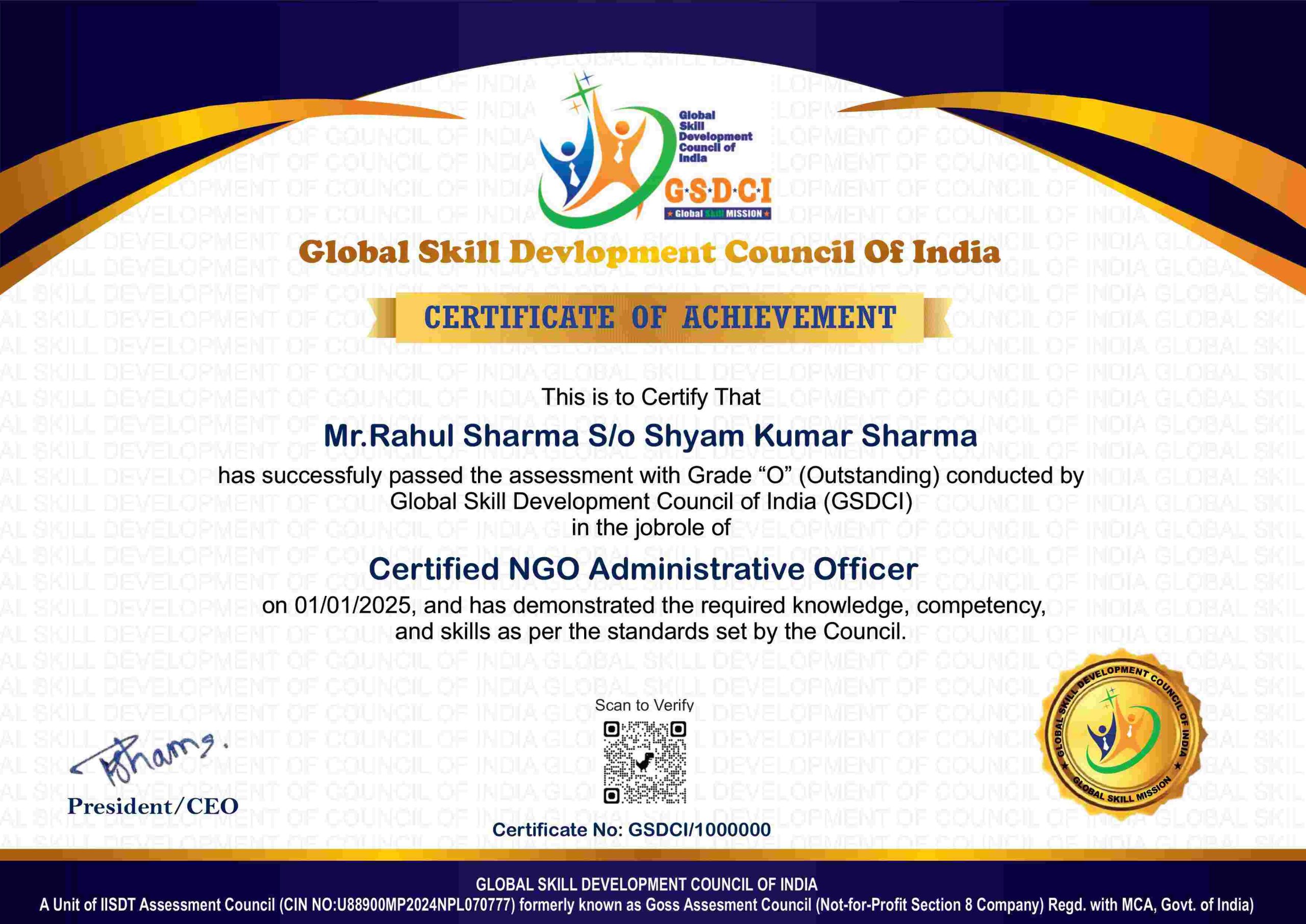
Certification: Within 5 days after Completion of Online Assessment.

Get ready to join the Journey to become a GSDCI Certified Professional  – International Certification and Assessment Body.

Steps to become a GSDCI Certified Professional:

Step 1: Select your certification you want to pursue.

Step 2: Click on get certified tab, new pop up window will open.

Step 3: Click on pay certification fee, you will be redirected to billing details page.

Step 4: Fill your details and click on pay certification fee, You will be redirected to payment gateway, pay fee by any available options like Card(Debit/Credit), Wallet, Paytm, Net banking, UPI and Google pay.

Step 5: You will get Login Credentials of Online E-Books and Online assessment link on your email id, within 48 hrs of payment.

Step 6: After completion of online assessment, you can download your Certificate Immediately.

Assessment Modules:

Module 1: Introduction to Emergency Medical Services (EMS) and EMT Role: Overview of EMS systems and levels of care, Roles, responsibilities, and scope of practice of EMT-B, Legal, ethical, and professional considerations in pre-hospital care, Consent, documentation, and patient confidentiality, Stress management and personal safety, Communication and teamwork in emergency response.

Module 2: Human Anatomy, Physiology and Patient Assessment: Basics of human anatomy and physiology relevant to EMTs, Primary and secondary patient assessments, Airway, breathing, and circulation evaluation (ABCs), Vital signs monitoring and history taking (SAMPLE, OPQRST), Scene size-up and mechanism of injury assessment, Triage principles and prioritization of care.

Module 3: Airway Management, Respiration and Artificial Ventilation: Anatomy of the respiratory system and airway structures, Airway obstruction identification and management, Use of suction devices, oral and nasal airways (OPA/NPA), Bag-valve-mask ventilation and oxygen administration, Managing respiratory emergencies like asthma and COPD, Monitoring SpO₂ and respiratory effort.

Module 4: Trauma and Medical Emergency Management: Assessment and management of bleeding, shock, and fractures, Head, neck, spine, chest, and abdominal injury care, Burns, soft tissue injuries and wound care, Medical emergencies: seizures, diabetes, poisoning, stroke, Allergic reactions, anaphylaxis, and temperature-related illnesses, Use of splints, bandages, and spinal immobilization devices.

Module 5: Cardiovascular Emergencies and Basic Life Support (BLS): Recognition and management of cardiac arrest and chest pain, Performing high-quality CPR and using AED, Assisting with medications like aspirin and nitroglycerin, Understanding heart attack, stroke, and hypertension symptoms, Monitoring and reporting cardiac signs and symptoms, Coordinating care with advanced providers and paramedics.

Module 6: Special Patient Populations and EMS Operations: Care for pediatric, geriatric, and pregnant patients, Handling psychiatric and behavioral emergencies, Obstetric and neonatal emergency care basics, Ambulance operations and equipment management, Infection control, hazardous material awareness, and disaster response, Radio communication, documentation, and EMS protocols.

GSDCI Online Assessment Detail:

  • Duration- 60 minutes.
  • Number of Questions- 30.
  • Number of Questions from each module: 5.
  • Language: English.
  • Exam Type: Multiple Choice Questions.
  • Maximum Marks- 100, Passing Marks- 50%.
  • There is no negative marking in any module.
Marking System:
S.No. No. of Questions Marks Each Question Total Marks
1 10 5 50
2 5 4 20
3 5 3 15
4 5 2 10
5 5 1 5
30   100
How Students will be Graded:
S.No. Marks Grade
1 91-100 O (Outstanding)
2 81-90 A+ (Excellent)
3 71-80 A (Very Good)
4 61-70 B (Good)
5 50-60 P (Pass)
6  0-49 F (Fail)


Benefits of Certification:

🌍 1. Global Recognition & Credibility – Stand out worldwide with a certification that opens doors across borders. Trusted by employers, respected by institutions, and recognized in over 100 countries.

📜 2. Quality Assurance through ISO Certification – Certified to global ISO standards, our programs deliver excellence, consistency, and a benchmarked learning experience that speaks for itself.

💼 3. Career Advancement & Employability – Enhances your resume and increases chances of promotions or job offers.

🤝 4. Non-Profit Trust Factor – Certifications from non-profit organizations are mission-driven rather than profit-driven.

📚 5. Access to Verified Learning & Resources – Often includes e-books, mock tests, and online support without hidden costs.

🔍 6. Transparency & Online Verification – Certifications come with a unique Enrolment ID for easy online verification by employers and institutions.

⏳ 7. Lifetime or Long-Term Validity – Certifications usually have lifetime validity or long-term recognition, reducing the need for frequent renewals.

Reviews

There are no reviews yet.

Be the first to review “Certified Emergency Medical Technician (EMT) – Basic”

Your email address will not be published. Required fields are marked *