
No products in the cart.



Certified Emerging Markets Business Executive
₹6,000.00 ₹3,000.00
50% fee concession will end in
To equip executives with the knowledge and tools to lead business operations and strategy effectively in emerging and high-growth markets worldwide.
Description
Certification Name: Certified Emerging Markets Business Executive
Global Occupational Skill Standard – GOSS ID: GOSS/BS/CEMBE/V1
Eligibility: Graduation or Equivalent or minimum 2 years of relevant experience (experience-based learners can directly enroll and certify).
Objective: The Certified Emerging Markets Business Executive (CEMBE) course is designed to prepare professionals to successfully lead and operate in emerging and frontier markets. It provides in-depth knowledge of the economic, political, regulatory, and cultural dynamics that shape business environments in developing regions.
Certification: Within 5 days after Completion of Online Assessment.
Get ready to join the Journey to become a GSDCI Certified Professional – International Certification and Assessment Body.
Steps to become a GSDCI Certified Professional:
Step 1: Select your certification you want to pursue.
Step 2: Click on get certified tab, new pop up window will open.
Step 3: Click on pay certification fee, you will be redirected to billing details page.
Step 4: Fill your details and click on pay certification fee, You will be redirected to payment gateway, pay fee by any available options like Card(Debit/Credit), Wallet, Paytm, Net banking, UPI and Google pay.
Step 5: You will get Login Credentials of Online E-Books and Online assessment link on your email id, within 48 hrs of payment.
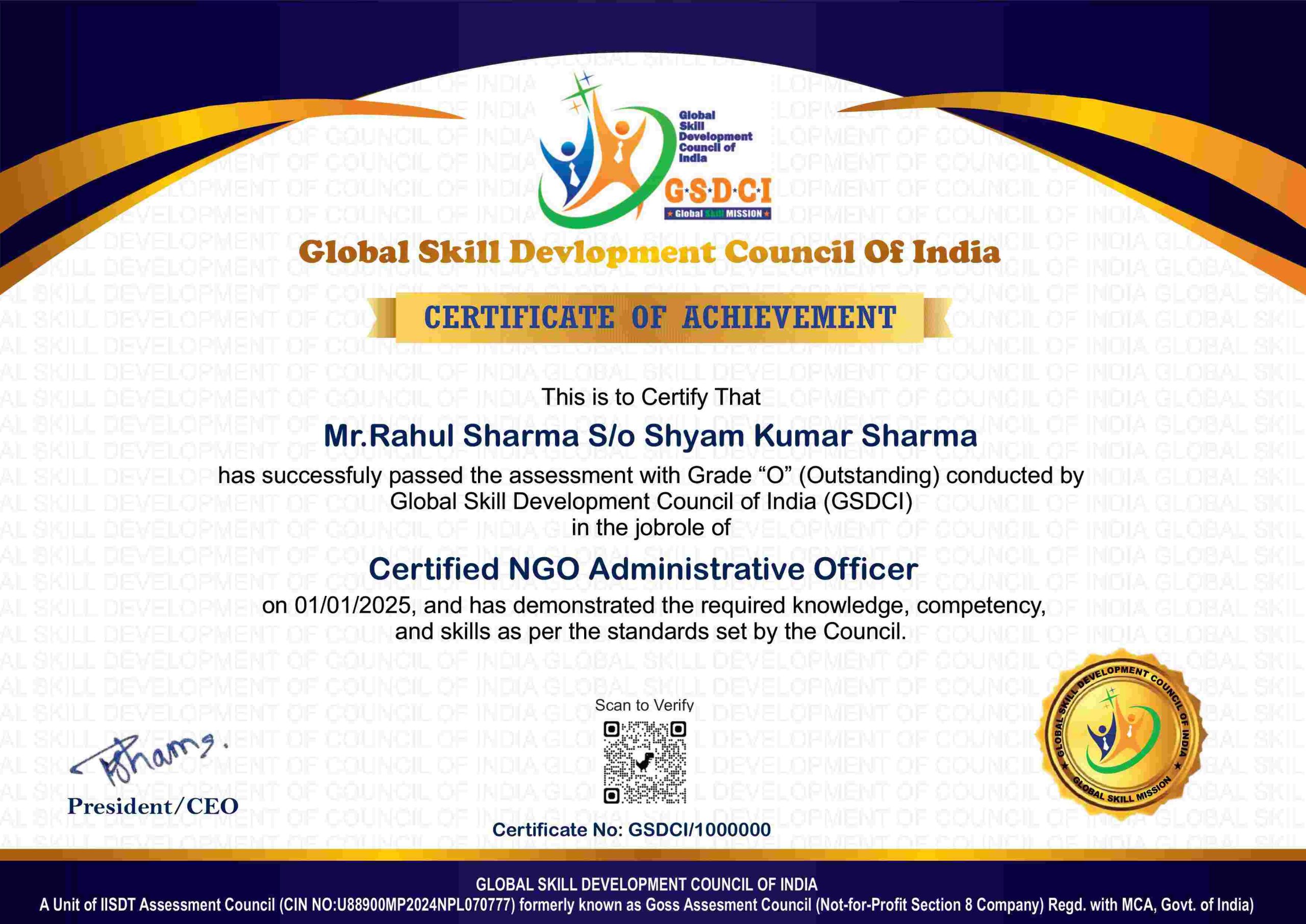
Step 6: After completion of online assessment, you can download your Certificate Immediately.
Assessment Modules:
Module 1: Understanding Emerging Markets: Characteristics and Classifications of Emerging Markets, Key Economic and Demographic Trends, Political and Institutional Landscape, Opportunities and Challenges in Emerging Economies, Market Entry Risks and Mitigation, Regional Focus: BRICS, MINT, and Frontier Markets.
Module 2: Strategic Market Entry and Expansion: Market Entry Modes (Joint Ventures, Franchising, Greenfield), Localization vs. Globalization Strategies, Partner Selection and Due Diligence, Navigating Legal and Regulatory Environments, Strategic Alliances and M&A in Emerging Markets, Exit Strategies and Business Continuity.
Module 3: Finance and Investment in Emerging Markets: Sources of Capital and Investment Vehicles, Currency Risk and Exchange Rate Management, Access to Local Capital Markets and Banking Systems, Project Finance and Public-Private Partnerships (PPPs), Investment Incentives and Tax Structures, Risk Assessment and Mitigation Strategies.
Module 4: Operations, Supply Chains, and Infrastructure: Logistics and Infrastructure Challenges, Building Resilient Supply Chains, Sourcing and Procurement in Local Markets, Technology Adoption and Innovation in Operations, Managing Cost Efficiency and Scalability, Infrastructure Gaps and Opportunities for Investment.
Module 5: Marketing, Culture, and Consumer Behavior: Understanding Local Consumer Preferences, Cultural Intelligence and Business Etiquette, Brand Positioning in Low- to Mid-Income Markets, Digital Marketing and Mobile Penetration, Sales Channels and Distribution Networks, Building Trust and Long-Term Customer Relationships.
Module 6: Leadership, Governance, and Sustainability in Emerging Markets: Leadership Challenges in Volatile Environments, Corporate Governance and Compliance, Stakeholder Management and Reputation Risk, Sustainability and ESG in Emerging Markets, Navigating Corruption and Ethical Dilemmas, Future Trends and Innovation in Emerging Market Strategies.
GSDCI Online Assessment Detail:
- Duration- 60 minutes.
- Number of Questions- 30.
- Number of Questions from each module: 5.
- Language: English.
- Exam Type: Multiple Choice Questions.
- Maximum Marks- 100, Passing Marks- 50%.
- There is no negative marking in any module.
| Marking System: | |||
| S.No. | No. of Questions | Marks Each Question | Total Marks |
| 1 | 10 | 5 | 50 |
| 2 | 5 | 4 | 20 |
| 3 | 5 | 3 | 15 |
| 4 | 5 | 2 | 10 |
| 5 | 5 | 1 | 5 |
| 30 | 100 | ||
| How Students will be Graded: | |||
| S.No. | Marks | Grade | |
| 1 | 91-100 | O (Outstanding) | |
| 2 | 81-90 | A+ (Excellent) | |
| 3 | 71-80 | A (Very Good) | |
| 4 | 61-70 | B (Good) | |
| 5 | 50-60 | P (Pass) | |
| 6 | 0-49 | F (Fail) | |
Benefits of Certification:
🌍 1. Global Recognition & Credibility – Stand out worldwide with a certification that opens doors across borders. Trusted by employers, respected by institutions, and recognized in over 100 countries.
📜 2. Quality Assurance through ISO Certification – Certified to global ISO standards, our programs deliver excellence, consistency, and a benchmarked learning experience that speaks for itself.
💼 3. Career Advancement & Employability – Enhances your resume and increases chances of promotions or job offers.
🤝 4. Non-Profit Trust Factor – Certifications from non-profit organizations are mission-driven rather than profit-driven.
📚 5. Access to Verified Learning & Resources – Often includes e-books, mock tests, and online support without hidden costs.
🔍 6. Transparency & Online Verification – Certifications come with a unique Enrolment ID for easy online verification by employers and institutions.
⏳ 7. Lifetime or Long-Term Validity – Certifications usually have lifetime validity or long-term recognition, reducing the need for frequent renewals.