Certified Employee Relations Manager

6,500.00 3,250.00

50% fee concession will end in

To train professionals in managing employee relations, resolving workplace issues, and fostering a fair, compliant, and engaged organizational culture.

Description

Certification Name: Certified Employee Relations Manager

Global Occupational Skill Standard – GOSS ID: GOSS/M/CERM/V1

Eligibility: Graduation or Equivalent or minimum 2 years of relevant experience (experience-based learners can directly enroll and certify).

Objective: The Certified Employee Relations Manager course is designed to equip HR professionals and managers with the knowledge, skills, and tools to foster positive employee-employer relationships and maintain a productive, compliant, and engaging work environment. The course covers key areas including employee relations strategy, conflict resolution, grievance handling, workplace investigations, disciplinary procedures, employee engagement, legal compliance, and policy development.

Certification: Within 5 days after Completion of Online Assessment.

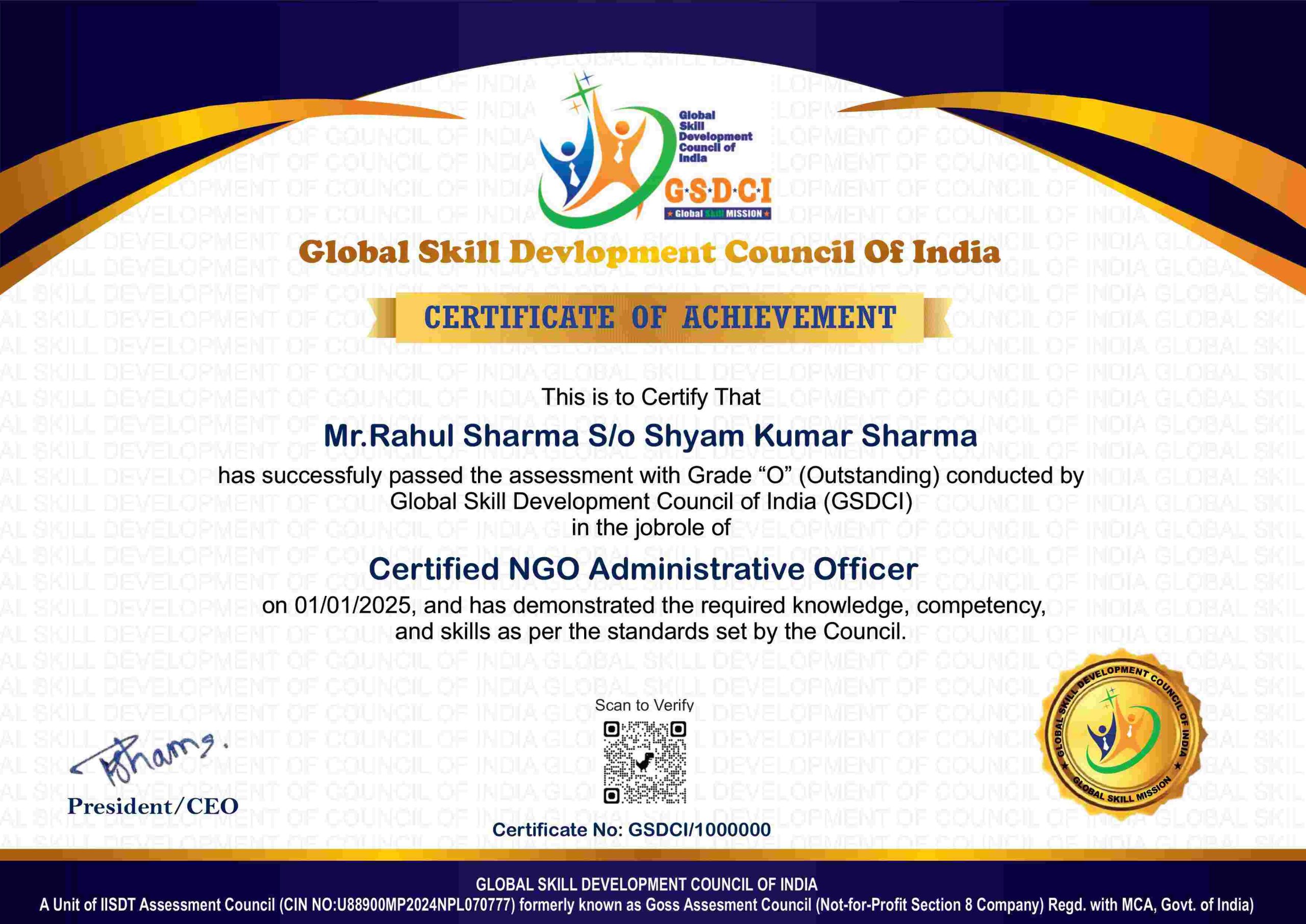
Get ready to join the Journey to become a GSDCI Certified Professional  – International Certification and Assessment Body.

Steps to become a GSDCI Certified Professional:

Step 1: Select your certification you want to pursue.

Step 2: Click on get certified tab, new pop up window will open.

Step 3: Click on pay certification fee, you will be redirected to billing details page.

Step 4: Fill your details and click on pay certification fee, You will be redirected to payment gateway, pay fee by any available options like Card(Debit/Credit), Wallet, Paytm, Net banking, UPI and Google pay.

Step 5: You will get Login Credentials of Online E-Books and Online assessment link on your email id, within 48 hrs of payment.

Step 6: After completion of online assessment, you can download your Certificate Immediately.

Assessment Modules:

Module 1: Introduction to Employee Relations: Definition and scope of employee relations, Importance of positive employee relations in organizational success, Role and responsibilities of an Employee Relations Manager, Difference between employee relations and industrial relations, Historical evolution of employee relations practices, Key stakeholders in the employee relations process.

Module 2: Employment Laws and Workplace Compliance: Overview of key labor and employment laws, Ensuring compliance with HR policies and legal frameworks, Handling wrongful termination, discrimination, and harassment issues, Conducting workplace investigations in line with legal procedures, Role of ER in managing legal risk and policy interpretation, Documentation and recordkeeping in ER cases.

Module 3: Conflict Resolution and Workplace Investigations: Identifying causes and sources of workplace conflict, Conflict resolution techniques and mediation skills, Process for conducting fair and unbiased investigations, Interviewing techniques and gathering evidence, Writing investigation reports and recommending actions, Ensuring confidentiality, fairness, and legal compliance.

Module 4: Grievance Handling and Disciplinary Procedures: Developing a formal grievance redressal process, Recognizing informal and formal employee complaints, Progressive discipline framework and guidelines, Conducting disciplinary hearings and inquiries, Legal and ethical handling of disciplinary actions, Communicating outcomes and preventing retaliation.

Module 5: Employee Engagement, Communication, and Culture: Strategies to build trust and open communication, Developing and sustaining a culture of transparency and respect, Managing employee feedback and engagement surveys, Role of ER in DEI and psychological safety, Recognition, wellness, and work-life balance initiatives, Supporting management and employees through change.

Module 6: ER Analytics, Strategy, and Future Trends: Using data to track ER trends and case patterns, Identifying root causes of turnover and dissatisfaction, ER dashboards and metrics for decision-making, Aligning ER strategies with organizational goals, Leveraging technology for ER case management, Future of employee relations in remote and hybrid work environments.

GSDCI Online Assessment Detail:

  • Duration- 60 minutes.
  • Number of Questions- 30.
  • Number of Questions from each module: 5.
  • Language: English.
  • Exam Type: Multiple Choice Questions.
  • Maximum Marks- 100, Passing Marks- 50%.
  • There is no negative marking in any module.
Marking System:
S.No. No. of Questions Marks Each Question Total Marks
1 10 5 50
2 5 4 20
3 5 3 15
4 5 2 10
5 5 1 5
30   100
How Students will be Graded:
S.No. Marks Grade
1 91-100 O (Outstanding)
2 81-90 A+ (Excellent)
3 71-80 A (Very Good)
4 61-70 B (Good)
5 50-60 P (Pass)
6  0-49 F (Fail)


Benefits of Certification:

🌍 1. Global Recognition & Credibility – Stand out worldwide with a certification that opens doors across borders. Trusted by employers, respected by institutions, and recognized in over 100 countries.

📜 2. Quality Assurance through ISO Certification – Certified to global ISO standards, our programs deliver excellence, consistency, and a benchmarked learning experience that speaks for itself.

💼 3. Career Advancement & Employability – Enhances your resume and increases chances of promotions or job offers.

🤝 4. Non-Profit Trust Factor – Certifications from non-profit organizations are mission-driven rather than profit-driven.

📚 5. Access to Verified Learning & Resources – Often includes e-books, mock tests, and online support without hidden costs.

🔍 6. Transparency & Online Verification – Certifications come with a unique Enrolment ID for easy online verification by employers and institutions.

⏳ 7. Lifetime or Long-Term Validity – Certifications usually have lifetime validity or long-term recognition, reducing the need for frequent renewals.