
No products in the cart.


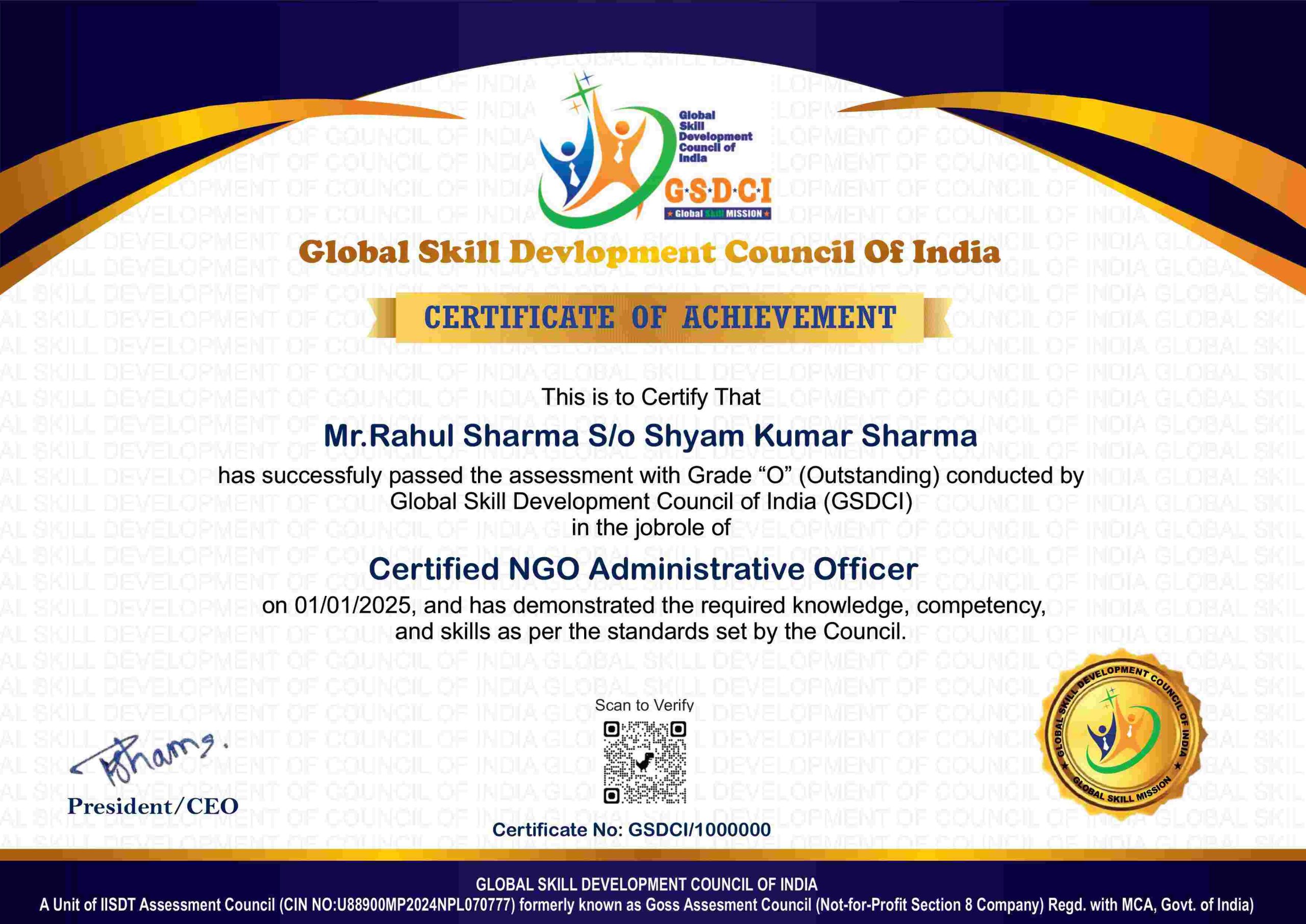

Certified Family Counselor
₹6,500.00 ₹3,250.00
50% fee concession will end in
To prepare professionals to support families in resolving conflicts, improving communication, and fostering emotional well-being through effective counseling strategies.
Description
Certification Name: Certified Family Counselor
Global Occupational Skill Standard – GOSS ID: GOSS/HF/CFC/V1
Eligibility: Graduation or Equivalent or minimum 2 years of relevant experience (experience-based learners can directly enroll and certify).
Objective: The Certified Family Counselor course is designed to train professionals in addressing and resolving emotional, behavioral, and relational challenges within family systems. The course provides comprehensive knowledge of family dynamics, developmental stages, communication patterns, parenting challenges, and intergenerational influences.
Certification: Within 5 days after Completion of Online Assessment.
Get ready to join the Journey to become a GSDCI Certified Professional – International Certification and Assessment Body.
Steps to become a GSDCI Certified Professional:
Step 1: Select your certification you want to pursue.
Step 2: Click on get certified tab, new pop up window will open.
Step 3: Click on pay certification fee, you will be redirected to billing details page.
Step 4: Fill your details and click on pay certification fee, You will be redirected to payment gateway, pay fee by any available options like Card(Debit/Credit), Wallet, Paytm, Net banking, UPI and Google pay.
Step 5: You will get Login Credentials of Online E-Books and Online assessment link on your email id, within 48 hrs of payment.
Step 6: After completion of online assessment, you can download your Certificate Immediately.
Assessment Modules:
Module 1: Foundations of Family Counseling: Definition and scope of family counseling, Historical development and key theories of family therapy, Roles and responsibilities of a family counselor, Understanding family systems, structures, and dynamics, Ethical and legal considerations in family counseling, Cultural, generational, and societal influences on family units.
Module 2: Family Communication and Relationship Patterns: Types of communication in family systems (verbal/non-verbal), Identifying dysfunctional communication and behavior patterns, Techniques to improve empathy, listening, and understanding, Conflict resolution within families and setting healthy boundaries, Enhancing emotional expression and reducing blame/shame cycles, Working with silence, avoidance, and hostility in sessions.
Module 3: Family Assessment and Counseling Approaches: Conducting family intake, genograms, and assessments, Identifying family roles, rules, and boundaries, Structural Family Therapy and Strategic Family Therapy models, Bowenian and Systemic Family Therapy approaches, Creating family treatment plans and measurable goals, Involving all family members in collaborative interventions.
Module 4: Working with Specific Family Issues: Parent-child conflicts and discipline challenges, Sibling rivalry and blended family dynamics, Marital discord and its impact on children, Divorce, separation, and co-parenting strategies, Grief, trauma, abuse, and crisis intervention in families, Managing addiction, chronic illness, and mental health in the family context.
Module 5: Child and Adolescent Counseling within Families: Developmental psychology of children and adolescents, Identifying behavioral and emotional issues in young family members, Building rapport with minors while involving caregivers, School and peer-related concerns within family systems, Parenting support and psychoeducation techniques, Play therapy and creative tools for child counseling.
Module 6: Professional Practice and Growth as a Family Counselor: Establishing trust, confidentiality, and informed consent, Record-keeping, documentation, and session planning, Multidisciplinary collaboration with schools, doctors, or legal systems, Dealing with resistance, transference, and counselor boundaries, Supervision, ethics, and ongoing skill development, Building a family counseling practice and career pathways.
GSDCI Online Assessment Detail:
- Duration- 60 minutes.
- Number of Questions- 30.
- Number of Questions from each module: 5.
- Language: English.
- Exam Type: Multiple Choice Questions.
- Maximum Marks- 100, Passing Marks- 50%.
- There is no negative marking in any module.
| Marking System: | |||
| S.No. | No. of Questions | Marks Each Question | Total Marks |
| 1 | 10 | 5 | 50 |
| 2 | 5 | 4 | 20 |
| 3 | 5 | 3 | 15 |
| 4 | 5 | 2 | 10 |
| 5 | 5 | 1 | 5 |
| 30 | 100 | ||
| How Students will be Graded: | |||
| S.No. | Marks | Grade | |
| 1 | 91-100 | O (Outstanding) | |
| 2 | 81-90 | A+ (Excellent) | |
| 3 | 71-80 | A (Very Good) | |
| 4 | 61-70 | B (Good) | |
| 5 | 50-60 | P (Pass) | |
| 6 | 0-49 | F (Fail) | |
Benefits of Certification:
🌍 1. Global Recognition & Credibility – Stand out worldwide with a certification that opens doors across borders. Trusted by employers, respected by institutions, and recognized in over 100 countries.
📜 2. Quality Assurance through ISO Certification – Certified to global ISO standards, our programs deliver excellence, consistency, and a benchmarked learning experience that speaks for itself.
💼 3. Career Advancement & Employability – Enhances your resume and increases chances of promotions or job offers.
🤝 4. Non-Profit Trust Factor – Certifications from non-profit organizations are mission-driven rather than profit-driven.
📚 5. Access to Verified Learning & Resources – Often includes e-books, mock tests, and online support without hidden costs.
🔍 6. Transparency & Online Verification – Certifications come with a unique Enrolment ID for easy online verification by employers and institutions.
⏳ 7. Lifetime or Long-Term Validity – Certifications usually have lifetime validity or long-term recognition, reducing the need for frequent renewals.