Certified Interaction Designer

6,500.00 3,250.00

50% Discount will end in

To train professionals in designing intuitive and engaging user interactions for digital interfaces, enhancing usability and user satisfaction.

Description

Certification Name: Certified Interaction Designer

Global Occupational Skill Standard – GOSS ID: GOSS/AD/CID/V1

Eligibility: Graduation or Equivalent or minimum 2 years of relevant experience (experience-based learners can directly enroll and certify).

Objective: The Certified Interaction Designer course is designed to equip professionals with the skills to create meaningful and intuitive interactions between users and digital interfaces. The course covers the principles of interaction design (IxD), including user flows, wireframing, prototyping, affordances, feedback mechanisms, motion design, and microinteractions. Participants will explore how to design for usability, accessibility, and engagement across web, mobile, and cross-platform interfaces. 

Certification: Within 5 days after Completion of Online Assessment.

Get ready to join the Journey to become a GSDCI Certified Professional  – International Certification and Assessment Body.

Steps to become a GSDCI Certified Professional:

Step 1: Select your certification you want to pursue.

Step 2: Click on get certified tab, new pop up window will open.

Step 3: Click on pay certification fee, you will be redirected to billing details page.

Step 4: Fill your details and click on pay certification fee, You will be redirected to payment gateway, pay fee by any available options like Card(Debit/Credit), Wallet, Paytm, Net banking, UPI and Google pay.

Step 5: You will get Login Credentials of Online E-Books and Online assessment link on your email id, within 48 hrs of payment.

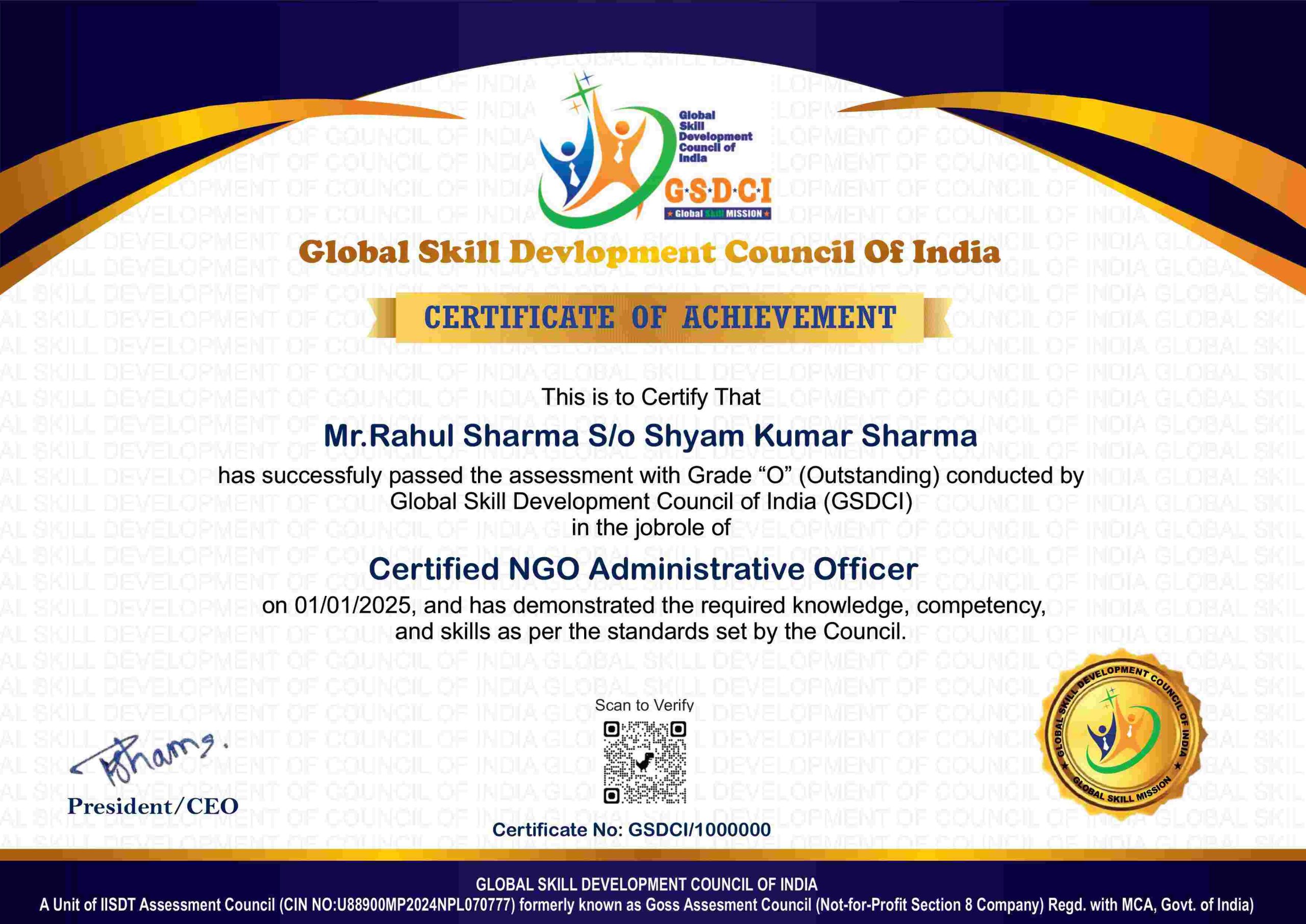
Step 6: After completion of online assessment, you can download your Certificate Immediately.

Assessment Modules:

Module 1: Introduction to Interaction Design (IxD): Definition and Core Principles of Interaction Design, Difference Between UX, UI, and Interaction Design, Role and Responsibilities of an Interaction Designer, Understanding User Needs, Behaviors, and Goals, History and Evolution of Interactive Systems, Key Components of Digital Interaction (Inputs, Feedback, Controls).

Module 2: Design Thinking and User-Centered Design: Design Thinking Framework (Empathize, Define, Ideate, Prototype, Test), Applying User-Centered Design in Interactive Products, Conducting User Research and Creating Personas, Mapping User Journeys and Touchpoints, Ideation Techniques and Sketching Concepts, Framing Problems and Defining Design Objectives.

Module 3: Interaction Patterns and Interface Design: Designing Effective User Interfaces for Web and Mobile, Common UI Components and Design Patterns, Navigation Systems, Forms, and Interactive Elements, Designing for Microinteractions and Feedback Loops, Responsive and Adaptive Interaction Design, Accessibility and Inclusive Interaction Principles.

Module 4: Prototyping and Interaction Modeling: Creating Low to High-Fidelity Interactive Prototypes, Tools for Prototyping (Figma, Adobe XD, Axure, ProtoPie), Interaction Flows and Storyboarding, State Changes and Transitions in UI, Clickable and Gesture-Based Interactions, Iterative Design and Usability Testing.

Module 5: Cognitive Psychology and Behavioral Design: Understanding Human Perception, Attention, and Memory, Mental Models and Affordances in Interaction Design, Heuristics and Behavioral Biases in Interface Use, Reducing Cognitive Load and Friction, Designing for Motivation, Engagement, and Flow, Applying Psychology to Drive Positive User Actions.

Module 6: Collaboration, Handoff, and Career Development: Working with UX Designers, Developers, and Product Teams, Preparing Design Specs and Interaction Guidelines, Using Tools for Design Handoff and Collaboration, Version Control and Design Systems, Building a Strong Interaction Design Portfolio, Freelancing, Job Roles, and Career Paths in Interaction Design.

GSDCI Online Assessment Detail:

  • Duration- 60 minutes.
  • Number of Questions- 30.
  • Number of Questions from each module: 5.
  • Language: English.
  • Exam Type: Multiple Choice Questions.
  • Maximum Marks- 100, Passing Marks- 50%.
  • There is no negative marking in any module.
Marking System:
S.No. No. of Questions Marks Each Question Total Marks
1 10 5 50
2 5 4 20
3 5 3 15
4 5 2 10
5 5 1 5
30   100
How Students will be Graded:
S.No. Marks Grade
1 91-100 O (Outstanding)
2 81-90 A+ (Excellent)
3 71-80 A (Very Good)
4 61-70 B (Good)
5 50-60 P (Pass)
6  0-49 F (Fail)


Benefits of Certification:

🌍 1. Global Recognition & Credibility – Stand out worldwide with a certification that opens doors across borders. Trusted by employers, respected by institutions, and recognized in over 100 countries.

📜 2. Quality Assurance through ISO Certification – Certified to global ISO standards, our programs deliver excellence, consistency, and a benchmarked learning experience that speaks for itself.

💼 3. Career Advancement & Employability – Enhances your resume and increases chances of promotions or job offers.

🤝 4. Non-Profit Trust Factor – Certifications from non-profit organizations are mission-driven rather than profit-driven.

📚 5. Access to Verified Learning & Resources – Often includes e-books, mock tests, and online support without hidden costs.

🔍 6. Transparency & Online Verification – Certifications come with a unique Enrolment ID for easy online verification by employers and institutions.

⏳ 7. Lifetime or Long-Term Validity – Certifications usually have lifetime validity or long-term recognition, reducing the need for frequent renewals.

Reviews

There are no reviews yet.

Be the first to review “Certified Interaction Designer”

Your email address will not be published. Required fields are marked *