
No products in the cart.


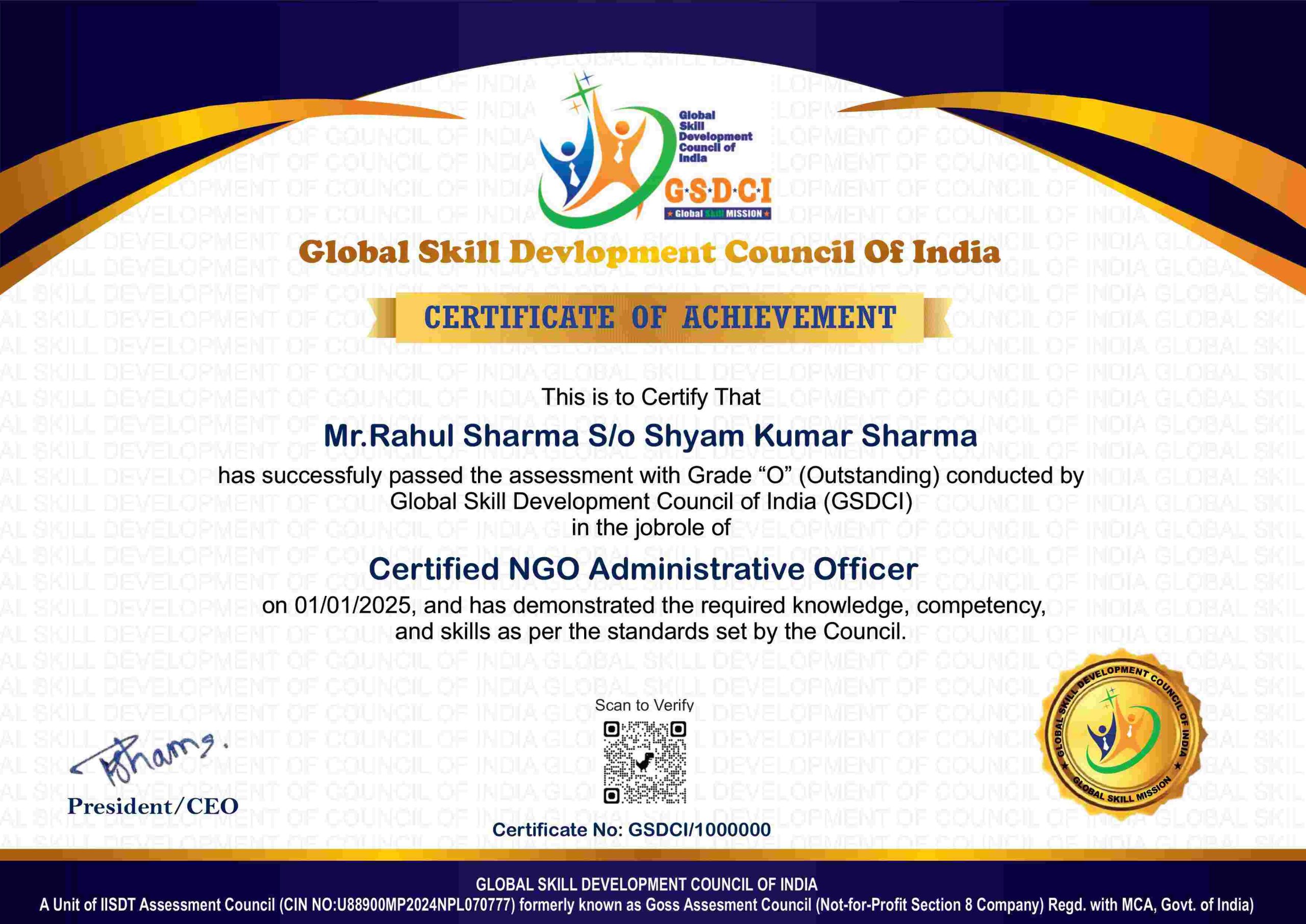

Certified Responsible Tourism Officer
₹6,000.00 ₹3,000.00
50% fee concession will end in
To train professionals to promote and manage tourism practices that are sustainable, ethical, and beneficial to local communities.
Description
Certification Name: Certified Responsible Tourism Officer
Global Occupational Skill Standard – GOSS ID: GOSS/HT/CRTO/V1
Eligibility: Graduation or Equivalent or minimum 2 years of relevant experience (experience-based learners can directly enroll and certify).
Objective: The Certified Responsible Tourism Officer course is designed to equip professionals with the knowledge and skills to promote and implement responsible and sustainable tourism practices. The program covers environmental conservation, cultural preservation, community engagement, ethical tourism principles, sustainable resource management, and policy development.
Certification: Within 5 days after Completion of Online Assessment.
Get ready to join the Journey to become a GSDCI Certified Professional – International Certification and Assessment Body.
Steps to become a GSDCI Certified Professional:
Step 1: Select your certification you want to pursue.
Step 2: Click on get certified tab, new pop up window will open.
Step 3: Click on pay certification fee, you will be redirected to billing details page.
Step 4: Fill your details and click on pay certification fee, You will be redirected to payment gateway, pay fee by any available options like Card(Debit/Credit), Wallet, Paytm, Net banking, UPI and Google pay.
Step 5: You will get Login Credentials of Online E-Books and Online assessment link on your email id, within 48 hrs of payment.
Step 6: After completion of online assessment, you can download your Certificate Immediately.
Assessment Modules:
Module 1: Introduction to Responsible Tourism and Global Frameworks: Definition and principles of responsible tourism, Difference between responsible, sustainable, and eco-tourism, Global charters and declarations (Cape Town Declaration, UNWTO guidelines), Importance of minimizing negative social, economic, and environmental impacts, Role of Responsible Tourism Officers in policy, planning, and implementation, Case studies of responsible tourism initiatives from India and abroad.
Module 2: Community Engagement and Cultural Preservation: Building partnerships with local communities for tourism development, Ensuring equitable benefit-sharing and empowerment of marginalized groups, Promoting local culture, heritage, art, and traditions through tourism, Developing and managing community-based tourism experiences, Conflict resolution and respecting local beliefs and customs, Avoiding cultural commodification and promoting dignity in storytelling.
Module 3: Environmental Sustainability and Conservation in Tourism: Understanding the ecological footprint of tourism activities, Implementing waste management, water conservation, and energy efficiency in tourism operations, Promoting low-impact travel: walking tours, cycling, public transport, Supporting conservation areas, national parks, and wildlife tourism responsibly, Green certifications and environmental auditing for tourism businesses, Climate action in tourism: carbon offsetting, reforestation, and awareness.
Module 4: Policy, Ethics, and Legal Aspects of Responsible Tourism: National and international tourism policies promoting sustainability, Understanding laws related to tribal rights, environment, and tourism land use, Ethical tourism marketing: avoiding false claims and exploitation, Legal responsibilities of operators regarding labor, safety, and environmental standards, Incorporating gender, child safety, and accessibility into tourism plans, Working with NGOs, government, and tourism boards on compliance.
Module 5: Marketing and Promoting Responsible Tourism Products: Positioning and branding responsible tourism destinations and experiences, Leveraging storytelling, authenticity, and purpose-driven marketing, Creating responsible travel itineraries and experiences for different market segments, Collaborating with responsible travel platforms, influencers, and media, Tools for digital marketing, social impact campaigns, and customer education, Showcasing certifications (e.g., Travelife, EarthCheck) to build trust.
Module 6: Monitoring, Evaluation, and Future Trends in Responsible Tourism: Developing KPIs for social, economic, and environmental impact, Tools for data collection, feedback, and impact assessment, Reporting mechanisms for sustainability outcomes and community benefits, Adaptive management for continuous improvement and learning, Trends in regenerative tourism, voluntourism, and slow travel, Building a long-term strategy for responsible destination management and resilience.
GSDCI Online Assessment Detail:
- Duration- 60 minutes.
- Number of Questions- 30.
- Number of Questions from each module: 5.
- Language: English.
- Exam Type: Multiple Choice Questions.
- Maximum Marks- 100, Passing Marks- 50%.
- There is no negative marking in any module.
| Marking System: | |||
| S.No. | No. of Questions | Marks Each Question | Total Marks |
| 1 | 10 | 5 | 50 |
| 2 | 5 | 4 | 20 |
| 3 | 5 | 3 | 15 |
| 4 | 5 | 2 | 10 |
| 5 | 5 | 1 | 5 |
| 30 | 100 | ||
| How Students will be Graded: | |||
| S.No. | Marks | Grade | |
| 1 | 91-100 | O (Outstanding) | |
| 2 | 81-90 | A+ (Excellent) | |
| 3 | 71-80 | A (Very Good) | |
| 4 | 61-70 | B (Good) | |
| 5 | 50-60 | P (Pass) | |
| 6 | 0-49 | F (Fail) | |
Benefits of Certification:
🌍 1. Global Recognition & Credibility – Stand out worldwide with a certification that opens doors across borders. Trusted by employers, respected by institutions, and recognized in over 100 countries.
📜 2. Quality Assurance through ISO Certification – Certified to global ISO standards, our programs deliver excellence, consistency, and a benchmarked learning experience that speaks for itself.
💼 3. Career Advancement & Employability – Enhances your resume and increases chances of promotions or job offers.
🤝 4. Non-Profit Trust Factor – Certifications from non-profit organizations are mission-driven rather than profit-driven.
📚 5. Access to Verified Learning & Resources – Often includes e-books, mock tests, and online support without hidden costs.
🔍 6. Transparency & Online Verification – Certifications come with a unique Enrolment ID for easy online verification by employers and institutions.
⏳ 7. Lifetime or Long-Term Validity – Certifications usually have lifetime validity or long-term recognition, reducing the need for frequent renewals.