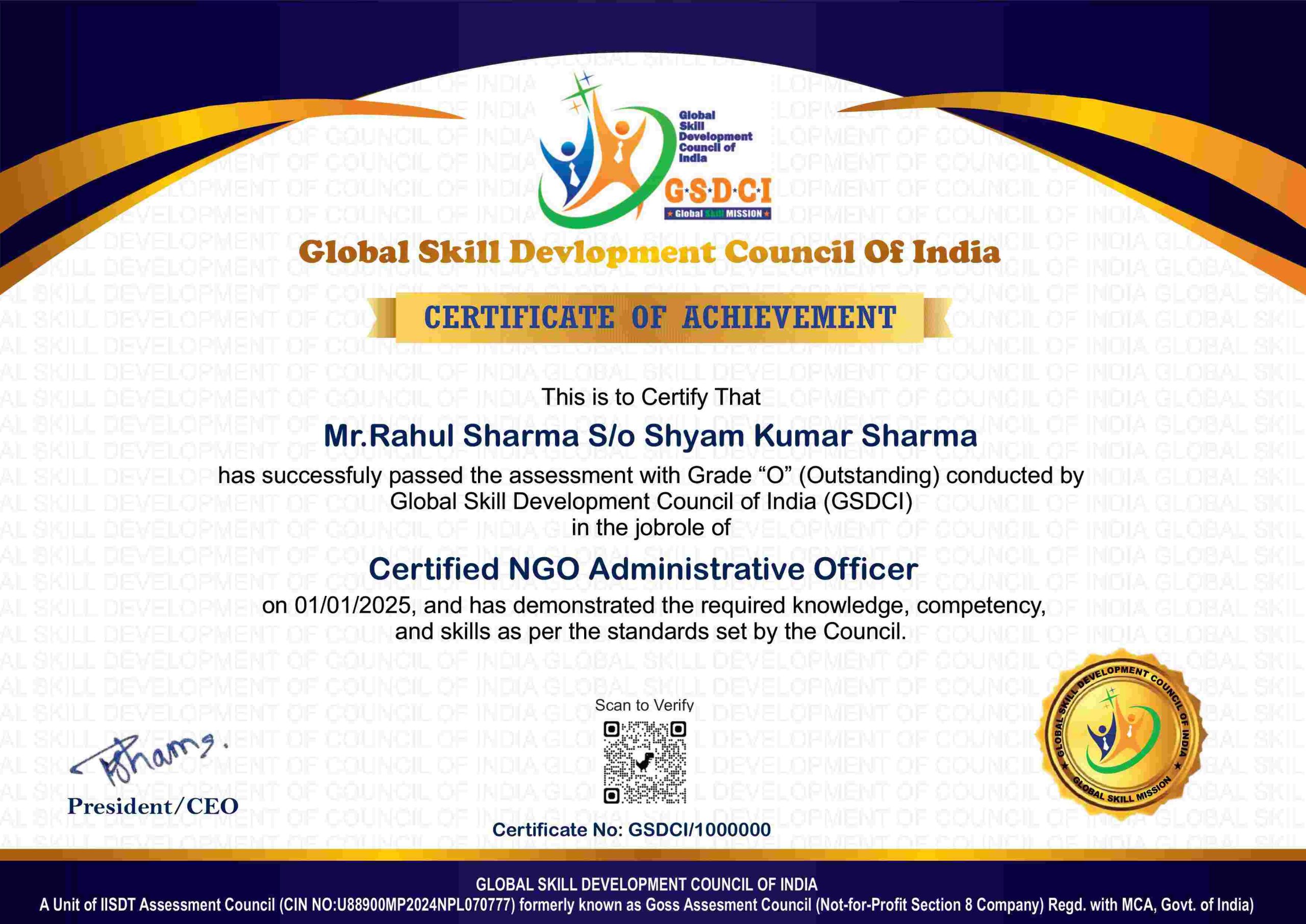
Description
Certification Name: Certified Restorative Practices Facilitator
Global Occupational Skill Standard – GOSS ID: GOSS/ET/CRPF/V1
Eligibility: Graduation or Equivalent or minimum 2 years of relevant experience (experience-based learners can directly enroll and certify).
Objective: The Certified Restorative Practices Facilitator course is designed to equip educators, administrators, and support staff with the knowledge and skills to implement restorative practices that build community, foster positive relationships, and resolve conflicts in educational settings. The course covers the philosophy and principles of restorative justice, restorative circles, mediation techniques, communication skills, and strategies for repairing harm and promoting accountability.
Certification: Within 5 days after Completion of Online Assessment.
Get ready to join the Journey to become a GSDCI Certified Professional – International Certification and Assessment Body.
Steps to become a GSDCI Certified Professional:
Step 1: Select your certification you want to pursue.
Step 2: Click on get certified tab, new pop up window will open.
Step 3: Click on pay certification fee, you will be redirected to billing details page.
Step 4: Fill your details and click on pay certification fee, You will be redirected to payment gateway, pay fee by any available options like Card(Debit/Credit), Wallet, Paytm, Net banking, UPI and Google pay.
Step 5: You will get Login Credentials of Online E-Books and Online assessment link on your email id, within 48 hrs of payment.
Step 6: After completion of online assessment, you can download your Certificate Immediately.
Assessment Modules:
Module 1: Introduction to Restorative Practices: Definition and philosophy of restorative practices, Historical development and key theories, Differences between restorative and punitive approaches, Benefits of restorative practices in schools and communities, Core principles and values, Types of restorative practices (circles, conferences, mediation).
Module 2: Building Restorative Relationships: Creating safe and respectful environments, Developing trust and empathy, Active listening and effective communication skills, Promoting accountability and responsibility, Strategies to engage diverse participants, Encouraging collaborative problem-solving.
Module 3: Restorative Circles Facilitation: Purpose and types of restorative circles, Planning and setting up circles, Role of the facilitator, Circle process and protocols, Managing emotions and conflicts within circles, Reflective questioning techniques.
Module 4: Restorative Conferences and Mediation: Preparing for restorative conferences, Roles of participants and facilitator, Structuring the conference dialogue, Addressing harm and repairing relationships, Conflict resolution strategies, Follow-up and agreement monitoring.
Module 5: Implementing Restorative Practices in Organizations: Assessing readiness and building support, Integrating restorative practices into policies and culture, Training staff and stakeholders, Monitoring and evaluating program effectiveness, Overcoming challenges and resistance, Sustaining restorative practices long-term.
Module 6: Ethical Considerations and Professional Development: Confidentiality and boundaries in facilitation, Managing power dynamics and bias, Self-reflection and continuous improvement, Adapting practices to diverse contexts, Professional standards and codes of conduct, Networking and resources for facilitators.
GSDCI Online Assessment Detail:
- Duration- 60 minutes.
- Number of Questions- 30.
- Number of Questions from each module: 5.
- Language: English.
- Exam Type: Multiple Choice Questions.
- Maximum Marks- 100, Passing Marks- 50%.
- There is no negative marking in any module.
| Marking System: | |||
| S.No. | No. of Questions | Marks Each Question | Total Marks |
| 1 | 10 | 5 | 50 |
| 2 | 5 | 4 | 20 |
| 3 | 5 | 3 | 15 |
| 4 | 5 | 2 | 10 |
| 5 | 5 | 1 | 5 |
| 30 | 100 | ||
| How Students will be Graded: | |||
| S.No. | Marks | Grade | |
| 1 | 91-100 | O (Outstanding) | |
| 2 | 81-90 | A+ (Excellent) | |
| 3 | 71-80 | A (Very Good) | |
| 4 | 61-70 | B (Good) | |
| 5 | 50-60 | P (Pass) | |
| 6 | 0-49 | F (Fail) | |
Benefits of Certification:
🌍 1. Global Recognition & Credibility – Stand out worldwide with a certification that opens doors across borders. Trusted by employers, respected by institutions, and recognized in over 100 countries.
📜 2. Quality Assurance through ISO Certification – Certified to global ISO standards, our programs deliver excellence, consistency, and a benchmarked learning experience that speaks for itself.
💼 3. Career Advancement & Employability – Enhances your resume and increases chances of promotions or job offers.
🤝 4. Non-Profit Trust Factor – Certifications from non-profit organizations are mission-driven rather than profit-driven.
📚 5. Access to Verified Learning & Resources – Often includes e-books, mock tests, and online support without hidden costs.
🔍 6. Transparency & Online Verification – Certifications come with a unique Enrolment ID for easy online verification by employers and institutions.
⏳ 7. Lifetime or Long-Term Validity – Certifications usually have lifetime validity or long-term recognition, reducing the need for frequent renewals.


Reviews
There are no reviews yet.