
No products in the cart.

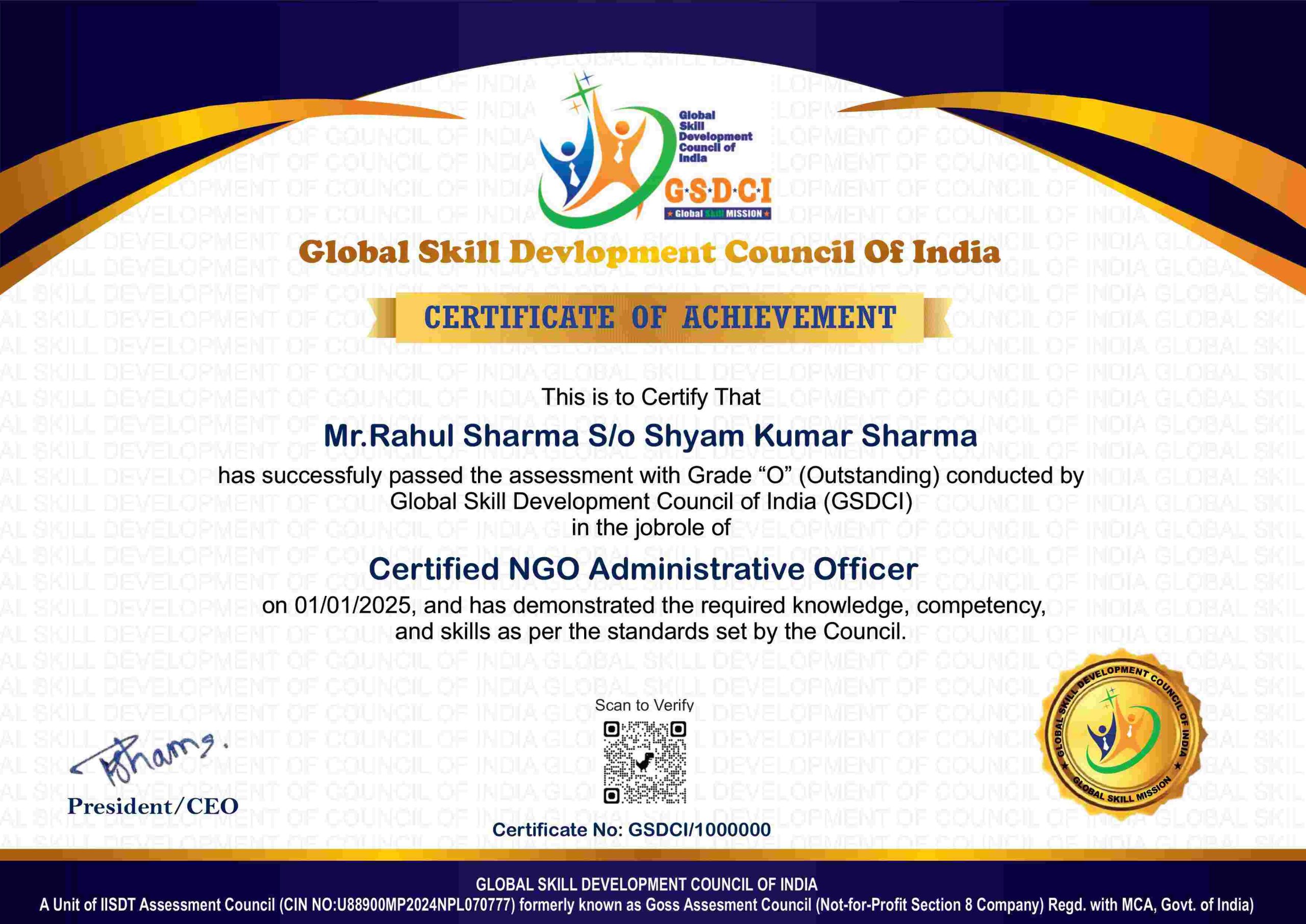

Certified Yoga & Meditation E-learning Course Developer
₹6,500.00 ₹3,250.00
50% fee concession will end in
The course trains individuals to design and deliver engaging online yoga and meditation programs, promoting effective learning and holistic well-being for a diverse digital audience.
Description
Certification Name: Certified Yoga & Meditation E-learning Course Developer
Global Occupational Skill Standard – GOSS ID: GOSS/YM/CYMECD/V1
Eligibility: Graduation or Equivalent or minimum 2 years of relevant experience (experience-based learners can directly enroll and certify).
Objective: The Certified Yoga & Meditation E-Learning Course Developer course is designed to train individuals to create effective, engaging, and accessible online learning programs focused on yoga and meditation. The course equips participants with the skills to structure course content, design interactive modules, and deliver instructional material that caters to diverse learners across different age groups and experience levels.
Certification: Within 5 days after Completion of Online Assessment.
Get ready to join the Journey to become a GSDCI Certified Professional – International Certification and Assessment Body.
Steps to become a GSDCI Certified Professional:
Step 1: Select your certification you want to pursue.
Step 2: Click on get certified tab, new pop up window will open.
Step 3: Click on pay certification fee, you will be redirected to billing details page.
Step 4: Fill your details and click on pay certification fee, you will be redirected to payment gateway, pay fee by any available options like Card (Debit/Credit), Wallet, Paytm, Net banking, UPI and Google pay.
Step 5: You will get Login Credentials of Online E-Books and Online assessment link on your email id, within 48 hrs of payment.
Step 6: After completion of online assessment, you can download your Certificate Immediately.
Assessment Modules:
Module 1: Introduction to E-learning and Yoga Education: Definition and importance of e-learning in yoga and meditation, Overview of online education platforms, Benefits of digital learning for learners and instructors, Trends in virtual wellness education, Ethical guidelines for online yoga instruction, Understanding learner demographics and engagement strategies
Module 2: Fundamentals of Yoga and Meditation: History and philosophy of yoga, Different styles of yoga and meditation, Anatomy and physiology relevant to yoga practices, Psychological and mental health benefits, Safety considerations and contraindications, Basics of mindfulness and relaxation techniques
Module 3: Instructional Design for E-learning: Principles of instructional design, Structuring course content for online delivery, Writing clear learning objectives and outcomes, Designing assessments and quizzes, Interactive and multimedia elements for engagement, Creating learner-centric modules and pathways
Module 4: Technology and Tools for Online Yoga Courses: Learning Management Systems (LMS) overview, Video recording and editing techniques, Audio and visual aids for meditation sessions, Integrating animations and graphics for clarity, Tools for live classes, webinars, and virtual workshops, Tracking and analytics for learner progress
Module 5: Teaching Methodology and Online Engagement: Strategies for virtual teaching and demonstrations, Effective communication and virtual presence, Encouraging learner participation and feedback, Adapting yoga practices for home environments, Mindfulness and meditation guidance in online formats, Motivating learners for consistent practice
Module 6: Course Development, Launch & Evaluation: Designing complete e-learning yoga programs, Scheduling modules, sessions, and interactive events, Collaboration with subject matter experts and multimedia teams, Marketing, promotion, and accessibility considerations, Collecting learner feedback and making improvements, Measuring outcomes and course effectiveness
GSDCI Online Assessment Detail:
- Duration- 60 minutes.
- Number of Questions- 30.
- Number of Questions from each module: 5.
- Language: English.
- Exam Type: Multiple Choice Questions.
- Maximum Marks- 100, Passing Marks- 50%.
- There is no negative marking in any module.
| Marking System: | |||
| S.No. | No. of Questions | Marks Each Question | Total Marks |
| 1 | 10 | 5 | 50 |
| 2 | 5 | 4 | 20 |
| 3 | 5 | 3 | 15 |
| 4 | 5 | 2 | 10 |
| 5 | 5 | 1 | 5 |
| 30 | 100 | ||
| How Students will be Graded: | |||
| S.No. | Marks | Grade | |
| 1 | 91-100 | O (Outstanding) | |
| 2 | 81-90 | A+ (Excellent) | |
| 3 | 71-80 | A (Very Good) | |
| 4 | 61-70 | B (Good) | |
| 5 | 50-60 | P (Pass) | |
| 6 | 0-49 | F (Fail) | |
Benefits of Certification:
🌍 1. Global Recognition & Credibility – Stand out worldwide with a certification that opens doors across borders. Trusted by employers, respected by institutions, and recognized in over 100 countries.
📜 2. Quality Assurance through ISO Certification – Certified to global ISO standards, our programs deliver excellence, consistency, and a benchmarked learning experience that speaks for itself.
💼 3. Career Advancement & Employability – Enhances your resume and increases chances of promotions or job offers.
🤝 4. Non-Profit Trust Factor – Certifications from non-profit organizations are mission-driven rather than profit-driven.
📚 5. Access to Verified Learning & Resources – Often includes e-books, mock tests, and online support without hidden costs.
🔍 6. Transparency & Online Verification – Certifications come with a unique Enrolment ID for easy online verification by employers and institutions.
⏳ 7. Lifetime or Long-Term Validity – Certifications usually have lifetime validity or long-term recognition, reducing the need for frequent renewals.
Reviews
There are no reviews yet.