
No products in the cart.


Certified Yoga Therapist for Neurological Health
₹6,000.00 ₹3,000.00
50% fee concession will end in
This course provides specialized training for yoga therapists to address neurological health, focusing on the therapeutic use of yoga for conditions like stroke, Parkinson’s, and brain injuries.
Description
Certification Name: Certified Yoga Therapist for Neurological Health
Global Occupational Skill Standard – GOSS ID: GOSS/YM/CYTNH/V1
Eligibility: 10+2 (higher Secondary) or Equivalent or minimum 2 years of relevant experience (experience-based learners can directly enroll and certify).
Objective: This course aims to equip individuals with the knowledge and skills required to use yoga therapy as a complementary treatment for neurological conditions. The curriculum focuses on understanding the neurological system, its dysfunctions, and how specific yoga practices can help manage, alleviate, or even reverse symptoms associated with conditions such as Parkinson’s disease, multiple sclerosis, stroke recovery, traumatic brain injuries, epilepsy, and more.
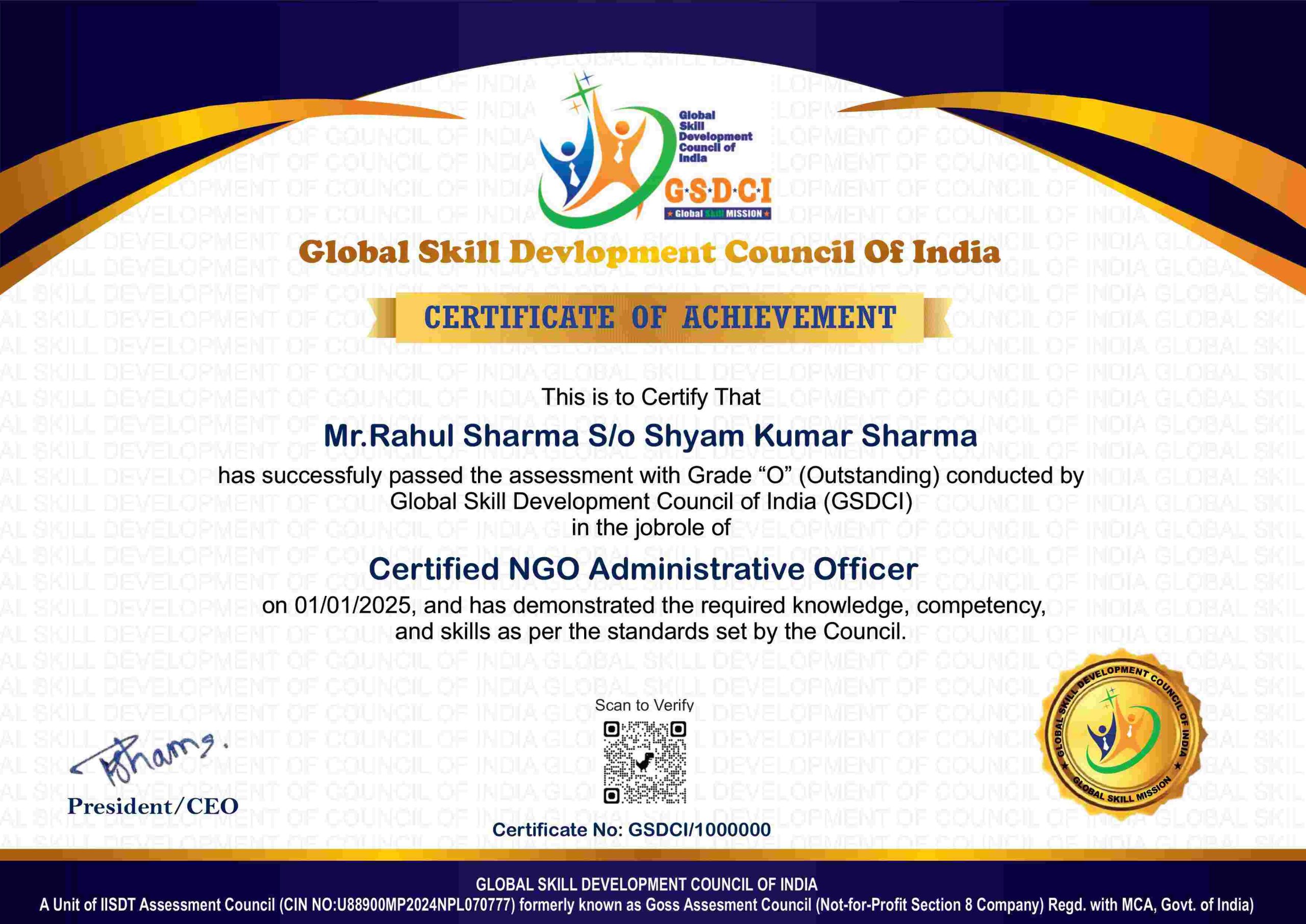
Certification: Within 5 days after Completion of Online Assessment.
Get ready to join the Journey to become a GSDCI Certified Professional – International Certification and Assessment Body.
Steps to become a GSDCI Certified Professional:
Step 1: Select your certification you want to pursue.
Step 2: Click on get certified tab, new pop up window will open.
Step 3: Click on pay certification fee, you will be redirected to billing details page.
Step 4: Fill your details and click on pay certification fee, You will be redirected to payment gateway, pay fee by any available options like Card(Debit/Credit), Wallet, Paytm, Net banking, UPI and Google pay.
Step 5: You will get Login Credentials of Online E-Books and Online assessment link on your email id, within 48 hrs of payment.
Step 6: After completion of online assessment, you can download your Certificate Immediately.
Assessment Modules:
Module 1: Introduction to Neurological Health and Yoga Therapy: Understanding the nervous system, The role of yoga in neurological health, Key neurological conditions (stroke, Parkinson’s, multiple sclerosis, etc.), The mind-body connection in neurological disorders, Principles of yoga therapy in neurological rehabilitation, Ethics and professional standards for yoga therapists.
Module 2: Anatomy and Physiology of the Nervous System: Basic neuroanatomy: brain, spinal cord, and peripheral nerves, Functions of different brain regions and their relation to movement and cognition, Neuroplasticity and its role in neurological recovery, The autonomic nervous system and its role in stress response, The impact of yoga on the nervous system, The role of breathing and meditation in neurophysiological regulation.
Module 3: Neurological Disorders and Their Symptoms: Stroke and its rehabilitation, Parkinson’s disease and movement disorders, Multiple sclerosis and chronic neurological conditions, Alzheimer’s disease and dementia, Traumatic brain injury and spinal cord injury, Epilepsy and seizure management.
Module 4: Therapeutic Yoga Practices for Neurological Health: Asanas (postures) for improving strength and balance in neurological patients, Pranayama (breathing exercises) for calming the nervous system, Meditation and mindfulness for cognitive enhancement, Restorative yoga for recovery and stress reduction, Adaptations and modifications for neurological conditions, Designing personalized yoga therapy sessions.
Module 5: Psychological Aspects of Neurological Disorders: Impact of neurological diseases on mental health and emotional well-being, Psychological symptoms commonly associated with neurological disorders (depression, anxiety), Role of yoga therapy in emotional regulation, Building resilience and mental clarity through yoga, Working with caregivers and families, Integrating emotional support with therapeutic yoga practices.
Module 6: Advanced Applications and Research in Yoga Therapy for Neurological Health: Evidence-based research in yoga therapy for neurological conditions, Case studies and clinical applications, Integrating yoga therapy into interdisciplinary healthcare teams, Developing long-term care plans with yoga practices, Advanced pranayama and kriyas for neurological health, Continuing education and professional development for yoga therapists.
GSDCI Online Assessment Detail:
- Duration- 60 minutes.
- Number of Questions- 30.
- Number of Questions from each module: 5.
- Language: English.
- Exam Type: Multiple Choice Questions.
- Maximum Marks- 100, Passing Marks- 50%.
- There is no negative marking in any module.
| Marking System: | |||
| S.No. | No. of Questions | Marks Each Question | Total Marks |
| 1 | 10 | 5 | 50 |
| 2 | 5 | 4 | 20 |
| 3 | 5 | 3 | 15 |
| 4 | 5 | 2 | 10 |
| 5 | 5 | 1 | 5 |
| 30 | 100 | ||
| How Students will be Graded: | |||
| S.No. | Marks | Grade | |
| 1 | 91-100 | O (Outstanding) | |
| 2 | 81-90 | A+ (Excellent) | |
| 3 | 71-80 | A (Very Good) | |
| 4 | 61-70 | B (Good) | |
| 5 | 50-60 | P (Pass) | |
| 6 | 0-49 | F (Fail) | |
Benefits of Certification:
🌍 1. Global Recognition & Credibility – Stand out worldwide with a certification that opens doors across borders. Trusted by employers, respected by institutions, and recognized in over 100 countries.
📜 2. Quality Assurance through ISO Certification – Certified to global ISO standards, our programs deliver excellence, consistency, and a benchmarked learning experience that speaks for itself.
💼 3. Career Advancement & Employability – Enhances your resume and increases chances of promotions or job offers.
🤝 4. Non-Profit Trust Factor – Certifications from non-profit organizations are mission-driven rather than profit-driven.
📚 5. Access to Verified Learning & Resources – Often includes e-books, mock tests, and online support without hidden costs.
🔍 6. Transparency & Online Verification – Certifications come with a unique Enrolment ID for easy online verification by employers and institutions.
⏳ 7. Lifetime or Long-Term Validity – Certifications usually have lifetime validity or long-term recognition, reducing the need for frequent renewals.
Reviews
There are no reviews yet.