Description
Certification Name: Certified KYC Compliance Officer
Global Occupational Skill Standard – GOSS ID: GOSS/BAF/CKCO/V1
Eligibility: Graduation or Equivalent or minimum 2 years of relevant experience (experience-based learners can directly enroll and certify).
Objective: The Certified KYC (Know Your Customer) Compliance Officer course is designed to develop professionals with the skills and knowledge necessary to ensure that organizations—especially banks, NBFCs, insurance firms, fintech companies, and other regulated financial institutions—comply with KYC, AML (Anti-Money Laundering), and CFT (Counter Financing of Terrorism) regulations. The program enables participants to effectively manage financial crime risks, uphold regulatory standards, and build a strong compliance culture.
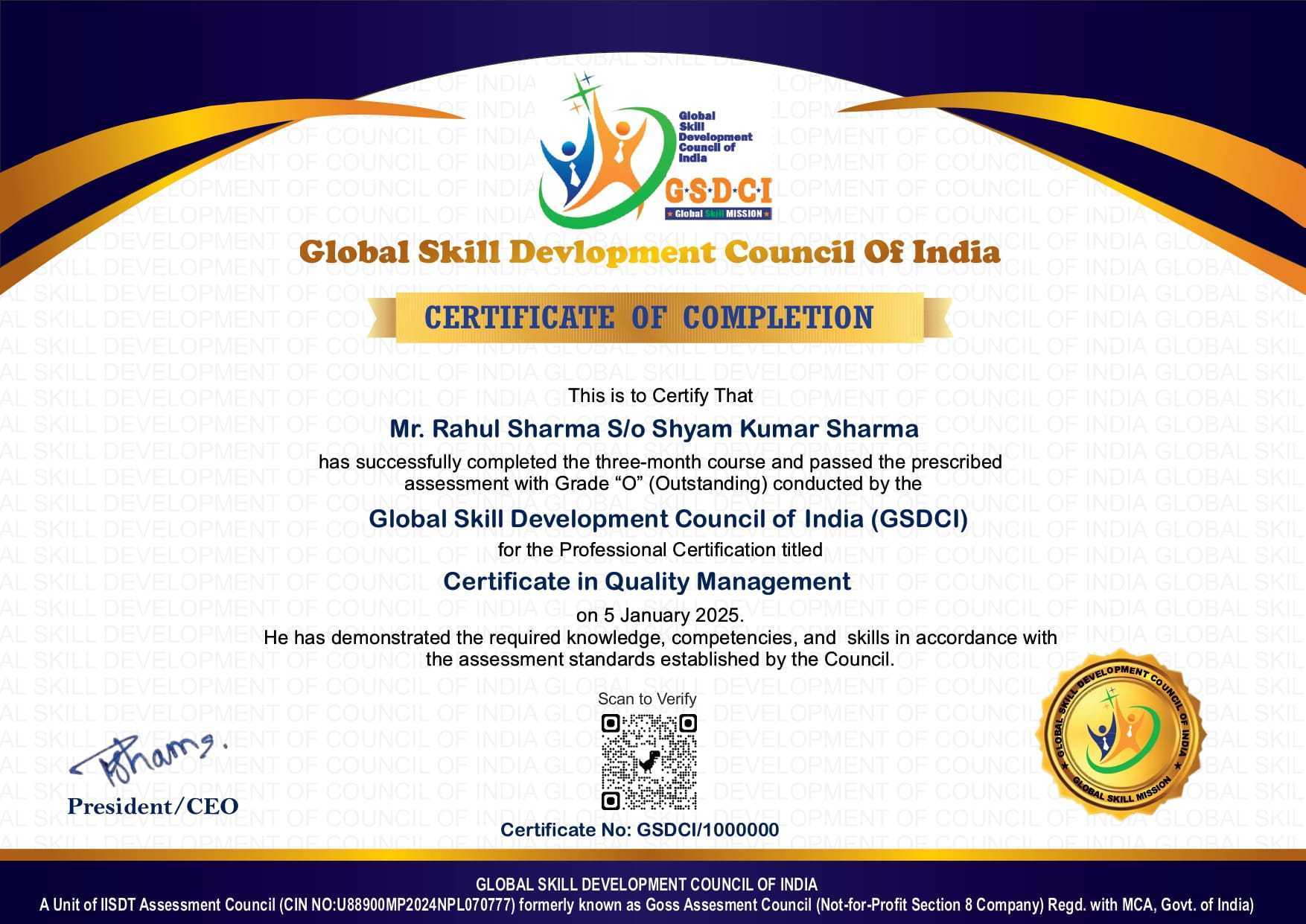
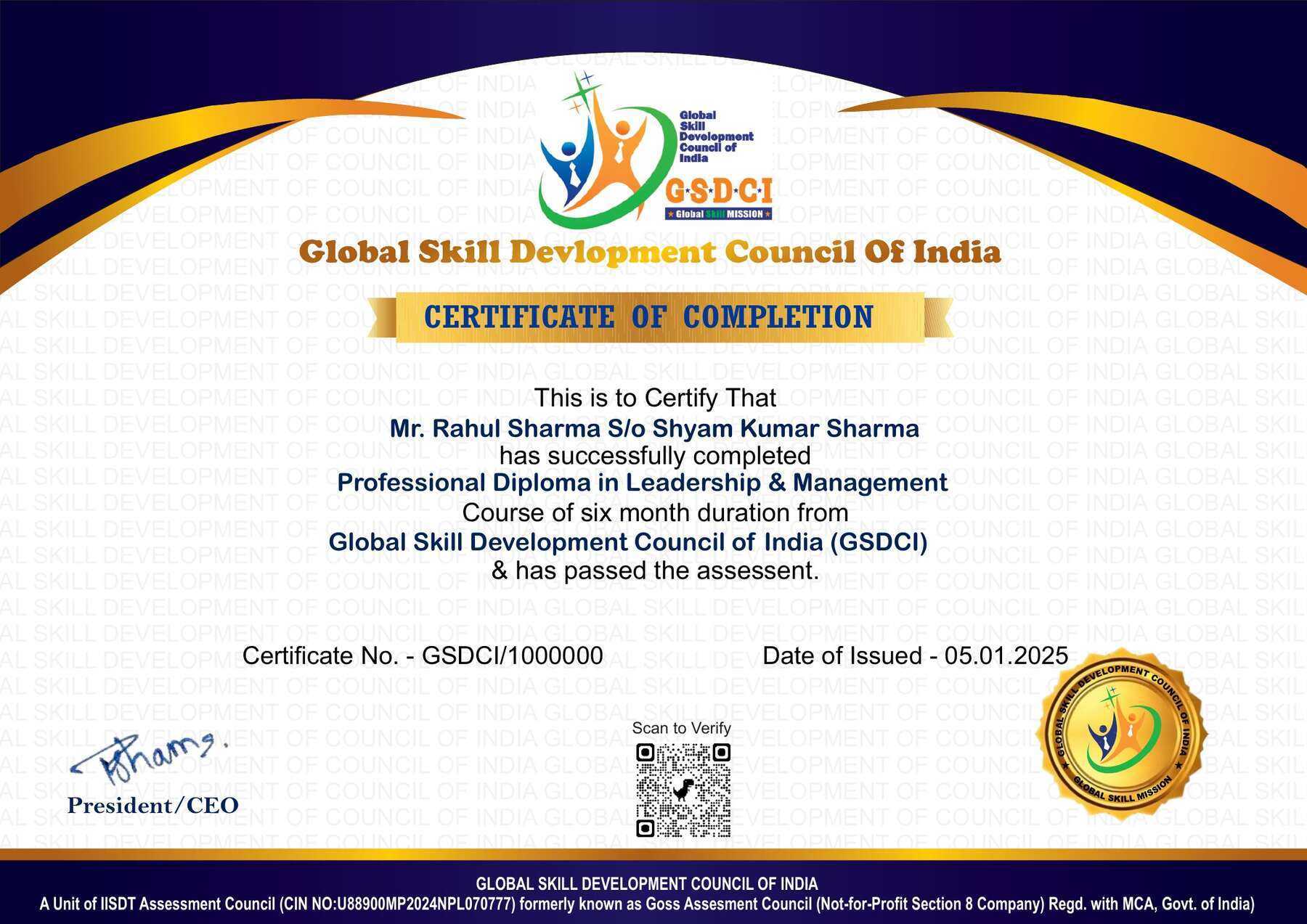
Certification: Within 5 days after Completion of Online Assessment.
Get ready to join the Journey to become a GSDCI Certified Professional – International Certification and Assessment Body.
Steps to become a GSDCI Certified Professional:
Step 1: Select your certification you want to pursue.
Step 2: Click on get certified tab, new pop up window will open.
Step 3: Click on pay certification fee, you will be redirected to billing details page.
Step 4: Fill your details and click on pay certification fee, You will be redirected to payment gateway, pay fee by any available options like Card(Debit/Credit), Wallet, Paytm, Net banking, UPI and Google pay.
Step 5: You will get Login Credentials of Online E-Books and Online assessment link on your email id, within 48 hrs of payment.
Step 6: After completion of online assessment, you can download your Certificate Immediately.
Assessment Modules:
Module 1: Introduction to KYC and AML: Definition and Importance of KYC, Regulatory Objectives and Legal Framework, Overview of Anti-Money Laundering (AML), Evolution of KYC Norms in India and Globally, Role of KYC in Preventing Financial Crimes, Key Stakeholders in KYC Compliance.
Module 2: KYC Regulations and Guidelines: RBI Guidelines on KYC, SEBI and IRDAI KYC Norms, FATF Recommendations and Global Standards, PMLA (Prevention of Money Laundering Act), Customer Due Diligence (CDD) Requirements, Record-Keeping and Retention Rules.
Module 3: Customer Identification and Verification: Types of Customers (Individuals, Corporates, Trusts), Identity and Address Verification Methods, Risk-Based Customer Classification (Low, Medium, High Risk), Enhanced Due Diligence (EDD) Procedures, Beneficial Ownership Identification, Non-Face-to-Face Customer Onboarding.
Module 4: KYC Documentation and Onboarding: List of Acceptable KYC Documents, KYC for Different Financial Products, KYC for Minors and NRI Clients, Video KYC and Digital Onboarding, KYC Updation and Periodic Review, Common Documentation Errors and Rectification.
Module 5: Monitoring, Reporting and Compliance: Ongoing Transaction Monitoring Techniques, Suspicious Transaction Reports (STR) and Currency Transaction Reports (CTR), Role of FIU-IND and International Reporting Obligations, Internal Audits and Regulatory Inspections, Risk Mitigation Strategies, Sanctions Screening and Blacklist Checks.
Module 6: Technology and Ethics in KYC: Role of Technology in KYC (AI, Blockchain, eKYC), Aadhaar-based Authentication and UIDAI Compliance, Data Privacy and Security Norms, Ethical Responsibilities of a KYC Officer, Challenges in Digital KYC Implementation, Case Studies on KYC Failures and Best Practices.
GSDCI Online Assessment Detail:
- Duration- 60 minutes.
- Number of Questions- 30.
- Number of Questions from each module: 5.
- Language: English.
- Exam Type: Multiple Choice Questions.
- Maximum Marks- 100, Passing Marks- 50%.
- There is no negative marking in any module.
| Marking System: | |||
| S.No. | No. of Questions | Marks Each Question | Total Marks |
| 1 | 10 | 5 | 50 |
| 2 | 5 | 4 | 20 |
| 3 | 5 | 3 | 15 |
| 4 | 5 | 2 | 10 |
| 5 | 5 | 1 | 5 |
| 30 | 100 | ||
| How Students will be Graded: | |||
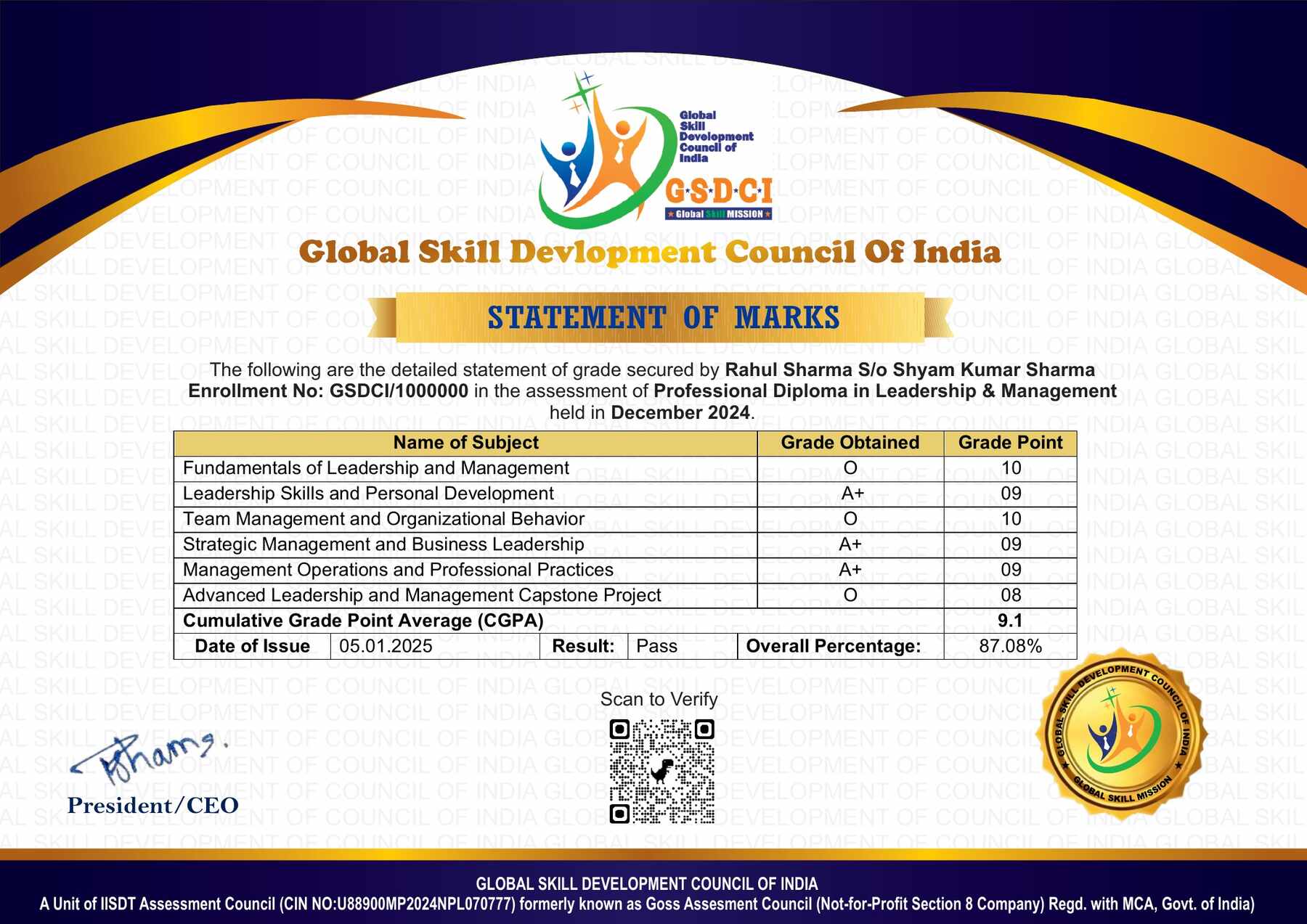
| S.No. | Marks | Grade | |
| 1 | 91-100 | O (Outstanding) | |
| 2 | 81-90 | A+ (Excellent) | |
| 3 | 71-80 | A (Very Good) | |
| 4 | 61-70 | B (Good) | |
| 5 | 50-60 | P (Pass) | |
| 6 | 0-49 | F (Fail) | |
Benefits of Certification:
🌍 1. Global Recognition & Credibility – Stand out worldwide with a certification that opens doors across borders. Trusted by employers, respected by institutions, and recognized in over 100 countries.
📜 2. Quality Assurance through ISO Certification – Certified to global ISO standards, our programs deliver excellence, consistency, and a benchmarked learning experience that speaks for itself.
💼 3. Career Advancement & Employability – Enhances your resume and increases chances of promotions or job offers.
🤝 4. Non-Profit Trust Factor – Certifications from non-profit organizations are mission-driven rather than profit-driven.
📚 5. Access to Verified Learning & Resources – Often includes e-books, mock tests, and online support without hidden costs.
🔍 6. Transparency & Online Verification – Certifications come with a unique Enrolment ID for easy online verification by employers and institutions.
⏳ 7. Lifetime or Long-Term Validity – Certifications usually have lifetime validity or long-term recognition, reducing the need for frequent renewals.