
No products in the cart.



Certificate in AI in Education
₹6,000.00 ₹3,000.00
50% fee concession will end in
To equip educators with the knowledge and skills to integrate AI tools responsibly and effectively into teaching and learning.
Description
Course Name: Certificate in AI in Education
Global Occupational Skill Standard – GOSS ID: GOSS/ET/CAIE/V1
Eligibility: Graduation or Equivalent.
Duration: Three Months.
Objective: The Certificate in AI in Education course is designed to equip teachers, instructional leaders, and education professionals with the foundational knowledge and practical skills to effectively integrate artificial intelligence (AI) tools and technologies into teaching and learning. The course covers key AI concepts, ethical considerations, educational applications of AI (e.g., intelligent tutoring systems, adaptive learning platforms, AI-driven assessments), and tools such as generative AI (e.g., ChatGPT, image generators) that support personalized and data-informed instruction.
Get ready to join the Journey to become a GSDCI Certified Professional – International Certification and Assessment Body.
Steps to become a GSDCI Certified Professional:
Step 1: Select your certification you want to pursue.
Step 2: Click on get certified tab, new pop up window will open.
Step 3: Click on pay certification fee, you will be redirected to billing details page.
Step 4: Fill your details and click on pay certification fee, You will be redirected to payment gateway, pay fee by any available options like Card(Debit/Credit), Wallet, Paytm, Net banking, UPI and Google pay.
Step 5: You will get Login Credentials of Online E-Books and Online assessment link on your email id, within 48 hrs of payment.
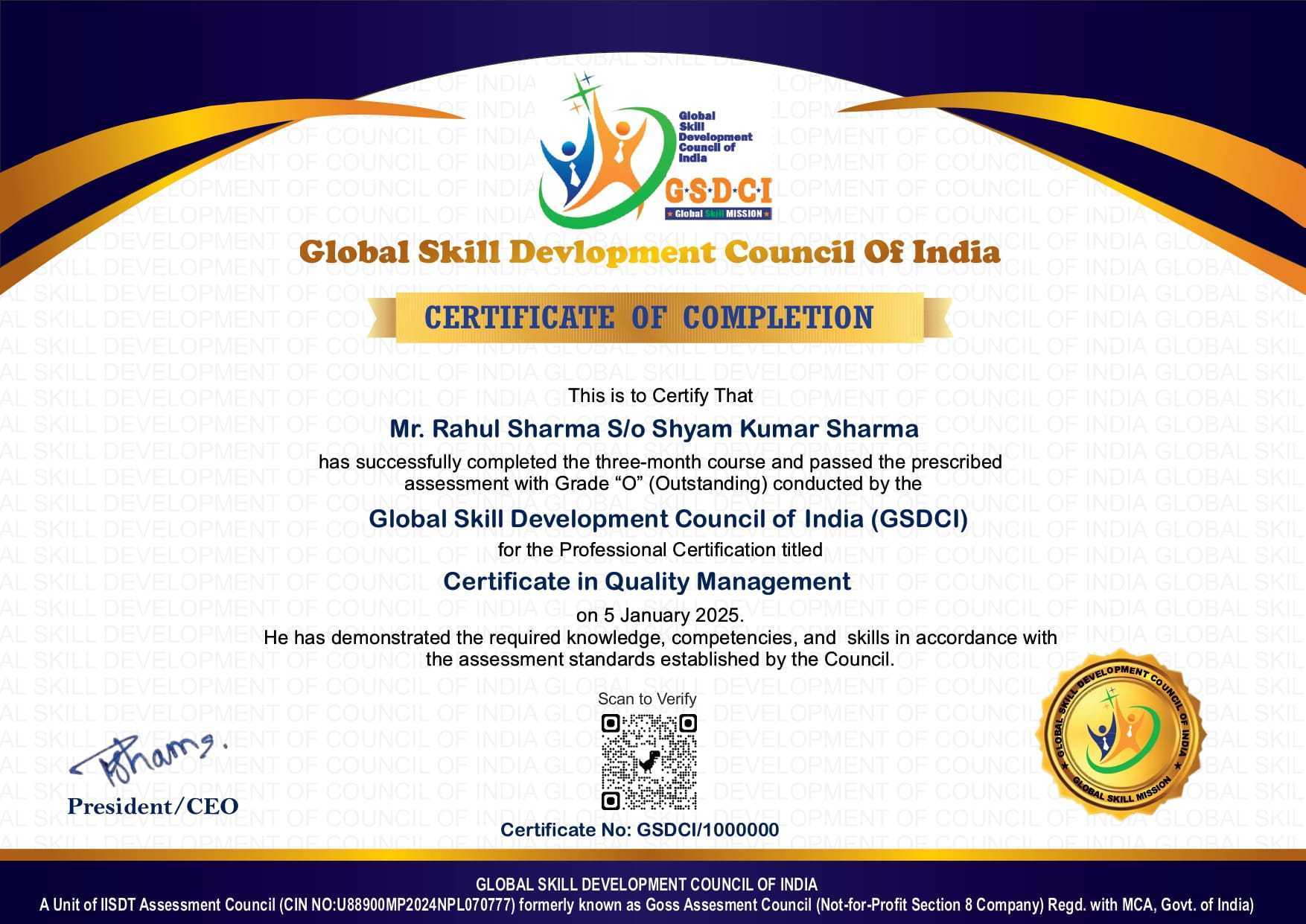
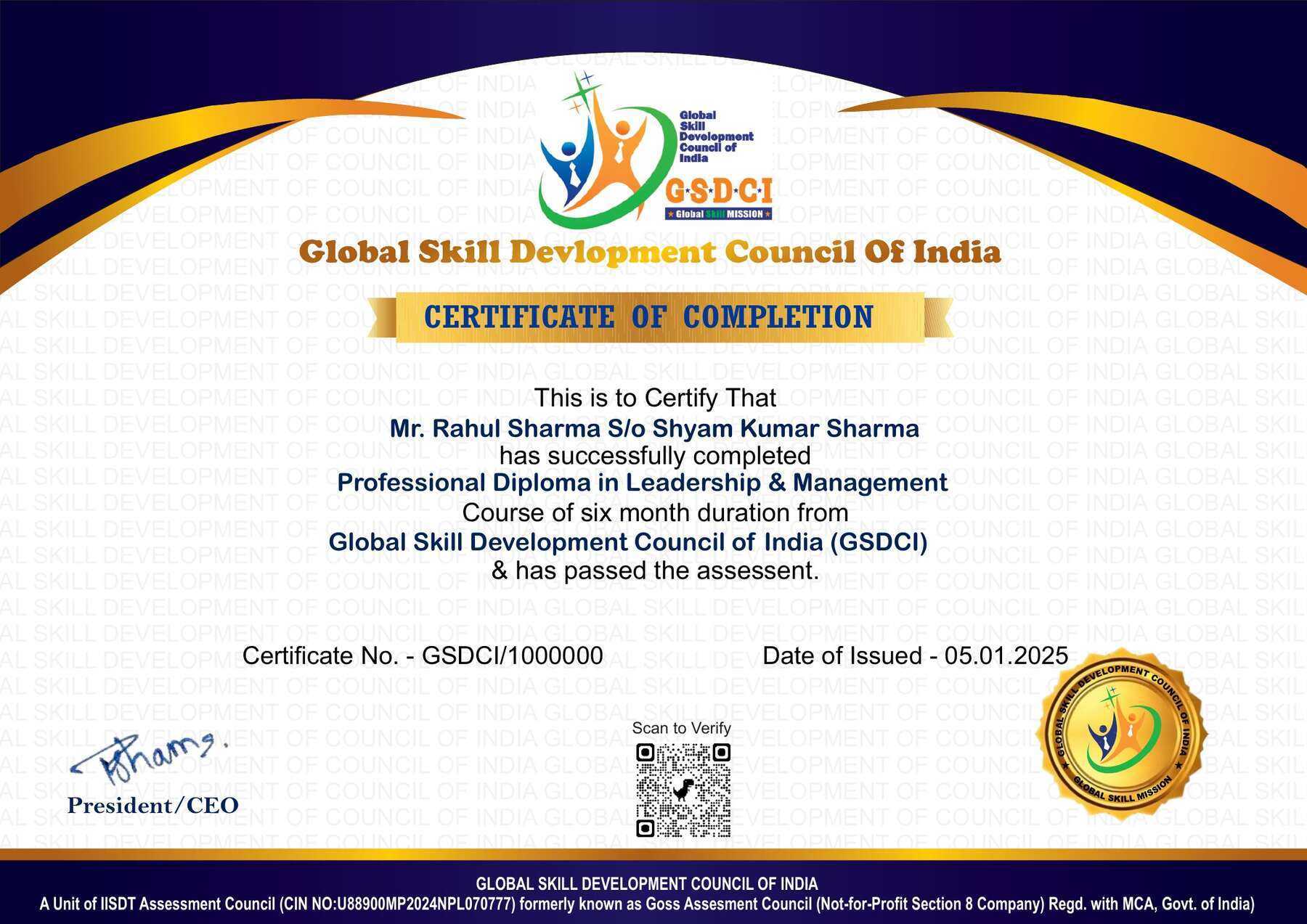
Step 6: After completion of the online assessment, the soft copy of your certificate will be sent to your registered email ID within 5 days.
Assessment Modules:
Module 1: Introduction to Artificial Intelligence in Education: Definition and Scope of AI in Education, History and Evolution of AI in Learning Environments, Key Concepts: Machine Learning, NLP, and Neural Networks, Benefits and Challenges of AI Integration in Classrooms, AI Trends Impacting Teaching and Learning, Ethical and Legal Considerations in Educational AI Use.
Module 2: AI Tools and Technologies for Educators: Overview of AI-Powered Educational Tools, AI in Learning Management Systems and Virtual Classrooms, Chatbots and Virtual Teaching Assistants, Adaptive Learning Platforms and Personalized Learning Tools, AI for Grading and Feedback Automation, Integrating AI into Existing Curriculum and Platforms.
Module 3: AI for Personalized and Inclusive Learning: Understanding Learner Profiles through AI, Adaptive Content Delivery Based on Student Needs, AI for Supporting Diverse and Special Needs Learners, Using Predictive Analytics for Student Success, Promoting Equity and Reducing Bias with AI Tools, Real-World Examples of AI-Supported Differentiated Instruction.
Module 4: Data Literacy and Learning Analytics for Educators: Importance of Data in AI-Driven Education, Basics of Learning Analytics and Educational Data Mining, Collecting and Interpreting Student Data Responsibly, Using Dashboards and AI Insights for Instructional Decisions, Detecting At-Risk Students with Predictive Models, Data Privacy Laws and Student Information Protection.
Module 5: Designing AI-Enhanced Learning Experiences: Blending AI with Pedagogical Models (TPACK, SAMR, etc.), Creating AI-Supported Lesson Plans and Activities, Promoting Student Engagement with Intelligent Tutors, Encouraging Creativity and Critical Thinking with Generative AI, Collaborative Learning with AI Agents, Assessing AI-Supported Learning Outcomes.
Module 6: Professional Practice and Future of AI in Education: Preparing for an AI-Integrated Teaching Role, Upskilling and Continuous AI Literacy Development, Evaluating AI Tools and Vendors for Classroom Use, Addressing Student and Parent Concerns about AI, Case Studies of AI Impact in K-12 and Higher Education, Capstone Project: Designing an AI-Infused Instructional Unit.
GSDCI Online Assessment Detail:
- Duration- 60 minutes.
- Number of Questions- 30.
- Number of Questions from each module: 5.
- Language: English.
- Exam Type: Multiple Choice Questions.
- Maximum Marks- 100, Passing Marks- 50%.
- There is no negative marking in any module.
| Marking System: | |||
| S.No. | No. of Questions | Marks Each Question | Total Marks |
| 1 | 10 | 5 | 50 |
| 2 | 5 | 4 | 20 |
| 3 | 5 | 3 | 15 |
| 4 | 5 | 2 | 10 |
| 5 | 5 | 1 | 5 |
| 30 | 100 | ||
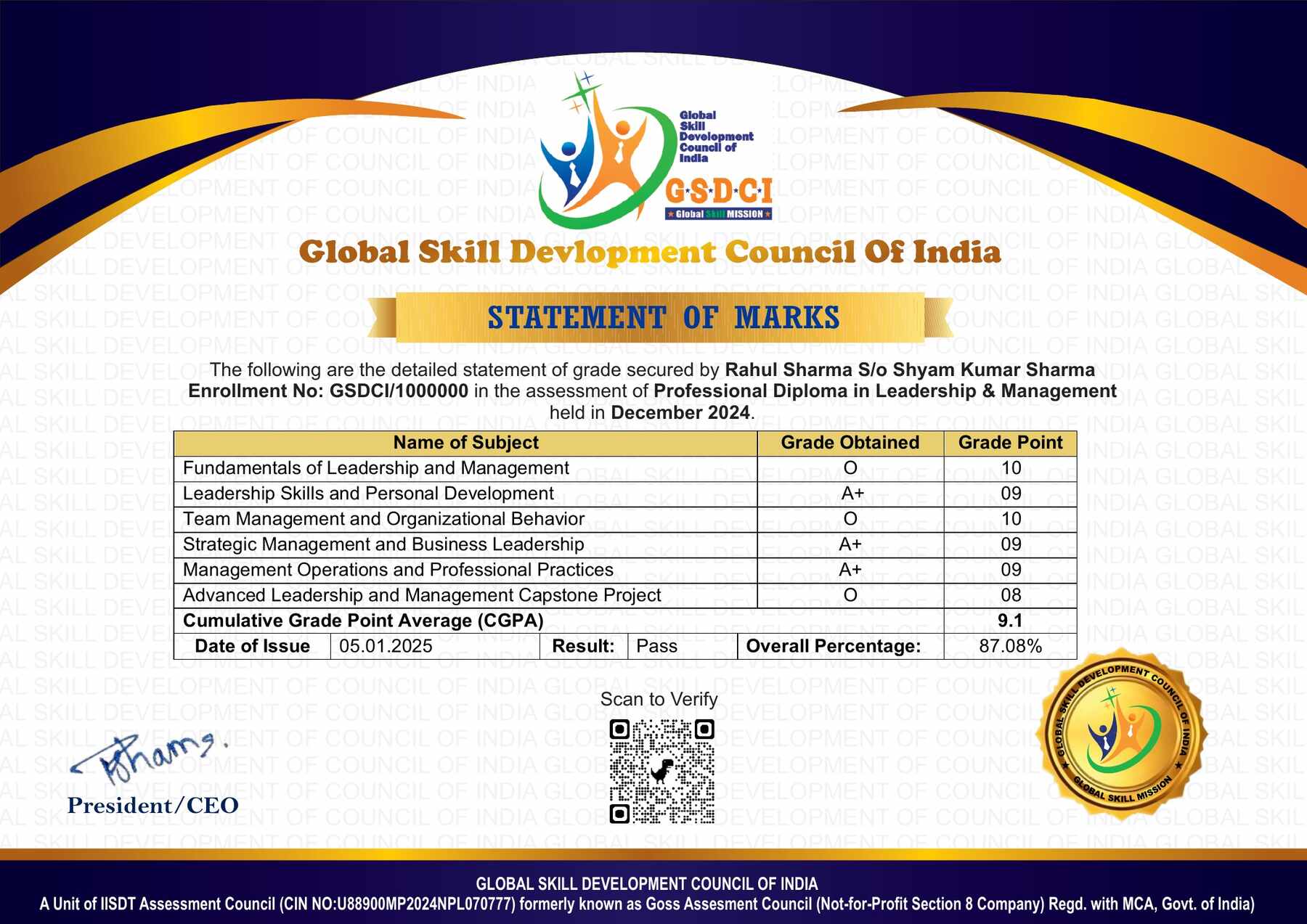
| How Students will be Graded: | |||
| S.No. | Marks | Grade | |
| 1 | 91-100 | O (Outstanding) | |
| 2 | 81-90 | A+ (Excellent) | |
| 3 | 71-80 | A (Very Good) | |
| 4 | 61-70 | B (Good) | |
| 5 | 50-60 | P (Pass) | |
| 6 | 0-49 | F (Fail) | |
Benefits of Certification:
1. Global Recognition & Credibility – Stand out worldwide with a certification that strengthens your professional profile across borders and demonstrates your skills to employers and institutions.
2. Quality Assurance through ISO Certification – Programs follow an ISO-certified quality management system to promote consistency, reliability, and a standardized learning experience.
3. Career Advancement & Employability – Enhance your résumé, demonstrate professional competence, and improve your prospects for career growth, promotions, or suitable job opportunities.
4. Non-Profit Trust Factor – Certification from a non-profit organization reflects a mission-driven approach focused on skill development, professional learning, and public benefit.
5. Access to Learning Resources – Gain access to useful learning resources such as e-books, mock tests, assessments, and online academic support.
6. Transparency & Online Verification – Each certification includes a unique enrolment or certificate ID, enabling convenient online verification by employers and other interested parties.
7. Lifetime or Long-Term Validity – Certifications may offer lifetime or extended validity, reducing the need for frequent renewal, subject to the applicable certification scheme.

Reviews
There are no reviews yet.