
No products in the cart.



Certificate in Biomedical Waste Management
₹6,000.00 ₹3,000.00
50% fee concession will end in
To train professionals in safe, compliant, and efficient management of biomedical waste, minimizing health and environmental risks.
Description
Course Name: Certified Biomedical Waste Management Officer
Global Occupational Skill Standard – GOSS ID: GOSS/HF/CBWMO/V1
Eligibility: 10+2 (Higher Secondary) or Equivalent.
Duration: Three Months.
Objective: The Certificate in Biomedical Waste Management course is designed to provide healthcare and environmental professionals with the knowledge and skills required to safely manage biomedical waste in compliance with legal, environmental, and public health standards. The course covers classification, segregation, handling, storage, transportation, treatment, and disposal of biomedical waste.
Get ready to join the Journey to become a GSDCI Certified Professional – International Certification and Assessment Body.
Steps to become a GSDCI Certified Professional:
Step 1: Select your certification you want to pursue.
Step 2: Click on get certified tab, new pop up window will open.
Step 3: Click on pay certification fee, you will be redirected to billing details page.
Step 4: Fill your details and click on pay certification fee, you will be redirected to payment gateway, pay fee by any available options like Card (Debit/Credit), Wallet, Paytm, Net banking, UPI and Google pay.
Step 5: You will get Login Credentials of Online E-Books and Online assessment link on your email id, within 48 hrs of payment.
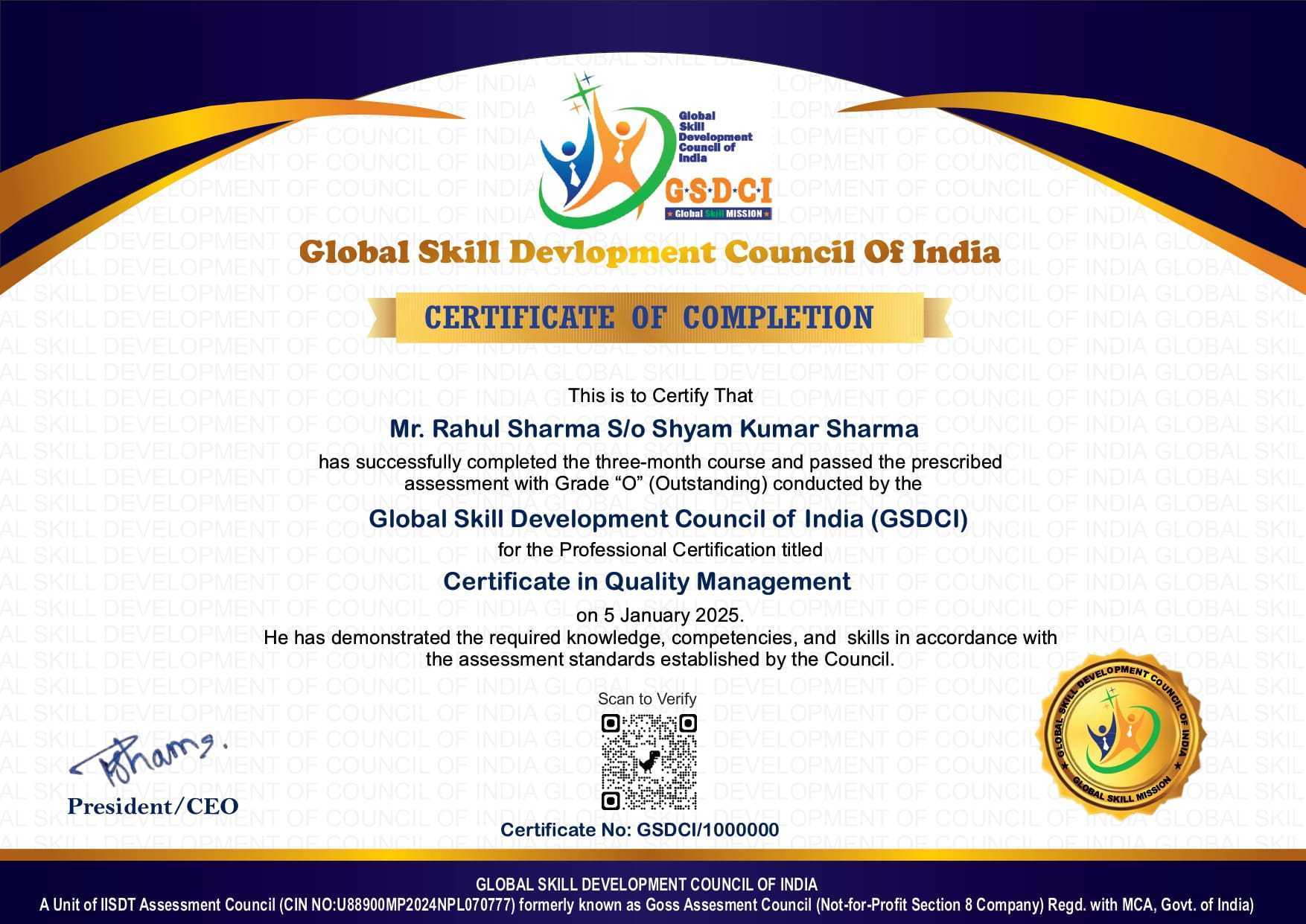
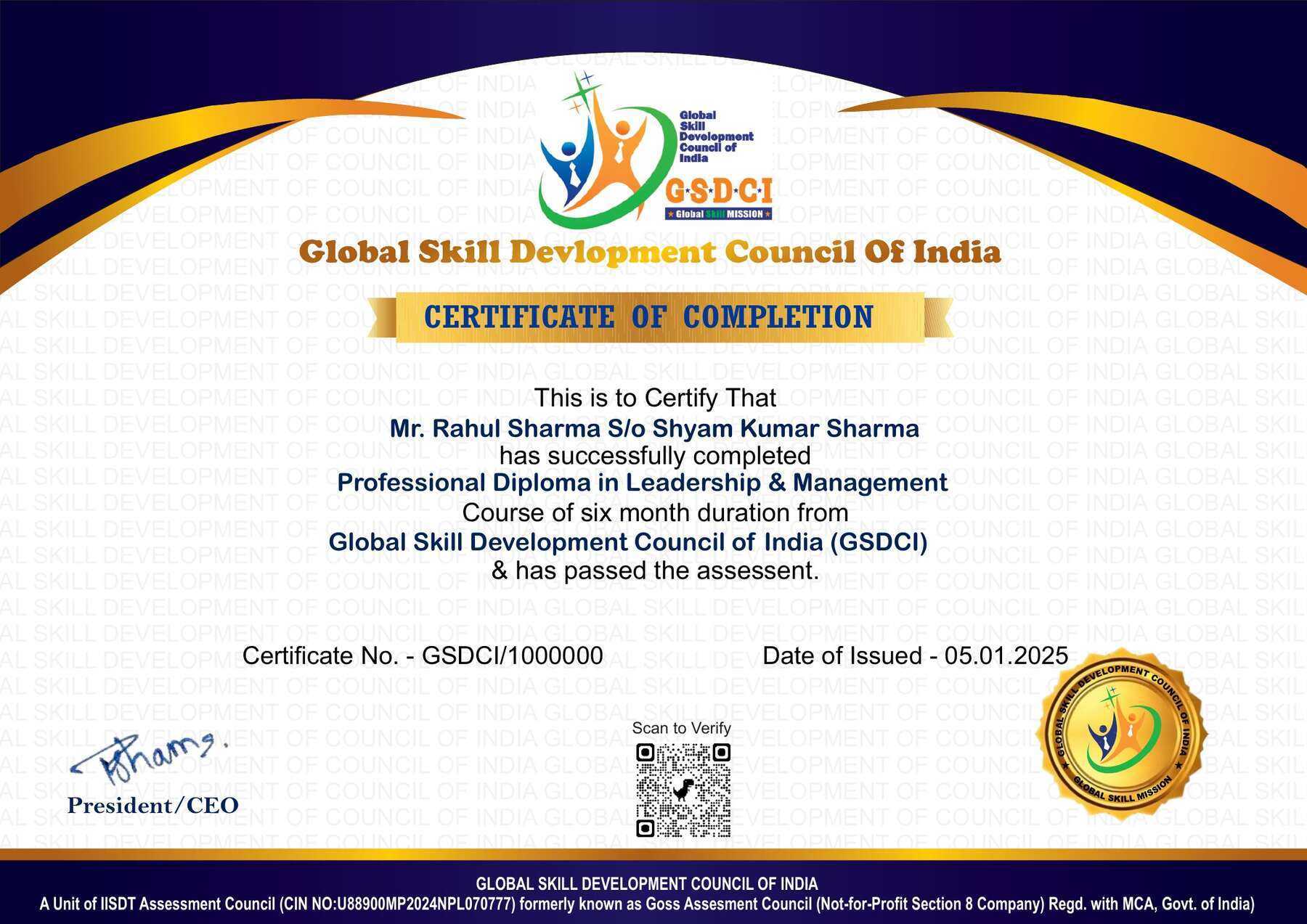
Step 6: After completion of the online assessment, the soft copy of your certificate will be sent to your registered email ID within 5 days.
Assessment Modules:
Module 1: Introduction to Biomedical Waste Management: Definition and types of biomedical waste, Sources and generation of biomedical waste, Importance of biomedical waste management, Health and environmental hazards, Legal and regulatory framework, Roles and responsibilities of a biomedical waste management officer
Module 2: Segregation and Collection of Biomedical Waste: Segregation techniques and color coding, Collection methods and containers, Labeling and handling of waste, Sharp and hazardous waste management, Packaging standards and safety precautions, Minimizing risk of infection and contamination
Module 3: Storage, Transportation, and Handling: On-site storage requirements, Temporary storage and holding areas, Transportation protocols and safety, Documentation and record-keeping, Handling spillages and accidents, Maintaining chain of custody
Module 4: Treatment and Disposal Methods: Overview of treatment technologies, Incineration and non-incineration methods, Autoclaving and microwaving, Chemical treatment of waste, Land disposal and landfill management, Compliance with environmental regulations
Module 5: Occupational Safety and Infection Control: Personal protective equipment (PPE) usage, Occupational health hazards, Vaccination and immunization protocols, Infection control procedures, Safety training and awareness programs, Emergency preparedness and response
Module 6: Monitoring, Auditing, and Regulatory Compliance: Biomedical waste management plans, Internal audits and inspections, Reporting and documentation requirements, Legal compliance and penalties, Continuous improvement strategies, Role of technology in monitoring and tracking
GSDCI Online Assessment Detail:
- Duration- 60 minutes.
- Number of Questions- 30.
- Number of Questions from each module: 5.
- Language: English.
- Exam Type: Multiple Choice Questions.
- Maximum Marks- 100, Passing Marks- 50%.
- There is no negative marking in any module.
| Marking System: | |||
| S.No. | No. of Questions | Marks Each Question | Total Marks |
| 1 | 10 | 5 | 50 |
| 2 | 5 | 4 | 20 |
| 3 | 5 | 3 | 15 |
| 4 | 5 | 2 | 10 |
| 5 | 5 | 1 | 5 |
| 30 | 100 | ||
| How Students will be Graded: | |||
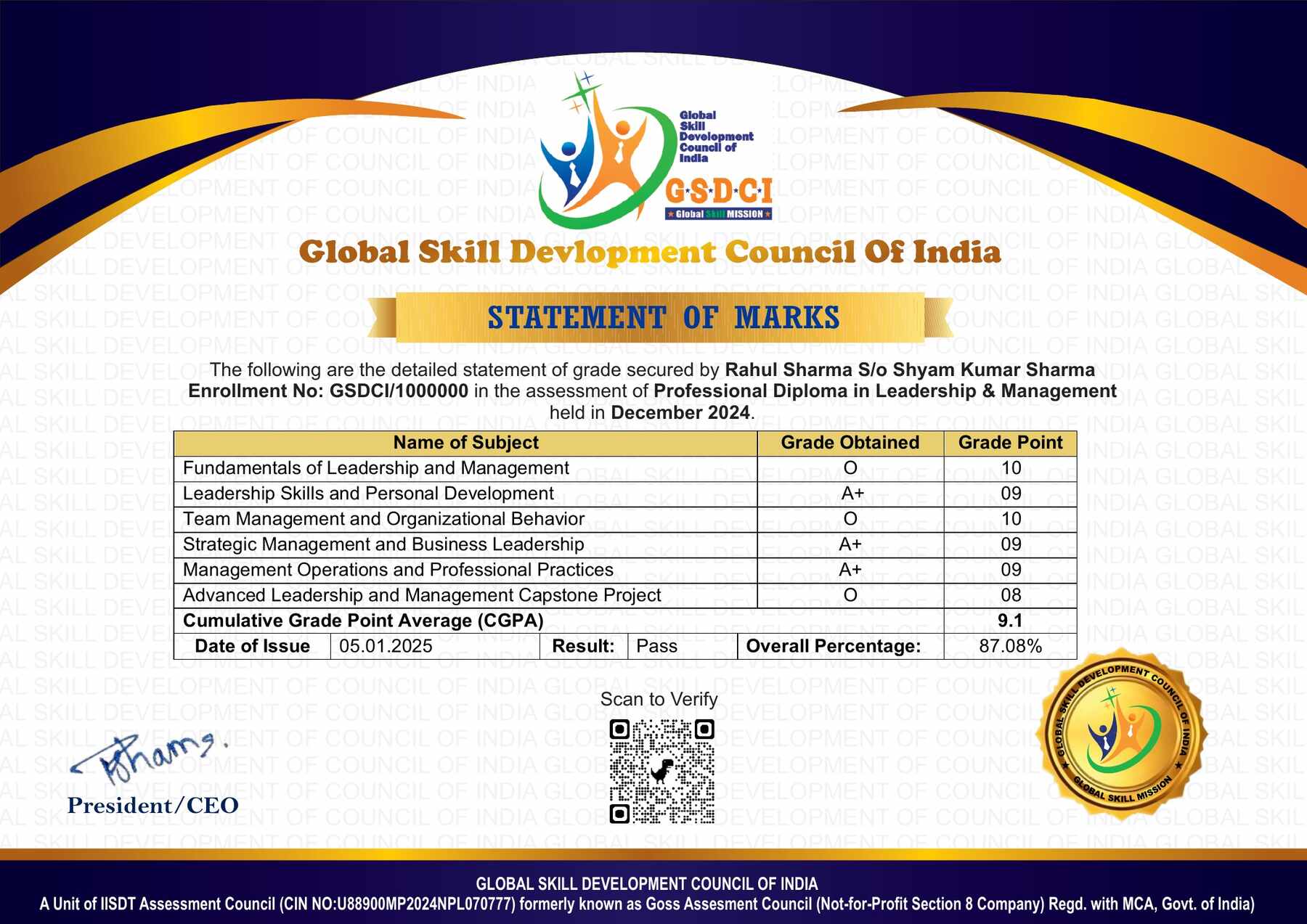
| S.No. | Marks | Grade | |
| 1 | 91-100 | O (Outstanding) | |
| 2 | 81-90 | A+ (Excellent) | |
| 3 | 71-80 | A (Very Good) | |
| 4 | 61-70 | B (Good) | |
| 5 | 50-60 | P (Pass) | |
| 6 | 0-49 | F (Fail) | |
Benefits of Certification:
1. Global Recognition & Credibility – Stand out worldwide with a certification that strengthens your professional profile across borders and demonstrates your skills to employers and institutions.
2. Quality Assurance through ISO Certification – Programs follow an ISO-certified quality management system to promote consistency, reliability, and a standardized learning experience.
3. Career Advancement & Employability – Enhance your résumé, demonstrate professional competence, and improve your prospects for career growth, promotions, or suitable job opportunities.
4. Non-Profit Trust Factor – Certification from a non-profit organization reflects a mission-driven approach focused on skill development, professional learning, and public benefit.
5. Access to Learning Resources – Gain access to useful learning resources such as e-books, mock tests, assessments, and online academic support.
6. Transparency & Online Verification – Each certification includes a unique enrolment or certificate ID, enabling convenient online verification by employers and other interested parties.
7. Lifetime or Long-Term Validity – Certifications may offer lifetime or extended validity, reducing the need for frequent renewal, subject to the applicable certification scheme.

Reviews
There are no reviews yet.