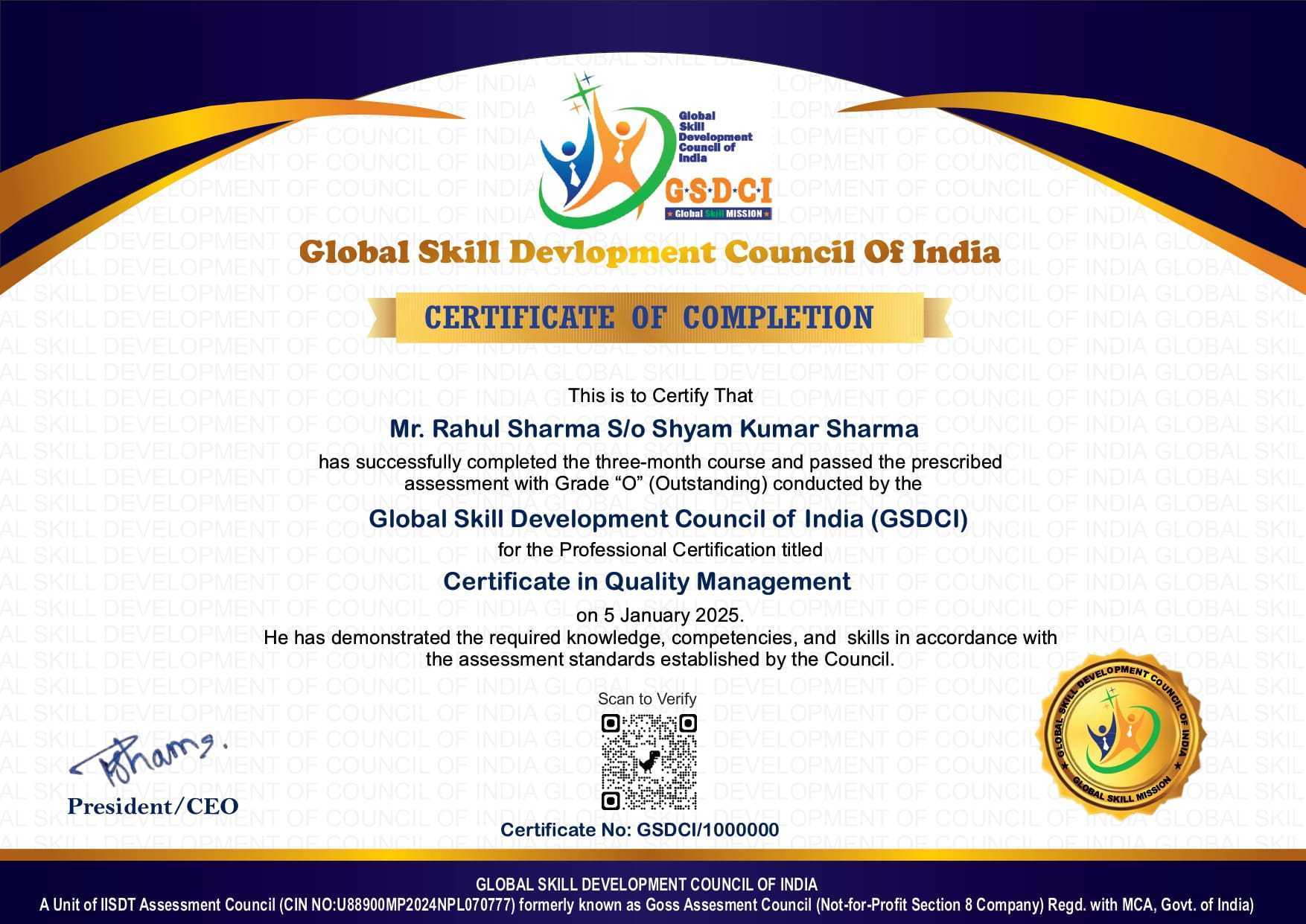
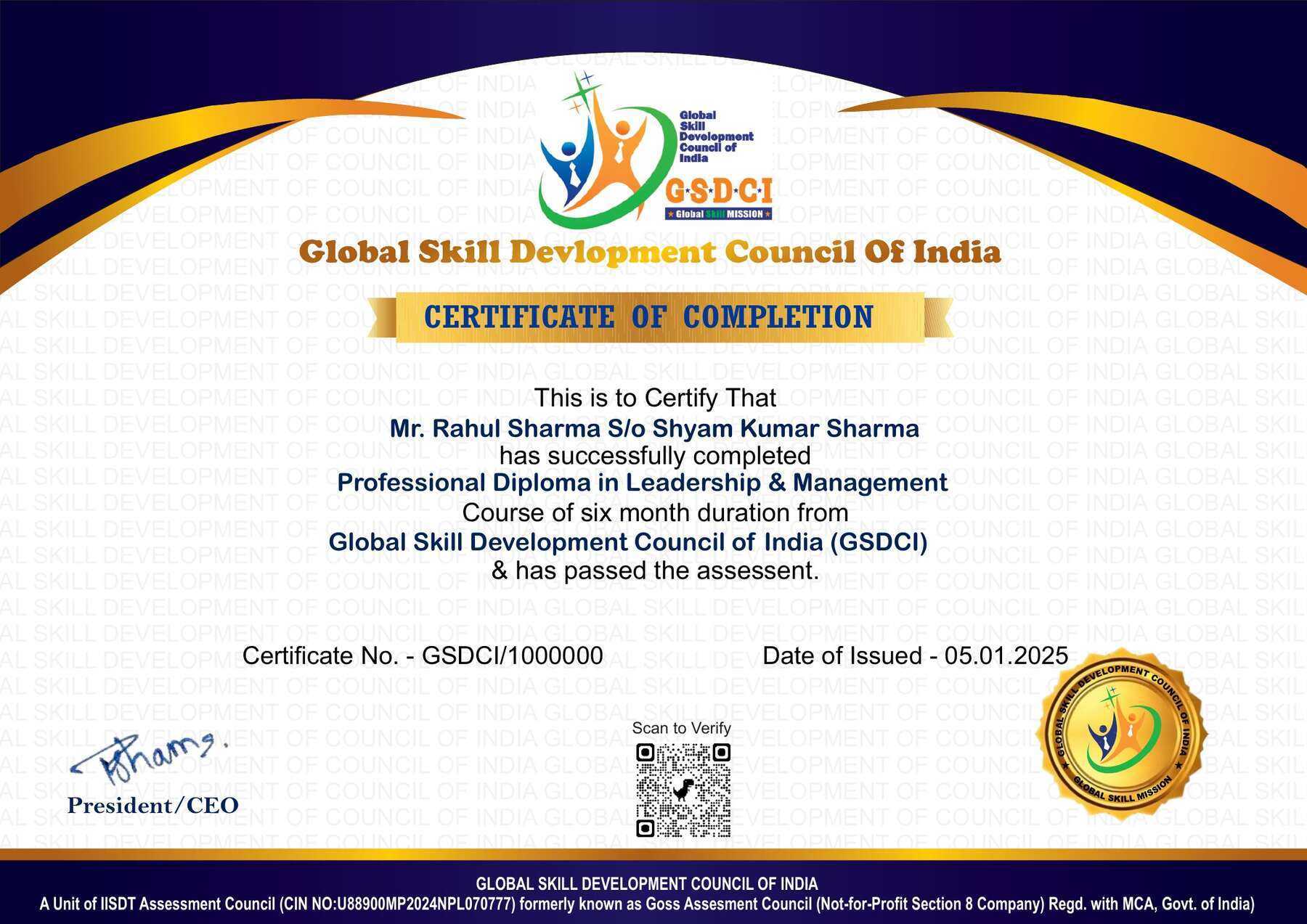
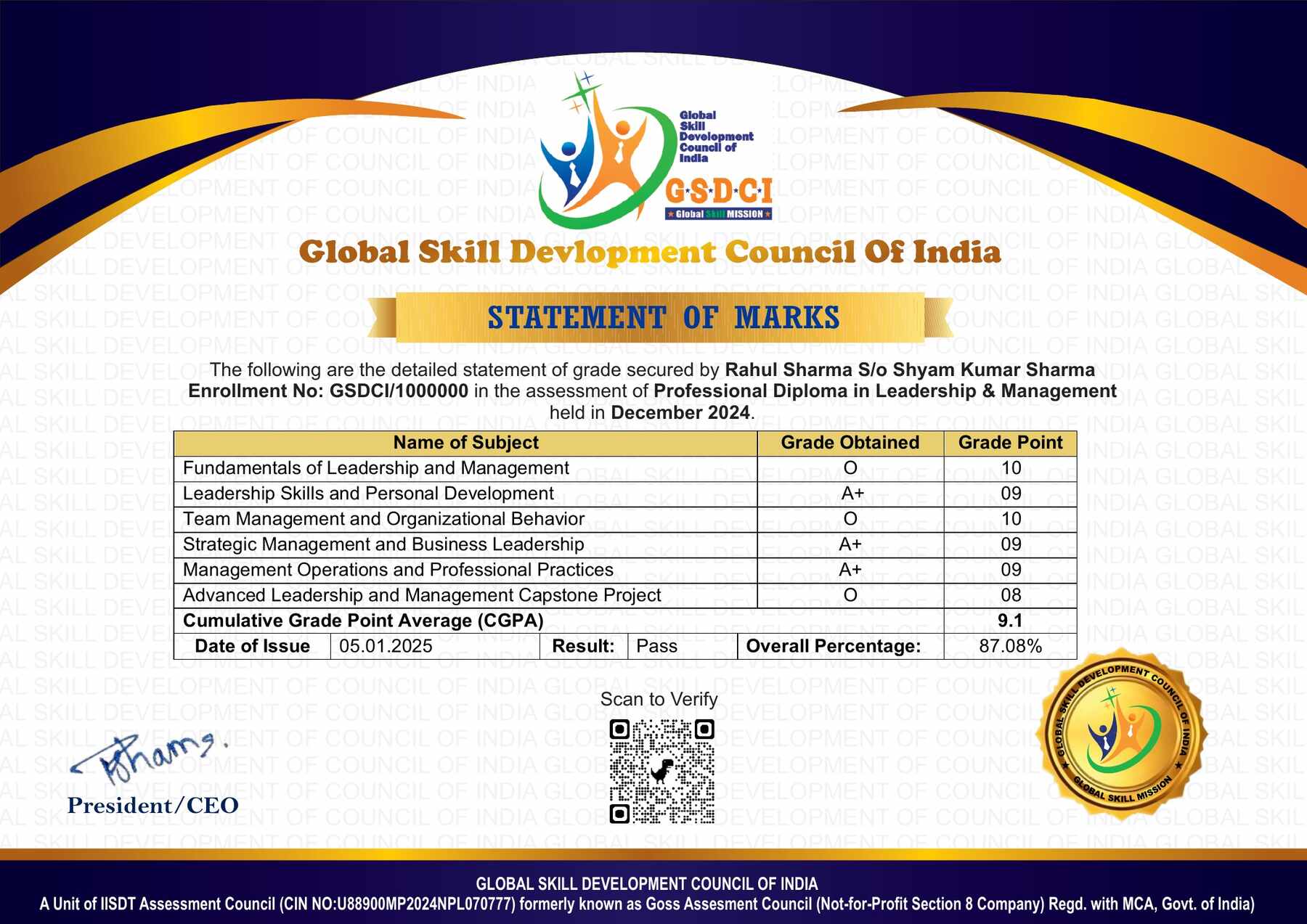
img not found!

Certificate in Coding & Computational Thinking

Certificate in Coding & Computational Thinking

₹6,000.00 ₹3,000.00

50% fee concession will end in

To equip educators with the skills and knowledge to teach coding and computational thinking effectively, fostering students’ problem-solving, logical reasoning, and creativity through practical and engaging learning experiences.

Description

Course Name: Certificate in Coding & Computational Thinking

Global Occupational Skill Standard – GOSS ID: GOSS/ET/CCCT/V1

Eligibility: Graduation or Equivalent.

Duration: Three Months.

Objective: The Certificate in Coding & Computational Thinking course aims to empower educators with the foundational knowledge and practical skills necessary to teach coding and computational thinking effectively across various educational levels. The course focuses on developing a deep understanding of programming concepts, algorithms, problem-solving techniques, and logic that underpin computational thinking.

Get ready to join the Journey to become a GSDCI Certified Professional  – International Certification and Assessment Body.

Steps to become a GSDCI Certified Professional:

Step 1: Select your certification you want to pursue.

Step 2: Click on get certified tab, new pop up window will open.

Step 3: Click on pay certification fee, you will be redirected to billing details page.

Step 4: Fill your details and click on pay certification fee, You will be redirected to payment gateway, pay fee by any available options like Card(Debit/Credit), Wallet, Paytm, Net banking, UPI and Google pay.

Step 5: You will get Login Credentials of Online E-Books and Online assessment link on your email id, within 48 hrs of payment.

Step 6: After completion of the online assessment, the soft copy of your certificate will be sent to your registered email ID within 5 days.

Assessment Modules:

Module 1: Foundations of Coding and Computational Thinking: Introduction to coding concepts and languages, Understanding computational thinking principles, History and evolution of coding education, Importance of coding in modern education, Key problem-solving strategies, Ethical considerations in coding education.

Module 2: Computational Thinking Skills Development: Decomposition and pattern recognition, Algorithmic thinking and design, Abstraction and generalization, Logical reasoning and debugging, Developing problem-solving mindset, Applying computational thinking across subjects.

Module 3: Coding Languages and Tools for Educators: Overview of beginner-friendly coding languages (e.g., Scratch, Python), Introduction to block-based vs text-based coding, Using coding platforms and environments, Selecting appropriate tools for age groups, Integrating coding with other subjects, Managing classroom technology.

Module 4: Designing Coding Curriculum and Activities: Creating lesson plans aligned with learning objectives, Designing engaging coding projects, Differentiating instruction for diverse learners, Incorporating collaborative coding activities, Promoting creativity through coding, Assessment strategies for coding skills.

Module 5: Classroom Implementation and Facilitation: Best practices for teaching coding, Managing classroom dynamics, Encouraging student exploration and experimentation, Supporting struggling learners, Using formative feedback and assessment, Promoting a growth mindset in coding education.

Module 6: Professional Growth and Advocacy: Staying updated with coding education trends, Participating in coding educator communities, Advocating for coding integration in schools, Ethical issues and digital citizenship, Reflective teaching and continuous improvement, Developing resources and mentorship programs.

GSDCI Online Assessment Detail:

  • Duration- 60 minutes.
  • Number of Questions- 30.
  • Number of Questions from each module: 5.
  • Language: English.
  • Exam Type: Multiple Choice Questions.
  • Maximum Marks- 100, Passing Marks- 50%.
  • There is no negative marking in any module.
Marking System:
S.No. No. of Questions Marks Each Question Total Marks
1 10 5 50
2 5 4 20
3 5 3 15
4 5 2 10
5 5 1 5
30   100
How Students will be Graded:
S.No. Marks Grade
1 91-100 O (Outstanding)
2 81-90 A+ (Excellent)
3 71-80 A (Very Good)
4 61-70 B (Good)
5 50-60 P (Pass)
6  0-49 F (Fail)


Benefits of Certification:

1. Global Recognition & Credibility – Stand out worldwide with a certification that strengthens your professional profile across borders and demonstrates your skills to employers and institutions.

2. Quality Assurance through ISO Certification – Programs follow an ISO-certified quality management system to promote consistency, reliability, and a standardized learning experience.

3. Career Advancement & Employability – Enhance your résumé, demonstrate professional competence, and improve your prospects for career growth, promotions, or suitable job opportunities.

4. Non-Profit Trust Factor – Certification from a non-profit organization reflects a mission-driven approach focused on skill development, professional learning, and public benefit.

5. Access to Learning Resources – Gain access to useful learning resources such as e-books, mock tests, assessments, and online academic support.

6. Transparency & Online Verification – Each certification includes a unique enrolment or certificate ID, enabling convenient online verification by employers and other interested parties.

7. Lifetime or Long-Term Validity – Certifications may offer lifetime or extended validity, reducing the need for frequent renewal, subject to the applicable certification scheme.

Course Rating

4.7/5
★★★★★
★★★★★

Based on 39 student ratings

Highly Rated Course

Reviews

There are no reviews yet.

Be the first to review “Certificate in Coding & Computational Thinking”

Your email address will not be published. Required fields are marked *

A 50% fee concession is applicable on all certification up to 30th September 2026.

0
    0
    Your Certification Detail
    Your cart is emptyReturn to Shop