img not found!

Certificate in Dry Cleaning Business

Certificate in Dry Cleaning Business

₹6,500.00 ₹3,250.00

50% fee concession will end in

The course is designed to build knowledge of dry cleaning operations, garment care, stain removal, equipment handling, and business management for sustainable enterprise growth.

Description

Course Name: Certificate in Dry Cleaning Business

Course Id: CDCB/Q1001.
Eligibility: 10th Grade(High School) or Equivalent.

Duration: One Month.

Objective: The course aims to provide learners with a comprehensive understanding of the dry cleaning business, focusing on garment care, fabric identification, stain removal techniques, and safe use of cleaning solvents and equipment. It introduces modern methods of dry cleaning, finishing, and garment preservation, along with quality control and customer service practices.

How to Enroll and Get Certified in Your Chosen Course:

Step 1: Choose the course you wish to get certified in.

Step 2: Click on the “Enroll Now” button.

Step 3: Proceed with the enrollment process.

Step 4: Enter your billing details and continue to course fee payment.

Step 5: You will be redirected to the payment gateway. Pay the course and exam fee using one of the following methods:
Debit/Credit Card, Wallet, Paytm, Net Banking, UPI, or Google Pay.

Step 6: After successful payment, you will receive your study material login ID and password via email within 48 hours of fee payment.

Step 7: Once you complete the course, take the online examination.

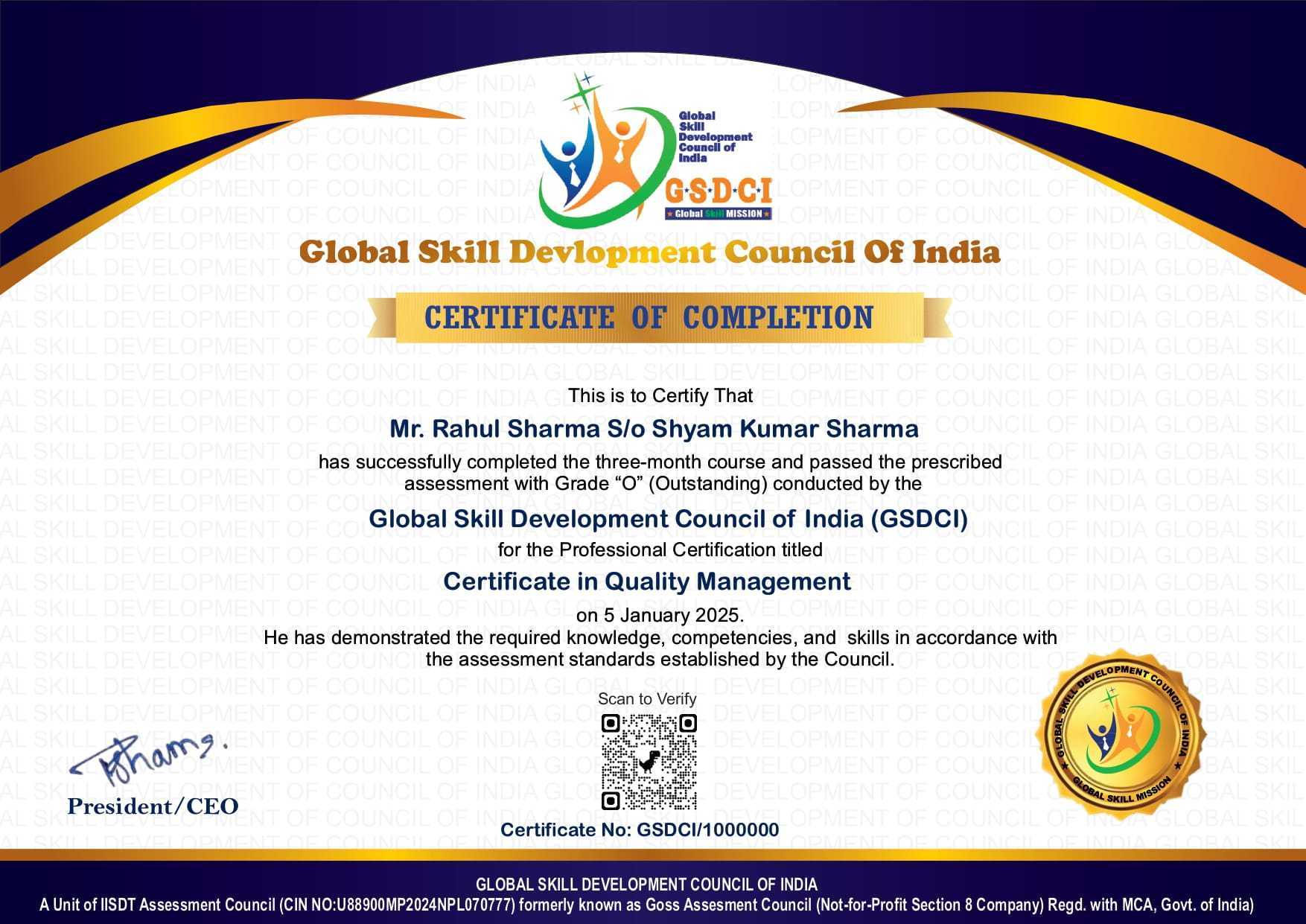
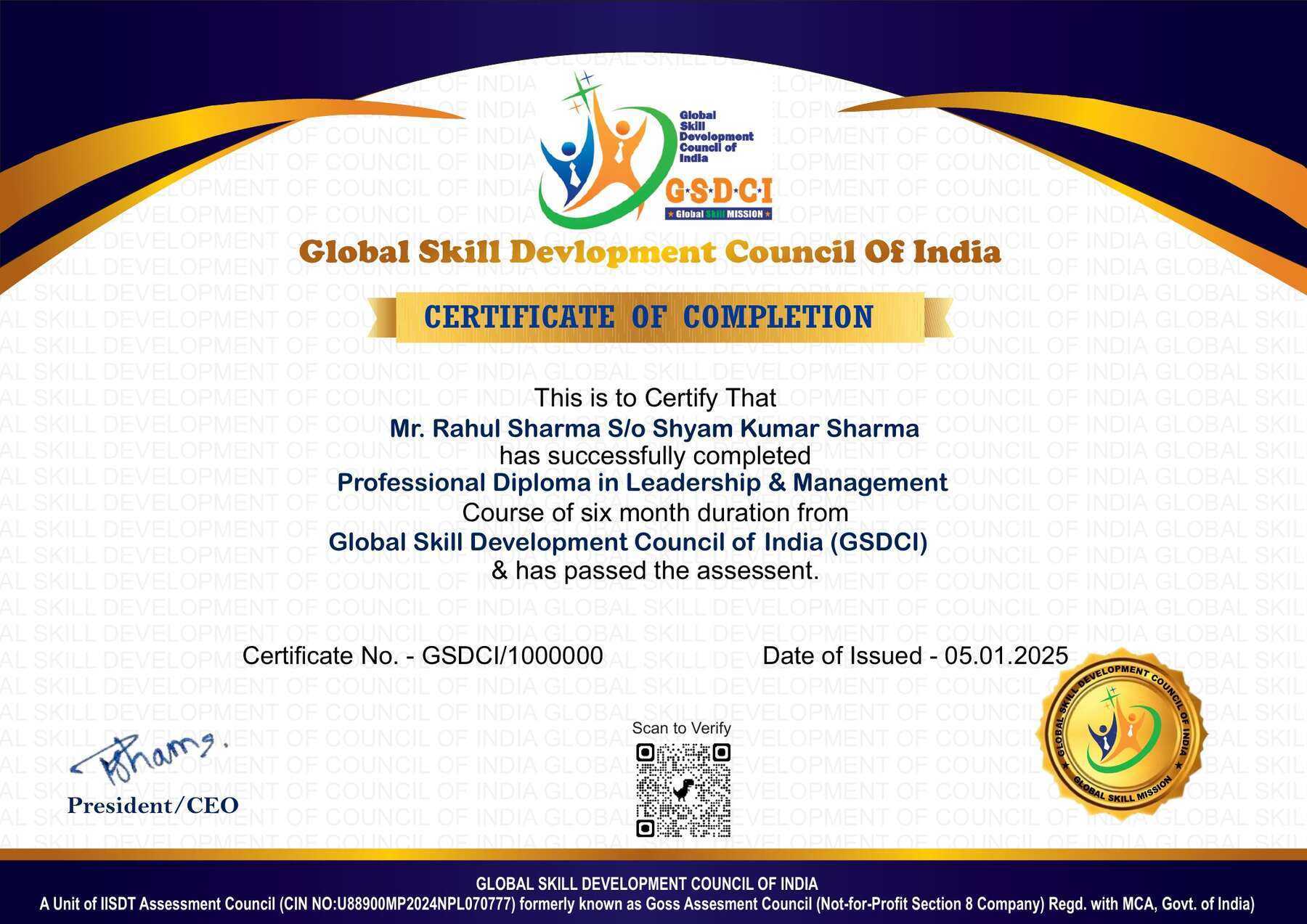
Step 8: Upon passing the examination, you will receive:
• A soft copy (scanned) of your certificate via email within 7 days of examination.
• A hard copy (original with official seal and signature) sent to your address within 45 day of declaration of result.

Step 9: After certification, you will be offered job opportunities aligned with your area of interest.

Online Examination Detail:

Duration- 60 minutes.
No. of Questions- 30. (Multiple Choice Questions).
Maximum Marks- 100, Passing Marks- 40%.
There is no negative marking in this module.

Marking System:
S.No. No. of Questions Marks Each Question Total Marks
1 10 5 50
2 5 4 20
3 5 3 15
4 5 2 10
5 5 1 5
30 100
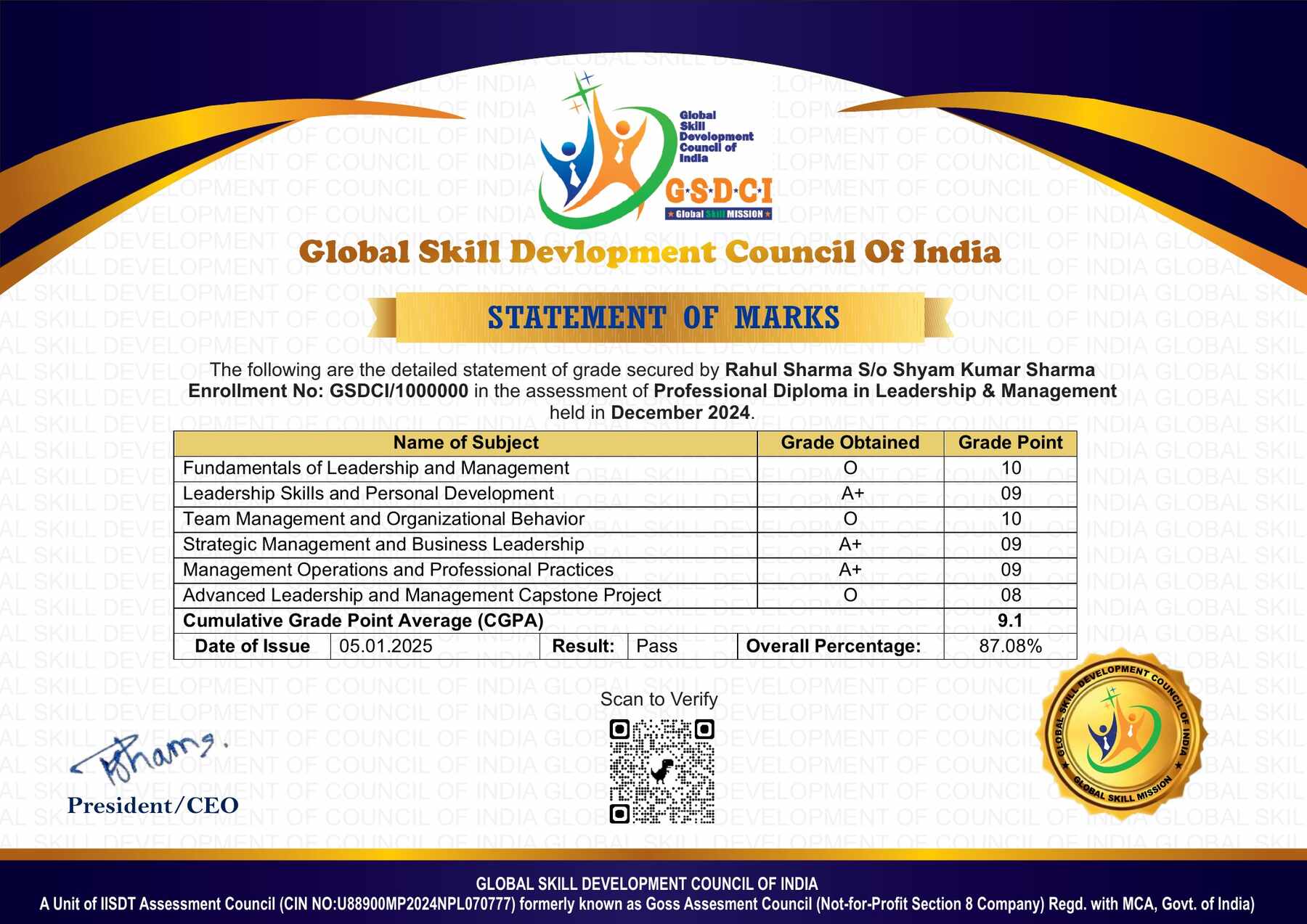
How Students will be Graded:
S.No. Marks Grade
1 91-100 O (Outstanding)
2 81-90 A+ (Excellent)
3 71-80 A (Very Good)
4 61-70 B (Good)
5 51-60 C (Average)
6 40-50 P (Pass)
7 0-40 F (Fail)

Key Benefits of Certification- Earning a professional certification not only validates your skills but also enhances your employability. Here are the major benefits you gain:

Practical, Job-Ready Skills – Our certifications are designed to equip you with real-world, hands-on skills that match current industry demands — helping you become employment-ready from day one.

Lifetime Validity – Your certification is valid for a lifetime — no renewals or expirations. It serves as a permanent proof of your skills and training.

Lifetime Certificate Verification – Employers and institutions can verify your certification anytime through a secure and reliable verification system — adding credibility to your qualifications.

Industry-Aligned Certification –All certifications are developed in consultation with industry experts to ensure that what you learn is current, relevant, and aligned with market needs.

Preferred by Employers – Candidates from ISO-certified institutes are often prioritized by recruiters due to their exposure to standardized, high-quality training.

Free Job Assistance Based on Your Career Interests – Receive personalized job assistance and career guidance in your preferred domain, helping you land the right role faster.

Syllabus

Introduction to Dry Cleaning Industry: Overview of the dry cleaning sector, History and evolution of dry cleaning, Scope and opportunities in the dry cleaning business, Comparison between dry cleaning and wet cleaning, Importance of professional garment care, Customer expectations and service standards, Trends in the garment care industry, Role of automation and technology, Environmental and health considerations, Legal and ethical responsibilities.

Fabrics and Garment Types: Types of fabrics and their characteristics, Fabric behavior under solvents, Label reading and garment classification, Identification of delicate and sensitive garments, Fiber testing and recognition, Garment construction and finishing elements, Reactions of fabric to heat and chemicals, Common fabric issues during cleaning, Textile dye types and colorfastness, Handling specialty items like suits, saris, and wedding dresses.

Dry Cleaning Process and Solvents: Steps in the dry cleaning process, Types of dry cleaning solvents (perchloroethylene, hydrocarbon, silicone), Solvent properties and handling, Pre-treatment of stains before dry cleaning, Post-spotting and finishing, Solvent recovery and distillation, Filtration systems and maintenance, Safety precautions with chemical use, Green alternatives in dry cleaning, Compliance with solvent disposal regulations.

Stain Removal Techniques: Types of stains (oil-based, water-based, protein-based), Stain identification methods, Chemicals used for stain removal, Techniques for pre-spotting and post-spotting, Equipment used in stain removal, Testing stain removers on fabric samples, Handling combination and unknown stains, Preventing garment damage during spotting, Color bleeding and dye transfer management, Stain removal for specific items (curtains, silks, leathers).

Dry Cleaning Machinery and Equipment: Dry cleaning machines and components, Washer-extractors and dryers, Pressing and finishing machines, Steam generators and vacuum tables, Maintenance and servicing of equipment, Energy consumption and efficiency, Automated systems in modern units, Handling machine breakdowns, Selection of machines based on business scale, Safety protocols during machine use.

Finishing, Pressing, and Packaging: Importance of garment finishing, Types of presses (utility, legger, topper), Hand ironing vs machine pressing, Techniques for wrinkle removal, Packaging for wrinkle-free delivery, Hanger and bag selection, Use of steam and moisture control, Quality checks before delivery, Odor removal and garment freshening, Branding through packaging design.

Job Opportunities after Certificate in Dry Cleaning Business

After successful completion of the Certificate in Dry Cleaning Business program, graduates gain practical expertise in fabric care, dry cleaning techniques, stain removal methods, laundry machinery operation, garment inspection, customer handling, and small business management. With rising demand for professional laundry and fabric care services in urban and semi-urban India, this sector offers steady employment and strong entrepreneurial potential.

Top Roles: Dry Cleaning Technician, Laundry Supervisor, Customer Service Executive, Quality Control Inspector, Sales & Marketing Executive, Inventory & Supply Manager, Maintenance Technician, Entrepreneur (Dry Cleaning Unit Owner)

Key Skills: Fabric identification and care techniques, stain removal processes, dry cleaning machine operation, use of solvents and detergents, customer service management, quality inspection, inventory control, and basic business operations.

Salary Range (India):

  • Entry-level: ₹1.8–3.5 LPA
  • Mid-level: ₹3–6 LPA
  • Senior-level: ₹6–12+ LPA

Scope: Opportunities exist in independent dry cleaning outlets, hotel and hospitality laundry services, corporate laundry chains, hospital laundry units, and franchise-based laundry brands. Graduates can also start their own dry cleaning and laundry business or expand into pickup-and-delivery laundry services. Income depends on location, scale, and customer base.

Course Rating

4.6/5
★★★★★
★★★★★

Based on 50 student ratings

Highly Rated Course

0
    0
    Your Certification Detail
    Your cart is emptyReturn to Shop
      Apply Coupon
      Available Coupons
      gsdci20 Get 20% off