
No products in the cart.



Certificate in Microfinance, Rural Banking and Financial Inclusion
₹6,500.00 ₹3,250.00
50% fee concession will end in
The course prepares professionals to manage rural and microfinance banking operations, serve underserved communities, ensure compliance, and support financial inclusion and local economic development.
Description
Course Name: Certificate in Microfinance, Rural Banking and Financial Inclusion
Global Occupational Skill Standard – GOSS ID: GOSS/BAF/CMRBFI/V1
Eligibility: 10+2 (Higher Secondary) or Equivalent.
Duration: Three Months.
Objective: The Certificate in Microfinance, Rural Banking and Financial Inclusion course is designed to equip professionals with the knowledge and skills required to manage and operate banking services in rural and semi-urban areas. It enables learners to understand the principles and practices of microfinance, rural banking operations, and financial inclusion, helping them serve low-income and underserved communities effectively.
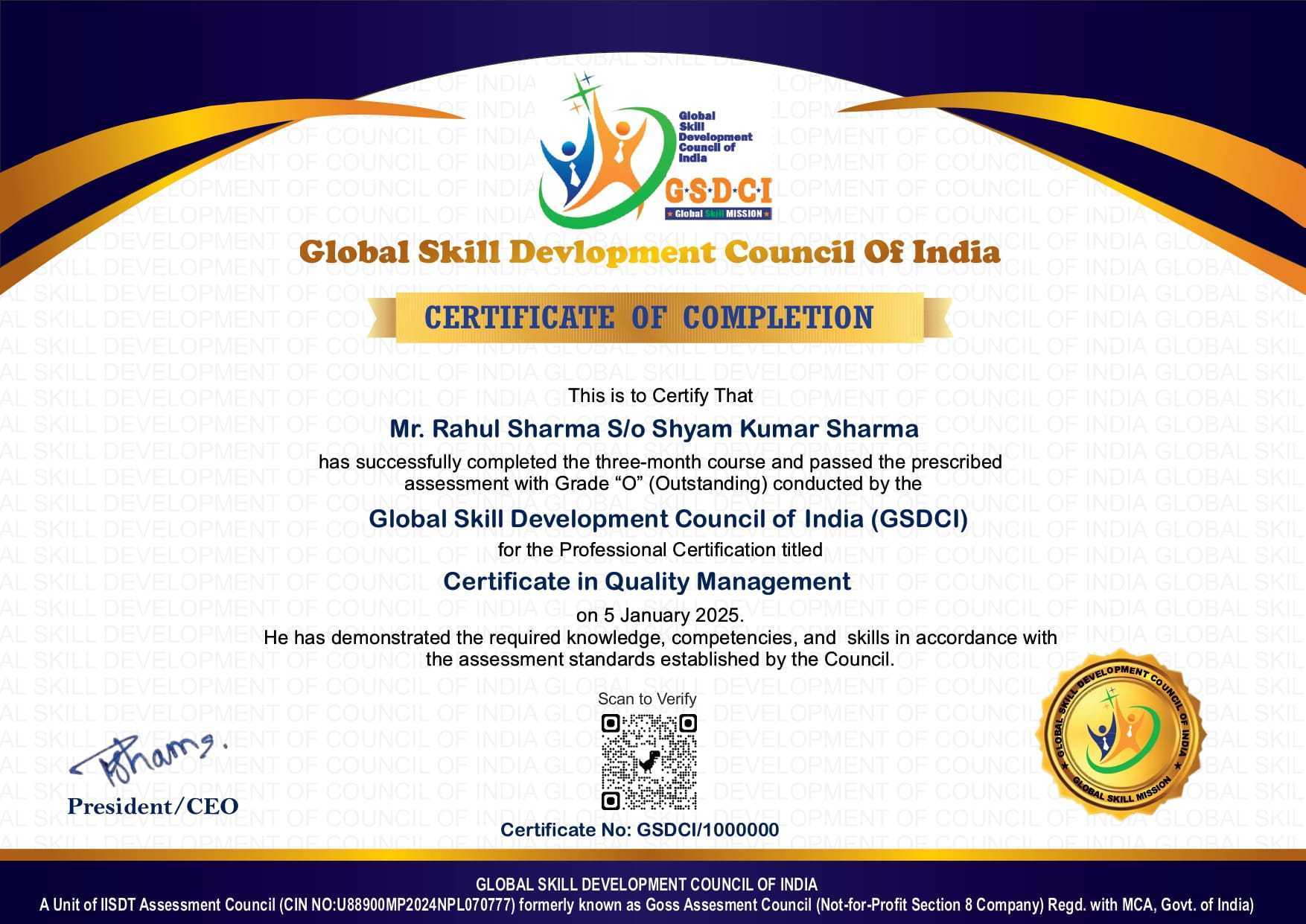
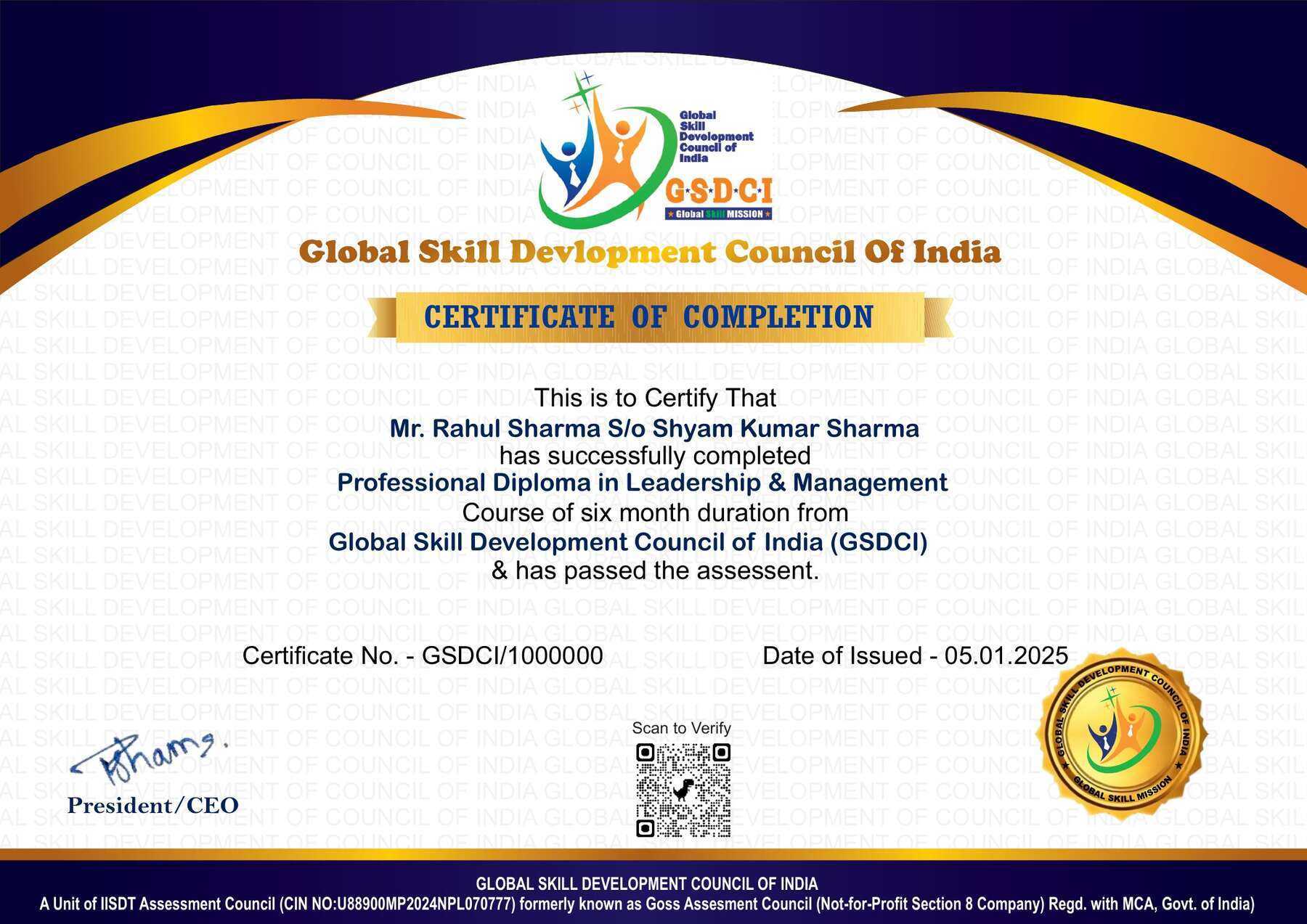
Certification: Within 5 days after Completion of Online Assessment.
Get ready to join the Journey to become a GSDCI Certified Professional – International Certification and Assessment Body.
Steps to become a GSDCI Certified Professional:
Step 1: Select your certification you want to pursue.
Step 2: Click on get certified tab, new pop up window will open.
Step 3: Click on pay certification fee, you will be redirected to billing details page.
Step 4: Fill your details and click on pay certification fee, you will be redirected to payment gateway, pay fee by any available options like Card (Debit/Credit), Wallet, Paytm, Net banking, UPI and Google pay.
Step 5: You will get Login Credentials of Online E-Books and Online assessment link on your email id, within 48 hrs of payment.
Step 6: After completion of the online assessment, the soft copy of your certificate will be sent to your registered email ID within 5 days.
Assessment Modules:
Module 1: Introduction to Microfinance & Rural Banking: Rural banking ecosystem and institutions (co‑operatives, RRBs, commercial banks), Concepts of microfinance and financial inclusion, Historical evolution of rural credit in India and policy context, Role of NABARD, RBI and other apex bodies, Delivery channels: SHG‑Bank Linkage, JLGs, MFIs, Key characteristics and features of microfinance products
Module 2: Products, Services & Credit Delivery in Rural Banking: Deposit products and services for rural customers (savings, current, fixed, recurring), Agricultural and allied credit: crop, term loans, allied activities, Non‑farm and microenterprise finance in rural areas, Microfinance lending models (group lending, individual lending, solidarity groups), Credit appraisal and documentation for rural & microfinance, Insurance and risk mitigation services (crop, livestock, micro‑insurance)
Module 3: Microfinance Institution Models & Operations Management: Organisational models: SHG‑bank linkage model, NGO/MFI model, NBFC‑MFI model, Comparative strengths and weaknesses of each methodology, Operations management: client enrolment, loan cycle, monitoring, recovery, Role of business correspondents/facilitators in rural banking, Technology‑enabled delivery in microfinance (mobile banking, digital payments)
Module 4: Regulatory, Legal & Compliance Framework: Regulatory framework for rural banking and microfinance (RBI guidelines, NBFC regulation, etc.), Legal aspects: banking laws applicable in rural/disadvantaged areas, Priority Sector Lending (PSL) norms and eligibility, Consumer protection, KYC/AML requirements in rural finance, Social performance and ethical issues in microfinance, Self‑regulation, grievance redressal and lender‑borrower rights
Module 5: Risk Management, Monitoring & Recovery in Rural Finance: Identifying and assessing risks in rural credit: agricultural risks, seasonal risks, borrower risk, social risk, Designing risk mitigation strategies: crop insurance, diversification, group guarantees, Monitoring and evaluation of rural banking portfolios, Early warning systems and Key Risk Indicators (KRIs) for microfinance & rural banking, Recovery and restructuring mechanisms for distressed rural lending
Module 6: Strategic Growth, Financial Inclusion & Emerging Trends: Strategic planning for rural banking: branch network, agent banking, digital outreach, Financial inclusion initiatives and government‑schemes (PMJDY, etc.), Emerging trends: fintech in rural finance, alternative delivery models, value chain financing for agriculture, Evaluating impact: social, economic and financial outcomes of rural banking/microfinance, Sustainability and scaling‑up of microfinance operations
GSDCI Online Assessment Detail:
- Duration- 60 minutes.
- Number of Questions- 30.
- Number of Questions from each module: 5.
- Language: English.
- Exam Type: Multiple Choice Questions.
- Maximum Marks- 100, Passing Marks- 50%.
- There is no negative marking in any module.
| Marking System: | |||
| S.No. | No. of Questions | Marks Each Question | Total Marks |
| 1 | 10 | 5 | 50 |
| 2 | 5 | 4 | 20 |
| 3 | 5 | 3 | 15 |
| 4 | 5 | 2 | 10 |
| 5 | 5 | 1 | 5 |
| 30 | 100 | ||
| How Students will be Graded: | |||
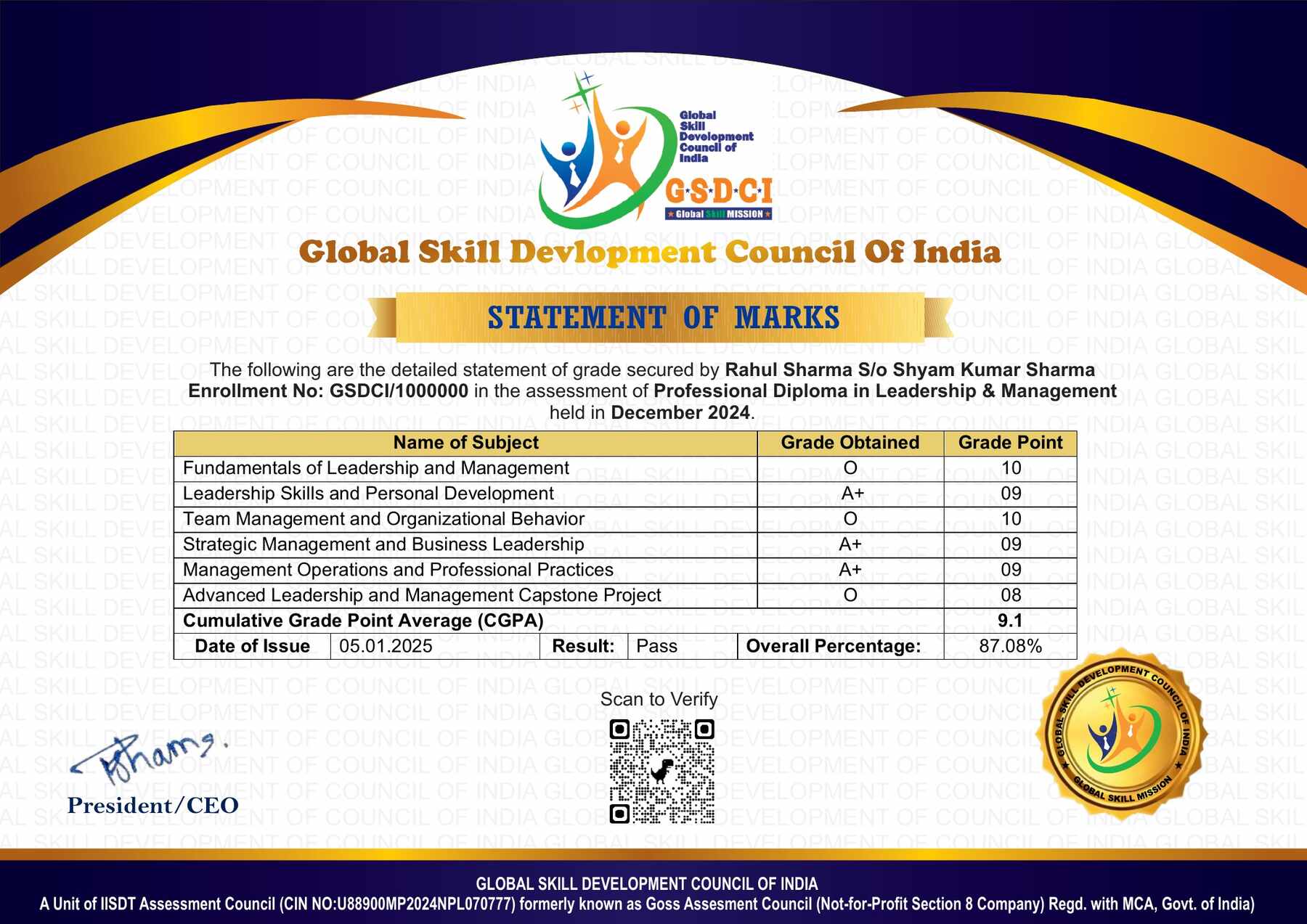
| S.No. | Marks | Grade | |
| 1 | 91-100 | O (Outstanding) | |
| 2 | 81-90 | A+ (Excellent) | |
| 3 | 71-80 | A (Very Good) | |
| 4 | 61-70 | B (Good) | |
| 5 | 50-60 | P (Pass) | |
| 6 | 0-49 | F (Fail) | |
Benefits of Certification:
1. Global Recognition & Credibility – Stand out worldwide with a certification that strengthens your professional profile across borders and demonstrates your skills to employers and institutions.
2. Quality Assurance through ISO Certification – Programs follow an ISO-certified quality management system to promote consistency, reliability, and a standardized learning experience.
3. Career Advancement & Employability – Enhance your résumé, demonstrate professional competence, and improve your prospects for career growth, promotions, or suitable job opportunities.
4. Non-Profit Trust Factor – Certification from a non-profit organization reflects a mission-driven approach focused on skill development, professional learning, and public benefit.
5. Access to Learning Resources – Gain access to useful learning resources such as e-books, mock tests, assessments, and online academic support.
6. Transparency & Online Verification – Each certification includes a unique enrolment or certificate ID, enabling convenient online verification by employers and other interested parties.
7. Lifetime or Long-Term Validity – Certifications may offer lifetime or extended validity, reducing the need for frequent renewal, subject to the applicable certification scheme.

Reviews
There are no reviews yet.