
No products in the cart.


Certificate in Tourism Destination Management
₹6,500.00 ₹3,250.00
50% fee concession will end in
To train professionals to effectively plan, manage, and promote tourism destinations, ensuring sustainable growth, high-quality visitor experiences, and stakeholder collaboration.
Description
Course Name: Certificate in Tourism Destination Management
Global Occupational Skill Standard – GOSS ID: GOSS/HT/CTDM/V1
Eligibility: Graduation or Equivalent.
Duration: Three Months.
Objective: The Certificate in Tourism Destination Management course is designed to prepare professionals to strategically manage and develop tourism destinations. It focuses on enhancing knowledge and skills in destination planning, marketing, sustainability, stakeholder engagement, and experience design. Participants learn to analyze market trends, develop tourism products, manage visitor experiences, and implement sustainable practices that balance economic growth with environmental and cultural preservation.
Get ready to join the Journey to become a GSDCI Certified Professional – International Certification and Assessment Body.
Steps to become a GSDCI Certified Professional:
Step 1: Select your certification you want to pursue.
Step 2: Click on get certified tab, new pop up window will open.
Step 3: Click on pay certification fee, you will be redirected to billing details page.
Step 4: Fill your details and click on pay certification fee, you will be redirected to payment gateway, pay fee by any available options like Card (Debit/Credit), Wallet, Paytm, Net banking, UPI and Google pay.
Step 5: You will get Login Credentials of Online E-Books and Online assessment link on your email id, within 48 hrs of payment.
Step 6: After completion of the online assessment, the soft copy of your certificate will be sent to your registered email ID within 5 days.
Assessment Modules:
Module 1:Introduction to Tourism Destination Management: Overview of Tourism Industry, Types of Tourism Destinations, Role and Responsibilities of a Destination Manager, Tourism Trends and Global Perspectives, Sustainable Tourism Concepts, Tourism Policies and Regulatory Framework
Module 2:Strategic Planning and Destination Development: Destination Vision and Strategic Planning, Infrastructure and Facility Planning, Resource Allocation and Budgeting, Destination Zoning and Land Use, Risk Assessment and Crisis Management, Monitoring and Evaluation of Development Projects
Module 3:Marketing and Promotion of Destinations: Market Research and Visitor Analysis, Branding and Positioning of Destinations, Digital Marketing and Social Media Strategies, Public Relations and Media Engagement, Event and Festival Promotion, Tourism Product Packaging and Promotion
Module 4:Visitor Experience and Service Management: Customer Service Excellence, Visitor Engagement and Personalization, Interpretation and Heritage Management, Feedback Systems and Complaint Handling, Accessibility and Inclusivity, Tourism Experience Enhancement Techniques
Module 5:Stakeholder and Community Engagement: Collaboration with Local Communities, Partnership with Tourism Service Providers, Government and Private Sector Coordination, Conflict Resolution and Negotiation, Community Empowerment and Benefit Sharing, Corporate Social Responsibility in Tourism
Module 6:Sustainable and Responsible Tourism Practices: Environmental Sustainability Practices, Cultural Heritage Preservation, Ecotourism and Nature-based Tourism, Policy Implementation for Responsible Tourism, Monitoring and Reporting Sustainability Metrics, Innovation and Future Trends in Tourism Management
GSDCI Online Assessment Detail:
- Duration- 60 minutes.
- Number of Questions- 30.
- Number of Questions from each module: 5.
- Language: English.
- Exam Type: Multiple Choice Questions.
- Maximum Marks- 100, Passing Marks- 50%.
- There is no negative marking in any module.
| Marking System: | |||
| S.No. | No. of Questions | Marks Each Question | Total Marks |
| 1 | 10 | 5 | 50 |
| 2 | 5 | 4 | 20 |
| 3 | 5 | 3 | 15 |
| 4 | 5 | 2 | 10 |
| 5 | 5 | 1 | 5 |
| 30 | 100 | ||
| How Students will be Graded: | |||
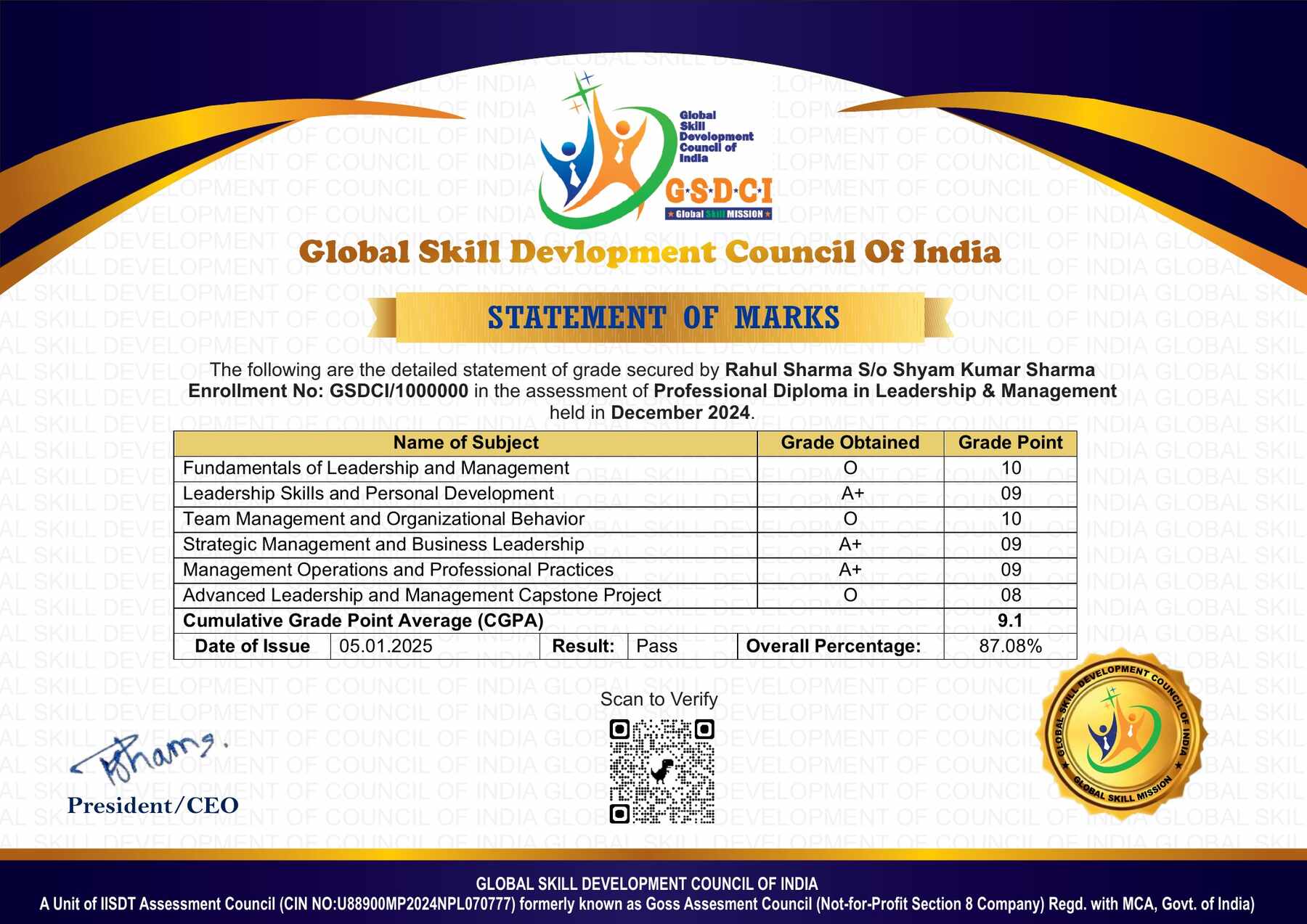
| S.No. | Marks | Grade | |
| 1 | 91-100 | O (Outstanding) | |
| 2 | 81-90 | A+ (Excellent) | |
| 3 | 71-80 | A (Very Good) | |
| 4 | 61-70 | B (Good) | |
| 5 | 50-60 | P (Pass) | |
| 6 | 0-49 | F (Fail) | |
Benefits of Certification:
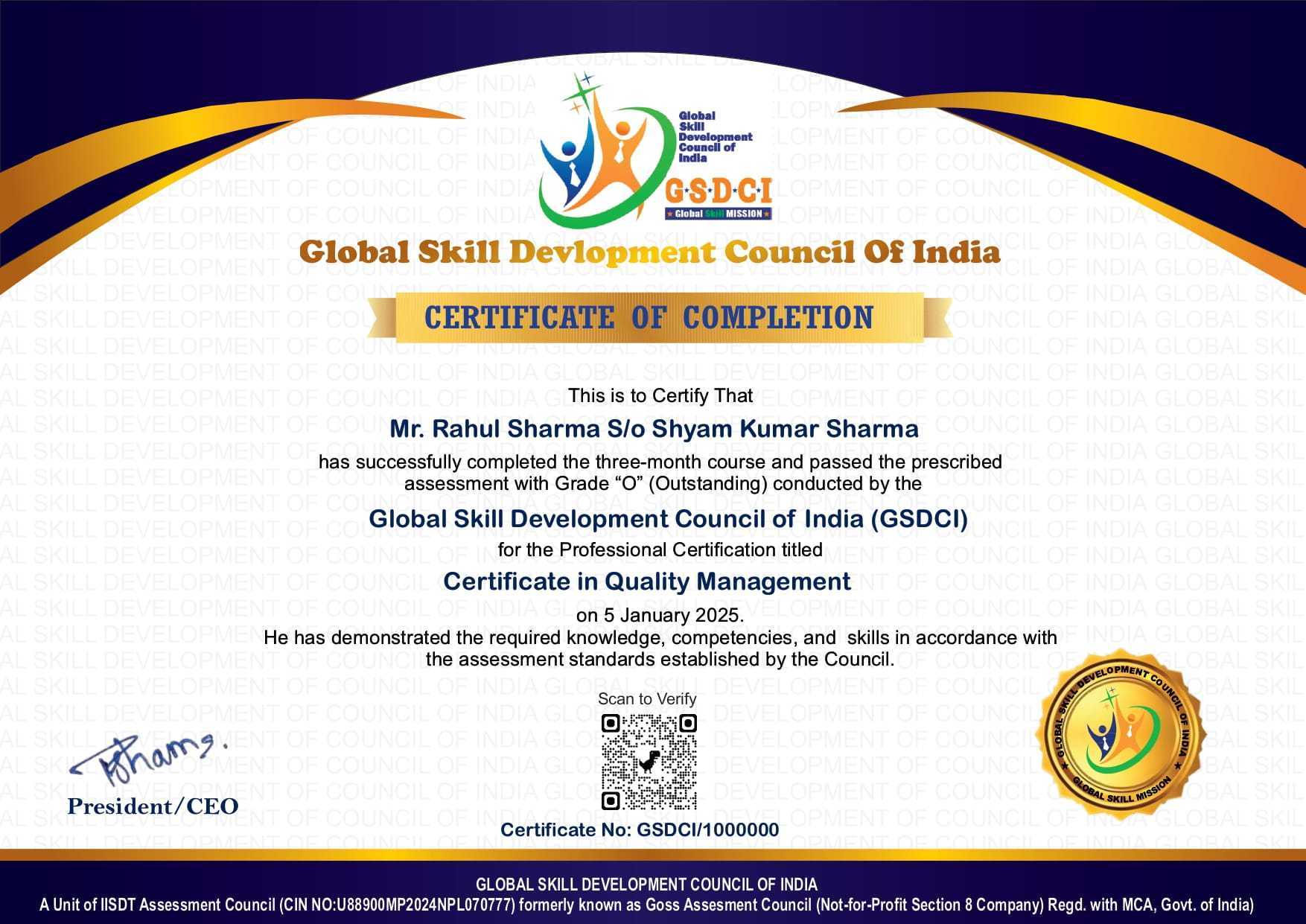
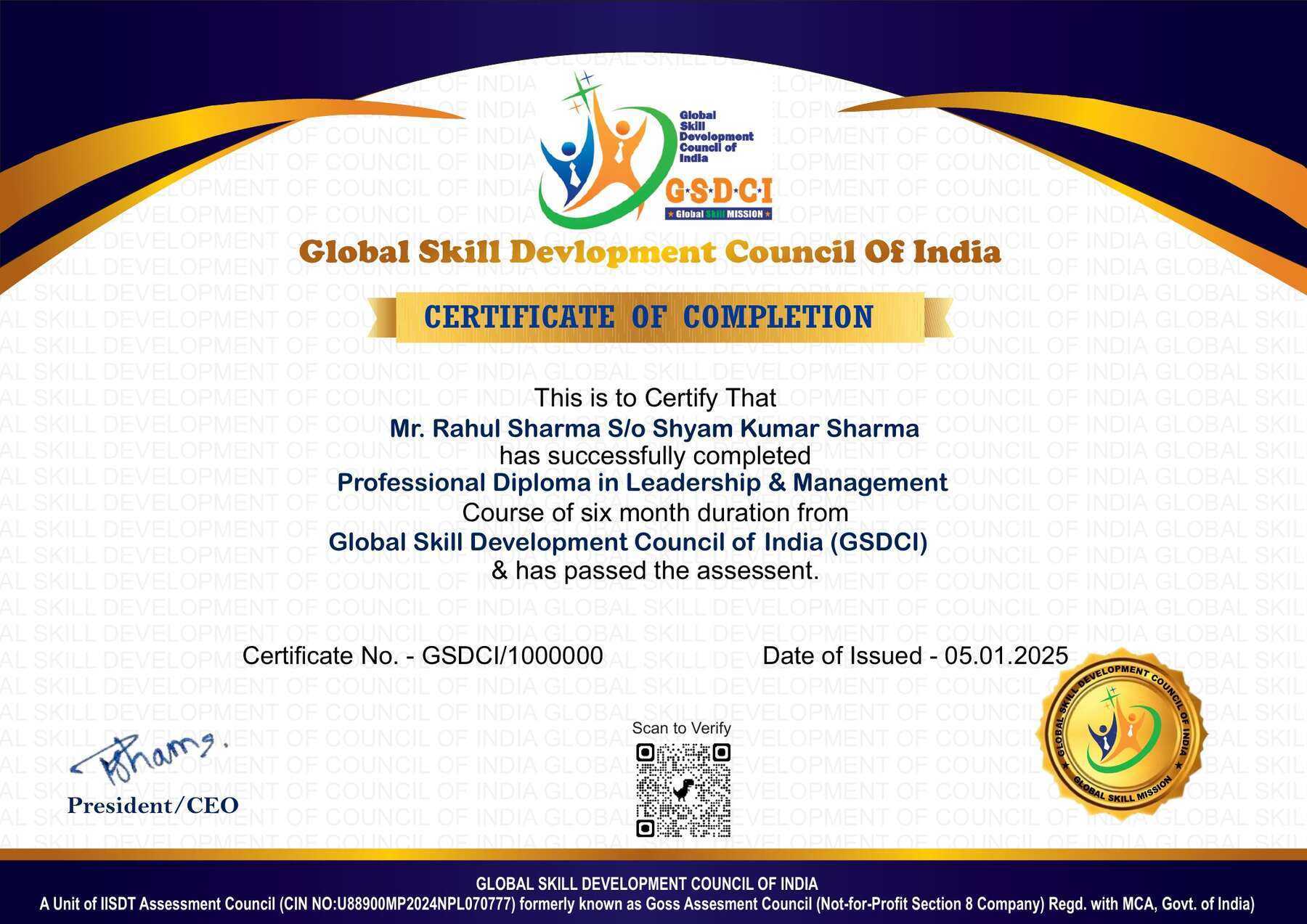
1. Global Recognition & Credibility – Stand out worldwide with a certification that strengthens your professional profile across borders and demonstrates your skills to employers and institutions.
2. Quality Assurance through ISO Certification – Programs follow an ISO-certified quality management system to promote consistency, reliability, and a standardized learning experience.
3. Career Advancement & Employability – Enhance your résumé, demonstrate professional competence, and improve your prospects for career growth, promotions, or suitable job opportunities.
4. Non-Profit Trust Factor – Certification from a non-profit organization reflects a mission-driven approach focused on skill development, professional learning, and public benefit.
5. Access to Learning Resources – Gain access to useful learning resources such as e-books, mock tests, assessments, and online academic support.
6. Transparency & Online Verification – Each certification includes a unique enrolment or certificate ID, enabling convenient online verification by employers and other interested parties.
7. Lifetime or Long-Term Validity – Certifications may offer lifetime or extended validity, reducing the need for frequent renewal, subject to the applicable certification scheme.

Reviews
There are no reviews yet.