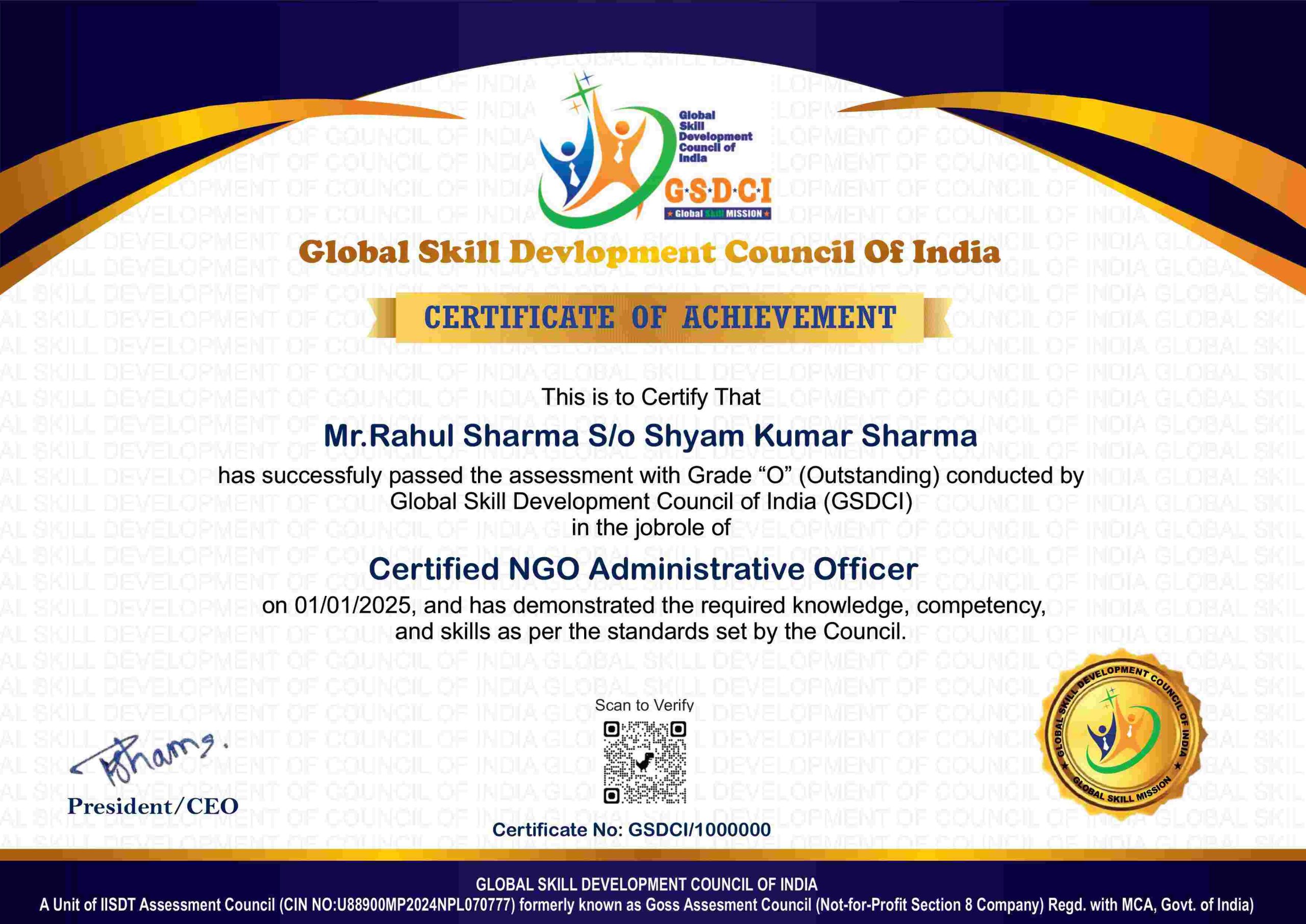
Certified Automation Systems Specialist

6,000.00 3,000.00

50% fee concession will end in

To train professionals to design, implement, and maintain industrial automation systems that enhance operational efficiency, precision, and productivity.

Description

Certification Name: Certified Automation Systems Specialist

Global Occupational Skill Standard – GOSS ID: GOSS/TL/CASS/V1

Eligibility: Graduation or Equivalent or minimum 2 years of relevant experience (experience-based learners can directly enroll and certify).

Objective: The Certified Automation Systems Specialist course is designed to equip participants with in-depth technical knowledge and practical skills to manage end-to-end automation processes in industrial and manufacturing settings. The course covers key components of automation such as PLCs (Programmable Logic Controllers), SCADA systems, HMIs (Human-Machine Interfaces), sensors, actuators, robotics, and control system integration. Participants will learn programming, troubleshooting, system diagnostics, and real-time monitoring techniques. 

Certification: Within 5 days after Completion of Online Assessment.

Get ready to join the Journey to become a GSDCI Certified Professional  – International Certification and Assessment Body.

Steps to become a GSDCI Certified Professional:

Step 1: Select your certification you want to pursue.

Step 2: Click on get certified tab, new pop up window will open.

Step 3: Click on pay certification fee, you will be redirected to billing details page.

Step 4: Fill your details and click on pay certification fee, You will be redirected to payment gateway, pay fee by any available options like Card(Debit/Credit), Wallet, Paytm, Net banking, UPI and Google pay.

Step 5: You will get Login Credentials of Online E-Books and Online assessment link on your email id, within 48 hrs of payment.

Step 6: After completion of online assessment, you can download your Certificate Immediately.

Assessment Modules:

Module 1: Fundamentals of Industrial Automation Systems: Introduction to industrial automation and its applications, Key components: sensors, actuators, controllers, HMIs, PLCs, Levels of automation: field level, control level, supervisory level, Types of automation systems: fixed, programmable, and flexible, Overview of control systems: open-loop vs closed-loop, Safety standards and compliance in automation systems (IEC, ISO).

Module 2: Programmable Logic Controllers (PLC) and Programming: Architecture and operation of PLCs in industrial environments, I/O systems: discrete and analog signals handling, Programming languages: Ladder Logic, FBD, ST, SFC (IEC 61131-3), PLC programming structure: routines, subroutines, scan cycles, Troubleshooting and debugging techniques using simulation tools, Practical exercises on timer, counter, logic, and sequencing operations.

Module 3: Human-Machine Interface (HMI) and SCADA Systems: Role and design of HMI in monitoring and control applications, Interface development: screens, alarms, data trends, and navigation, Introduction to SCADA systems and their architecture, Data acquisition and real-time visualization techniques, Integration of PLCs with HMI/SCADA systems for centralized control, Communication protocols: Modbus, OPC, DNP3, Ethernet/IP.

Module 4: Industrial Communication Networks and Protocols: Basics of industrial networking: topologies, media, and standards, Wired and wireless communication systems in automation, Common protocols: Profibus, Profinet, DeviceNet, CANopen, Fieldbus integration with control systems and field devices, Troubleshooting communication issues and signal integrity checks, Cybersecurity best practices in industrial automation networks.

Module 5: Sensors, Actuators, and Motion Control Systems: Types of sensors: proximity, temperature, pressure, level, photoelectric, Selection and installation of actuators: pneumatic, hydraulic, electric, Basics of motion control: servo motors, stepper motors, VFDs, PID control fundamentals and tuning for process optimization, Feedback systems and signal conditioning techniques, Calibration, maintenance, and fault diagnosis of field devices.

Module 6: System Integration, Testing, and Project Implementation: System design lifecycle: concept, engineering, installation, commissioning, Integration of control components into a unified automation system, Testing methods: FAT (Factory Acceptance Test), SAT (Site Acceptance Test), Documentation: P&ID diagrams, control narratives, wiring layouts, Project management basics: budgeting, scheduling, risk analysis, Capstone project: design and simulate a complete automation system for a manufacturing process.

GSDCI Online Assessment Detail:

  • Duration- 60 minutes.
  • Number of Questions- 30.
  • Number of Questions from each module: 5.
  • Language: English.
  • Exam Type: Multiple Choice Questions.
  • Maximum Marks- 100, Passing Marks- 50%.
  • There is no negative marking in any module.
Marking System:
S.No. No. of Questions Marks Each Question Total Marks
1 10 5 50
2 5 4 20
3 5 3 15
4 5 2 10
5 5 1 5
30   100
How Students will be Graded:
S.No. Marks Grade
1 91-100 O (Outstanding)
2 81-90 A+ (Excellent)
3 71-80 A (Very Good)
4 61-70 B (Good)
5 50-60 P (Pass)
6  0-49 F (Fail)


Benefits of Certification:

🌍 1. Global Recognition & Credibility – Stand out worldwide with a certification that opens doors across borders. Trusted by employers, respected by institutions, and recognized in over 100 countries.

📜 2. Quality Assurance through ISO Certification – Certified to global ISO standards, our programs deliver excellence, consistency, and a benchmarked learning experience that speaks for itself.

💼 3. Career Advancement & Employability – Enhances your resume and increases chances of promotions or job offers.

🤝 4. Non-Profit Trust Factor – Certifications from non-profit organizations are mission-driven rather than profit-driven.

📚 5. Access to Verified Learning & Resources – Often includes e-books, mock tests, and online support without hidden costs.

🔍 6. Transparency & Online Verification – Certifications come with a unique Enrolment ID for easy online verification by employers and institutions.

⏳ 7. Lifetime or Long-Term Validity – Certifications usually have lifetime validity or long-term recognition, reducing the need for frequent renewals.

Reviews

There are no reviews yet.

Be the first to review “Certified Automation Systems Specialist”

Your email address will not be published. Required fields are marked *