
No products in the cart.


Certified Media Animator (2D & 3D)
₹6,500.00 ₹3,250.00
50% fee concession will end in
To train learners in creating professional 2D and 3D animations using industry-standard tools and techniques for media, entertainment, and digital platforms.
Description
Certification Name: Certified Media Animator (2D & 3D)
Global Occupational Skill Standard – GOSS ID: GOSS/JPM/CMA/V1
Eligibility: 10+2 (higher Secondary) or Equivalent or minimum 2 years of relevant experience (experience-based learners can directly enroll and certify).
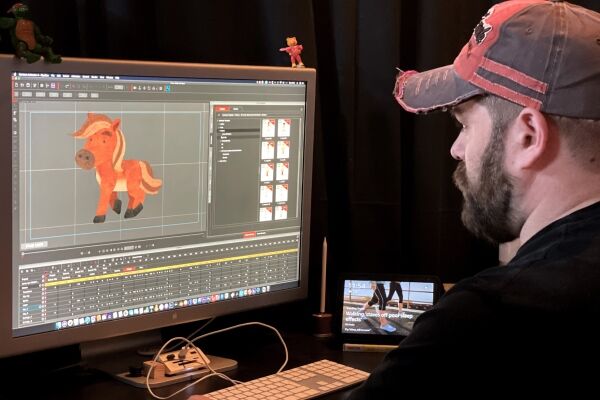
Objective: The Certified Media Animator (2D & 3D) course is designed to develop creative and technical skills in producing professional-quality 2D and 3D animations for film, television, advertising, gaming, and digital media. The course covers the full animation pipeline—from concept development and storyboarding to character design, rigging, animation, lighting, rendering, and compositing. Learners will explore animation principles such as timing, squash and stretch, anticipation, and follow-through in both 2D and 3D environments.
Certification: Within 5 days after Completion of Online Assessment.
Get ready to join the Journey to become a GSDCI Certified Professional – International Certification and Assessment Body.
Steps to become a GSDCI Certified Professional:
Step 1: Select your certification you want to pursue.
Step 2: Click on get certified tab, new pop up window will open.
Step 3: Click on pay certification fee, you will be redirected to billing details page.
Step 4: Fill your details and click on pay certification fee, You will be redirected to payment gateway, pay fee by any available options like Card(Debit/Credit), Wallet, Paytm, Net banking, UPI and Google pay.
Step 5: You will get Login Credentials of Online E-Books and Online assessment link on your email id, within 48 hrs of payment.
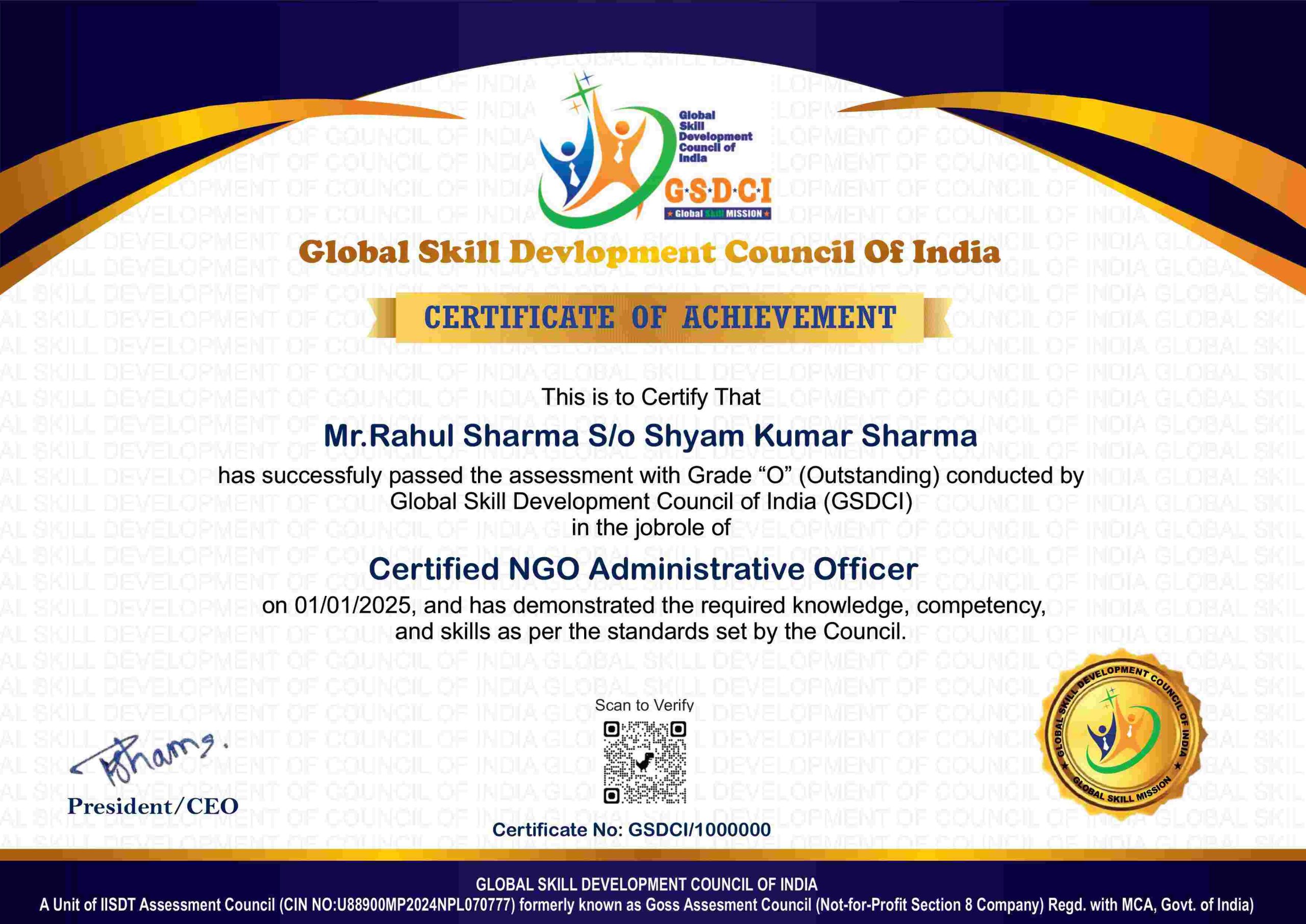
Step 6: After completion of online assessment, you can download your Certificate Immediately.
Assessment Modules:
Module 1: Fundamentals of Animation and Media Production: Introduction to animation principles and media formats, Difference between 2D and 3D animation workflows, Overview of the animation production pipeline (pre-production to post-production), Frame rate, resolution, and aspect ratio for animation, Introduction to storyboarding and animatics, Understanding the role of animators in media industries.
Module 2: 2D Animation Techniques and Tools: Principles of 2D animation (squash & stretch, anticipation, timing, arcs), Frame-by-frame animation vs tweening, Character rigging and puppet animation, Using software like Adobe Animate and Toon Boom Harmony, Creating animated scenes, loops, and transitions, Exporting 2D animation for video and web platforms.
Module 3: 3D Modeling and Texturing: Basics of 3D space, geometry, and topology, Creating 3D models using polygons, NURBS, and sculpting techniques, Introduction to UV mapping and unwrapping, Applying textures and materials to 3D surfaces, Introduction to PBR (physically based rendering) workflows, Using tools like Autodesk Maya, Blender, or 3ds Max for modeling.
Module 4: 3D Animation and Rigging: Principles of 3D character and object animation, Understanding keyframes, timelines, and motion curves, Character rigging and bone structures, Inverse kinematics and forward kinematics, Simulating realistic motion and physics, Animating cameras, props, and environments.
Module 5: Lighting, Rendering, and Compositing: Basics of lighting in 3D scenes (key, fill, rim, ambient), Setting up cameras and perspectives, Rendering settings and output formats, Introduction to rendering engines (Cycles, Arnold, V-Ray), Compositing rendered passes and effects using After Effects or Nuke, Adding visual effects and finishing touches.
Module 6: Project Development and Portfolio Creation: Planning and executing a complete 2D and 3D animation project, Applying storytelling and timing techniques in animation, Managing assets and organizing production files, Revising based on feedback and optimizing animation, Compiling a showreel with 2D/3D animation samples, Presenting a professional portfolio for studio or freelance opportunities.
GSDCI Online Assessment Detail:
- Duration- 60 minutes.
- Number of Questions- 30.
- Number of Questions from each module: 5.
- Language: English.
- Exam Type: Multiple Choice Questions.
- Maximum Marks- 100, Passing Marks- 50%.
- There is no negative marking in any module.
| Marking System: | |||
| S.No. | No. of Questions | Marks Each Question | Total Marks |
| 1 | 10 | 5 | 50 |
| 2 | 5 | 4 | 20 |
| 3 | 5 | 3 | 15 |
| 4 | 5 | 2 | 10 |
| 5 | 5 | 1 | 5 |
| 30 | 100 | ||
| How Students will be Graded: | |||
| S.No. | Marks | Grade | |
| 1 | 91-100 | O (Outstanding) | |
| 2 | 81-90 | A+ (Excellent) | |
| 3 | 71-80 | A (Very Good) | |
| 4 | 61-70 | B (Good) | |
| 5 | 50-60 | P (Pass) | |
| 6 | 0-49 | F (Fail) | |
Benefits of Certification:
🌍 1. Global Recognition & Credibility – Stand out worldwide with a certification that opens doors across borders. Trusted by employers, respected by institutions, and recognized in over 100 countries.
📜 2. Quality Assurance through ISO Certification – Certified to global ISO standards, our programs deliver excellence, consistency, and a benchmarked learning experience that speaks for itself.
💼 3. Career Advancement & Employability – Enhances your resume and increases chances of promotions or job offers.
🤝 4. Non-Profit Trust Factor – Certifications from non-profit organizations are mission-driven rather than profit-driven.
📚 5. Access to Verified Learning & Resources – Often includes e-books, mock tests, and online support without hidden costs.
🔍 6. Transparency & Online Verification – Certifications come with a unique Enrolment ID for easy online verification by employers and institutions.
⏳ 7. Lifetime or Long-Term Validity – Certifications usually have lifetime validity or long-term recognition, reducing the need for frequent renewals.