
No products in the cart.


Certified Online Community Manager
₹6,500.00 ₹3,250.00
50% fee concession will end in
To train learners in building and managing engaged online communities that support brand growth, customer loyalty, and meaningful digital interactions.
Description
Certification Name: Certified Online Community Manager
Global Occupational Skill Standard – GOSS ID: GOSS/JPM/COCM/V1
Eligibility: Graduation or Equivalent or minimum 2 years of relevant experience (experience-based learners can directly enroll and certify).
Objective: The Certified Online Community Manager course is designed to equip learners with the strategic, communication, and analytical skills required to build, manage, and grow online communities across social media, forums, membership platforms, and brand-owned channels. The course covers community engagement strategies, content planning, moderation policies, brand voice development, audience behavior analysis, crisis management, and community-building tools.
Certification: Within 5 days after Completion of Online Assessment.
Get ready to join the Journey to become a GSDCI Certified Professional – International Certification and Assessment Body.
Steps to become a GSDCI Certified Professional:
Step 1: Select your certification you want to pursue.
Step 2: Click on get certified tab, new pop up window will open.
Step 3: Click on pay certification fee, you will be redirected to billing details page.
Step 4: Fill your details and click on pay certification fee, You will be redirected to payment gateway, pay fee by any available options like Card(Debit/Credit), Wallet, Paytm, Net banking, UPI and Google pay.
Step 5: You will get Login Credentials of Online E-Books and Online assessment link on your email id, within 48 hrs of payment.
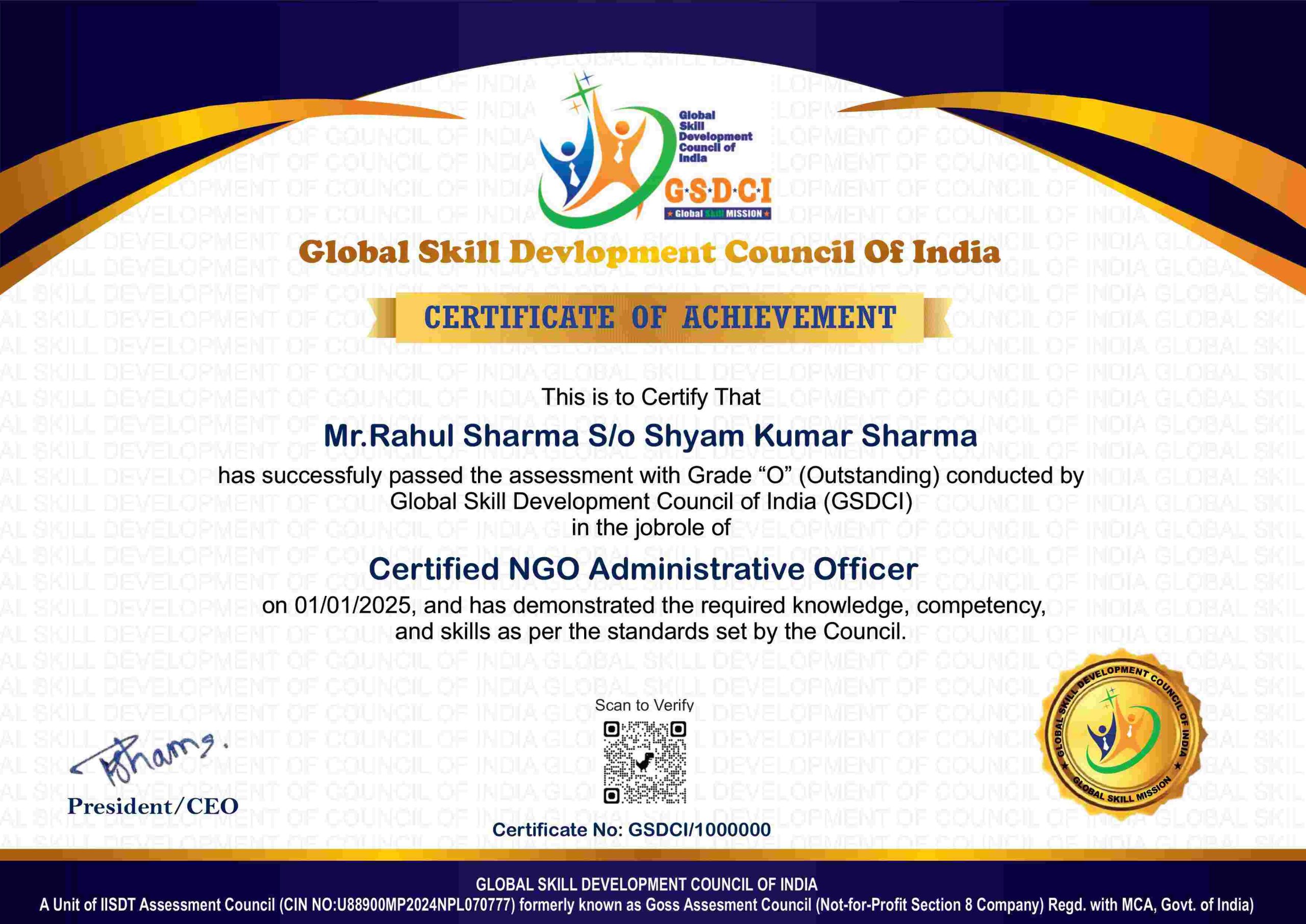
Step 6: After completion of online assessment, you can download your Certificate Immediately.
Assessment Modules:
Module 1: Introduction to Online Community Management: Understanding the role of an online community manager, Types of online communities: brand, product, interest-based, support forums, Importance of community in digital marketing and brand loyalty, Key differences between social media management and community management, Community lifecycle stages: inception, growth, maturity, moderation, Essential tools and platforms for community building (Facebook Groups, Discord, Reddit, Slack, etc.).
Module 2: Community Strategy and Goal Setting: Identifying community purpose, audience, and value proposition, Setting SMART goals for engagement, retention, and growth, Creating community guidelines, tone, and voice, Defining KPIs and success metrics (DAU, MAU, engagement rate), Mapping user journeys and behavior patterns, Aligning community goals with brand or organizational objectives.
Module 3: Content Planning and Engagement Techniques: Planning and scheduling content that drives interaction, Creating polls, challenges, live sessions, and AMAs, Encouraging user-generated content and peer-to-peer interaction, Gamification strategies (badges, leaderboards, contests), Managing announcements, updates, and feedback loops, Using content calendars and automation tools to streamline engagement.
Module 4: Moderation, Conflict Resolution, and Safety: Developing moderation policies and enforcing community rules, Identifying and handling spam, trolling, and toxic behavior, Tools and workflows for automated and manual moderation, Managing user conflicts with empathy and fairness, Creating a safe, inclusive, and respectful environment, Crisis management and escalation procedures.
Module 5: Analytics, Reporting, and Community Insights: Using analytics tools to track engagement and member behavior, Measuring growth, churn, and sentiment through reports, Conducting surveys and polls for feedback and insights, Generating actionable reports for internal stakeholders, A/B testing content and features for engagement optimization, Data-driven decision making to improve community health.
Module 6: Community Growth, Collaboration, and Career Pathways: Scaling communities through partnerships, influencers, and campaigns, Collaborating with marketing, product, and support teams, Hosting events (online/offline) to foster community connection, Creating a community management portfolio and case studies, Career paths: community strategist, forum manager, customer experience lead, Best practices for job interviews, freelancing, and agency work in community management.
GSDCI Online Assessment Detail:
- Duration- 60 minutes.
- Number of Questions- 30.
- Number of Questions from each module: 5.
- Language: English.
- Exam Type: Multiple Choice Questions.
- Maximum Marks- 100, Passing Marks- 50%.
- There is no negative marking in any module.
| Marking System: | |||
| S.No. | No. of Questions | Marks Each Question | Total Marks |
| 1 | 10 | 5 | 50 |
| 2 | 5 | 4 | 20 |
| 3 | 5 | 3 | 15 |
| 4 | 5 | 2 | 10 |
| 5 | 5 | 1 | 5 |
| 30 | 100 | ||
| How Students will be Graded: | |||
| S.No. | Marks | Grade | |
| 1 | 91-100 | O (Outstanding) | |
| 2 | 81-90 | A+ (Excellent) | |
| 3 | 71-80 | A (Very Good) | |
| 4 | 61-70 | B (Good) | |
| 5 | 50-60 | P (Pass) | |
| 6 | 0-49 | F (Fail) | |
Benefits of Certification:
🌍 1. Global Recognition & Credibility – Stand out worldwide with a certification that opens doors across borders. Trusted by employers, respected by institutions, and recognized in over 100 countries.
📜 2. Quality Assurance through ISO Certification – Certified to global ISO standards, our programs deliver excellence, consistency, and a benchmarked learning experience that speaks for itself.
💼 3. Career Advancement & Employability – Enhances your resume and increases chances of promotions or job offers.
🤝 4. Non-Profit Trust Factor – Certifications from non-profit organizations are mission-driven rather than profit-driven.
📚 5. Access to Verified Learning & Resources – Often includes e-books, mock tests, and online support without hidden costs.
🔍 6. Transparency & Online Verification – Certifications come with a unique Enrolment ID for easy online verification by employers and institutions.
⏳ 7. Lifetime or Long-Term Validity – Certifications usually have lifetime validity or long-term recognition, reducing the need for frequent renewals.
Reviews
There are no reviews yet.