Description
Course Name: Professional Diploma in Email Communication
Global Occupational Skill Standard – GOSS ID: GOSS/PD-HRO-EC-260
Eligibility: 10+2 or equivalent
Language Type: English
Course Type: Self-Paced Online Learning
Objective: The Professional Diploma in Email Communication is designed to provide students with practical knowledge of professional email writing, communication techniques, and digital correspondence practices. It focuses on developing skills in drafting clear and effective emails, managing email workflows, maintaining professional etiquette, and organizing digital communication. The course prepares learners to communicate professionally through emails and develop skills required for administrative, corporate, and business support roles.
Duration: 6 Months / 370 Hours
Steps to become a GSDCI Certified Professional:
Step 1: Select your Course you want to pursue.
Step 2: Click on get Enroll Now tab, new pop up window will open.
Step 3: Click on pay Course fee, you will be redirected to billing details page.
Step 4: Fill your details and click on pay course fee, you will be redirected to payment gateway, pay fee by any available options like Card (Debit/Credit), Wallet, Paytm, Net banking, UPI and Google pay.
Step 5: You will get Login Credentials of Online E-Books and Online assessment link on your email id, within 48 hrs of payment.
Step 6: After completion of the online assessment, the Digital(PDF) copy of your Diploma & Marksheet will be sent to your registered email ID within 7 days.
Course Modules:
Module 1: Introduction to Email Communication: Basics and importance of email communication, Role of email in professional and business environments, Types of emails and their purposes, Email communication process, Advantages and limitations of email communication, Professional email standards, Email etiquette and best practices, Importance of clear and effective emails, Email security awareness, Career benefits of professional email skills.
Module 2: Email Writing Skills and Structure: Fundamentals of professional email writing, Email format and structure, Subject line writing techniques, Email greetings and closing methods, Writing clear and concise email content, Professional tone and language usage, Formal and informal email styles, Email proofreading and editing, Common email writing mistakes, Improving email writing effectiveness.
Module 3: Business and Workplace Email Communication: Business email correspondence, Internal and external workplace emails, Official announcements and notifications, Request and response emails, Follow-up email techniques, Complaint and resolution emails, Client and customer communication emails, Meeting and appointment emails, Report and update emails, Maintaining professional email records.
Module 4: Email Management and Productivity Skills: Managing email accounts and settings, Organizing emails with folders and labels, Email sorting and filtering techniques, Managing attachments and documents, Email scheduling and automation, Contact management and address books, Spam and unwanted email management, Email backup and recovery, Time management for email handling, Improving email productivity.
Module 5: Digital Email Tools and Security Practices: Email platforms and applications, Gmail and Outlook features, Professional email configuration, Cloud-based email services, Email collaboration tools, Email privacy and confidentiality, Password protection and account security, Identifying phishing and email threats, Safe email practices, Digital communication security.
Module 6: Advanced Email Communication and Career Skills: Advanced professional email techniques, Email communication for customer support, Email marketing basics, Cross-cultural email communication, Email communication in remote workplaces, Business networking through email, Professional online identity management, Email communication assessment and improvement, Interview and workplace email skills, Career development through effective email communication.
GSDCI Online Assessment Detail:
- Duration- 120 minutes.
- Number of Questions- 60.
- Number of Questions from each module: 10.
- Language: English.
- Exam Type: Multiple Choice Questions.
- Maximum Marks- 600, Passing Marks Above 40%.
- There is no negative marking in any module.
| How Students will be Graded: | ||
| S.No. | Marks | Grade |
| 1 | 91-100 | O (Outstanding) |
| 2 | 81-90 | A+ (Excellent) |
| 3 | 71-80 | A (Very Good) |
| 4 | 61-70 | B (Good) |
| 5 | 51-60 | C (Average) |
| 6 | 41-50 | P (Pass) |
| 7 | 0-40 | F (Fail) |
Benefits of the Professional Diploma
1. Globally Recognized Professional Diploma – Earn a professionally designed diploma that enhances your profile and demonstrates industry-relevant knowledge. Widely valued by employers, organizations, and institutions across multiple sectors.
2. Quality Learning with ISO-Certified Standards – Our training programs are developed under ISO-certified quality management practices, ensuring a structured, consistent, and high-quality learning experience.
3. Enhanced Career Opportunities – Strengthen your resume, improve your professional skills, and increase your potential for employment, career advancement, and new job opportunities.
4. Issued by a Non-Profit Skill Development Organization – The diploma is awarded by a mission-driven organization dedicated to promoting skill development, vocational education, and lifelong learning.
5. Comprehensive Learning Resources – Access quality study materials, e-books, practice assessments, mock tests, and learner support to help you successfully complete the program.
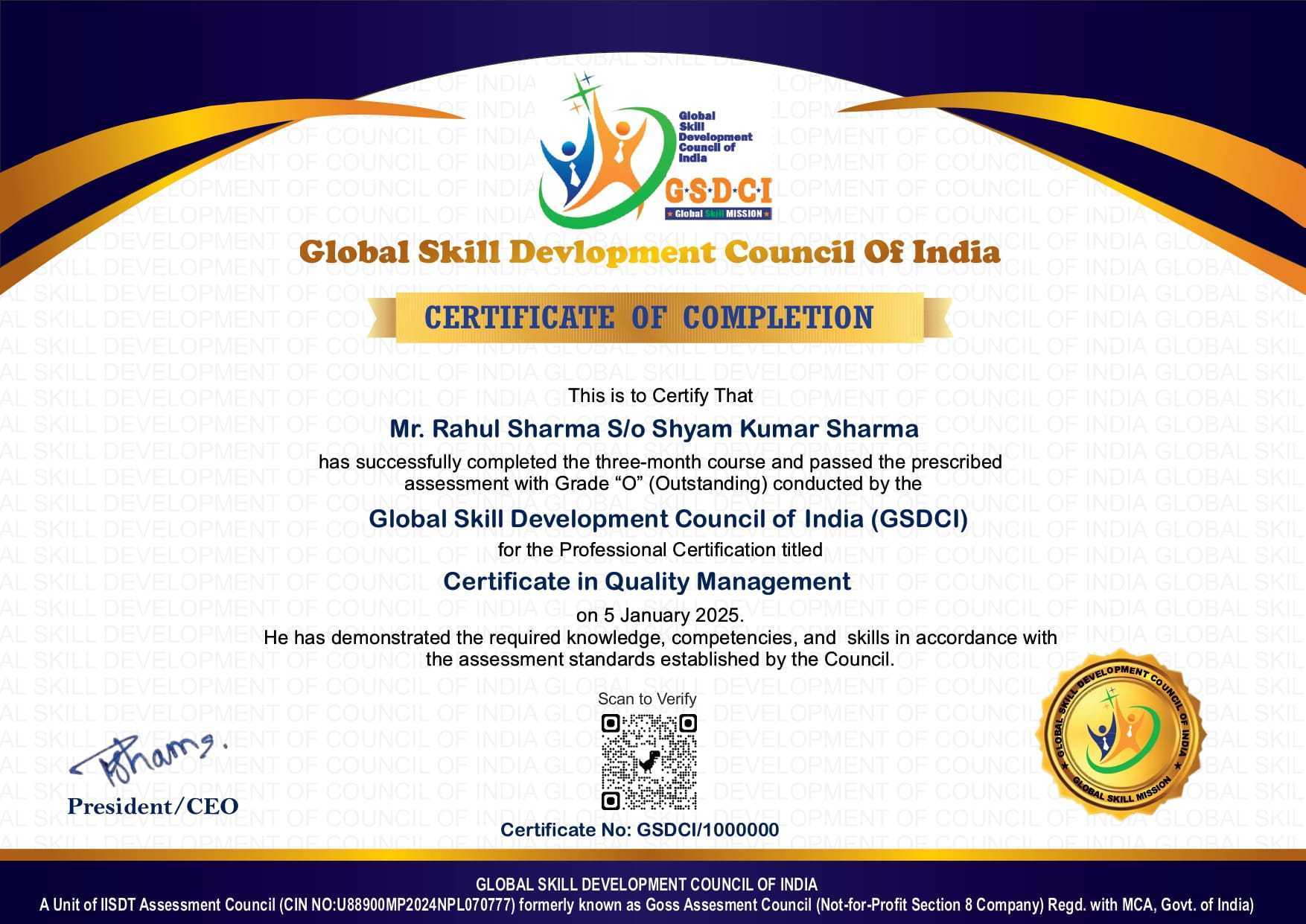
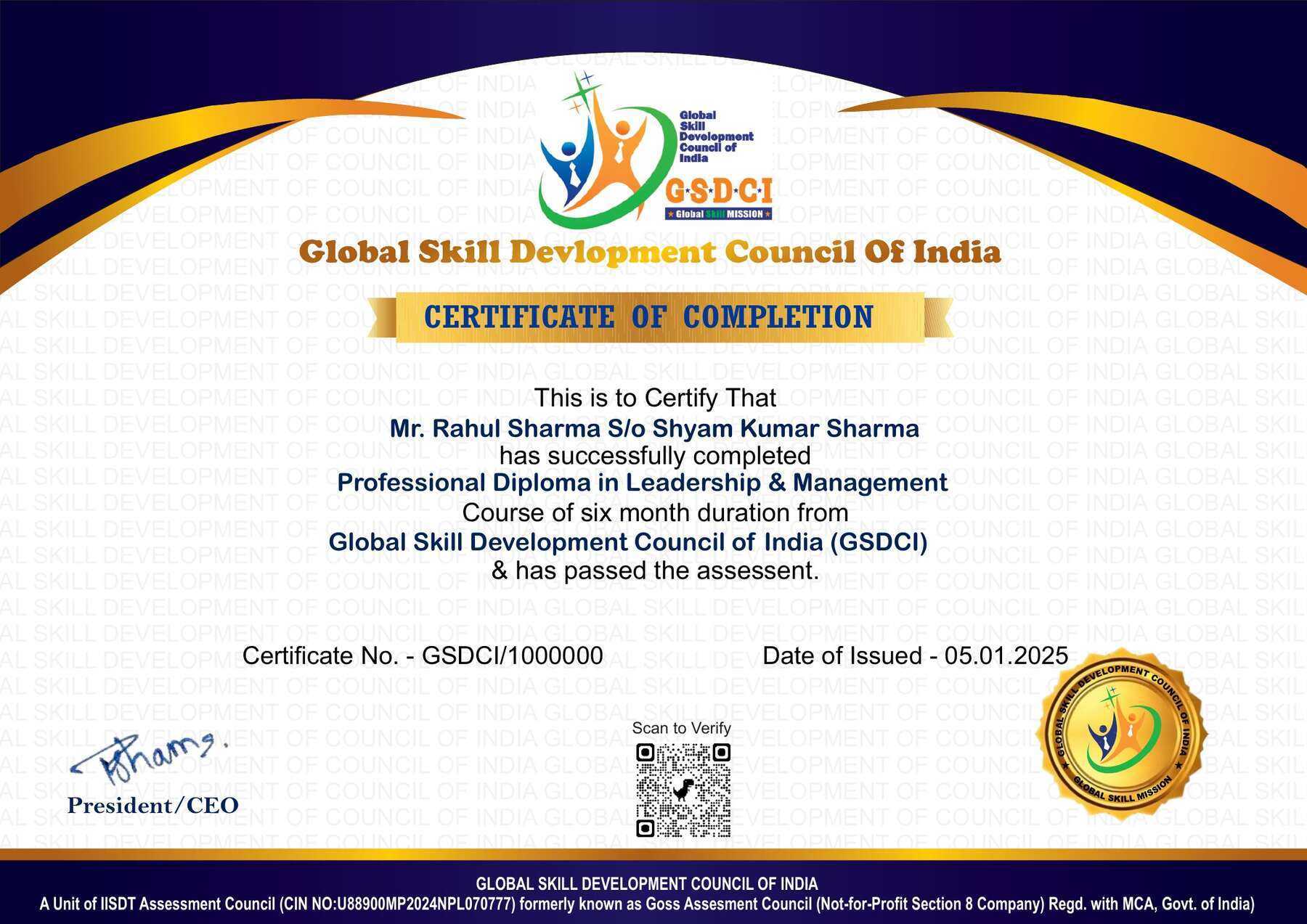
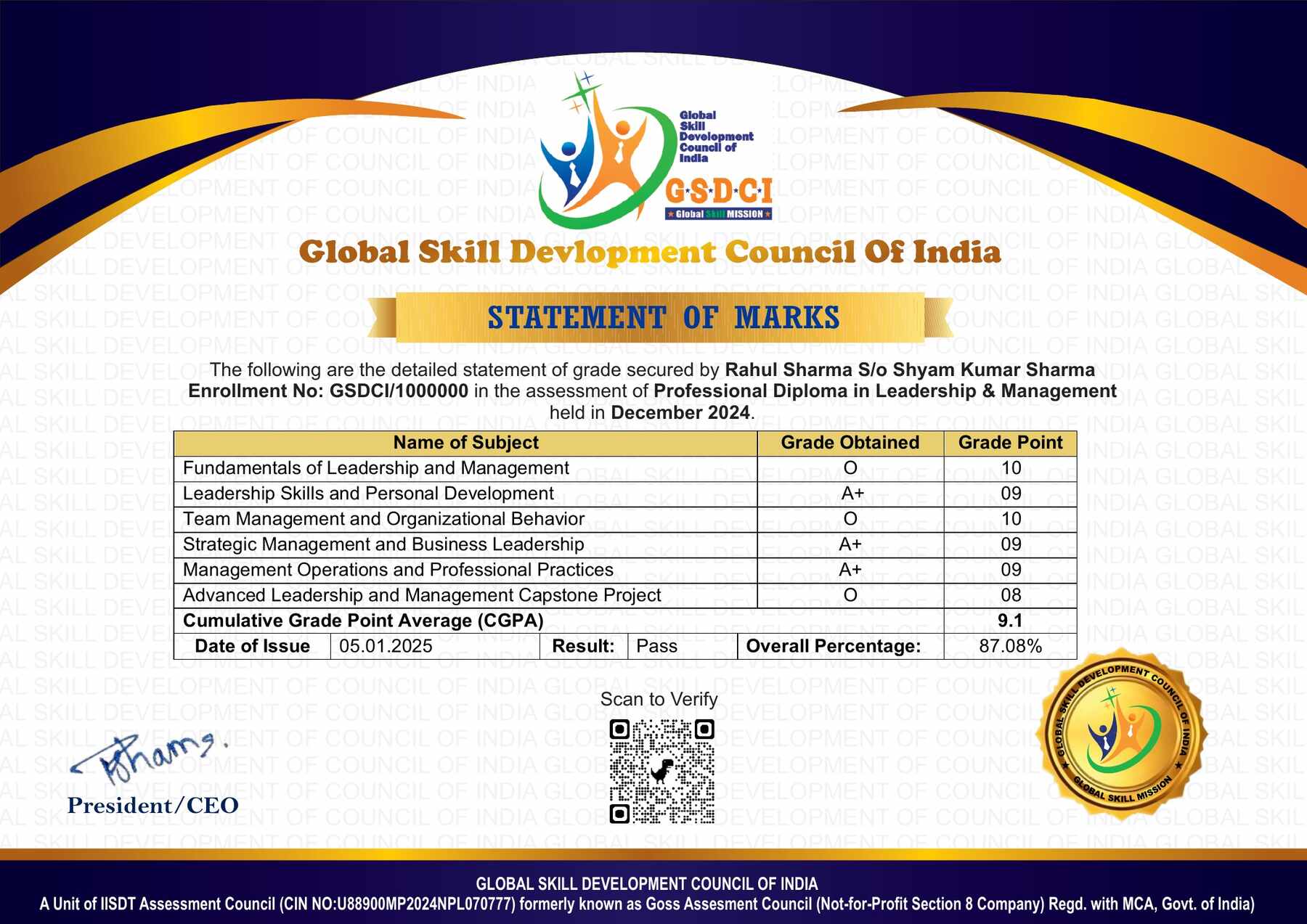
6. Secure Online Verification – Every diploma and marksheet is issued with a unique Enrolment ID and QR Code, enabling employers, institutions, and other stakeholders to instantly verify the authenticity of your credential online.
7. Lifetime Validity – The Professional Diploma is issued with lifetime validity and does not require periodic renewal, allowing you to showcase your achievement throughout your career.
8. Flexible Self-Paced Learning – Learn anytime and anywhere at your own pace, making it easy to balance your studies with work, business, or personal commitments.
9. Industry-Relevant Curriculum – The curriculum is designed to focus on practical knowledge, current industry trends, and real-world applications to improve workplace readiness.
10. Skill-Based Professional Qualification – Demonstrates your commitment to continuous professional development and validates your practical knowledge and skills in the subject area.
Job Opportunities after Professional Diploma in Email Communication
Graduates gain skills in professional email writing, business communication, email management, workplace etiquette, digital communication practices, and client correspondence, preparing them for roles in corporate, administrative, customer service, and business support sectors.
Key Career Options: Email Communication Executive, Business Communication Associate, Customer Support Executive, Administrative Assistant, Executive Assistant, Client Relationship Executive, Documentation Executive, HR Communication Assistant, Sales Support Executive, and Virtual Communication Specialist.
Salary Range (India):
Entry-level: ₹2–4 LPA
Mid-level: ₹4–8 LPA
Senior-level: ₹8–15+ LPA
Industries Hiring Graduates: Corporate Companies, IT Firms, Banking & Finance, BPO & Customer Support, E-commerce Companies, Educational Institutions, Healthcare Organizations, Consulting Firms, and Service-Based Industries.
Skills Developed: Professional email writing, business correspondence, email etiquette, client communication, documentation, digital communication tools, professional language skills, and workplace communication.
Graduates can progress to roles like Communication Specialist, Client Relations Executive, Corporate Communication Associate, or Email Management Professional with experience and advanced communication skills.


Reviews
There are no reviews yet.