
No products in the cart.


Certificate in Restaurant Kitchen Management & Operations
₹6,000.00 ₹3,000.00
50% fee concession will end in
To equip participants with the skills to efficiently supervise kitchen operations, maintain quality and hygiene standards, manage staff, and optimize restaurant performance.
Description
Course Name: Certificate in Restaurant Kitchen Management & Operations
Global Occupational Skill Standard – GOSS ID: GOSS/HT/CRKMO/V1
Eligibility: 10+2 (Higher Secondary) or Equivalent.
Duration: Three Months.
Objective: The Certificate in Restaurant Kitchen Management & Operations course is designed to train participants in effectively managing kitchen operations in restaurants or hospitality settings. The course emphasizes both technical and managerial skills, including menu planning, food preparation, kitchen safety and hygiene, inventory control, cost management, and staff supervision.
Get ready to join the Journey to become a GSDCI Certified Professional – International Certification and Assessment Body.
Steps to become a GSDCI Certified Professional:
Step 1: Select your certification you want to pursue.
Step 2: Click on get certified tab, new pop up window will open.
Step 3: Click on pay certification fee, you will be redirected to billing details page.
Step 4: Fill your details and click on pay certification fee, you will be redirected to payment gateway, pay fee by any available options like Card (Debit/Credit), Wallet, Paytm, Net banking, UPI and Google pay.
Step 5: You will get Login Credentials of Online E-Books and Online assessment link on your email id, within 48 hrs of payment.
Step 6: After completion of the online assessment, the soft copy of your certificate will be sent to your registered email ID within 5 days.
Assessment Modules:
Module 1: Introduction to Professional Kitchen Management: role and responsibilities of kitchen supervisor, types of kitchens and kitchen hierarchy, kitchen organization and workflow, hygiene and sanitation standards, kitchen safety protocols, career prospects in culinary management
Module 2: Food Preparation & Cooking Techniques: basic cooking methods (boiling, grilling, frying, baking), knife skills and cutting techniques, preparation of stocks, sauces, and soups, meat, poultry, and seafood handling, vegetable and pastry preparation, modern and international cooking techniques
Module 3: Kitchen Operations & Inventory Management: menu planning and recipe standardization, procurement and storage of ingredients, stock control and inventory management, cost control and portioning, supplier coordination, maintaining kitchen equipment and tools
Module 4: Food Safety & Hygiene: personal hygiene and grooming, food handling and storage regulations, cleaning and sanitation procedures, prevention of foodborne illnesses, pest control management, compliance with local health and safety laws
Module 5: Team Management & Leadership in Kitchen: staff scheduling and delegation of duties, training and mentoring kitchen staff, communication and coordination within the kitchen, motivation and team building, conflict resolution, maintaining discipline and professionalism
Module 6: Culinary Innovation & Quality Control: menu development and experimentation, presentation and plating techniques, maintaining consistency in taste and quality, adapting to dietary requirements, feedback collection and analysis, performance measurement and kitchen audit
GSDCI Online Assessment Detail:
- Duration- 60 minutes.
- Number of Questions- 30.
- Number of Questions from each module: 5.
- Language: English.
- Exam Type: Multiple Choice Questions.
- Maximum Marks- 100, Passing Marks- 50%.
- There is no negative marking in any module.
| Marking System: | |||
| S.No. | No. of Questions | Marks Each Question | Total Marks |
| 1 | 10 | 5 | 50 |
| 2 | 5 | 4 | 20 |
| 3 | 5 | 3 | 15 |
| 4 | 5 | 2 | 10 |
| 5 | 5 | 1 | 5 |
| 30 | 100 | ||
| How Students will be Graded: | |||
| S.No. | Marks | Grade | |
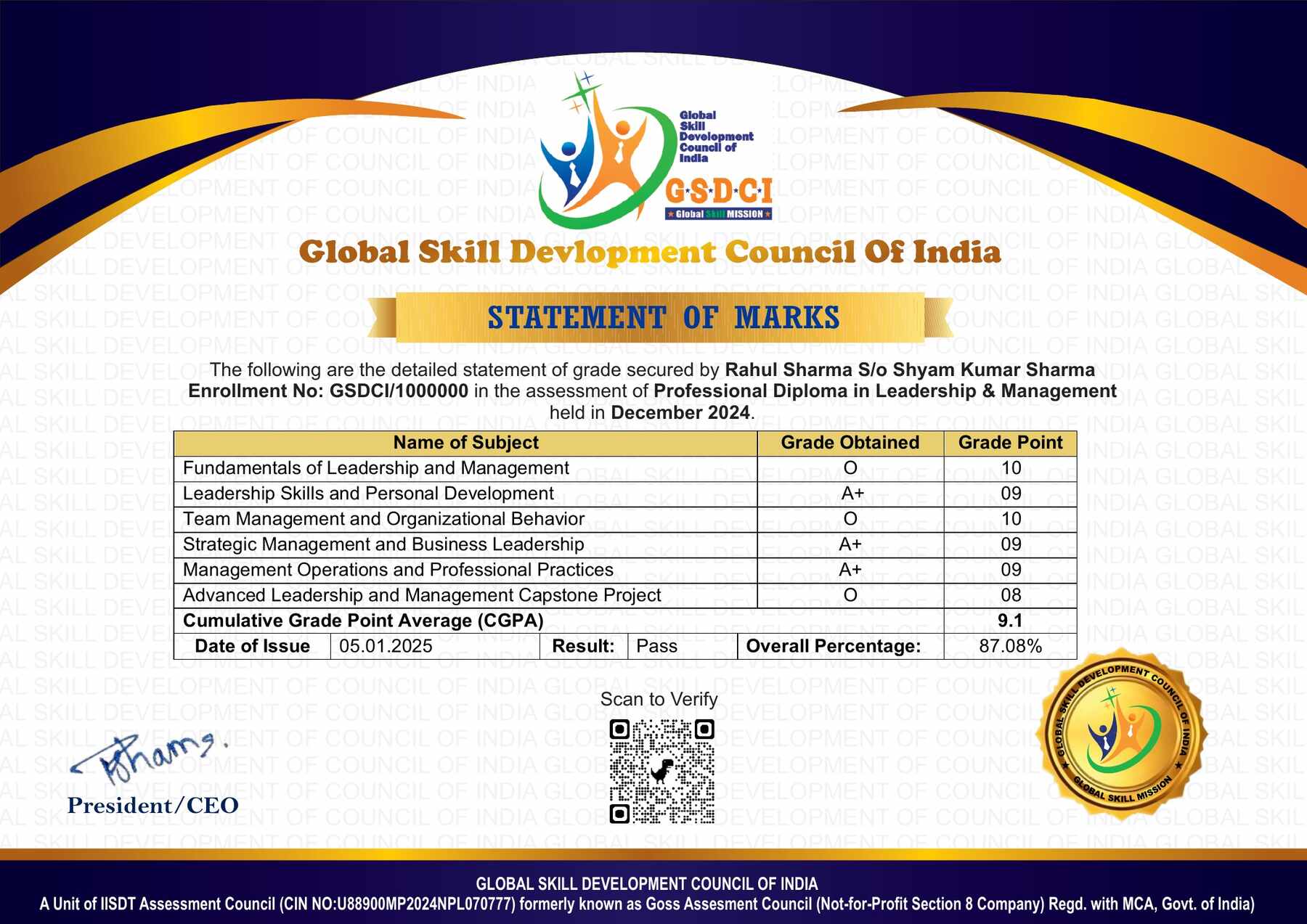
| 1 | 91-100 | O (Outstanding) | |
| 2 | 81-90 | A+ (Excellent) | |
| 3 | 71-80 | A (Very Good) | |
| 4 | 61-70 | B (Good) | |
| 5 | 50-60 | P (Pass) | |
| 6 | 0-49 | F (Fail) | |
Benefits of Certification:
1. Global Recognition & Credibility – Stand out worldwide with a certification that strengthens your professional profile across borders and demonstrates your skills to employers and institutions.
2. Quality Assurance through ISO Certification – Programs follow an ISO-certified quality management system to promote consistency, reliability, and a standardized learning experience.
3. Career Advancement & Employability – Enhance your résumé, demonstrate professional competence, and improve your prospects for career growth, promotions, or suitable job opportunities.
4. Non-Profit Trust Factor – Certification from a non-profit organization reflects a mission-driven approach focused on skill development, professional learning, and public benefit.
5. Access to Learning Resources – Gain access to useful learning resources such as e-books, mock tests, assessments, and online academic support.
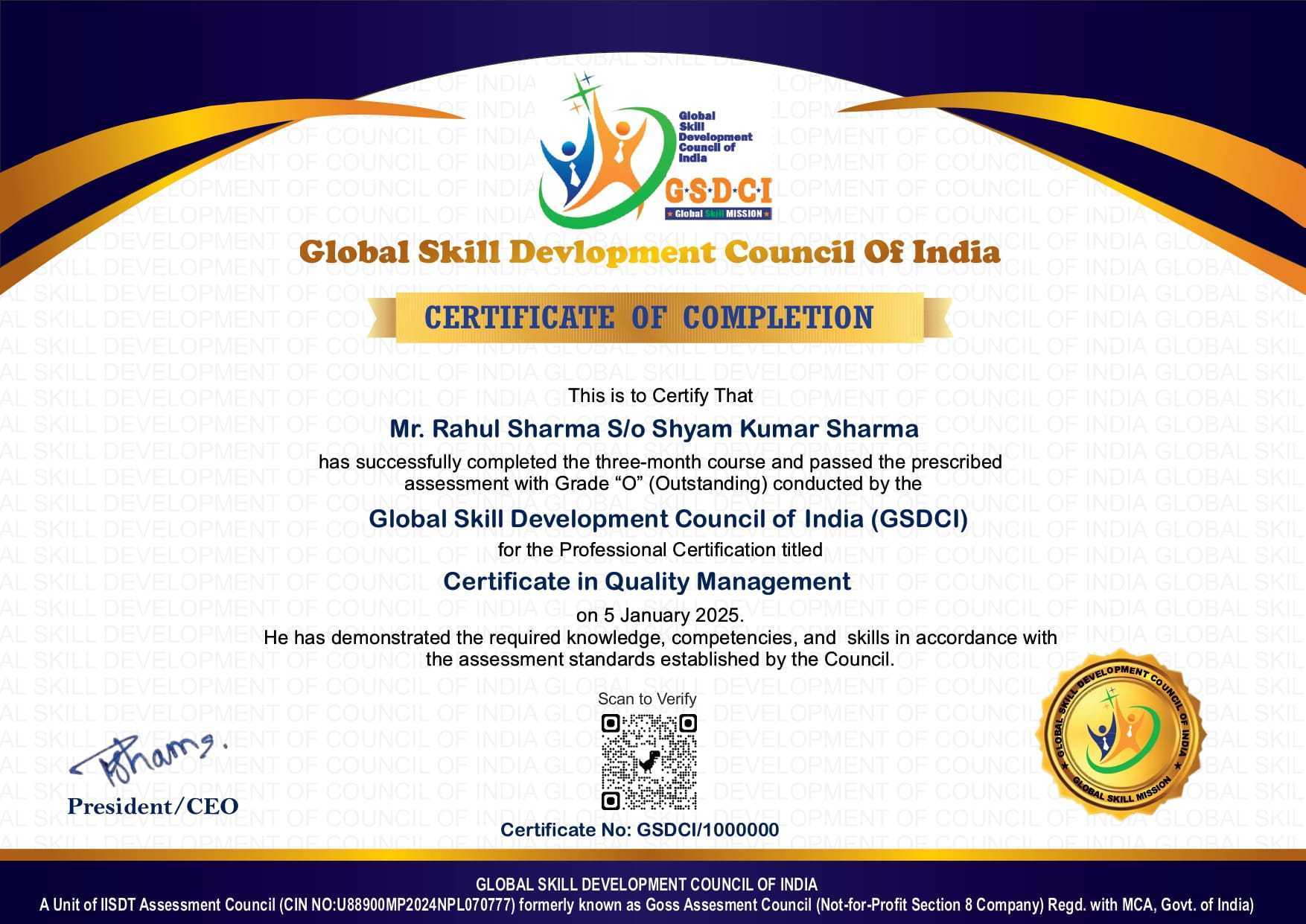
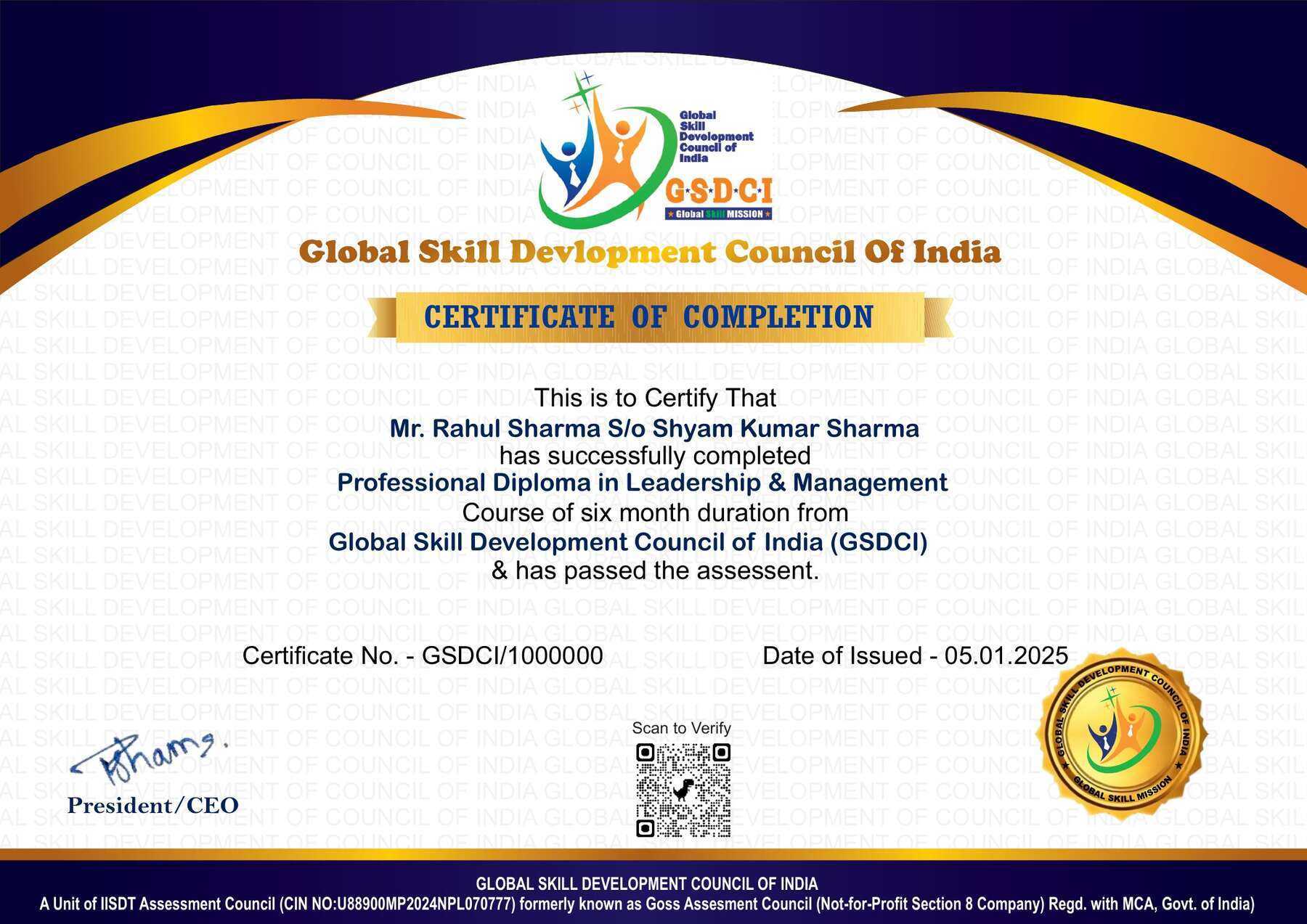
6. Transparency & Online Verification – Each certification includes a unique enrolment or certificate ID, enabling convenient online verification by employers and other interested parties.
7. Lifetime or Long-Term Validity – Certifications may offer lifetime or extended validity, reducing the need for frequent renewal, subject to the applicable certification scheme.

Reviews
There are no reviews yet.