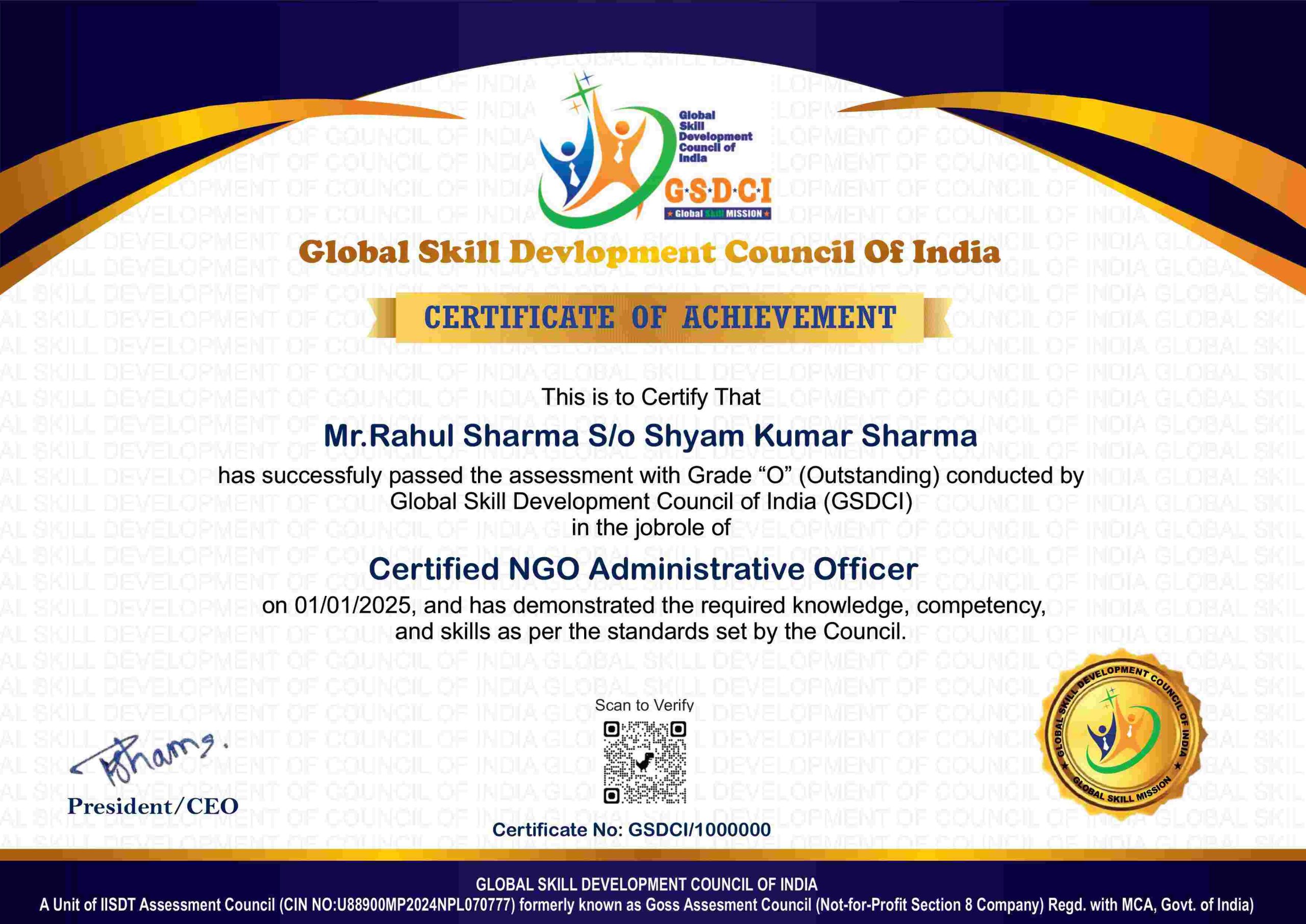
Description
Certification Name: Certified Crisis Communications Manager
Global Occupational Skill Standard – GOSS ID: GOSS/JPM/CCCM/V1
Eligibility: Graduation or Equivalent or minimum 2 years of relevant experience (experience-based learners can directly enroll and certify).
Objective: The Certified Crisis Communications Manager course is designed to prepare learners to plan, lead, and execute effective communication strategies during times of organizational crisis, reputational threats, or public scrutiny. The course covers crisis identification, scenario planning, risk communication, stakeholder mapping, media handling, message control, and real-time response strategies. Learners will gain hands-on experience in drafting crisis communication plans, press statements, holding statements, internal briefings, and managing communication across traditional and digital platforms.
Certification: Within 5 days after Completion of Online Assessment.
Get ready to join the Journey to become a GSDCI Certified Professional – International Certification and Assessment Body.
Steps to become a GSDCI Certified Professional:
Step 1: Select your certification you want to pursue.
Step 2: Click on get certified tab, new pop up window will open.
Step 3: Click on pay certification fee, you will be redirected to billing details page.
Step 4: Fill your details and click on pay certification fee, You will be redirected to payment gateway, pay fee by any available options like Card(Debit/Credit), Wallet, Paytm, Net banking, UPI and Google pay.
Step 5: You will get Login Credentials of Online E-Books and Online assessment link on your email id, within 48 hrs of payment.
Step 6: After completion of online assessment, you can download your Certificate Immediately.
Assessment Modules:
Module 1: Introduction to Crisis Communication: Understanding the nature and types of crises: operational, reputational, legal, cyber, Defining the role and responsibilities of a Crisis Communications Manager, Difference between risk management, crisis management, and issue management, Importance of transparency, timeliness, and consistency in crisis response, Key principles of crisis communication: clarity, empathy, accountability, Case studies on real-world crisis communication failures and successes.
Module 2: Crisis Preparedness and Planning: Developing a crisis communication plan and response framework, Identifying potential risks and conducting vulnerability assessments, Creating crisis scenarios and simulation exercises, Defining roles and responsibilities of internal response teams, Establishing communication protocols and escalation pathways, Preparing holding statements, FAQs, and media templates in advance.
Module 3: Messaging and Media Strategy in Crisis: Crafting effective crisis messages for different stakeholders, Coordinating internal and external messaging to ensure alignment, Communicating with media: press releases, interviews, briefings, Designating and training spokespersons for crisis response, Managing press inquiries, media statements, and real-time updates, Avoiding misinformation, speculation, and communication gaps.
Module 4: Digital Crisis Management and Social Media Response: Monitoring social media for crisis signals and public sentiment, Responding to negative content, fake news, and viral backlash, Managing brand reputation across digital platforms during crisis, Using social listening tools for sentiment tracking and escalation, Creating a digital response plan including pre-approved content, Engaging with online communities with transparency and empathy.
Module 5: Stakeholder Engagement and Internal Communication: Communicating with internal stakeholders: employees, leadership, partners, Maintaining employee trust and morale during high-pressure situations, Updating shareholders, clients, and regulatory authorities as required, Ensuring two-way communication and feedback loops during crisis, Coordinating with legal, HR, and executive teams for unified communication, Using internal channels: email, town halls, messaging apps, and intranet.
Module 6: Post-Crisis Recovery and Professional Practice: Conducting post-crisis reviews and communication audits, Analyzing crisis communication performance and lessons learned, Rebuilding public trust and brand reputation over time, Documenting best practices, policies, and case learnings, Developing a professional portfolio with mock crisis scenarios and response plans, Exploring career roles: crisis manager, PR head, risk communication consultant, emergency communication strategist.
GSDCI Online Assessment Detail:
- Duration- 60 minutes.
- Number of Questions- 30.
- Number of Questions from each module: 5.
- Language: English.
- Exam Type: Multiple Choice Questions.
- Maximum Marks- 100, Passing Marks- 50%.
- There is no negative marking in any module.
| Marking System: | |||
| S.No. | No. of Questions | Marks Each Question | Total Marks |
| 1 | 10 | 5 | 50 |
| 2 | 5 | 4 | 20 |
| 3 | 5 | 3 | 15 |
| 4 | 5 | 2 | 10 |
| 5 | 5 | 1 | 5 |
| 30 | 100 | ||
| How Students will be Graded: | |||
| S.No. | Marks | Grade | |
| 1 | 91-100 | O (Outstanding) | |
| 2 | 81-90 | A+ (Excellent) | |
| 3 | 71-80 | A (Very Good) | |
| 4 | 61-70 | B (Good) | |
| 5 | 50-60 | P (Pass) | |
| 6 | 0-49 | F (Fail) | |
Benefits of Certification:
🌍 1. Global Recognition & Credibility – Stand out worldwide with a certification that opens doors across borders. Trusted by employers, respected by institutions, and recognized in over 100 countries.
📜 2. Quality Assurance through ISO Certification – Certified to global ISO standards, our programs deliver excellence, consistency, and a benchmarked learning experience that speaks for itself.
💼 3. Career Advancement & Employability – Enhances your resume and increases chances of promotions or job offers.
🤝 4. Non-Profit Trust Factor – Certifications from non-profit organizations are mission-driven rather than profit-driven.
📚 5. Access to Verified Learning & Resources – Often includes e-books, mock tests, and online support without hidden costs.
🔍 6. Transparency & Online Verification – Certifications come with a unique Enrolment ID for easy online verification by employers and institutions.
⏳ 7. Lifetime or Long-Term Validity – Certifications usually have lifetime validity or long-term recognition, reducing the need for frequent renewals.

Reviews
There are no reviews yet.