
No products in the cart.



Certificate in Medical Claims Processing and Analysis
₹6,500.00 ₹3,250.00
50% fee concession will end in
To train learners to accurately analyze, evaluate, and process medical claims using coding standards, documentation review, and regulatory compliance to ensure correct and ethical claims adjudication.
Description
Course Name: Certificate in Medical Claims Processing and Analysis
Global Occupational Skill Standard – GOSS ID: GOSS/HF/CMCPA/V1
Eligibility: Graduation or Equivalent.
Duration: Three Months.
Objective: The Certificate in Medical Claims Processing and Analysis course aims to develop advanced expertise in reviewing, analyzing, and adjudicating medical claims with accuracy and compliance. The program trains learners to interpret medical records, understand clinical terminology, and apply standard coding systems such as ICD, CPT, and HCPCS.
Get ready to join the Journey to become a GSDCI Certified Professional – International Certification and Assessment Body.
Steps to become a GSDCI Certified Professional:
Step 1: Select your certification you want to pursue.
Step 2: Click on get certified tab, new pop up window will open.
Step 3: Click on pay certification fee, you will be redirected to billing details page.
Step 4: Fill your details and click on pay certification fee, you will be redirected to payment gateway, pay fee by any available options like Card (Debit/Credit), Wallet, Paytm, Net banking, UPI and Google pay.
Step 5: You will get Login Credentials of Online E-Books and Online assessment link on your email id, within 48 hrs of payment.
Step 6: After completion of the online assessment, the soft copy of your certificate will be sent to your registered email ID within 5 days.
Assessment Modules:
Module 1: Introduction to Medical Claims Analysis: Overview of healthcare delivery and insurance systems, Role and responsibilities of a Medical Claims Analyst, Key medical and insurance terminology, Types of healthcare claims (professional, institutional, pharmacy), Claim lifecycle and workflow overview, Importance of accuracy and compliance in claims analysis
Module 2: Medical Coding Systems and Clinical Documentation Review: ICD-10-CM diagnosis coding essentials, CPT/HCPCS procedure and supply coding basics, Use of modifiers and coding guidelines, Understanding clinical documentation and medical necessity, Identifying coding inconsistencies and documentation gaps, Common coding-related claim issues
Module 3: Claims Processing and Adjudication Procedures: Components of CMS-1500 and UB-04 claim forms, Electronic claim submission standards (EDI), Verification of patient eligibility and benefits, Payment calculation methods and coverage rules, Explanation of Benefits (EOB) and Remittance Advice (ERA) review, Timely filing requirements and correction processes
Module 4: Insurance Plans, Reimbursement Policies, and Regulatory Standards: Medicare, Medicaid, and commercial insurance policy structures, Managed care principles and payer-specific rules, DRG, APC, and fee-for-service reimbursement methodologies, Preauthorization and referral requirements, Coordination of benefits and dual coverage rules, Regulatory compliance (CMS, HIPAA, NAIC)
Module 5: Denials, Appeals, and Claims Audit Techniques: Types of denials and common root causes, Denial prevention and correction strategies, Preparing appeal letters and supporting documentation, Claims dispute processes and reconsideration steps, Internal claims audit procedures and error identification, Communication with providers and payers for issue resolution
Module 6: Advanced Claims Analysis, Reporting, and Professional Ethics: Data analysis techniques for claims trends and patterns, Identifying fraud, waste, and abuse indicators, Performance metrics and productivity reporting, Use of claims analysis software and tools, Ethical standards in claims handling and decision-making, Continuous education and professional development in claims analysis
GSDCI Online Assessment Detail:
- Duration- 60 minutes.
- Number of Questions- 30.
- Number of Questions from each module: 5.
- Language: English.
- Exam Type: Multiple Choice Questions.
- Maximum Marks- 100, Passing Marks- 50%.
- There is no negative marking in any module.
| Marking System: | |||
| S.No. | No. of Questions | Marks Each Question | Total Marks |
| 1 | 10 | 5 | 50 |
| 2 | 5 | 4 | 20 |
| 3 | 5 | 3 | 15 |
| 4 | 5 | 2 | 10 |
| 5 | 5 | 1 | 5 |
| 30 | 100 | ||
| How Students will be Graded: | |||
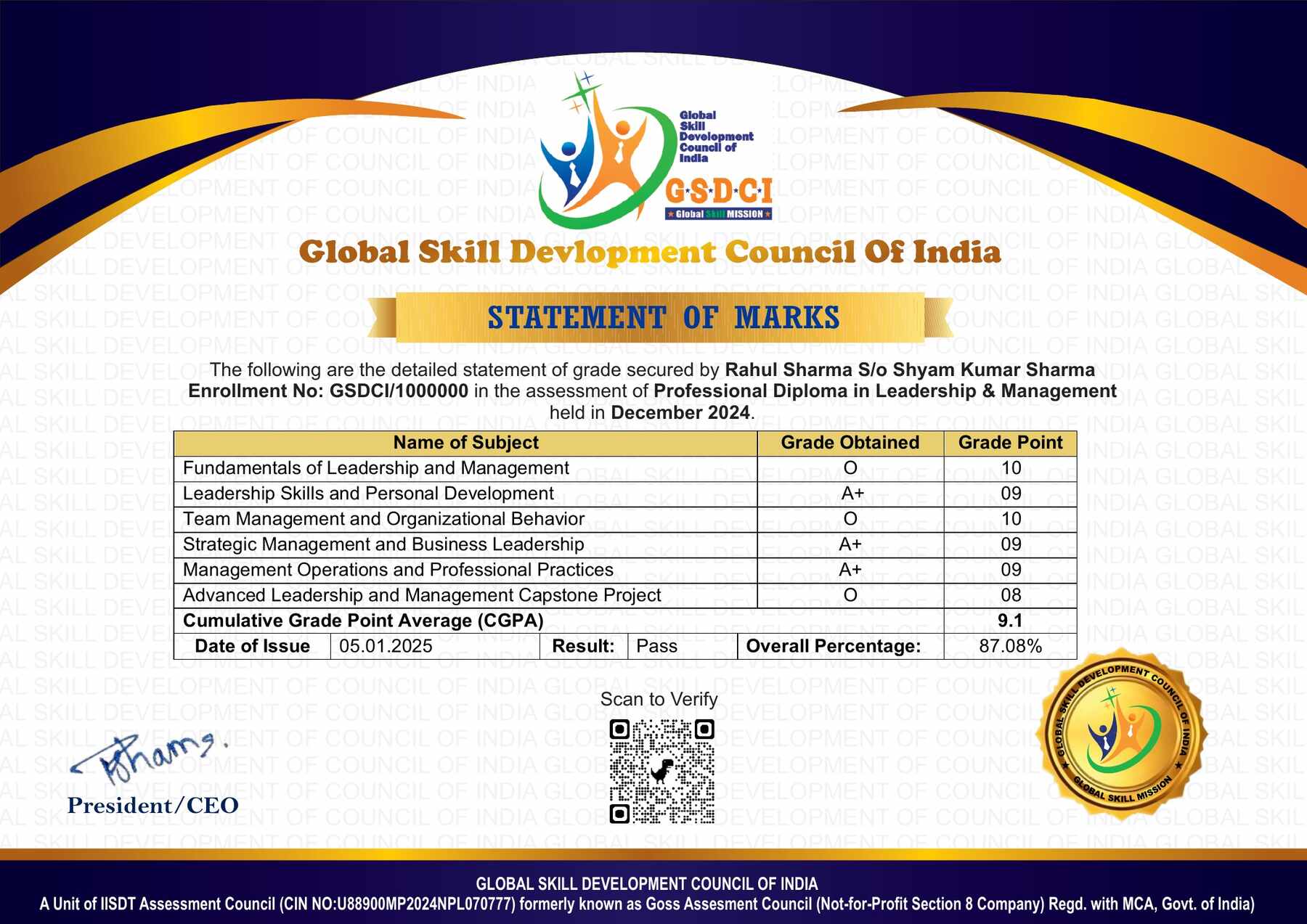
| S.No. | Marks | Grade | |
| 1 | 91-100 | O (Outstanding) | |
| 2 | 81-90 | A+ (Excellent) | |
| 3 | 71-80 | A (Very Good) | |
| 4 | 61-70 | B (Good) | |
| 5 | 50-60 | P (Pass) | |
| 6 | 0-49 | F (Fail) | |
Benefits of Certification:
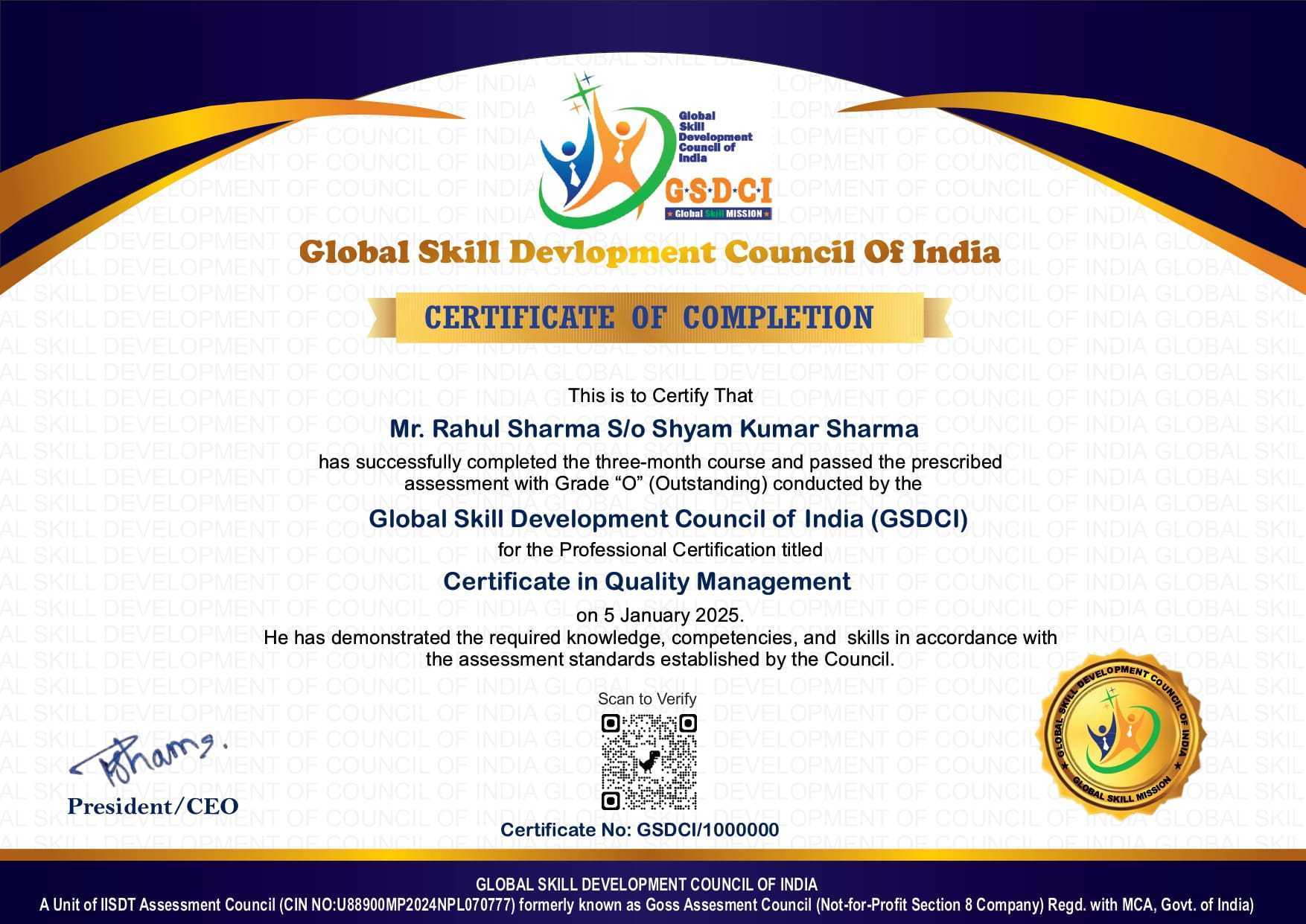
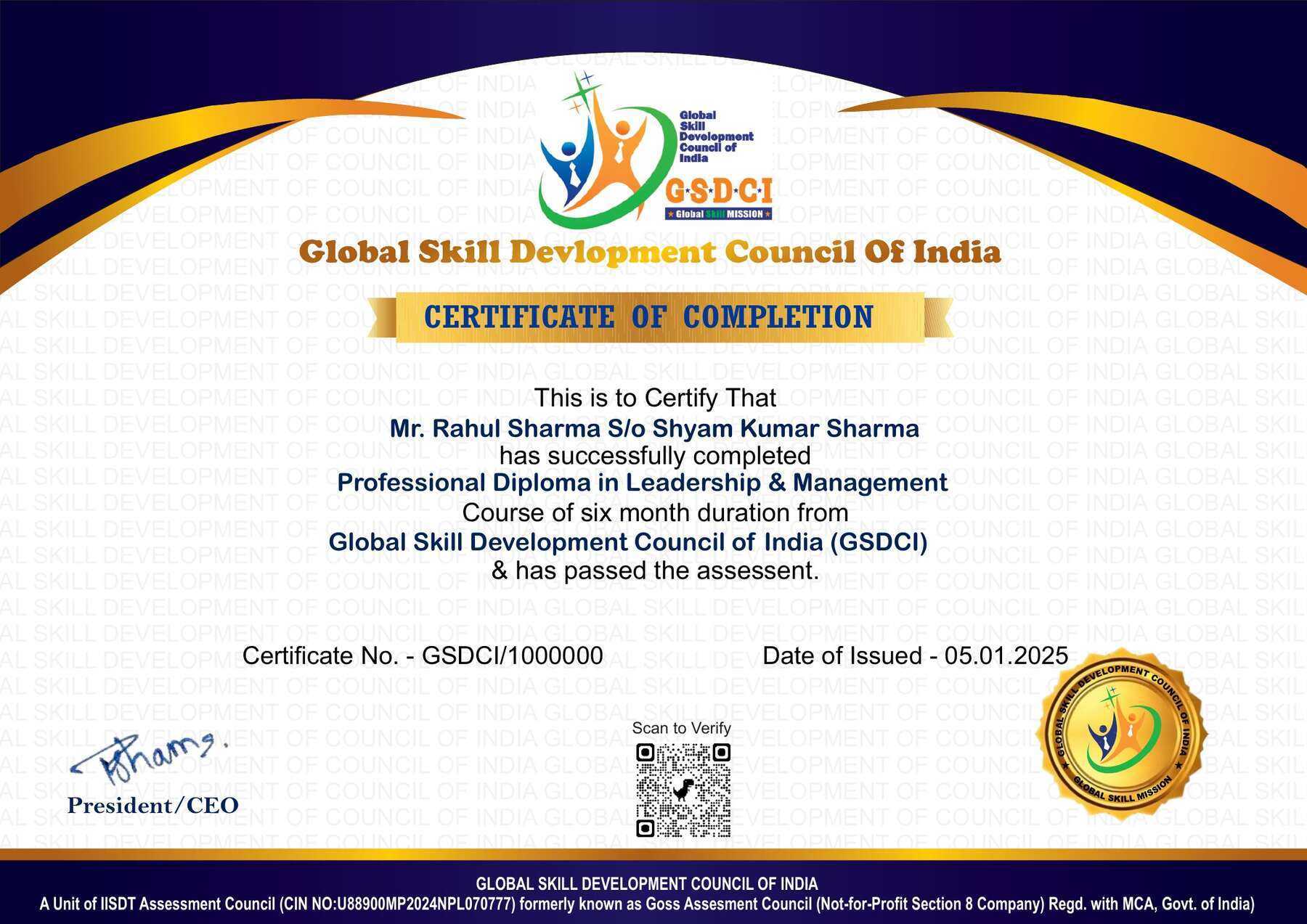
1. Global Recognition & Credibility – Stand out worldwide with a certification that strengthens your professional profile across borders and demonstrates your skills to employers and institutions.
2. Quality Assurance through ISO Certification – Programs follow an ISO-certified quality management system to promote consistency, reliability, and a standardized learning experience.
3. Career Advancement & Employability – Enhance your résumé, demonstrate professional competence, and improve your prospects for career growth, promotions, or suitable job opportunities.
4. Non-Profit Trust Factor – Certification from a non-profit organization reflects a mission-driven approach focused on skill development, professional learning, and public benefit.
5. Access to Learning Resources – Gain access to useful learning resources such as e-books, mock tests, assessments, and online academic support.
6. Transparency & Online Verification – Each certification includes a unique enrolment or certificate ID, enabling convenient online verification by employers and other interested parties.
7. Lifetime or Long-Term Validity – Certifications may offer lifetime or extended validity, reducing the need for frequent renewal, subject to the applicable certification scheme.

Reviews
There are no reviews yet.